Friday, March 04, 2005

going green

Thursday, March 03, 2005
HELEN JUNG


Nike is known for designing shoes so striking that footwear fans admiringly collect them by the dozens, and customers wait in line for hours to spend $150 or more on the latest release. But making hemp look hip? That's a whole new challenge as the Beaverton-based company grapples with going green.

In February, Nike started selling five models of casual shoes and boots that it says use environmentally sustainable materials and manufacturing processes. Called Nike Considered, the new line of shoes is part of the company's overall effort to research ways to reduce waste, eliminate toxic substances and otherwise lessen the environmental impact of the world's largest sneaker manufacturer.

Among other changes, the Nike Considered shoes are largely made with materials found within 200 miles of the factory, to cut down on fuel consumption in transporting them. The leather comes from a tannery that recycles wastewater to ensure that no toxins are released into the environment, and it is pigmented using vegetable dyes. Hemp and polyester are used to make the shoe's woven upper and shoelaces. The midsole is cut to lock into the outer sole, lessening the need for adhesives in constructing the shoe. The shoe's outer sole includes recycled rubber.

The shoes, with suggested retail prices of $65 for sandals to $110 for boots, aren't designed for heavy-duty hiking or sport, said Nate Tobecksen, a Nike spokesman.

They also don't have the sleek, stylized design that Nike is known for. With the woven upper and natural vegetable dye color of the leather, some of the shoes resemble a macrame moccasin or a woven wallaby that looks mistakenly imprinted with the Nike swoosh.

But as consumers flaunt their environmental consciousness with purchases that show their inner greenie -- such as the snout-nosed, gas-electric hybrid Toyota Prius -- the unrefined look of the shoes may well be a selling point.

The shoes are finding retail space in places as dissimilar as the down-to-earth Recreational Equipment Inc. to the tony Barneys New York Co-op stores.

"The design of the shoe is definitely a conversation piece. The pattern and components used in the production of the shoes -- especially the Considered Boot -- are innovative," said Monique Soulet, an associate buyer for Barneys Men's Co-op shoes. "Our co-op customers are fashion-savvy and are willing to take chances on patterns that diverge from the beaten path."
But the environmental aspect is also part of its appeal, she said.

For outdoor-gear retailer REI, the shoes "have an aesthetic about them that's cool, and it tries to tell a little about the story just in the design of the shoes," said Mike Foley, spokesman for REI, which carries two models of the shoes in nine stores and on its Web site. "They look environmental."

It remains to be seen how popular they become with consumers, said Matt Powell, contributing editor for trade publication Sports Executive Weekly.

"I think it's great that Nike is trying to be a good corporate citizen," Powell said. "But the consumer who's going to appreciate this is relatively small."

Still, if there's not a commercial market for the shoes themselves, Nike probably will find ways to incorporate some of the environmentally friendly elements into other shoes, he said.

Suppliers said they are also seeing more interest, not only from Nike, but also from Adidas-Salomon AG, Reebok Ltd. and others in using more environmentally friendly materials, said Paul Pellati, a sales executive for Sadesa, a company in Buenos Aires, Argentina, that provides leather to shoe companies.

Using vegetable dyes and other natural pigments is more expensive, he said. But once enough consumers are willing to pay more, shoe companies will widely use such materials. Then, he said, "we're all off to the races."

The move not only fits in with Nike's environmental goals, but it also gives an image boost to an often-vilified corporation. Nike should be applauded and encouraged to do more, said Amanda Chehrezad, a spokeswoman for Co-op America, a nonprofit that urges businesses, consumers and investors to spend their money using socially and environmentally responsible practices.

"When larger companies do decide to take significant changes to create new products using environmental and social standards, we think it's a great step for them and we always like to see them do that," Chehrezad said. "We just encourage them to keep going and incorporating more efforts into their other practices and production areas," she said, such as ensuring Nike's contract factories are paying and treating workers fairly.

Nike is continuing to develop new models, the company's Tobecksen said. The company is working on more products to bring to market in June, with additional designs to roll out through spring 2006.

Meantime, while the current shoes aren't exactly the most mainstream of looks, Tobecksen said, "Stay tuned."

"The next generation," he said, "will have possibly more of a design that may be more in line with people's perceptions of a sneaker."

Thursday, March 03, 2005

this is me, then | 1988


This is your friendly neighborhood blogger in 1988, standing with my brother Allen in our favorite shirts. I wore a lot of madras shirts as a teenager. I was a dork.

what i do

Want to see some of what I've designed at work? Look below.

This house, in the 700 block of Jamison Avenue, SE, in Roanoke, was the prototype for two houses in the neighborhood erected by Southeast By Design, a collaboration between LMW. PC, Blue Ridge Housing Development Corporation, the city of Roanoke and Virginia Tech. I refined for construction and was the CAD technician on the house, which was designed by a Virginia Tech 3rd year student architectural studio.

This house, at 728 Jamison Avenue, SE, in Roanoke, was the prototype for three houses in the neighborhood erected by Southeast By Design, a collaboration between LMW. PC, Blue Ridge Housing Development Corporation, the city of Roanoke and Virginia Tech. Hunter Greene and I collaborated on the project, but I was the CAD technician and prepared most of the construction documents.


The expansive first floor living area of 728 Jamison Avenue. The sliding doors enter onto a 2 story sleeping porch, which is a common detail on houses in its Southeast Roanoke neighborhood.


House for sale...my house! :) The house on the right was based on the 720 Jamison prototype, but is located at 620 Jamison Avenue. The porch was reduced for budgetary reasons on this and other houses.

The Roanoke Health & Human Services facility on Williamson Road is the adaptive reuse of a former Sears Roebuck store as a central home for the city's health & welfare needs. I was the primary CAD technician, contributing 22 architectural sheets and coordinating the implementation of 60 engineering sheets into the drawing set.


The rear facade of the same facility.


The third-floor main interior corridor and lobby of the Roanoke Health & Human Services Facility. Note the lighted coves, lighting layout and alumium and glass storefront design; those were all me. :)


Here's what the former Sears Roebuck store looked like in a rendering for their 1957 ad during Roanoke's 75th anniversary celebration. The store opened that year. Sears was part of Searstown, which consisted of a combination Kroger and Sears store, with an adjacent Rose's variety store and Peoples Drug (later Revco). Kroger left in the '70s, Roses and Revco in the early '80s, and finally Sears in 1985, moving to Valley View Mall. After Sears moved, the store was briefly a small enclosed mall, but now there is only retail on the bottom floor.

The Human Services portion of the building has been occupied for over a year, but the Health Department was unable to move into its section due to budget problems. That situation was recently resolved:

Health department to get healthier, roomier location

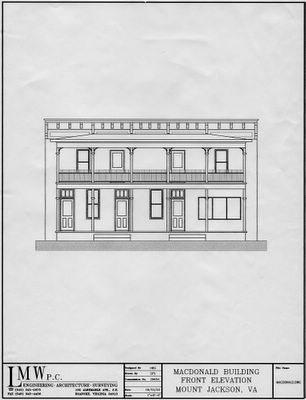
I did a facade rendering on this existing historic building in CAD based on a few basic measurements (taken by an associate) and several photographs, without actually visiting the site. I thought it came out well, and once I visited the building to verify what I did, very little had to be changed.

SNEAK ATTACK

By TOM SYKES, New York Post

PEOPLE fighting over rare merchandise at a tiny downtown boutique is par for the course in Manhattan. But when those people are grown men, and they've spent all night waiting in freezing temps to buy a pair of sneakers - as they did last week for limited edition, $300 Nike Pigeon Dunks at an Orchard Street shop - they make the most debt-ridden fashionista look sane.

"Guys go crazy for sneakers in the way that girls go crazy for Manolo Blahniks," says Jimmy Jellinek, editor in chief of Complex magazine, a sneaker collector's bible.

Even New York sneakerheads like Carlo Castro were shocked by the frenzy at the Orchard Street shop, where a fight broke out but no arrests were made.

"It was kind of unbelievable to me that people would wait in line that long. But they see Pharrell [Williams] wearing these dunks, so they want them," explained Castro, referring to the hip-hop superstar. (Williams is also co-owner of his own sneaker/clothing shop in SoHo, called A Bathing Ape.)

The sneaker-fetish scene revolves around the twin poles of eBay and the city's ultra-exclusive boutiques - some have no signs, others no storefronts - where staff and customers talk about sneakers with the rapture of wine connoisseurs discussing great vintages.

Rather than relying on big-bucks advertising, word of mouth is king at the city's specialty sneaker temples - mostly clustered on the Lower East Side.

At stake are bragging rights to be the first, or only, person in your neighborhood to have that exclusive shoe - or, alternately, the chance to make some serious money by reselling it on eBay.

The most sought-after sneakers, like the Nike Pigeon Dunk, are produced in limited editions.

"Basically, this is the same formula of limited releases that the sneaker companies were using in the '80s," says Dave Ortiz, the owner of tiny sneaker emporium Dave's Quality Meat.

"Everyone goes bananas because they can get one pair of 500," Ortiz says. "Smaller boutiques like us fuel the fire, because the kids who shop here are the 'influencers' - they inspire the broader masses. They get bragging rights from that unique pair of sneakers."

The most sought-after models are limited-edition collaborations between street artists and the big companies.

"It's all about heritage," says Jellinek, noting that by purchasing a pair of Nikes with "built-in nostalgia" the wearer also stakes a claim "to all Nikes that came before it - all the influences of hip-hop and skating - that go into that sneaker's DNA."

It's also all about knowing where half these stores are even located - and how to get in.

The Alife (pronounced A-life) Rivington Club is one of the city's premier sneaker shops, even though it's totally unmarked and you have to be buzzed in through a security door.

Single sneakers are displayed in mahogany shelving, with the more expensive, limited-edition items - which can top out at $400 - locked away in glass cases like museum exhibits.

Nom de Guerre, whose customers include Giorgio Armani, is a sprawling subterranean store accessible via a cellar staircase and marked only by a small plaque on the pavement. The most expensive pair of sneaks on sale are an $800 pair of Slim Shady Nikes.

"Fifty percent of customers are genuine collectors," said manager Angelo Baque, 26. "Fifty percent are buying to resell on eBay - these kids can turn $300 into $1,500 overnight. When I was 16, I made $4.25 an hour at McDonald's."

The other day, David Willson, 20, who drops more than $100 on sneakers "a couple of times a year," was browsing.

"I like to get a few pair of good sneakers for going out every year," he said.

"For school or everyday, I am like everyone else," he said. "I just buy cheap ones from Century 21."

Spoken like a true Blahnik-loving fashionista.

something to think about

I love the sneakers I buy and I'm not stopping anytime soon, but sometimes you have to think about something other than the 'new-shoe smell' and consider the human consequences of marketing. Then there's the other side of the coin: the connection to something greater than the rubber and lesther on your feet. Here's some food for thought:
__________

Selling Sneakers By Violating Young Minds
By Courtland Milloy
Wednesday, March 2, 2005; Page B01

More than two dozen young men had been waiting for nearly an hour when the Downtown Locker Room shoe store in Temple Hills opened at 10 a.m. Sunday.

They were hoping to be among the lucky ones who would walk away with a pair of Michael Jordan's latest release -- or "limited" rerelease in this case: the Nike Jordan Retro 13 "Altitude," a basketball shoe that first came out in the early 1990s.

This time, the black and green sneaker was selling for $160 a pair, $10 more than the originals. The Downtown Locker Room had 60 pairs in stock and sold out within an hour.

And so it went at select shoe stores throughout the Washington area over the weekend. At a Downtown Locker Room in Waldorf, customers who called ahead were advised to show up at least an hour before the store opened at 7 a.m. Sunday. The line began forming in the cold of dawn, and before the sun could break through the morning fog, all the Retro 13s were gone.

Told that the sneaker he had just bought for $160 probably cost $2 to make, a young man who works as a cook at a fast-food restaurant told me gleefully: "I don't care if they cost a penny to make. These are Jordans." Those who overheard him nodded in agreement.

For those who missed out, there is always the Internet, where the Retro 13 has been selling for as much as $300 a pair.

During the past two decades -- ever since Jordan signed as the pitchman for Nike in 1985 -- the craze over Jordan shoes has been much discussed. This is especially true in black urban areas where the popularity of Jordan shoes and other brand-name apparel has been associated with thefts, armed robberies and even homicides.

The public could stand to know more about the marketing strategies that fuel these desires -- and the socioeconomic implications of having consumers under a spell.

On March 11, scholars from throughout the country will gather at Howard University to share their knowledge on the subject at a three-day conference, "Consuming Kids: How Marketing Undermines Children's Health, Values & Behavior."

Alvin Poussaint, a professor of psychiatry at Harvard Medical School and president of the Campaign for a Commercial-Free Childhood, will moderate panel discussions on such subjects as the sexualization of childhood in advertisements, the economics of obesity and the commercial branding of children in public schools.

"Even parents who are trying to do the right thing must realize what they're up against," said Velma LaPoint, a professor of child development at Howard and one of the conference organizers. "They may be trying to promote positive child development, but at the same time, you've got a marketing industry trying to hire people like me to tell them what a child's vulnerabilities might be at certain ages. In very scientific ways, they set out to capitalize on a child's need to belong and to create in them a feeling that they must always have something new to be accepted."

Sonny Vaccaro, a Nike executive in 1985 and the man credited with bringing Jordan onboard, dismissed talk of marketing boogiemen and said classic Jordan shoes, like old Frank Sinatra recordings, help keep a glorious past alive.

"What we saw happen with Michael, and carry on to other individuals, was a legacy and a myth wrapped up into one thing: a shoe," said Vaccaro, now a consultant to Reebok. "It was incomprehensible, and it grew to mystical proportions. What we are seeing now is a new generation wanting to be a part of that. All humans want to be connected to greatness and glory, and now people are connecting with that, and each other, through the shoe."

When I noted that $160 seemed a lot to pay for such a connection, Vaccaro replied: "And they'll pay $260 and $270 when it's time to pay that number."

No doubt the human need for connection is strong. Scholars at the conference on marketing to kids would do well to keep that need in mind and to consider ways to satisfy it that last longer than a shoe.

Wednesday, March 02, 2005

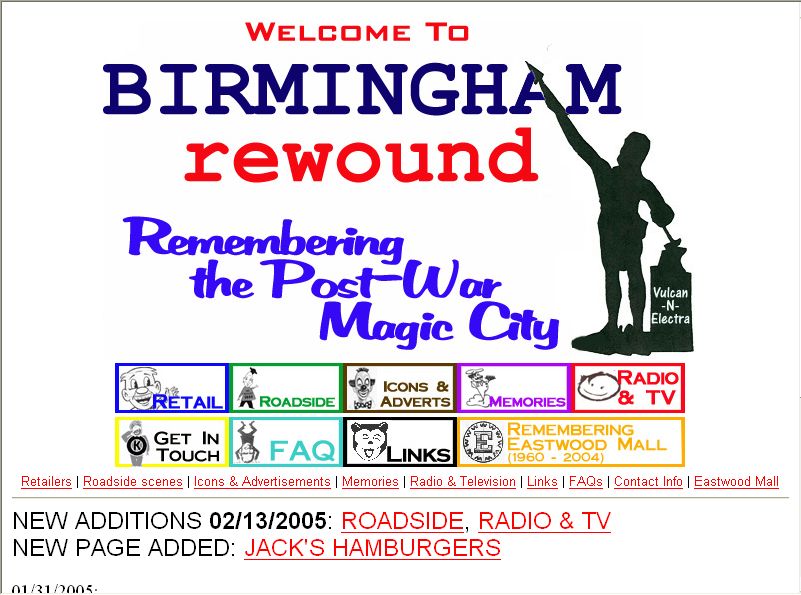
birmingham rewound


Birmingham Rewound, 3/2/2005

I know that I'm a historian by nature, and it's nice to know there are others like me. One such person is Russell Wells, who you may remember from the Eastwood Mall tribute site I posted a few weeks ago.

My new friend J.T. Legg (webmaster of the Rich's tribute site posted this week) told me about Russell's new site Birmingham Rewound. On it, he features some fading memories of postwar Birmingham, Alabama, through personal rememberances, old pictures and vintage audio.

Though I'm not a resident or native of Birmingham (you'll have to hit up my friend Tim Anson for the former), I found the content of Birmingham Rewound facinating and fun. You might, too, especially if you like what you see here.

Tuesday, March 01, 2005

song of the day | march 1, 2005

Nice & Slow - Redhead Kingpin and the F.B.I. Listen

snow day

As I write, I’m in the middle of eight inches of snow which came down overnight Sunday night. It’s the first real snowfall we’ve had this winter and I’ve been enjoying it, if for no other reason than pulling out the cool new parka I bought at the end of the season last year ;) I couldn’t go anywhere, so I got to spend the day in yesterday, and have spent most of it on the phone with several of my friends, who invariably all call on the same day. No biggie though, I like the company.

I was hoping to hear from some of the people I interviewed with today, but the snow through things off a bit. Maybe tomorrow. The guy I interviewed with at Virginia Furniture Market was in the Roanoke paper Monday reviewing Oscar dresses. You read that right. What the hell??!! Well, to each his own, I guess.

I do have a good group of friends and have met a couple more from the message boards and blogs I participate in. One of the people I met contributes on the Men’s Health board and lives in Charlotte. He’s a youth minister and seems to be into clothes and otherwise a fairly normal person. I met another couple of people on UrbanPlanet that are big retail and planning freaks like me. One guy from Atlanta runs a Rich’s department store tribute site. Another guy studies the malls of the Carolinas like me. Another fellow runs an Ames discount store tribute site and I sent him some information that he posted on his website about the old Ames around here. It’s always nice to meet new people, especially when they make you feel more normal.

Over the weekend Mom and I loaded the new shelves at the club with dishes. I counted over 340 dinner plates alone, and that’s only maybe half of what we have, and even that doesn’t count all the other plates, bowls, flatware, and glasses. Needless to say, it was a long day on Sunday. To update some stuff from earlier, both the shelves and new floor I built and put down are doing okay. Not a bad try for a guy with all thumbs like me.

I guess you’ve heard by now about the May-Federated department store merger. What I gather is that our local Hecht’s will become Macy’s, maybe next year. I’m not overwhelmed by that prospect, but I know it’s going to lead to a little more upscale, modern department store over time. Maybe having a Macy’s will grease the wheels a little on some of the national name stores we don’t have yet.


A rendering of Boscov's in Albany, NY (www.turner3d.net/ albany.html)

One store we don’t have is Boscov’s. Boscov’s is comparable to Belk and Hecht’s, with a generous dose of Sears thrown in. It’s a great store; not trendy but not lame either. Most of the stores are around 200,000 square feet, about the size of a typical Super Wal-Mart, which is why it’s hard for them to find a good spot in the Roanoke Valley, where they’re actively looking according to a real estate website I found. I’ve been to a couple in Pennsylvania. And I’m looking forward to the new store in Danville at Piedmont Mall coming in 2006. Maybe we’ll luck up and get one at Tanglewood or Valley View.

Speaking of malls, I ended up going to Lynchburg twice over the weekend. Once with Mom and Dad, once with my friend Kevin. They have a new dollar store in River Ridge Mall that carries a little bit of everything, even hair pieces for $1.00. So if you need some fake hair cheap, I know who can hook you upJ.

On a classier note, I found the Harbor Inn seafood restaurant in Lynchburg to be very classy and a good deal to boot. The best way to find a good restaurant I’ve found is to follow the crowd of fat happy people and go where they go. That usually works, and it certainly worked this time.

That's my 2 cents for the day :)

Fat Joe, Nas, Others Salute Jam Master Jay And His Adidas

Fund-raiser gala held to benefit late DJ's charity foundation.

NEW YORK — Two hip-hop icons were honored Friday night at the Skylight club: Jam Master Jay and Adidas.Nas, Fat Joe, Bone Thugs-N-Harmony, Q-Tip, Public Enemy and DMC were among those on hand for a fund-raiser gala that celebrated the Jam Master himself as well as the 35th anniversary of his group's favorite kicks.

"Jam Master Jay is my man, and Queens is my borough," Nas said of the late DJ, who was slain in his Queens studio in October 2002 (see "Jam Master Jay, Run-DMC DJ, Killed In Shooting").

"It's important we come out and show love to the foundation and the community work that's being put together through Adidas and the Jam Master Jay Foundation."

"We came together for this to really pay homage," said Layzie Bone, flanked by his entire group.

"It really means a lot to us because we came up on Run-DMC. We really loved these guys, and Jam Master Jay taught us some things and talked to us. It really meant a lot to be here."

"Run-DMC were one of the most powerful impacts on my childhood, 'cause they took a culture and made it worldwide and showed me the possibilities of something I liked," offered video director Dave Meyers (Jay-Z, Kelly Clarkson). "They were some cool guys doing cool sh--. I was a kid who was very influenced by their creative flow and the choices they made."

Many of the artists noted that not only were they influenced by the music of Jam Master Jay (born Jason Mizell), but as they became prominent in the industry, Jay reached out to them personally.

"Jam Master was a mentor, an idol to me, a good brother," Fat Joe remembered. "Every time I seen him, he was like, 'Yo, Joe, you gotta get outta the Bronx. You gotta get out of New York. You gotta sell some records somewhere else. There's a whole world out there, go sell some records somewhere else.' "

"Everyone coming to support just shows me all the love and effect Jason had," Jam Master Jay's widow, Terri Corley-Mizell, said. "It's about honoring his legacy and life. Everyone here had love for Jason, which means a lot for me."

The Adidas sneaker was shown love as well: 35 types of special Adidas were on display, including the Missy Elliott shoe, the Bad Boy shoe, the Roc-A-Fella 10th anniversary sneaker and a Disney sneaker with a picture of Goofy on it.

"Adidas gotta show love," DMC said. "We took that shell-toe sneaker around the world. We stepped onstage at Live Aid, the people gave and the poor got paid. Adidas is more than a sneaker on my feet, it represents what hip-hop is about."

Some of the proceeds from the event went to the Jam Master Jay Foundation, which supports music programs in inner-city schools. DMC, Bone Thugs and Public Enemy were among the performers who hit the stage at the shindig.

Museum shows 200 pairs of sneakers

LOS ANGELES (AP) --A traveling exhibit of nearly 200 pairs of sneakers has been created by a 45-year-old Los Angeles County social worker.

James Moore, who calls his exhibit the California Sneaker Museum, brought it Saturday to the Ahmanson Senior Citizen Center in Exposition Park.

The exhibit features pie charts with athletic footwear market shares, vintage advertisements and is an ode to the evolution of sneakers.

"(Kids) spend a lot of money on sneakers," Moore said. "There's a history to sneakers, and I want kids and parents to see how this evolved into a multibillion-dollar industry."

The collection includes a 1930s pair of Red Ball basketball sneakers, 1960s sneakers made by Goodyear and BF Goodrich and a pair of silver Adidas KobeTwo sneakers.

"It's gone from an 1800s rubber-and-cloth material Plimsoll to now there's a specialty shoe for every sport," Moore said.

Moore said he buys most of his sneakers on the Internet, but also scours thrift stores and buys from collectors.

His most expensive purchase so far? A $200 pair of Nike Air Jordan XVIIs, which came in a foam-lined cherry red carrying case.

New Balance's latest ads celebrate the (older) amateur

By Naomi Aoki, Boston Globe Staff February 28, 2005

Are you in it for love or money?

In a national ad campaign that begins this week, the Boston sneaker maker New Balance aims to set itself apart from the Nikes and the Reeboks of the world.

The idea behind the campaign: If you want to wear the same shoes as NBA stars Allen Iverson or LeBron James wear, buy Reeboks or Nikes. But if you're in it for the pure love of the sport, New Balance is the shoe for you.

'' 'For Love or Money' felt so natural to us because it was something that only New Balance can stand in front of," said Paul Heffernan, executive vice president of global marketing at New Balance. ''It's all about everyday athletes playing for the love of the game."

Well, Reebok International Ltd. and Nike Inc. might ask, ''What's so different about that?" After all, they're also courting the everyday athlete. But their ads are slick and filled with sports and entertainment celebrities. This month, Canton-based Reebok introduced its ''i am what i am" campaign, featuring actress Lucy Liu and tennis player Andy Roddick.

In its new campaign, New Balance features amateur athletes and high-school sports teams. As opposed to ads featuring pro athletes, these ads are unconcerned with how polished the athletes appear or whether their foot placement is just right.

In addition to four 30-second TV spots, the campaign also includes print, billboard, and online ads that pose a series of questions about values in sports today:

''Can a losing coach still be a good coach?"

''Is fighting in sports ever justified?"

''Which teaches a player more, winning or losing?"

Tobe Berkovitz, an advertising professor and associate dean of the College of Communication at Boston University, gives New Balance's strategy a thumbs up. New Balance's customer isn't a teenager -- an all-important demographic in the youth-oriented sneaker business. It's the 21- to 55-year-old who's working toward a personal goal, rather than working to impress someone.

The $1.4 billion company has to defend that turf against far larger rivals with far bigger marketing budgets. The company didn't say how much it is spending on the ad campaign, but said it is spending significantly more on advertising than it did last year.

Berkovitz predicts the ''For Love or Money" campaign will reinforce its customers' brand loyalty and potentially expand their appeal among people who are moving into the New Balance niche.

''If they can grow by just 3 or 5 percent, or even if they can just keep the other guys from eating them alive, that's a win for New Balance," he said.

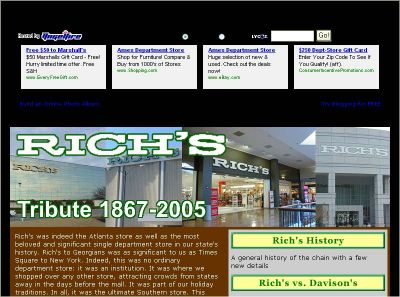
Rich's | the tribute


J.T. Legg's Rich's tribute site, 3/1/05.

J.T. Legg, a self decribed 'retail geek' like me had this to say about his tribute website to the soon to be departed iconic Atlanta, Georgia department store chain Rich's:

"I'm the webmaster of the new Rich's Tribute site, which will have pictures inside and out of my all-time favorite department store that Federated just canned out of shear stupidity. I grew up my whole life with Rich's, making frequent annual visits tothe Town Center Mall store all 19 years of its existance."

"I did manage to snag pics of every single Rich's store in the entire Atlanta area, but it did take a TON of work and time to do it. I also had two run-ins with mall security that were not pleased that I had such a penchant for Atlanta's classic store."

That's love y'all. You should check out his Rich's tribute soon

Monday, February 28, 2005

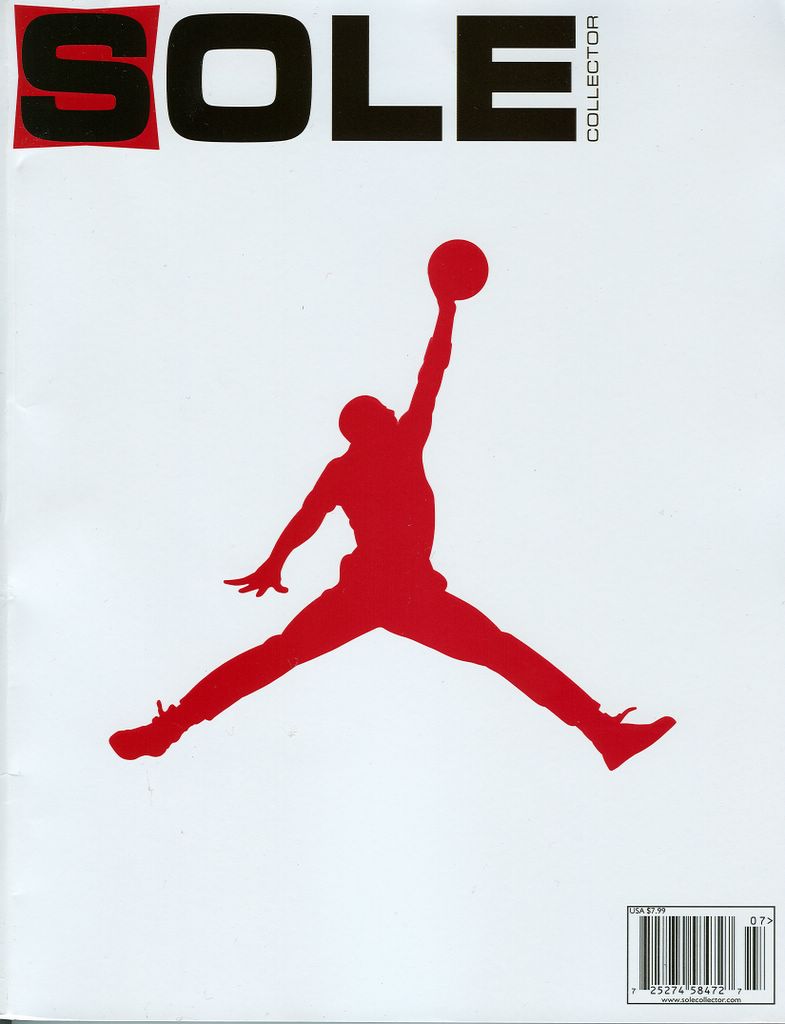
the jordan issue!


Anyone even remotely interested in the Air Jordan sneaker series should make an effort to pick up the latest edition of Sole Collector magazine.

In honor of the release of the Air Jordan XX, the magazine has collected knowledge and accolades form a wide variety of sneakerheads, basketball fans, and historians to create the best Air Jordan retrospective anyone can buy for only $7.99.

If you like 'em, worn, unworn, pristine, trashed, loved, lauded, or anything in between, you will find something to like about this Sole Collector special edition.

lyrics | Cha Cha Cha by MC Lyte

The very round-sounding bassline brings back memories of riding through Friendly Center in Greensboro around Christmas in 1989 with my family shooping. I think we stopped at Woolworth's. From the album Eyes On This.

[Kick this one here for me and my DJ]

You can cha-cha-cha to this Mardis Gras
I'm the dopest female that you've heard thus far
And I do get better, the voice gets wetter
Nobody gets hurt (as long as you let her)
Do my thing with an '89 swing
The dopeness I write, I guarantee delight
To the hip-hop maniac, the Uptown brainiac
In full effect, MC Lyte is back
And better than before as if that was possible
My competition, you'll find them in the hospital
Visiting time, I think it's on a Sunday
But notice they only get one day to shine
The rest of the week is mine
And I'll blind you with the science that the others have yet to find
So come along and I'll lead you the right way
Just clap your hands to the words I say, come on...

[Kick this one here for me and my DJ]

I've got the power to spread out and devour
At the same time I'll eat you up with a rhyme
But I'll let you slide cuz you accidently hopped on the wrong side
Now come on, that's suicide
Hypothetically speaking
Ok, let's say you didn't know what you were doing
You're new in town, and you're looking around
For another name to ruin, and it's me that you're pursuing?
Well well well, I'll be damned
I might as well tell you who I am
I am the capital L-Y-T-E
And it's shocking I'm the one you're mocking
Oh yes, I've been watching you watching me
And like the fat on your back it's plain to see
That you're a wannabe, but you can't be what you're not
So you better start living with what you got

[Kick this one here for me and my DJ]

Yeah, DJ K-Rock when you hear a scratch
Now it's time to kick a rhyme out the batch
And you're the receiver eager as a beaver
Time to convert the non-believer
That I'm a roadrunner leaving you in the dust
I can adjust to the times and at times I might just get quicker
Than the ticker of your pacemaker
More tender than a roni but harder than a jawbreaker
So don't ever second guess me
And if you're wondering who could the best be
Think a second and recollect the worst whipping you ever had yet
And I'll bet that I did it
My fingerprints are still on you
How many times I gotta warn you
About the light? It'll blind your sight
But the rhythm will still guide you through the night

[Kick this tip...Kick this one here for me and my DJ]

Federated Agrees to Buy May for About $11 Billion, Executives Say

By ANDREW ROSS SORKIN and TRACIE ROZHON

Federated Department Stores, which owns Macy's and Bloomingdale's, agreed yesterday to buy May Department Stores, which owns Lord & Taylor and Marshall Field's, for about $11 billion, executives involved in the negotiations said.

The deal, which is expected to be announced today, would transform Federated, already the nation's largest department store company, into a retailing giant with more than 1,000 stores and $30 billion in sales.

As big as the combined company will be, however, its sales will be far exceeded by the discount retailing juggernaut Wal-Mart, which had sales of $262 billion last year.

The transaction is the latest retail merger in an industry that is rapidly being redrawn as the traditional department store faces mounting pressure from rivals on all sides: discount giants like Wal-Mart and Target, specialty stores like Gap and Victoria's Secret and upscale retailers like Neiman Marcus and Nordstrom.

Late last year, two other famous names in retailing, Kmart and Sears, Roebuck & Company, agreed to merge in an $11 billion deal.

Some retail and fashion executives lament that such consolidation has left the industry devoid of department stores that were once landmarks, like Gimbels in New York, Bullock's in Los Angeles and Wanamaker's in Philadelphia.

Lost too, the executives suggest, are the industry's personal touches, like its "merchant princes" - buyers for department stores who traveled the country spotting the Ralph Laurens and Calvin Kleins before they were household names. And even more retail mergers may be in the making.

Wall Street analysts and fashion industry specialists have been buzzing in recent weeks about the deal prospects for Saks Fifth Avenue and Neiman Marcus. Fortunoff and Barney's were sold last year.

Federated's deal with May is a long time in the making. Two and half years ago, the companies held talks but failed to reach an agreement after a dispute over which executives would run the combined company. Last month, May's chief executive, Gene Kahn, was ousted by the company's board, which created an opening for Federated to resume negotiations.

The companies have been negotiating off and on for several weeks, the executives said, and a deal was approved by both company boards over the weekend.

The deal is subject to approval by regulators, who are not expected to block the transaction, but may press Federated to sell stores in cities in which it has a stronghold.

Analysts predict that Federated, based in Cincinnati, will probably close a significant number of May's underperforming locations, perhaps as many as 200 stores. Federated may also give the Macy's name to many of May's regional stores, discarding the familiar names that have been known to generations of shoppers in those areas. Besides Lord & Taylor and Marshall Field's, which are likely to go untouched, May owns Famous-Barr, Filene's, Foley's, Hecht's, Kaufmann's, Meier & Frank, Robinsons-May and Strawbridge's, among others.

"Together, using the Macy's name, a powerful national franchise could be established," Bernard Sosnick, an analyst at Oppenheimer & Company recently wrote in a note to investors. "This, we believe, is the compelling force behind a possible merger between the two, along with cost reductions due to the elimination of redundant activities."

Thousands of layoffs are also expected, although other merchants, including Kohl's, J.C. Penney and Nordstrom, are reportedly already lining up to take over some of the locations that Federated may jettison.

May, which is based in St. Louis, is expected to keep some offices there, but there will be layoffs.

Spokeswomen for Federated and May declined to comment.

Some analysts worry that the deal is marrying two companies facing critical challenges. "There may be back-office synergies," Joshua R. Goldberg, a managing director of Mercantile Capital Partners, a private equity firm in Manhattan, said last week. "But will a combined May-Federated be more attractive and effective with customers than each is now?"

Still, Terry J. Lundgren, Federated's chief executive, has received high marks for being a disciplined executive, refusing to overpay for acquisitions. When Marshall Field's came up for sale in the last year, he walked away and let May buy it when he thought the asking price had become too high.

And in his negotiations to buy May, Mr. Lundgren was similarly tough. While May's board had been holding out for more than $40 a share, he was able to talk them into selling for $35.50 a share in cash and stock, executives involved the process said. Shares of May closed on Friday at $35.35. When Mr. Kahn stepped down, before speculation began swirling about talks with Federated, May's shares traded at $27.84. Federated is also expected to assume about $6 billion in debt. May was in a tough position, analysts say, but there no other natural buyers.

Same-store sales for Federated grew by 2.6% last year. May, which has not had sales growth for four years, had a same-store sales loss of 2.4% last year.

In acquiring May, Federated will have to decide how May's 501 department stores and more than 700 specialty stores like the David's Bridal chain will fit into the merged company.

The new company is expected to wring hundreds of millions of dollars in savings, which Mr. Lundgren is expected to outline today.

Mr. Lundgren has been praised marks for imposing an innovative streamlining on his 458-store chain since he took over the company two years ago.

He is pushing to increase the amount of creative private-label fashions, a way to allow stores to differentiate themselves from other chains and discount stores.

The Federated consolidation began in 1929, with the combination of Abraham & Straus; Filene's; F&R Lazarus of Columbus, Ohio; and Bloomingdale's of New York City. Federated, in its fact book, said it created the idea of "pay as you can" credit policies, as well as grouping clothes by size as opposed to color, brand or price.By 1964, Federated had combined 14 store chains. In the 1970's, it began developing shopping centers, bought Rich's and built a new headquarters in Cincinnati.

But the 1980's brought trouble: Robert Campeau, a Canadian real estate developer, in a highly leveraged takeover, laid claim to Federated in 1988 and two years later, the company went bankrupt, emerging in 1992 as a public company. Two years later, it bought Macy's, a triumph, and Fingerhut, a dismal and very public failure.

The year after Mr. Lundgren became chief executive in 2002, he began adding the Macy's name to its regional store chains, creating Bon-Macy's, Burdines-Macy's, Goldsmith's-Macy's, Lazarus-Macy's and Rich's-Macy's.

The next year, after what he said was extensive customer polling, he decided to remove the old names, and Federated began concentrating on its two marquee names: Macy's and Bloomingdale's.

Besides Marshall Field's in Chicago, which Federated has coveted for years, the company will acquire valuable Robinson-May locations on the West Coast and Foley's locations in Texas. Lord & Taylor, particularly, will be closely watched. Jane Elfers, its chief executive, is in the midst of a turnaround, and has closeda third of her stores to concentrate on sales and profits at the rest.

Ms. Elfers has been mentioned as a successor to Mr. Kahn, the recently ousted May chief executive.

Yet by the weekend, new speculation surfaced that Nordstrom had put in a request for Lord & Taylor's grand Fifth Avenue flagship.

To pay for the acquisition, most retailing specialists say Mr. Lundgren will sell one or both of the company's credit card operations. Over the weekend, they also were speculating that Mr. Lundgren was likely to shed David's Bridal, the successful wedding apparel chain. May also owns After Hours Formalwear and Priscilla's of Boston, an upscale wedding gown retailer.