Friday, October 21, 2005

Fashion Victims

How NBA players can get around the league's awful new dress code.

By Randy and Jason Sklar

On Tuesday, Commissioner David Stern revealed the dos and don'ts of the NBA's new dress code. At press conferences and the like, players must wear "business casual" attire: a dress shirt and/or sweater, slacks or "dress jeans," and "dress shoes, dress boots, or other presentable shoes." At games, players who aren't in uniform must wear a sport coat. And there are a few items that are expressly forbidden when conducting "league business": shorts, "jerseys or sports apparel," "headgear of any kind," "chains, pendants, or medallions worn over the … clothes," and "sunglasses while indoors."

Indiana Pacers guard Stephen Jackson, for one, zeroed in on the league's ban on jewelry and medallions. While covered in more ice than Brando in Superman, Jackson argued that the league is singling out hip-hop culture. And he's right. These restrictions only serve to chip away at the unique style that the game has helped to cultivate.

But fear not, NBA players. With every rule, there's a loophole. We've dug deep and figured out how you can accept this dress code and still retain your individuality.

Embrace the suit: This is not 1957. Today, a suit can mean a lot of things. Commissioner Stern of all people should know that. He stands at the podium every draft day and watches the basketball youth take the stage wearing mustard-colored blazers and fire-engine-red waistcoats. And those aren't even the European players. Put it this way: We've seen Cedric the Entertainer wear a suit without sleeves before. There's room for creativity here.

Stay true to your region: Business casual has different connotations in different parts of the country. We say, use geography to your advantage. In San Antonio, you could don a pair of chaps—over dress jeans, of course. At Golden State, a stone's throw from the Castro in San Francisco, slip into a pair of leather pants. If you're not planning on standing up for any reason, cut out the cheeks and let your rebellion breathe a little. Indiana Pacers, pick up a pair of overalls. Just make sure they're dress overalls. You know, the kind you would wear to a formal farming function.

Go retro: We're not just talking about taking it back, we're talking about taking it way back. The dress code says nothing about powdered wigs or makeup. Throw on that removable mole and you're on your way to turning the basketball court into an Elizabethan court.

Use your heads: Headgear not allowed? Bring back the visor. While a visor does boast a brim, we believe that it is technically not a hat as it does not satisfy the main hat qualification: covering your head. In reality, it is more akin to the headband. Hell, accountants wear visors, and it does not get more straight-laced than that.

Accessorize: No medallions, no problem. You need your bling, put it on an earring. Want us to rhyme one more time? Fine. If it's telling time, where's the crime? Bring back the pocket watch and chain. Get your medallion fix while letting everybody know "what time it is."

Make your injury work for you: Riding the pine with a torn ACL? Walk that one off with a diamond-encrusted cane. We're talking about your health here. You'd be surprised what an emerald-studded walking cast can do for a nasty case of plantar fasciitis.

Give yourself props: Bump that folding chair up a notch. Who says you can't sit on a throne and go from a Sacramento King to the king of Sacramento? And get yourself a pair of pumas. We're not talkin' sneakers here—those are on the don't list. After a tough loss, stroll to the press conference while flanked by two adult female pumas. Then we'll see if that beat writer chastises you about the fade away three-pointer you took in overtime.

Get the fans involved: They need a dress code more than the players. To the fat guy in Row 17 (of every arena): If you're going to wear a sleeveless jersey, either pull a Pat Ewing and put on a gray undershirt or invest in a supportive brassiere.

Now, let's imagine how this will all play out. It's February, the Pistons are facing the Pacers, and a glass of chardonnay spills onto Ron Artest's green-pinstriped, short-sleeved suit. He tosses off his visor and storms into the crowd wielding a ruby-tipped scepter. Instead of throwing a punch, he'll simply unhook the chardonnay-spiller's bra and ask for an apology. Because it would be hard to justify hitting a fat guy wearing a monocle.

Randy and Jason Sklar are the hosts of Cheap Seats on ESPN Classic and regular contributors to NPR's Day to Day.

Kroger making a bid for Albertsons?

Albertsons shares rise after sources tell Reuters the chain is being eyed by nation's top grocer.

PHILADELPHIA (Reuters) - Kroger Co., the largest U.S. grocery store, submitted a preliminary takeover bid for rival Albertsons Inc., competing against several private equity firms for the hand of the No. 2 U.S. grocer, sources familiar with the situation said Friday.

News that a bid was in the works sent Albertsons shares up 3.5 percent in after-hours trading on Inet Friday.

Albertsons put itself up for sale in September after struggling against competition from discounters such as Wal-Mart Stores Inc.

Despite its struggles, Albertsons could fetch more than $10 billion, plus the assumption of $6.5 billion of debt, analysts said.

Kroger and Albertsons declined to comment.

Learning to Explore the Dark Side

By DAVID COLMAN

ANY woman worth her weight in back issues of Vogue will tell you that black is the new black this season, even for men. Go see for yourself: the men's mannequins in the window of Barneys New York this week are all decked out in black for the first time in seven-odd years. "Not since the height of Helmut," said Simon Doonan, the store's creative director. (Too bad Mr. Lang is not in business to see it.)

Two-button black suits, in finely worsted wool or velvet with tuxedo details like peak or shawl lapels, are fast becoming the uniform for meatpacking district Don Juans, who kit out their look with Chelsea boots, white dress shirts and skinny black ties. Next spring's wave of rockabilly clothes have so much black you'll need night-vision glasses just to try them on.

And why not black? It worked for Johnny Cash. It conveys that citified sense of aloof cool while telegraphing an understated elegance, even as it slims. Right?

Maybe if you're a woman.

Even a cursory glance reveals that it's hard for men to look good in black. Urban hipsters have come to embrace such a range of colors for shirts, pants and even suits that black, the onetime official color of the hip city dweller, now looks stickily mired in the tar pits of late 1980's smoothie-ness. It also summons a raft of characters that no one wants at the party: 80's art-star holdovers, for one; cerebral European architects, for another.

"No one wants to look like Sprockets," said Jim Moore, the creative director of GQ, referring to Mike Myers's "Saturday Night Live" spoof of a pretentious, black-clad German talk-show host.

Even black's biggest fans admit that it's tough to get right.

"Black has a lot of baggage," said Matt Dick, a creative consultant to design companies in San Francisco who has worn only black since high school. "People find it intimidating. It's like an actor that gets typecast. That's what happened to black."

Mr. Dick, 34, takes pains to vary his blacks - from saturated to faded, from slick and high-tech to textured or distressed - so that he is not wearing the same shade head to toe. "They vibrate on different levels, if that's not too California-esoteric for you," he said.

On trips to New York he has bought many of his clothes at Atelier, a three-year-old men's boutique in SoHo, where the Gothic-modern vibe (go-mo for short?) means racks of crisp yet creepy clothes in a palette of black and off-black. Karlo Steel, an owner of the shop and an inveterate lover of black, said that black clothes need a little antiheroics - a distressed look and a disillusioned outlook - to cut it.

"This isn't about just a bourgeois black cashmere turtleneck and slacks like it was in the 90's," Mr. Steel said. "It's not for everyone. On some level you don't choose black; it chooses you. It's a mind-set."

Rick Owens, the designer who once cited Morticia Addams as his muse, explains that the problem with black is that, as they used to say of bright colors, it's just too loud. "I used to wear nothing but black," Mr. Owens said. "But I thought it was too dramatic and too aggressive, too defiant. I got into a period of talking softly and being soft. I turned my black into gray."

Layering his favorite Middle Earth tones of Dark Shadow and Dust, as he calls them - a blackish green and a light gray-green fog - with weathered black leather, Mr. Owens manages to turn down black's volume to a level more worthy of the word cool.

If folding gray - should one call it light black? - into the mix makes the look jell, the same goes for mixing different fabrics, like polished cotton, velveteen, denim and corduroy. "It's all about how you put it together," Mr. Moore said. "I wear something black every day. There's nothing wrong with it."

Nor is it hard to find, with excellent black clothing available this season at every price. Atelier's Carpe Diem leather shirt, at $2,200, and Carol Christian Poell distressed boots, at $1,350, work unexpectedly well with the sheen of Levi's synthetic "Tex Twill" jeans. A velvet sport coat from DKNY contrasts snappily with a distressed Margiela-influenced sweater from H&M and a chunky cashmere scarf from Banana Republic. Or offset Mr. Owens's Grim Reaper hoodie with a black broadcloth dress shirt with French cuffs.

What black does not mix well with is bright colors: a sharp black blazer does not look so sharp paired with a sport-striped shirt.

But what use would anyone with a truly black outlook have for color?

joke week | day 6

A man goes into a bar with a flamingo and a cat. He puts them both on the bar, and says "A pint for me, a vodka for the flamingo and the cat will have a whiskey", and they all take their drinks and sit down.

Twenty minutes later the flamingo comes up to the bar, says "same again please, a pint, a vodka and a whiskey", and takes the drinks back to the table.

Twenty minutes later, when they've all finished their drinks the man says "OK cat, your round", and the cat says "No, fuck off, I'm not paying for your drinks". After some discussion, the man goes up to the bar for the third round.

Whilst he's there, the bartender says to him "Listen mate, what's the deal with your flamingo adn your cat? More importantly, what's the cat's problem -- isn't it his round?"

The man says "It's funny you should ask. On my way home last night, I stumbled across an old brass lamp. I picked it up and rubbed it, and lo and behold, a genie came out and offered me one wish as a token of his gratitute for releasing him.

"Yeah?" The barman says, "What did you wish for?"

"A bird with long legs and a tight pussy"

Gap Mounts a Safari and Bags Some Basics

By ERIC WILSON

TO anyone tracing the ups and downs of Gap's fortunes over the last decade, it is striking how often the periodic sales dips have bounced like a Ping-Pong ball, attributed first to "too much fashion," then to "too many basics." The company's latest difficulty in selling collections that emphasized style over khakis led to the sudden replacement last week of the designer Pina Ferlisi with Charlotte Neuville, most recently of the more tepid retailer New York & Company. Reading between the lines, Gap's fashion message for spring 2006 is that basics are back.

That was the case at a fashion show on Monday for Gap's upscale division, Banana Republic. It opened with safari jackets and closed with a series of zebra prints that recalled the kind of clothes the company once sold from an illustrated catalog, before it was acquired by Gap in 1983 and transformed into a walk-in wardrobe for the urban careerist.

That feeling was intentional, said Deborah Lloyd, the executive vice president for design. The collection was inspired by Peter Beard's photos of his trips through Africa, a familiar subject for longtime Banana Republic customers.

"This was really about going back to our beginnings," Ms. Lloyd said.

But Ms. Lloyd updated her basics with a touch of style (and espadrille wedges, the shoe of the season) by looping a high-waisted belt through a classic khaki pencil skirt; tucking the hem of a billowing crochet camisole into pinstripe shorts; and restyling a winner of a white cotton trench to the scale and weight of a blouse.

Her colleagues at Gap might argue that reviving best sellers from seasons past is not a fashion cure-all. Ms. Lloyd just showed them how.

coolest t-shirt ever

Thursday, October 20, 2005

Is It Organic? Well, Maybe

By JESSICA MERRILL

HUNDREDS of soaps, shampoos and skin creams call themselves organic, but their labels have long been confusing, even misleading. A moisturizing cream might be made with organic kiwi, strawberries, jojoba oil and aloe vera, but then mixed with synthetic preservatives. No government agency checked whether the ingredients were truly organic.

But now the Agriculture Department is applying its strict organic food standards to personal care products too. Two months ago, after years of wavering, the agency's National Organic Program declared that cosmetics can also be labeled with the familiar round, two-tone "U.S.D.A. Organic" seal.

Theoretically this is good news to the large and growing population of consumers who spent $4 billion last year for beauty products labeled natural or organic, often paying more for the satisfaction of buying products they consider pure or healthy. Megan Slate, 56, of Manhattan said that for her organic soaps and lotions were the third step in a progression away from synthetic substances that began with alternative medicines and organic foods.

"I also realize that it can be more labor-intensive, that you have to be careful about the source, that the shelf life might be a little shorter," Ms. Slate said. "I understand both sides, and I choose organic."

But much confusion is likely to remain over the Agriculture Department seal because so few organic beauty products are expected to qualify for it. Government licensed certifiers must examine the formulas of the products and determine that at least 95 percent of the ingredients are organic. Many more products will end up labeled "made with organic" ingredients, a murkier designation. Some products that do not meet even the lower standard could possibly still use "organic" in their trademark names. And the new regulations can do nothing to clear up whether an organic beauty product is always a good thing.

The government's extension of the organic seal was forced by a lawsuit brought by one of the oldest, most colorful makers of natural soaps, Dr. Bronner's, whose labels crammed with free adaptations of the wisdom of Longfellow, Chaucer and Confucius have amused bathers for years. "Enjoy sink body rub to stimulate body-mind-soul-spirit" is a typical label direction.

In June, Dr. Bronner's, based in Escondido, Calif., joined with the Organic Consumers Association, an advocacy group, in a suit against the Agriculture Department to include personal care products in the organic certification program, which was limited to food. Since 2002 foods both fresh and packaged - tree-ripened pears or bottled herbal salad dressings - can be labeled organic only if they are made of farm products grown without synthetic fertilizers and pesticides, genetically engineered seeds or irradiation.

Dr. Bronner's argued that organic olive oil does not become nonagricultural just because it is used in massage oil rather than in salad dressing. On Aug. 23, the eve of a deadline for the agency to respond to the lawsuit, its National Organic Program issued a memo to organic certifiers that it would now include beauty products.

"The U.S.D.A. decided that the content is what matters in a product, not end use," said Joan Shaffer, speaking for the National Organic Program. "Any agricultural product, regardless of its end use, that meets the N.O.P. standards and is certified may be labeled according to its organic content."

David Bronner, the president of Dr. Bronner's, said that without the government's action the word "organic" on cosmetics would not be meaningful. "The cosmetic industry is so full of hype in a bottle," Mr. Bronner said. "It's such a marketing-driven industry, and it's just kind of a corrosive influence on the organic program."

Dr. Bronner's has already put the organic seal on its Sun Dog's lotions and balms. Two other brands already using the seal are the Nourish line of body and face washes, moisturizers and deodorant (made by Sensibility Soaps in Beaver Falls, Pa.) and Aubrey Organics, which makes organic "body polish," massage oils and lotions. Terressentials in Middletown, Md., which sells organic cleansers, shampoos and skin lotions, is having its skin and hair products certified.

Yet many organic products are less than 95 percent organic and will not get the seal. Dr. Bronner's soaps, for example, are labeled "made with organic oils," because their main ingredient is made, as soap has been for centuries, by mixing an alkali (sodium hydroxide) with oil and water. No alkali remains in the finished soaps, Mr. Bronner said, but because it is used in the production it must be counted as an ingredient.

Some products mix synthetic and organic ingredients because the synthetics do things that organics cannot. "It's really very hard to make a shampoo or a skin-care product that is 95 percent organic," said Morris Shriftman, the senior vice president of Avalon Organics. "There are ingredients in those products that are not organic, and those are the things that clean your skin or get under the grime that is in your hair."

In shampoos and soaps, rich lather, clean scent and long shelf life often come courtesy of synthetic surface-active substances, perfumes and preservatives. Moisturizers, for their part, often contain petrolatum, a gelatinous substance derived from petroleum, and emollients like dimethicone.

Synthetic ingredients used in cosmetics are generally considered safe. The Food and Drug Administration requires that cosmetics makers make sure that their products are safe. And because each synthetic ingredient is typically used in a small amount, product users experience very low levels of exposure. Some synthetic ingredients, however, can be irritating to extrasensitive skin. And some have been linked in preliminary studies on rodents and humans to possible health problems when used in large amounts.

Certain studies have suggested, for example, that phthalates, which are used in making fragrances, lotions, shampoos and nail polish, may be associated with changes in male reproductive development. Others have indicated that parabens, which are preservatives, mimic the activity of estrogen in cells, and that has led to the hypothesis that they may be associated with breast cancer. The research remains inconclusive and controversial.

Andrew Jacobson, the president of the personal care division of Hain Celestial, the maker of Jason Natural Personal Care products, said it is more important for products to be safe and effective than for them to be 95 to 100 percent organic. His company and Avalon are among some 200 that have joined the Campaign for Safe Cosmetics, which advocates the removal from beauty products of any ingredients suspected to be carcinogens, reproductive toxins or mutagens.

Whenever a product carries the label "made with organic" ingredients, said Ronnie Cummins, the national director of the Organic Consumers Association, "consumers have to dig a little deeper for information and look at the back of the bottle." The word "hydrosols" high on the list should raise suspicion about the amount of organic ingredients in a product, Mr. Cummins said, because it may in some cases be just a fancy word for water.

Water is not considered an organic ingredient, according to government standards, but hydrosols, the water collected when herbs or flowers are steam-distilled, are. A manufacturer could therefore bulk up on hydrosols made with certified organic ingredients to justify a 70 percent organic claim.

Aloe vera is likewise used in large amounts in some products to boost the organic content to 70 percent, Mr. Cummins said.

Brands that have the word "organic" as part of their name may also be confusing to consumers, especially if their products are not even 70 percent organic. The National Organic Program does not categorically forbid this practice. The preamble to its regulations states that the word "organic" in a brand name "does not inherently imply an organic production or handling claim and, thus, does not inherently constitute a false or misleading statement."

That bothers Mr. Cummins as well as purists in the natural products industry. Mr. Bronner said he hoped the organic industry itself would limit use of the word in the names of beauty products. If it does not, he said, he will consider challenging the practice in court.

Many consumers are confused about the virtues of organic products, dermatologists say, because they assume "organic" always means gentle, safe and healthy. But some organic substances can actually bother the skin. Bergamot oil, for example, can increase the skin's sensitivity to sunlight, said Dr. Leslie Baumann, the director of the University of Miami Cosmetic Center. Coconut oil can clog pores, and peppermint can irritate the skin.

"Just because something is organic doesn't mean it is better than something synthetic," said Dr. Bruce Katz, the director of the Cosmetic Surgery and Laser Clinic at Mount Sinai Hospital in Manhattan. "Poison ivy is natural, but that doesn't mean you want to rub it on your skin."

story of the day | "My Night at Wal-Mart: A Third Person Narrative"

Chris wrote a kick-ass short story on his blog. Check it out.

you want to carve a pumpkin?

This is fun (and clean)!

http://www.toilette-humor.com/flash/carve_pumpkin.swf

D'oh! Arabized Simpsons Aren't Getting Many Laughs

By YASMINE EL-RASHIDI
Staff Reporter of THE WALL STREET JOURNAL

DUBAI, United Arab Emirates -- When an Arab satellite TV network, MBC, decided to introduce "The Simpsons" to the Middle East, they knew the family would have to make some fundamental lifestyle changes.

"Omar Shamshoon," as he is called on the show, looks like the same Homer Simpson, but he has given up beer and bacon, which are both against Islam, and he no longer hangs out at "seedy bars with bums and lowlifes." In Arabia, Homer's beer is soda, and his hot dogs are barbequed Egyptian beef sausages. And the donut-shaped snacks he gobbles are the traditional Arab cookies called kahk.

An Arabized "Simpsons" -- called "Al Shamshoon" -- made its debut in the Arab world earlier this month, in time for Ramadan, a time of high TV viewership. It uses the original "Simpsons" animation, but the voices are dubbed into Arabic and the scripts have been adapted to make the show more accessible, and acceptable, to Arab audiences.

The family remains, as the producers describe them, "dysfunctional." They still live in Springfield, and "Omar" is still lazy and works at the local nuclear power plant. Bart (now called "Badr") is constantly cheeky to his parents and teachers and is always in trouble. Providing the characters' voices are several popular Egyptian actors, including Mohamed Heneidy, considered the Robert De Niro of the Middle East.

MBC hopes "Al Shamshoon" will be the first of many adaptations for the growing Arab TV audience. "We are opening up a whole new genre of programming in the Middle East," says Michel Costandi, MBC's business-development director. Suppliers of Arabic-dubbed Western cartoons say demand had been sky-high for years, with Walt Disney Co. dubbing countless animations. Now broadcasters are looking for something new. "The advent of the satellite era in the Arab world has created -- and is still creating -- new channels on a continuous basis," says Sherine El-Hakim, head of Arabic content at VSI Ltd., a London-based company that dubs and subtitles TV shows and other content for broadcasters and corporations.

With 60% of the population in the Arab world under the age of 20 -- 40% is under age 15 -- the market for Arabized animations is vast. "Arabization is going to boom in these next few years," says Ms. El-Hakim. "We're such an impressionable people and we aspire so much to be like the West, that we take on anything that we believe is a symbol or a manifestation of Western culture." "Pokémon," "Digimon" and other animated shows from Japan were popular first, she says, "but now the Americans are taking over."

"Al Shamshoon" is currently broadcast daily during an early-evening prime-time slot, starting with the show's first season. If it is a hit, MBC envisions Arabizing the other 16 seasons.

But there's no guarantee of success. Many Arab blogs and Internet chat sessions have become consumed with how unfunny "Al Shamshoon" is. "They've ruined it! Oh yes they have, *sob*. ... Why? Why, why oh why?!!!!" wrote a blogger, "Noors," from Oman.

Some longtime "Simpson" fans who are Arabs are incensed over the Arabized version. "This is just beyond the pale," wrote As'ad AbuKhalil, a professor at California State University, Stanislaus, whose blog, angryarab blogspot, often touches on politics and the media. After viewing a promotional segment of "Al Shamshoon," Prof. AbuKhalil wrote, "It was just painful....The guy who played Homer Simpson was one of the most unfunny people I ever watched. Just drop the project, and air reruns of Tony Danza's show instead."

Few shows have more obsessed fans than "The Simpsons," and their vast online community is worried about whether classic Simpsons dialogue can even be translated. One blogger wrote, "'Hi-diddly-ho, neighbors!' How the h -- are they going to translate that? Or this great quote: Mr Burns: Oooh, so Mother Nature needs a favor?! Well maybe she should have thought of that when she was besetting us with droughts and floods and poison monkeys! Nature started the fight for survival, and now she wants to quit because she's losing. Well I say, hard cheese."

A blogger, who uses the name "Nibaq," wrote, "I am sure the effort [of] the people who made this show to translate it to Arabic could have made a good original show about an Egyptian family living in Egypt, dealing with religion, life and work and trying to keep a family together. That way they can proudly say Made in Egypt, instead of Made in USA Assembled in Egypt."

Ms. El-Hakim says when it comes to Arabized animation, the market is still in its experimentation phase. A few boom years for adaptations of U.S. content may be followed by a surge in locally created productions, she says.

joke week | day 5

How many kids with ADD does it take to change a....HEY let's go ride our bikes!

If the Shoe Fits, Please Wear It

JANET GILBERT
The View from Ellicott City

People have gotten way too casual with their feet.

In movie theaters, I’ve seen people slip off a shoe in order to tuck one foot underneath themselves and settle into a seat. This happens routinely on airplanes, in school auditoriums, and during long commutes, too. I’ve even witnessed this in fancy playhouses and restaurants.

Friends, pardon me, but WHAT ARE YOU THINKING? Would you remove your blouse? Your slacks? Shoes, too, are an essential part of your outfit, and moreover, they are covering up your unsavory toes and those hairy little knuckles!

Can we agree that the rule is: leave your shoes on in public places, or at least whenever you are among people unrelated to you? I did not make up this rule; it has been widely circulated on the “No shoes/No service” signs in eating establishments across the United States since the Industrial Revolution. Our culture says we mean business when we wear shoes. And if we want to reflect our playful personalities in public, we have more than enough whimsical shoe styles from which to choose, including embellished flip-flops, sequined sandals, and neon high-top sneakers!

Whatever you do, just keep your shoes on. Because when you remove them, you stand a good chance of releasing an “Eau de Toe” that is objectionable to the rest of us.

And do not tell me that you “hope you don’t mind if I get comfortable,” while you are unlacing or unbuckling your shoes. Because, thanks to the Planet Janet Foot Offensive, I will spring into action in one of the following ways.

I will “toe tag” you with a scented automotive air freshener tree! Because even “new car scent” is preferable to what is wafting from your socks!

I will take out a purse-size hair spray and begin vigorously spraying and lifting my locks high into the land of John Waters, taking care to aim a good amount of the overspray your way. This is a disagreeable habit that matches public shoe removal on the Planet Janet scale.

I will ask if I can try on your shoes. This is especially effective when the request is made of someone of the opposite sex. Almost always, the person will immediately slip his or her shoes back on and make a quick exit.

Finally, I can always use the Planet Janet travel kit, now available for only $29.95 plus shipping and handling! I simply excuse myself to the restroom, and take out what looks remarkably like an ordinary container of mints.

Surprise! Inside is a plastic set of one-size-fits-all discolored, misshapen dentures. Just insert the dentures, return to your seat, and wait until the shoeless seatmate is looking your way. Then, remove the yellowed dentures, and set them in a prominent place, such as the tray table on an airplane or the armrest/soda holder in a movie theater. Wait.

I must credit my late Great-grandfather Datz with the removable denture idea. One of my earliest childhood memories is of him coming to dinner when I was three or four years old. When the other adults weren’t paying attention, he would smile at me and suddenly “drop” his false teeth in his mouth, pushing them out with his tongue, then quickly snapping them back into place. I can replay this scene in my mind, the fascination and horror, wanting to see it again and again, while at the same time wanting to run far, far away.

But my point is, in less than five minutes, the ghost of Great-grandpa Datz guarantees that your shoeless seatmate will elect to move! Victory! Or, he or she might actually be so bold as to ask if you could please put the dentures away. This is your cue to say, “Sure, as soon as you put your shoes back on.”

Fall into the Trend

By Mary Connolly
The Quadrangle

Sophistication and glamour are the only words to describe this year's fall line. Dramatic colors, patterns and texture rock the autumn creations of some of the world's most prominent fashion designers. Let's see what they have in store for the fall 2005 season.

Women's fashion is all about stunning, glamorous, body shaping styles. Studs, chains, and grommets bedazzle the accessory line. Renowned brand Coach, has added a wintry fur trim to spice up their signature letter bags. Outerwear has been transformed from shapeless masses to jackets and shawls that hug the female form in all the right places. The khaki trench has been labeled "out," while a classic, black has been voted in. The versatility and flattering shape of the trench coat make it a must-have. Mink and faux fur shawls are a hit, with their soft texture catering to the cold, winter months. Oversized beaded necklaces grab attention over dainty, elegant ones. For the working girl, ruffled cuffs, high collars, and billowing sleeves have transformed the everyday blouse into an eye catcher. The blouse is suggested to be offset by a classic pencil skirt. Both trendy and slimming, the pencil skirt should be a staple in every working girl's closets. Most importantly, women's fall fashion is not complete without the dressing of the feet. Leave the flats in the closet ladies! Platforms and heels with vibrant color finish off the outfit. Dolce & Gabana has designed every color shoe imaginable. From the basic, black heel to gold lamé, alligator texture, feet can be made into as much of a statement as you let them. Denim has upped its glamour by taking a trendy twist this fall. Patchwork, jeweled and ripped jeans only scrape the surface of this must-have item. The jeans can be dressed up with a sexy, off the shoulder top, or made into casual wear with a comfortable Polo.

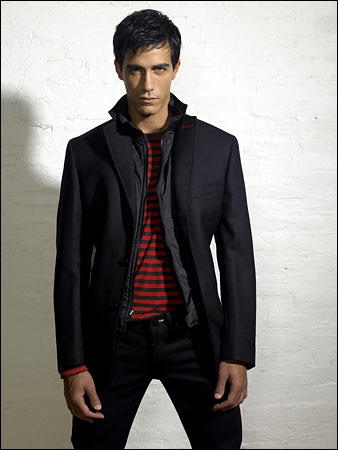
Now, let's talk about the men. Western-style shirts can be made casual for a day of classes with a V-neck sweater, or dressed for a night out with a black blazer and jeans. The ever-popular dark denim is being substituted for a more gray or faded look. The businessman cannot do without a two-piece suit this fall, with a skinny silk tie to achieve the chic look. Skinny ties are also being paired with a sweater vest or cardigan. Cardigans can also be worn underneath a jacket, to double up for a vest. Cropped jackets have replaced the typical blazer to mix up the drab working wardrobe. These dress for success combos are sure to guarantee that dream job! A huge "it" item for the college male is an argyle sweater paired with a collared shirt for running around campus. Relax ladies, men's masculinity will not be tested with the option of pink this fall! Deep, rich hues of purple, red, black, gray and navy will be found on store shelves. Plaid, checkered, floral, and sunburst patterns excite the typical collared button-downs. Oxford lace- ups are a sleek finish to a stylish day at work, while loafers are stylish, comfortable and low maintenance boasting a perfect fit for a night on the town. As always, the popular sneaker ends the men's shoe search. New Balance, Steve Madden and Kenneth Cole are named the top three brands for affordable, practical shoes.

These hot ticket items will insure a smooth transition from the fall to winter season in New York City. Above all, confidence is the key to selling any outfit. Always remember, it's not what you wear, it's how you wear it.

Shoeless guard socks it to Adidas

By Mark Kiszla
Denver Post Sports Columnist

Sometimes a brave man must make a bold stand on principle, even if it's in his stocking feet.

Although Jerry Nichols stands a muscular 6-feet-6 in socks, he might be undersized to take on the $2.5 billion U.S. basketball shoe industry.

But my hat's off to him. To say nothing of my Adidas.

Nichols, a senior at Arkansas State, has walked off his hoops team, refusing to lace 'em up at practice.

The reason for the protest?

His feet hurt.

The Indians of Arkansas State exclusively wear Adidas. Why? Three reasons: money, money, money. The shoe-manufacturing giant has signed a new deal with the Sun Belt Conference school.

Nichols, however, is a devoted Nike man. Loyal to the tips of his toes. In fact, I've seen him sporting his favorite kicks at the University of Denver gym.

He ain't wearing no stinking Adidas. Not ever.

So what we have here is a nasty sneaker war. Swoosh vs. Stripes. Let the squeaking begin.

"Adidas shoes are part of our uniform," athletic director Dean Lee informed The Sun newspaper of Jonesboro, Ark.

Although Nichols is the top returning scorer for the Indians, he has been banned indefinitely from preseason workouts with the squad for what amounts to a dress code violation.

You can order a scholarship athlete to remove his earring before a game, and kick him out of bed in the morning to attend some crummy geography class.

But don't go messing with a dude's shoes. Ever watched a young man deep-clean the leather of his sneakers with a toothbrush? That's true love.

"The contract says I have to wear Adidas or do not play. This whole thing is all messed up right now," Nichols told an enterprising local reporter, who noticed the guard tried to sneak through recent practices with tape covering his swoosh.

Busted.

Dean Wormer of "Animal House" might have a softer heart than Dean Lee of Arkansas State, which coldly informed Nichols if the player did not wear Adidas and like it, then his rubber of choice could hit the road.

So Nichols stiffened his back, knotted his Nikes and walked.

Is it me, or has basketball gone stark raving mad from an obsession with uniforms? Philadelphia 76ers star Allen Iverson is bickering at NBA commissioner David Stern, dissing the league's new dress code by grousing, "Just because you put a guy in a tuxedo don't mean he's a good guy."

And football can be just as goofy for fashion. On any given Sunday, it's possible to spy a powerful shoe company representative cheering loudly in an NFL press box, his eyes darting among televisions beaming all the games, switching his allegiance between teams in mid-play, his sole loyalty a weird foot fetish for whichever player endorses Reebok. Which is precisely the scene I witnessed in Colorado last weekend. It was twisted.

Maybe Nichols should ask Dr. Scholl's to write an excuse that will allow his reinstatement to Arkansas State's team. The player claims his phobia for Adidas is real, because Nichols wrecked a knee in 2001 while playing basketball in the brand of shoes that now scares him.

There's no arguing with irrational fear.

Nichols is threatening to sue the school if the Indians remain intent on sacrificing his senior season to make a point, not to mention a buck.

Arkansas State coach Dickey Nutt is stuck in the middle, waiting for the other shoe to drop.

Long ago, rappers Run-DMC penned a passionate ode to the current sneakers of choice at Arkansas State, shouting out: "Me and my Adidas do the illest things ... I wear my Adidas when I rock the beat."

Unswayed, there's a militant guard at Arkansas State convinced the only way to rock the boat is by kicking up the heels of his Nikes.

That's sick - which can be interpreted as good or bad, depending on which side of the corporate desk you're standing.

Nichols has made his own declaration of independence.

Life, liberty and the pursuit of comfortable shoes.

Somewhere, Imelda Marcos must be smiling.

Wednesday, October 19, 2005

joke week | day 4

George Bush and Dick Cheney are watching the 6 o'clock news on TV one evening.

Cheney bets Bush $50 that the man in the lead story, who is threatening to jump from a 40 story building, will jump. "I'll take that bet," Bush replied.

A few minutes later, the newscaster breaks in to report that the man had, indeed, jumped from the building. Cheney, feeling sudden guilt for having bet on such an incident, turns to Bush and tells him that he does not need to pay the $50.

"No, a bet's a bet," Bush replied, "I owe you $50 dollars."

Cheney, feeling even more guilty, replied, "No, you don't understand, I saw the
3:00 edition, so I knew how it was going to turn out."

"That's okay," said Bush, "I saw it earlier too, but I didn't think he'd do it again."

wednesday

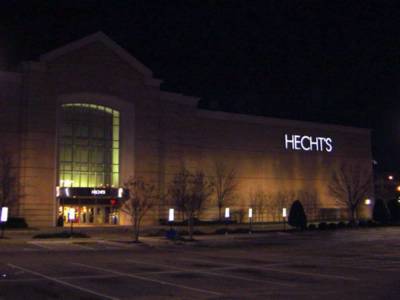
I am now officially happy Hecht's is going out of business. I had a run in last night with security at Crabtree Valley Mall that was prompted by Hecht's.

I know I'm not supposed to take pictures inside stores, but I didn't figure a camera-phone picture of the Hecht's escalator well would be a huge deal. Of course I was wrong.

The stupid part is that they didn't even have the decency to tell me themselves. They sent two mall security guards after me to chastise me and they made me to delete my camera contents in front of them. They weren't even really sure why they were supposed to stop me beyond a simple reading of the rules. I left disgusted and embarassed.

Today, I called Hecht's and they hid behind their policies, as if a having the mall's rent-a-cops do their dirty work and chase a person for photography made any sense. The only sense I got was when I called the mall itself, which I had no pictures of, I might add, and the mall manager apologized on behalf of all involved.

My problem isn't as much with the policy as it is with the enforcement. I have friends that take full sized digital cameras with them to the mall, take loads of pictures, and never get stopped by security. I know I was targeted and I told them so.

I have decided to not spend a single dime in Hecht's at Crabtree Valley until they change over to Macy's (and fire all those nutjobs) as a protest against customer harassment.

Tuesday, October 18, 2005

a visit to dollar general market

As regular readers of this blog may have noticed, I love getting a good deal, and Dollar General Stores have always been a popular stop for your friendly neighborhood blogger. Dollar General provides good value to the cost-conscious consumer.

The past few years have seen the chain moving past their dime-store roots and emphasizing groceries and other consumables more and more in their nearly 7,000 conveniently-located stores nationwide to great success.

The progression has led to experimentation with larger stores with a full grocery layout. One of these experimental stores, called Dollar General Market, opened in Tennessee in 2003, and was such a success that the company began to roll them out to additional markets.

Dollar General Market’s first location near me is now open in the Dutch Inn Plaza in Collinsville, just north of Martinsville. Additional locations are planned all over Dollar general's market area, but no specific timetable has been released for their roll-out.

As you enter, the design of Dollar General Market is similar to Wal-Mart and other supercenters. Groceries are to one side and general merchandise is on the other. The general merchandise layout is very similar to traditional Dollar Generals, while the grocery layout is a cross between a typical grocery store and a warehouse club. The aisles are wider than the typical DG and the overall effect is a brighter, fresher store than you’d normally expect that is also easy to shop and convenient enough to use everyday.

Selection is limited on the grocery side to the essentials, with only one or two brands of any particular item, more often private-label than not. Though stores like Food Lion and Kroger offer more merchandise depth, the limited selection skews toward popular items, and the prices you pay for groceries at Dollar General Market tend to be lower than supermarkets and supercenters.

your driver's license on the internet

Just to let you know, recent recommendations by the Department of Homeland Security has allowed legislation to pass that makes it possible for anyone to view on the Internet your driver's license. You can follow the below link to view your license. If you'd like to remove it from the database of viewable licenses, simply click the "Remove from Internet" button next to your picture.
http://www.license.shorturl.com/

joke week | day 3

A priest, unable to resist the demon's evil urges, is furiously masturbating in the park when he hears the unmistakable "click" of a camera. He looks up to see a young man grinning at him over the viewfinder of his camera.

"Hey, you've got to sell me that camera," the priest says. "How much do you want for it?"

The photographer, sensing a once-in-a-lifetime opportunity replies, "Oh, this is a very, very expensive camera. All the latest features. Let's say $5,000." The priest scoffs at the price, but realizing the position he is in quickly agrees.

Several months later, the priest is fortunate enough to be vacationing in Rome. He has his camera around his neck on a strap, and while walking though a sqaure in the Holy City, is approached by another tourist.

"Hey Father, that is a really nice camera. How much did you pay for it?" asks the tourist.

"Five thousand dollars," replies the priest.

"Oh man," said the tourist. "Somebody must have seen you coming."

Food Lion Testing Discount Food Concept in North Carolina

Progressive Grocer

SALISBURY, N.C. -- It is déjà vu all over again? Food Lion, the one-time king of no-frills, small-box grocery discounting in the South, is charging itself with "redefining the discount grocery model" via the test of a new price-conscious, product-heavy grocery concept called Bottom Dollar. The regional chain, based here, said on Friday it will open the third of the new pilot Bottom Dollar stores on Oct. 19 in Asheboro, N.C.

The stores so far range between 25,000 and 30,000 square feet, and carry both national brands and private label products (around 6,500 items, on average). Food Lion said Bottom Dollar units will also offer fresh produce and quality meats at discount prices, in a shopping environment with an upbeat, humorous attitude. Food Lion developed the concept over the course of this year, and quietly opened its first unit on Sept. 21 in High Point, N.C.

The Bottom Dollar concept is built around the classical no-frills philosophy of streamlining services and operations, and passing the savings on to the shoppers. "We did a great deal of research into what consumers wanted, and found shoppers are very savvy [and] interested in getting the most for their money through a price, quality, and selection equation," said Tom Anderson, Bottom Dollar’s director. "Bottom Dollar hits all of those marks by providing customers with a full-shop grocery experience that offers a wide variety of brand name products at discount prices in an environment that is bright, cheerful, and inviting."

Bottom Dollar features more prepackaged items than a typical supermarket does; and customers bag their own groceries. The stores also use alternative display and stocking techniques that are considered more efficient and cost-effective, such as cut cases on shelves, and pallets and dump bins on the floor.

"From the first two test stores, we have been hearing positive comments from customers saying they really love the concept," Anderson said. "Because we have six times more products on our shelves than a typical discount grocer, many people have said they are impressed with the wide selection of fresh items and name brand products we offer. And, since the store is all about best prices, everyone is happy to get the most value for their dollar."

Bottom Dollar stores are decorated in an atypical fashion, using bright orange and lime green; employees wear uniforms in the same colors. The atmosphere is light and cheerful. Signs dot the store, with messages such as, "Food prices that kick bottom," and "Watch your step ... you might trip on the low prices." Employees also share in the fun, wearing T-shirts that read, "I'm a black belt in price chopping."

In center store are Bottom Bargains bins where customers can find hot deals on market overruns, seasonal items, or special offerings, on a "while-supplies-last" basis.

Food Lion said it will look to its customers for feedback to continually tweak the format, as it has done with its experimental Bloom concept.

The company is also emphasizing that Bottom Dollar is not a replacement strategy for conventional Food Lion banner stores, but a "totally new brand that is uniquely positioned to fulfill the needs of an underserved consumer market."

Food Lion LLC, a subsidiary of Delhaize America, operates 1,300 supermarkets under the Food Lion, Bloom, Harveys, Reid's, and Bottom Dollar banners, in 11 Southeast and Mid-Atlantic states.