Monday, August 14, 2006

Macy's makes it obvious

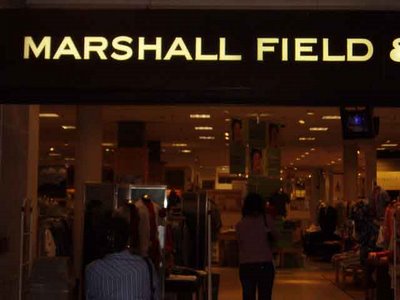
As Marshall Field's signs fall, Federated about to find out if shoppers' threats, anger real

Sandra Jones
Chicago Tribune

Macy's red star is rising in Chicago.

The department store chain's red-and-black logo is going up on Marshall Field's stores around town. Red Macy's credit cards are in the mail. Macy's merchandise is arriving on the floors. And the window displays on State Street are draped in Macy's red.

It's been almost a year since Federated Department Stores Inc. unveiled plans to drop Marshall Field's in favor of the Macy's moniker. On Sept. 9, a Saturday, the wait will be over, and the real test will begin: Will shoppers upset about losing the Marshall Field's name follow through on threats to boycott Macy's?

If conversions in other markets are any indication, wooing shoppers under the Macy's banner isn't going to be easy.

Scarborough Research found that in four out of five markets where Macy's already replaced the name of the hometown department store, shoppers surveyed say they are visiting Macy's less frequently than when the store operated under its original name.

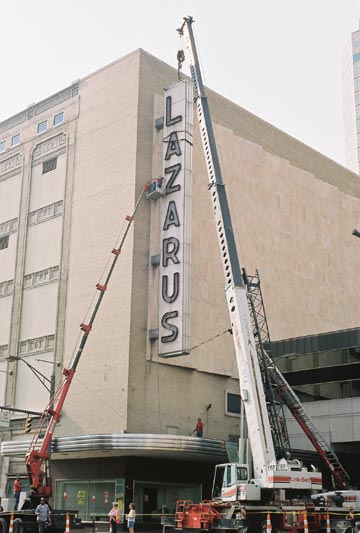
Scarborough, a New York-based market research firm that measures consumer shopping patterns, tracked shoppers at Rich's in Atlanta, Goldsmiths in Memphis, Bon-Marche in Seattle, Lazarus in Columbus and Burdines in Miami as each store's name changed--first hyphenated to include the Macy's name in August 2003 and then converted to solely Macy's in March 2005.

When asked in annual surveys between 2002 and 2006 where they had shopped in the past three months, the number of consumers visiting Macy's fell in all of the markets surveyed except Miami, where Macy's was already a familiar name.

"There are certain brands that create a great deal of customer loyalty," said Jay McIntosh, director of consumer products for the Americas at New York-based Ernst & Young LLP's Chicago office. "Anyone who changes the names of one of those stores takes significant risks."

To be sure, consumers are renowned for saying one thing and doing another. And the appeal of department stores as shopping destinations has been waning for years, overshadowed by the ascent of specialty stores and big-box discount chains.

But the survey results signal that Federated could face an uphill road in Chicago where the Field's names is entrenched and shoppers have been vocal about their displeasure.

One critic is James McKay, creator of FieldsFansChicago.org, a blog that has received 600 posts in the past month from people upset with the name change. McKay is organizing a demonstration on Sept. 9, the day Macy's officially eclipses Field's.

More than 250 people have expressed support for the demonstration, he said, and his cohorts have already mailed about 6,000 "Keep It Marshall Field's" lapel stickers to Field's fans.

"The big protest has to do with the fact that we're losing part of Chicago," said McKay. "It is in support of Field's, but it's a much bigger thing. We're losing a piece of Chicago culture by it becoming Macy's. We're getting homogenized."

Ellen McGury Stone said she has already stopped shopping at Fields and destroyed her credit card. "I've lived in Chicago all of my life. My parents and my grandparents all shopped at Marshall Field's. It means Chicago to us. It's not just that they're changing the name. It's that they're changing it to the name of a store that means New York. It's a double whammy."

Chicago's feelings are certainly known to Federated's top brass. Karen Hoguet, the retailer's chief financial officer, addressed the issue last week in a conference call with analysts. "We're fairly optimistic that when the Chicago customer, which is the only one of the markets where we've had that backlash, we're hoping that when they see we're keeping the best of Field's but enhancing that greatly with all that Macy's offers, that the customer will be pleased."

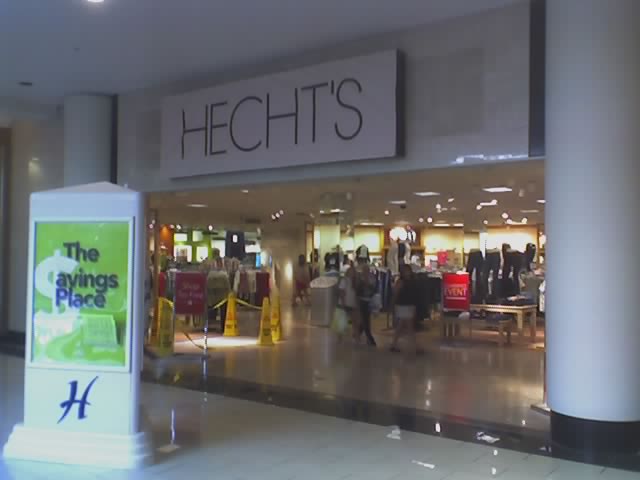
Federated acquired Field's last year as part of its $11 billion purchase of May Department Stores Co. On Sept. 9, in one fell swoop, the Macy's name will appear on more than 400 regional department stores included in the deal, doubling the number of Macy's nameplates nationally and wiping out almost a dozen regional names, including Famous-Barr, Filene's, Hecht's and Kaufmann's.

Federated Chairman and CEO Terry Lundgren has repeatedly said Field's needs a makeover, pointing to years of declining sales. The New York-based firm is giving extra attention to Chicago, especially the high-profile Field's State Street flagship, creating a display candy kitchen for making Frango mints and building an express elevator to the famed 28 Shop, where well-heeled Chicagoans purchase designer clothing.

"One of the central issues is how to take advantage of a national scale and stay relevant to the local customer," Lundgren told a July luncheon gathering of North Michigan Avenue retailers. "We're trying to be locally responsible within a national umbrella."

Lundgren is betting he can reinvent the U.S. department store by creating one national brand, streamlining advertising and beefing up high-margin house brands such as INC and Alfani that shoppers can't find elsewhere.

Federated's latest results seem to support Lundgren's view. Same-store sales, a key measure of a retailer's health, rose 1.3 percent last year, and increased 2.2 percent in the first half of 2006, the company reported. Florida, former home of Burdines, and the Pacific Northwest, former home of Bon-Marche, were "two of the best performing divisions," noted spokesman Jim Sluzewski, who discounted Scarborough Research's findings.

With 61 stores ringing up annual sales estimated between $2 billion and $2.5 billion, Field's will account for less than 10 percent of Federated's $23 billion department store empire. Federated also owns 36 Bloomingdale's stores.

Standard & Poor's analyst Jason Asaeda said he considers changing the name a lesser risk than the threat of Macy's losing ground nationwide to J.C. Penney Co., Kohl's Corp. and Nordstrom Inc.

If the company stumbles in executing the transformation, the analyst said, that could lead to discounts and, in turn, hurt profit margins.

Penneys CEO Myron Ullman told investors last week that Penneys has already started to pick up sales from customers disenchanted with Macy's conversions.

Federated has at least won over Anthony Qaiyum, owner of Chicago-based Merz Apothecary. He operates a leased shop inside Field's State Street store and at first wasn't keen on losing Field's name.

Qaiyum believes the store was treated like an "unwanted stepchild" under previous owners Target Corp. and May Co.

"I do feel with Federated someone is finally paying attention and trying to make it a great department store. They're very serious about this in a way I haven't seen anyone before."

Shoppers tend to drop off as names disappear

Sandra Jones
Chicago Tribune

Scarborough Research tracked shoppers at Rich's in Atlanta, Goldsmiths in Memphis, Bon-Marche in Seattle, Lazarus in Columbus, Ohio, and Burdines in Miami as each store's name changed--first hyphenated to include the Macy's name in August 2003 and then converted to solely Macy's in March 2005.

SEATTLE
A marked decline in shoppers occurred there, where Bon-Marche has been around since 1890. Some 41 percent of consumers said they shopped at Macy's in 2006, down 10 percentage points from 51 percent in 2002 when it was simply Bon-Marche.

COLUMBUS, OHIO
In the same time frame, in the hometown of Lazarus, the percentage of shoppers frequenting Macy's fell 9 points to 30 percent.

MEMPHIS
In Goldsmith's base town, the percentage fell 8 points to 35 percent as Macy's put its nameplate on the local stores.

GREATER ATLANTA
Macy's has had a presence since the 1980s, and Rich's has been a fixture for more than a century. Some 36 percent of consumers said they shopped at Macy's in 2006 compared with 39 percent who shopped at Rich's-Macy's in 2004. In 2002, when both stores operated side by side, 46 percent of shoppers said they frequented either Rich's or Macy's. When asked if they specifically visited one or the other, 41 percent said they shopped at Rich's and 28 percent said they shopped at Macy's.

MIAMI
At Burdines, another market where Macy's has been around for two decades, the renaming appeared to have little effect. Of those shoppers surveyed, 47 percent said they shopped at Macy's in 2006, unchanged from the 47 percent in 2004 that shopped at Burdines-Macy's. In 2002, 57 percent surveyed shopped at either Burdines or Macy's. When asked to break it out, 51 percent of shoppers frequented Burdines and 24 percent visited Macy's.

The sample size of the surveys ranged from 2,000 to 5,000. The estimated margin of error is no more than 3 percentage points.

Is that me or what :-)

Sunday, August 13, 2006

picture picture

So what have I been up to lately? A lot of graphics.

Both days of my weekend involved pictures. Saturday, I took a bunch of pictures at a class reunion, Sunday; I received a lot of pictures from a friend for LiveMalls. Editing, printing, posting pictures. I’m about graphic-ed out.

Talk soon.

The Ivey's Archive

I am pleased to present, via LiveMalls, The Ivey's Archive, a tribute to the legendary former Charlotte, North Carolina-based department store chain, J. B. Ivey & Company.

The Ivey's Archive would not be possible without the generous contributions of Patrick Richardson, who gave LiveMalls exclusive access to his collection of Ivey's photos and memorabilia. I thank Pat for his help to provide the internet with a collection of all things Ivey’s. Please check the archive page regularly, as I will be adding more memorabilia as I receive it.

A final note: this archive is neither sponsored nor endorsed by J.B. Ivey Co., Dillard Department Stores, or its subsidiaries. I do hope that they are honored and not offended, because it's all done out of love for their company.

Visit The Ivey's Archive

The Belk Archive

I am pleased to present, via LiveMalls, The Belk Archive, a tribute to America's largest family-owned department store company, Belk, Inc.

The first LiveMalls post was a Belk department store, and pictures of the company's stores have helped form the backbone of LiveMalls.

The Belk Archive would not be possible without the generous contributions of Patrick Richardson, who gave LiveMalls exclusive access to his extensive collection of Belk photos and memorabilia. I thank Pat for his help to provide the internet with a unsurpassed collection of all things Belk. Please check the archive page regularly, as I will be adding more memorabilia as I receive it.

A final note: this archive is neither sponsored nor endorsed by Belk, Inc. or its subsidiaries. I do hope that they are honored and not offended, because it's all done out of love for their company.

Visit The Belk Archive

The Puma Spy

steve's blog's resident internationally renowned sneakerographer, Al Cabino, created the world's first ever spy sneaker, the Puma Spy.

There's a mini preview in the Espionage issue of Lemon Magazine, available at Barnes & Noble, Borders, Virgin Megastore, Tower Records and other fine newstands nationwide.

I only wish he’d sent a picture of the sneaker, too! :-)

A Crack at Making Jeans That Stay Up

Matthew C. Wright
The Washington Post

Dickies may be retooling its work pants to fight slippage, but no cracks, please. Williamson-Dickie, the Fort Worth-based clothing maker, recently announced an updated version of its classic jeans, due out this spring. But one new feature is attracting attention the company would rather avoid.

The new design will offer a lower waist and a roomier seat -- designed, in part, to keep the jeans from slipping down the hips when wearers bend over or crouch down, the Fort Worth Star-Telegram reported last week. The change would help eliminate the appearance of backside cleavage, a phenomenon commonly known as "plumber's crack."

Company officials have since been declining interviews with reporters who want to discuss this particular feature. Dickies doesn't want to disrespect hardworking plumbers or make jokes at their expense, said Kristen Kauffman, a company spokeswoman.

Officials said there were several reasons for the new design, principally to produce a jean that could be worn casually and at work. Still, Jon Ragsdale, Dickies vice president of marketing, acknowledged to the Fort Worth Star-Telegram, "If there's anything we can do to beautify America, we're in favor of doing it."

Friday, August 11, 2006

the reason why

This is the response to a comment I recently recieved:

Q: Steven, ... where did you get this love of malls? I have never seen somebody have such a fascination of malls before.

A: I guess it started when I was very small, because I don’t remember a time that I didn’t love malls, retail trade, and shopping. The whole thing solidified into what it is now when I discovered the internet and realized that there were people a lot like me out there.

If I can get a little self-indulgent, my particular obsession is a little unique because most mall geeks don’t like to shop and most ‘power-shoppers’ aren’t interested in retail history. I think they’re intrinsically linked and you can’t really have one without the other. I try to cover both in my blogs.

Thursday, August 10, 2006

An Impressionable Age

By RUTH LA FERLA

YOU would not accuse Tessa Sprauer of false modesty, or missing out on an opportunity to shine. “My mom,’’ she confided with a canny grin, “says I’m always reaching for a photo op.’’

Ms. Sprauer, 13, who will enter the ninth grade this fall, is highly particular about the looks that suit her, and those she deems spotlight worthy. “I’m thinking about something maybe not like so casual,’’ she said as she eyed a selection of dresses last week at Forever 21 in the Palisades Center mall in West Nyack, N.Y. “I never wear anything literally like basic,’’ she said. “Even your jeans have to be great-fitting and stylish, not just the average jeans.’’

Ms. Sprauer represents a growing number of teenagers who plan to ditch their rumpled, randomly mingled T-shirts, cargo pants and jeans this fall for a more thoughtfully orchestrated, if seemingly unstudied, back-to-school wardrobe. Many will be zeroing in on fashions with a frankly mature edge. Tunic tops, Empire dresses, argyle sweaters, mixed prints and skinny jeans — chances are that if they spied those looks on the runways or in the pages of Us Weekly or InStyle, they will be wearing look-alike versions this fall.

Savvier than their predecessors about trends, brand names and quality — and hipper about the image they hope to project — many teenagers are unabashedly style-struck. Accordingly, merchants and trend watchers predict that many teenagers will be investing sums, which previously have gone to electronic gadgets, on wardrobes that are meant to be the envy of their peers.

An intensifying infatuation with Hollywood and runway-inspired designs is pointing them to sophisticated youth-oriented brands like Marc by Marc Jacobs, Paul & Joe for Target, See by Chloé and J. Crew. According to retail analysts, that romance is expected to result in an increase of 5 to 15 percent in sales of back-to-school apparel. Indeed, clothing sales, which have been flat in recent years, are ahead perceptibly. Neither the rising price of gasoline nor an extended heat wave seem to have kept teenagers and their parents from the malls.

“I like getting more dressed up this year,’’ said Ally Zingarelli, 13. She is an eighth grader in Old Tappan, N.J., who also likes to dress competitively. “Everyone has to have accessories,’’ she said. “Big necklaces, clunky jewelry and longer shirts with leggings.

“Before, you’d wear a polo shirts and jeans,’’ she added. “Now it’s a polo shirt and jeans — and the right shoes.’’

Aileen McCluskey, 16, a junior at Culver Academy in Culver, Ind., wears a prep school uniform, but she tweaks it with headbands, big earrings and bangles, long necklaces and a profusion of clips and bows. “In junior high it was a lot of pajama pants and sweatshirts,’’ Ms. McCluskey said. “Lately we’re going upscale a bit more.’’

Marshal Cohen, the chief analyst at NPD Group, the market research firm, has taken note of the trend.

Today boys and girls “have got style in their minds,” Mr. Cohen said. “All of a sudden, dressing up is an important component of their lives.’’ Large numbers, he added, are forsaking “raggy, utilitarian clothing for statement pieces.

“This year, they are using clothing rather than gadgets to say, ‘We have style.’ ’’

Researchers say many teenagers are emulating celebrity idols like Mischa Barton, Lindsay Lohan, Hilary Duff and Chris Martin (the lead singer of Coldplay), some scarcely out of their teens themselves, to cultivate an impression of maturity. “Kids are going more covered up and more sophisticated, and the girls are more traditionally feminine,’’ said Rob Callender, the trends director at Teen Research Unlimited. “It’s a question of trying to look more adult. Teenagers today are 12 going on 25.’’

Paradoxically, their desire to look older is stoked in part by designer fashions — baby-doll dresses, shrunken blazers, schoolgirl jumpers and the like — that have an emphatically youthful demeanor. Often on the runways, “there is no real delineation of what is ‘child’ and what is ‘adult’ anymore,’’ said Gloria Baume, the fashion market director of Teen Vogue.

There are practical reasons, too, why fashion has become seductive to both teenagers and their parents. “Many of them rationalize that it’s less expensive to buy clothes than it is to buy a new computer, calculator or phone,’’ said Robert Passikoff the president of Brand Keys, a market research company. “And they haven’t bought clothes for a while, so there is a real market need.’’ Brand Keys is forecasting a 15 percent increase in back-to-school apparel sales this year.

Among the beneficiaries of a heightened interest in style are stores like Dillard’s, Target, J. C. Penney, Bebe and American Eagle Outfitters, which cater to teenagers. Some posted July gains in a range of 2 percent to 10 percent over the same period last year.

American Eagle Outfitters’ back-to-school fashion mix, in particular its successful interpretation of longer, more fitted shapes for boys and girls, helped boost sales by 7 percent last month, said Susan McGalla, the company’s president. At Abercrombie & Fitch a new emphasis on quality — higher thread counts, softer fabrics, more subtle washes — has resulted in a price increase of 25 percent in the last two years. “But the customer gets it and is willing to pay up for it,’’ said Tom Lennox, a company spokesman.

At stores like Abercrombie as well as Forever 21, Bebe and Intermix, young women are investing in an archetypically girl-y look, buying lavishly detailed tank tops, dresses and skirts with a grown-up flair, playing down their formality with ballet flats or heavy engineer boots and leggings. Boys are gravitating toward dress shirts and slimmer pants and the occasional blazer for nights out.

Their younger siblings prefer the slimmed-down, hip-slung premium jeans they see on their favorite rock stars. “We’re seeing a high-school-age person looking for very specific fashion items, interested to replicate the looks they see on some celebrities,’’ said Gregg Andrews, the fashion director at Nordstrom.

Boys, Mr. Andrews added pointedly, are: “more concerned about their appearance than ever before. They want to look nonchalant but in fact are quite studied. It might look like ‘Oh, I just picked this up off my bedroom floor,’ but the look is actually very calculated.’’

At Urban Kidz in Scottsdale, Ariz., designer jeans, fitted shirts, puka necklaces and coin chokers are among the most sought-after items for boys as young as 12 or 13. Lila Metcalf, the owner, says the average family is spending about $500 at the store on back-to-school items for each child this year. “And an increasing number of young men are putting that money toward clothing,’’ she said.

Teenagers at every economic level are displaying a new fastidiousness. Erika Sprauer, the mother of Tessa, teaches at a middle school in the East Ramapo, N.Y., and has seen a preoccupation with dress heat up among her charges. Few of her students are well-off, “but they spend a lot of money on their clothes,” Erika Sprauer said. “They match the colors of their shoes to their outfits, and they walk so they don’t crease their sneakers. Their clothes always look brand-new.’’

Well-off or not, teenagers know precisely what looks and effects they are after, having gleaned their fashion intelligence from an ever widening variety of sources. “We used to go to a newsstand and buy a stack of magazines,’’ Mr. Andrews of Nordstrom said. “Now the Internet allows kids to focus on fashion. They can spend a half hour at a time studying the way Pink dresses.’’

Stefani Greenfield, an owner of the Scoop chain, which caters to affluent communities in Chicago, Manhattan, Miami and Greenwich, Conn., said: “They go on Style.com. They know what’s hot, what’s in, what’s out. They know what Prada is.

“Juicy Couture to them is not high-end. And what they are going to wear back to school is a very big deal.’’

That news leaves some parents less than thrilled. “It’s not O.K. if kids see something in a magazine and emulate it outright,’’ said Karen DiDonato, Ms. Zingarelli’s mother. Still, she conceded, a teenager fussing over what to wear is “better than if your child simply rolls out of bed and pulls on her sweatshirt and jeans.’’

you helped make it happen!

Thanks in part to support from the readers of steve's blog, the Nike McFly commercial cracked the AOL Comedy Top 11. It is # 8, according to Al Cabino

Did you miss it the first time? Check it out here:

Nike McFly commercial

Bombshell Model Search

IGIGI, Bombshell Magazine and Brand Talent Agency team up to find America’s next plus-size model.

My friend Ozlem Arpaci of IGIGI recently infomed me of a partnership between the plus-sized fashion label, Bombshell™ Magazine and Brand Model and Talent Agency for the Bombshell Model Search 2007 scheduled to run August 15, 2006 through October 21, 2006.

So, what does the lucky winner get? A plethora of prizes including a one year modeling contract with Brand Model and Talent Management and the oppurtunity to be the cover model for Bombshell Magazine's Launch Issue (May/June 2007) . Finalists will also recieve valuable prizes and a chance to model for Bombshell at a 3-day finalist photo shoot in Los Angeles with professional hair, make-up and styling.

Bombshell Magazine, www.bombshellmagazine.com, is an online fashion and lifestyle magazine that caters to plus-size women 14 and up. Founded in 2003 by Candace Werginz and Heather Benjamin, the magazine has successfully positioned itself within the plus-size fashion industry as a leader and advocate for plus-size women. The model search marks the official announcement of Bombshell in print scheduled to launch in May/June 2007.

For more information check out www.curvychick.com, or contact Candace at Candace@curvychick.com

Federated Banking on Making Assimilation Work

NEW YORK (AFX) - Federated is betting it can change how shoppers feel about department stores as it absorbs former May Co. shops and turns its Macy's chain into a national brand with more than 800 stores.

Federated Department Stores Inc., now commanding about 25 percent of the U.S. department store business, based on figures from the U.S. Census Bureau, is using its increased clout to develop more exclusive merchandise and attract younger shoppers with new features such as robotic vending machines that sell iPods.

Macy's first national TV and print advertising campaign will break Sept. 9, when more than 400 stores acquired when it bought May Department Stores Co. a year ago -- including such homegrown names as Hecht's, Foley's, Filene's and Marshall Field's -- are officially converted to Macy's.

So far, the Federated-May combination is on track. Federated, which also operates 40 Bloomingdale's stores, reported on Wednesday better-than expected second-quarter results and raised its second-half profit forecast. Shares rose more than 3 percent, or $1.07, to $34.86, in afternoon trading on the New York Stock Exchange.

Still, the $22 billion behemoth retailer faces a tough battle on price from discounters including Target Corp. and on customer service from specialty stores such as Chico's FAS Inc. as it seeks to hold on to former May customers and attract new ones.

"The big challenge is to hold on to the local loyalty factor while changing the name and changing the format to achieve success nationwide," said Janet Hoffman, managing partner of the North American retail division of Accenture, a consulting firm.

"It's the lack of pizazz that has hurt department stores," Hoffman noted. Yet, she added, the comfort of having a local store has enabled "department stores to hang on to a thread."

Terry Lundgren, CEO, president and chairman of Federated, says he's unfazed by the challenge.

"Macy's will be the largest seller of all the important brands," said Lundgren, in a recent interview. "These are affordable luxury. This is not Gucci or Prada. And we are going to be catering to a large cross section of the American population."

Lundgren emphasized that Federated is not adopting a cookie-cutter merchandising approach. Federated's seven regional headquarters will do the buying and planning regionally, but there will be some differences from store to store, Lundgren said.

For example, there will be upgraded merchandise at the Foley's in the Northpark Mall in Dallas, and Filene's site in Chestnut Hill, Mass. -- places with demographics that can support higher-end products. Meanwhile, the Hecht's site in Marlow Heights, Md., and a Filene's location in Meridan, Conn. will continue to have a moderate-price focus, though more fashionable merchandise.

Jackie Bogue, a customer at the Famous-Barr store in the Galleria in St. Louis, Mo., said she drives more than 70 miles from her home in Bowling Green, Mo., to shop at the store, which will have a more upscale focus as a Macy's.

"I was buying the higher-end things at Famous-Barr, so it wouldn't bother me," she said.

Federated's sales had been sluggish at about $15.5 billion for the four years before the May acquisition, which boosted its total revenue to $22.39 billion for the last fiscal year. Meanwhile, May had lagged behind competitors like Federated because it failed to come up with compelling merchandise and instead resorted to aggressive price cutting.

Through July, Federated has averaged 2.4 percent in same-store sales growth since the fiscal year began in February. Same-store sales are considered a key barometer of a retailer's health.

But Federated said Wednesday it expects same-store sales, or sales at stores opened at least a year, to rise between 3 percent and 5 percent in the last two quarters of 2006, up from an earlier forecast of 2 percent to 4 percent.

In a conference call with analysts, Karen Hoguet, Federated's chief financial officer, said the company had hoped for slightly higher sales at the former May stores, whose business has lagged because of all the disruptions, but their performance was within expectations.

For the quarter ended July 29, Federated reported net income of $317 million, or 57 cents per share, versus a prior-year profit of $148 million, or 42 cents per share. Revenue nearly doubled to roughly $6 billion from $3.62 billion in the year-earlier period. Excluding costs of the May integration and other adjustments, earnings were 49 cents per share, beating a 44 cent estimate among analysts polled by Thomson Financial.

Federated forecast third-quarter earnings of 15 to 20 cents a share and $1.40 to $1.50 per share for the fourth quarter, up from a previous view of $1.50 to $1.62 per share for the combined periods

Federated is capitalizing on its increased clout with vendors to strike exclusive partnerships with fashion brands, a key strategy to set itself apart from rivals. Macy's will also be expanding its store label business, key names such as INC and Charter Club, which have grown three times faster than branded products over the last four years.

Among the new Macy's exclusives is a new line from designer Elie Tahari called T Tahari, coming this fall. Starting in February, Macy's will have exclusive rights to sell O Oscar, an affordable collection from Oscar de la Renta.

A big thrust in Macy's home area will be an exclusive Martha Stewart collection, to make its debut for fall 2007. Lundgren conceived the idea of having up to 3,000-square-foot house environments, developed by KB Homes, at Macy's Herald Square flagship in New York, Macy's Union Square store in San Francisco, and the Marshall Field's State Street location in Chicago.

Lundgren acknowledged fierce competition from the likes of Target and J.C. Penney, which are offering trendier fashions at lower prices, but he believes Federated's store experience will give it an edge.

To attract younger shoppers, Macy's is counting on self-serve robotic vending machines which will offer iPods and eventually other popular consumer electronics. The displays are being rolled out at 180 Macy's stores this fall. Macy's year-old shopping Web site aimed at teens called thisit.com will also have more power because it can be marketed across Macy's stores on a national basis.

In recent years, Federated has been enlarging fitting rooms and adding television and seating areas. From the 2006 to 2008, Federated said it plans to spend as much as $4 billion in store improvements on the former May Co. locations.

Lundgren also has had to deal with some emotional fallout among some shoppers from the conversion of 11 former May nameplates, ending an era of having homegrown department stores in such major cities as Washington D.C. and Chicago. The worst came from Chicago, where Marshall Field's flagship has been a century-old fixture, though resistance has subsided, Lundgren said.

Paul Arola of Park Forest, Ill., a loyal Marshall Field's customer for 40 years, doesn't plan to stop, though he views the name change as unfortunate.

"I'll always think of it as Marshall Field's," Arola said.

"I know that keeping the name for the namesake is not the right answer," Lundgren said. "The business was not performing for years."

Tuesday, August 08, 2006

Macy's instituting new dress code for employees

Pittsburgh Business Times

A new dress code at Macy's that requires workers to wear black is making some employees see red.

The requirement, which is being rolled out nationally and will take effect Aug. 11, requires male and female employees to wear all-black. Exceptions are made for men's shirts and ties and women's shoes and sleeveless tops provided the tops are covered by a black jacket or sweater.

Pinstripe suits are allowed, as long as the stripe is thin and only one color.

"Depending on if you work in juniors or young men, it's a little more relaxed," said Orlando Veras, a spokesman at Macy's East headquarters in New York City, which covers about 174 stores. "Instead of wearing dress slacks they can wear black denim."

The new dress code is an attempt by the retailer to make it easier for customers to identify sales associates, Veras said. Macy's has always required employees to dress professionally, so the only change is the color.

"It looks amazing," Veras said. "I just came back from a new store opening in Philadelphia. There's a sea of people and you can tell who our associates are from far away."

But the rule is upsetting to some employees who have to spend money on a new wardrobe, even with the special employee-only discounts that have been offered on black clothes.

One national retail analyst said the dress code could make it difficult for Macy's to hire part-time temporary help during the Christmas shopping season because of the added expense.

"They may get a bit of a sales person revolution if they're not careful," said Britt Beemer of America's Research Group.

Bloomingdale's instituted the same policy a year ago, Beemer said, and some employees there called it a "major hardship."

Monday, August 07, 2006

my thoughts (kinda dull)

Hello again. The passive blogging continues.

In contrast to my usual (these days) dead feeling this time of night, I’m actually feeling pretty good, despite the fact that I have a cold. The ups and downs of the temperature gauge are to blame. It’s hot as hell outside, and then I go into cold air conditioning. It’s the perfect storm for the sniffles, and do I ever have them.

Work has been okay lately. Not great, but okay. I can’t go into a lot of detail about what’s going on because some of it is fairly sensitive municipal information, and I never know who’s reading this blog, so I’ll say that every day is an adventure, filled with drama and oddities that could fill a book.

We had a sales tax holiday this weekend in Virginia, and also in neighboring states. I ended up at two malls and a Wal-Mart and all of them were packed with bargain hunters. Thing is, there weren’t that many bargains. The better discounts were generally last week and the sales tax savings was negligible in Virginia, plus most of the stuff I bought was not included in the holiday. It was a wash.

I’m kind of upset about the Macy-fying of Hecht’s Hanes Mall. I won’t bore you with the entire saga of how this store was downgraded when it changed from Thalhimers to Hecht’s back in the day, but I will say that Federated is ripping what soul that’s left out of the place. The latest casualties are the upstairs showcases at the mall entrance and the Polo department, both of which have been stripped to practically nothing aesthetically. Combine this with the walling off of part of the third floor’s failed mattress and rug department, and you’ve got a formerly good store being rendered bland and boring.

One of these days I’m going to get around to cleaning up my inbox. As always, I have the best friends in the world and they’re always writing to see how I am, but I don’t have much time to write back. I’m constantly working on that, but sometimes it’s still slower than I like.

Until next time...

Sunday, August 06, 2006

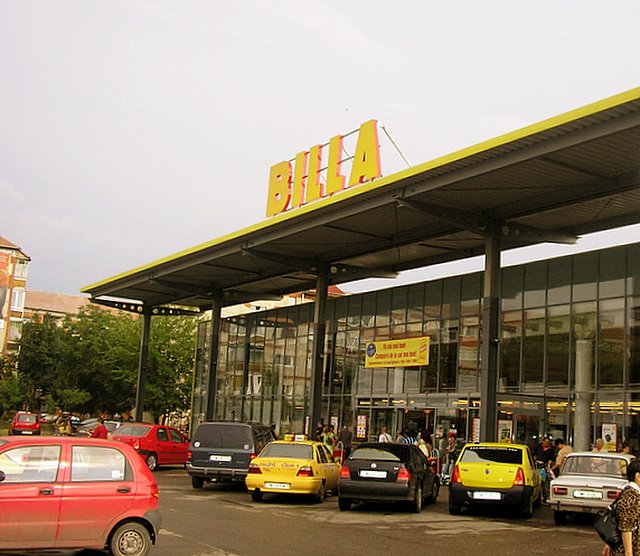
Billa Supermarket in Romania


Some great photos of a Billa supermarket in Romania. Frequent steve's blog contributor Todd Long took these pictures and had this to say:

(top) This is the store.... looks a bit like a 60's airport terminal. Everyone shops here ZILNIC (daily) as their bags say. Billa is Austrian and were the first to arrive after communism and are ubiquitous as far as groceries here...

(bottom) This is Billa Supermarket's outdoor sign at night.... it a humongous shopping bag. if you were here, you'd get it. A "Billa bag" is the symbol of everything!

This si just some of what you'll find at Todd's insightful and always interesting blog Road to Romania. I enjoy reading it, and I know you will, too.

I Wore Shorts to Work, and They All Laughed

By ERIC WILSON

NEW YORK -- IN the late 19th century, Oscar Wilde was ridiculed for his views on fashion, specifically that men should follow the enlightened example of women in the Victorian era: lighter fabrics, brighter colors and generally more comfortable clothes. A parody of Wilde in Punch caricatured a man wearing shorts as effeminate and wimpy.

At the same time, English literary journals also began to suggest a less regimented dress code for men than the prevailing dark suit, and by the 1920’s, the idea had become a serious movement with the formation of the Men’s Dress Reform Party. None of its ideas got anywhere. Valerie Steele, the director of the Museum at the Fashion Institute of Technology, said such movements were considered so leftist, associated with utopianism or vegetarianism, “that men thought they would be moving to some ideal of nonfashion or total nudity.”

Last week during the heat wave, Mayor Michael R. Bloomberg suggested New Yorkers wear light-colored, loose-fitting clothing, though he continued showing up to work in a dark suit. His remarks drew the same tone of derision as Wilde suffered. Gawker.com posted an old photo of Mr. Bloomberg in shorts with readers’ comments like “What can brown do for you?” and “Mikey is escorted to his first day of school by gigantic lesbian bodyguards.”

Nevertheless, I, neither vegetarian nor nudist, wore shorts to work on Thursday. It was partly a show of civic-mindedness, but also a way of redressing the disparity between men, who wear a stifling suit and tie to the office in summer, and women, who breeze by in ventilated cotton eyelet skirts with loose silk camisoles or the bubble silhouette dress of the season that barely seems to graze the body.

And clearly I was not alone in noticing this double standard. The designer Cynthia Rowley had been reading a report from The Associated Press that day that advised women to prepare for the heat wave by wearing dresses, but offered no guidance for men. “I should go down to Wall Street and set up a little booth where I could cut off their pants legs and hem them into shorts,” she said. “But they would have to throw away their socks.” There was a short-lived shorts moment in the 1950’s, abbreviated for that reason.

It is not so easy for men to put together a cool shorts outfit as designers would suggest: shorts suits were the big message for spring men’s wear shown in Milan by designers like Miuccia Prada and Raf Simons for Jil Sander. You can imagine there are men’s magazine articles in the works about the effects of global warming on fashion.

I wore a dressy pair of low-waisted, narrow knee-length navy twill shorts from Joseph, a white dress shirt, brown loafers (no socks) and a tightly tailored gray jacket from Thom Browne, another designer who put shorts suits in his fall collection. I found myself cooler, strangely confident and, because of that, walking more gaily than usual.

But on the street, people stared. Some took pictures.

“What country are you from?” asked Joe Gianotti, an insurance executive, who was eating lunch with Jim Silverberg, a manager at the New York Public Library, in Bryant Park, where the temperature approached 100 degrees. Mr. Silverberg wore long sleeves and a tie. Mr. Gianotti had taken his tie off and described himself as something unprintable for wearing it at all.

“It is unfair,” he said. “Women wear flip-flops and miniskirts, and some of them even have their stomachs out. But if I wore shorts, they’d make a big deal of it in the office. You look around, and all the men have long pants on, so it’s obvious that you have to wear them. We’re not in Bermuda.”

“Shorts are against library policy,” Mr. Silverberg added. “Though women tend to get away with them.”

But why does this have to be so? On Wall Street, I was surprised to discover that with the exception of two suits, and the many tourists, the male dress code had already adjusted to the heat. And yet everyone was dressed exactly alike: instead of a suit it was a dress shirt, either white or cobalt with the top button open, and trousers. The uniformity was startling, but apparently comforting as well. Two men — wearing clunky lace-up shoes, thick belts and sunglasses meant for extreme surfing — were pointing at my shorts and laughing.

The philosopher J C Flügel explained a similar reaction to dress reformers in the 1930’s as rooted in “man’s intense fear of appearing different from his fellows” and also fear of association with tendencies of narcissism and homosexuality. I went ahead walking more gaily.

Still, it struck me as defeatist that Mayor Bloomberg would not take his own advice and lighten up. “There are red lines that men won’t cross,” said Michael Anton, a former speechwriter for President Bush who now works for Rupert Murdoch at News Corp. Under the pseudonym Nicholas Antongiavanni, Mr. Anton wrote “The Suit,” a book on corporate style.

“Shorts, for the immediate future, are a step too far,” he said. “If we ended up dressing identically for work and for leisure pursuits, men would feel intuitively that something has been lost.”

Comfort, for one thing. But on Friday I wore pants.

Saturday, August 05, 2006

Belk-Parisian deal opens top real estate

Store vacancies may interest other chains

MICHAEL TOMBERLIN
The Birmingham News


BIRMINGHAM, Ala. -- Belk's purchase of Parisian could end up creating retail opportunities in the Birmingham metro area for department store chains that are not in the market, officials said Thursday.

The consolidation of some stores is expected to create vacancies in key locations such as Riverchase Galleria. The reduction of competition by taking away the long-dominant name of Parisian could also prove inviting for often-mentioned names like Dillard's, Nordstrom and Neiman Marcus.

"I'm thinking at the end of the day, there will be less retail vacancies in the larger boxes than there are today because of that opportunity," said Russell Cunningham, president of the Birmingham Regional Chamber of Commerce.

Some of the more obvious names missing from Birmingham may find it easy to walk into empty space inside a successful shopping center or mall, Cunningham said.

"For big companies like Neiman and Dillard's and Nordstrom's, an entry into a market has to make financial sense," Cunningham said. "When opportunities don't have any organizational costs attached to them and they can just come in, change the name on a building and put the merchandise in there, that makes it easy for them to move in."

The Galleria could prove to be pivotal in the Birmingham area's landing a new department store.

Belk owns the 255,000-square-foot Galleria store. After it completes the purchase of Parisian, it will also own the 190,000-square-foot anchor position there.

The 136,000-square-foot former McRae's space, another anchor position, has been vacant for over a year. It is the subject of a lawsuit between owner Pizitz Management Group and Parisian's current parent company, Saks Inc.

A hearing on whether that case will be decided by a jury or by arbitration is scheduled for this month.

According to Michael Pizitz of Pizitz Management Group, there have been no offers for the space from other department stores. "We have had basically no interest as far as anyone making a formal proposal."

After the Belk-Parisian store consolidation, there could be two empty anchor positions at what may be the state's best-known shopping destination.

"It's so dominant in the Birmingham region that if you only had one chance to get here, that would be the place to put it," Cunningham said.

The Galleria's owner, General Growth, would also like to see all vacancies filled.

"However, Parisian will retain its identity until fall 2007 and our immediate goal is to focus on their continued success," said Tracy Gatewood, spokeswoman for the Galleria.

Tutwiler Farm, perhaps
Eyes also will be on Colonial Pinnacle at Tutwiler Farm, a retail development by Colonial Properties Trust in Trussville set to open in October.

That project calls for a 100,700-square-foot store that Parisian will own but which will become the property of Belk when the acquisition is complete. Belk is already locked into a 20-year lease for its own 95,800-square-foot store at the development.

Retail executives believe Belk will not operate in both locations, which would create a vacancy at one of Birmingham's most anticipated new centers.

Richard Yeilding, whose family ran one of Birmingham's most lasting and successful department store chains in Yeilding's, said a retailer coming into Birmingham now has to be assured of some degree of success to take such risks.

"Because Dillard's has a presence in Alabama in all markets except Birmingham, they now have to look for a strategy to have multiple stores here," said Yeilding, who now works with Colonial Properties Trust in developing new centers. "They can't compete with all the stores Belk and Macy's have without at least a three-store strategy. They've always been interested in Birmingham, but it always had to be a matter of knowing how they fit in."

Yeilding sees Nordstrom as an outside possibility, with Neiman Marcus being more of a long shot for a market the size of Birmingham.

"There is a difference between Nordstrom's and Neiman Marcus in that Nordstrom does have a broader appeal whereas Neiman is more focused on the upper price points," he said.

For Nordstrom, a decision could come down to population, Yeilding said.

"It's a challenge for them to get a business projection that gives them the type of volume they need for their stores to be successful," he said. "Certainly, it's a developer's job to try to prove to them that they can achieve that."

Any hope of landing Neiman Marcus in the Magic City may hinge on the level of profitability Saks Fifth Avenue has had at The Summit.

"Anybody on the upper end is going to play off their perception of Saks Fifth Avenue's relative success in this market," Yeilding said.

Mum's the word
Despite all the talk about the other department store chains, the chains are remaining hushed.

Julie Bull, spokeswoman for Dillard's, would not speculate on whether the Belk-Parisian deal has boosted Birmingham back onto the company's radar.

"We look at markets for a number of reasons and a number of factors," she said. "We have not made any announcement regarding Birmingham."

Amy Pobft, spokeswoman for Nordstrom, was similarly noncommittal.

"We don't have any current plans for a store in Birmingham," she said. "Regardless of what's happening with Belk and Parisian, we continue to try to find the right opportunity at the right time. We're looking at opportunities all the time, and while we think that Birmingham is great, we just don't have any current plans."

Yeilding said the thing that may be missing in the expectations for new stores is how successful Belk may be as a competitor now that it will have nearly 30 stores in the metro area.

"Belk has proven in a market like Charlotte that they can run a store like at SouthPark that is on par with any store in the country," he said. "Belk has shown over a 50-year period that they know how to run small-market stores and big-market stores. They've taken on Atlanta in a way that has been extremely profitable and used a very good business strategy in a place where there was extreme department store competition."

Cunningham agreed that the retail climate after all the gyrations may end up better.

"Setting aside the intellectual effect of losing one of our favorite Birmingham-based, longtime department store names, I think at the end of the day from an economic standpoint we will be in better shape," he said.

Thursday, August 03, 2006

Parisian has rich, eventful history

Industry changes result in end of era

MICHAEL TOMBERLIN
The Birmingham News


BIRMINGHAM, Ala. -- It is quite possible that the last Parisian sign could come off the last store exactly 120 years to the day two sisters hung their shingle for The Parisian Dry Goods and Millinery Co. on a building at 2030 First Ave. North.

The date was Oct. 5, 1887, and was the start of a rich retailing history that survived the Great Depression, a failed leveraged buyout, multiple ownerships and the persistent ebbs and flows of the retail business.

Charlotte-based Belk Inc. is buying Parisian in a $285 million deal and said it will launch a rebranding campaign of all of the stores into Belk in the third quarter of 2007. That last sign change may very well take place on Oct. 5, 2007.

Few will note the passing of the Parisian name as nostalgically as Donald Hess.

"Of course from a family perspective and just as a citizen of Birmingham, it is very disappointing and very sad for us," Hess said Wednesday. "We feel like for three generations of my family at least we had a great run and had a lot of fun at it."

His grandfather, Carl Hess, purchased Parisian in 1920 and soon brought William Holiner on as a partner.

They sought to establish Parisian alongside the bellwethers of Birmingham retailing at the time - Pizitz, Blach's, Kress, Loveman's, Burger-Phillips and Odom-Bowers & White.

Just as Parisian moved into a larger more exclusive space, the Great Depression hit and temporarily did the company in until it emerged after a restructuring.

Donald Hess' father, Emil, took over the company after World War II along with Holiner's son-in-law Leonard Salit.

They sought to distinguish themselves from competitors with the growing popularity of credit cards. Where others were charging 1.5 percent interest, Parisian began offering six months with no interest - a novelty for the business at the time.

That and similar merchandising and customer-service initiatives propelled the company's growth. In 1963, Parisian began expanding into Five Points West, Decatur, Vestavia Hills and Eastwood.

Hess became president of the company in 1972, and expansion and the growth continued well into the 1980s as Parisian became known as the place for cutting-edge fashion.

"We continued to expand the business and take the things we thought were great about Parisian into any new market we went to," he said.

Parisian went public in 1983. In 1988, Australia's Hooker Corp. bought the company for $250 million. A year later, Hooker filed for bankruptcy, allowing the Hess and Hal Abroms families to regain Parisian and continue with its growth.

"There were a lot of days that were just spectacular in terms of the volume we generated, the people we were able to hire, the excitement of our employees, the excitement of the holiday business, reaching milestones in terms of sales," Hess said. "There were a lot of those days. There were days when we didn't make the numbers and the frustration of how do you do that, particularly as the industry started changing so dramatically in the'90s."

A discussion over a golf game with Proffitt's CEO Brad Martin in 1996 led to Parisian selling to that company for $450 million. Proffitt's moved its headquarters to Birmingham from Knoxville. In 1998, Proffitt's bought Saks Fifth Avenue and became Saks, keeping its headquarters in the Magic City.

Hess said he does not regret selling the company.

"I don't have a crystal ball or a look-back ball. I don't know where the company would be today if we hadn't decided to sell to Brad and Proffitt's 10 years ago; whether we could have made it on our own or not," he said. "I think it would have been a very tough road for us.

"I know the industry was changing," he added. "I think we had to be part of a bigger corporate structure at the time to rationalize the costs."

When Saks announced it planned to sell Parisian a few months ago, many wondered if Hess might make a move to regain the company as he did in the late'80s.

"There were a lot of rumors to that effect," he said. "It's a tough business that has changed dramatically. It would be presumptuous for me to assume I could jump back in there and make a difference and run that business as a free-standing business."

On Wednesday, Belk and Saks announced the latest deal, putting the Parisian name and history in the hands of rapidly expanding Belk, which, like Hess recognized a decade ago, can't afford to operate it as a stand-alone company and is opting instead to assimilate it into its existing brand.

But Hess said he can't be critical of the decision to sell to Belk, especially since he helped make it.

"I can't say it's unfortunate," he said. "I'm on the board of Saks. I was involved in the process over the last several months and the decision to put Parisian up for sale. I was involved with the board meeting when the decision was made (Tuesday)."

`Good old days':
For many, Parisian has been sort of in a state of flux since Proffitt's bought it a decade ago and ownership shifts and leadership changes have left the stores short of where they had once been.

But Hess said retail is not only cyclical, but it is evolving. There are reasons why the Pizitz, Kress, Loveman's and other stores don't exist anymore.

"I think people always want to remember the `good old days.' That doesn't mean the current days aren't also good days," he said.

"We do have some businesses that weren't around during the'70s and'80s when we were expanding so dramatically," he added. "We have some stores that weren't even around then and now they're coming around. Other businesses will grow and flourish in this town. We did have a great presence of retailers headquartered here, but that was true of most cities because that's how retail worked. It's no longer true of most cities because the industry has changed."

Instead of looking back with longing, Hess said he prefers to take pride in what Parisian accomplished.

"I feel like Parisian and the leadership of Parisian and the associates of Parisian have made a major impact on this community in just being good citizens and concerned about its well-being," Hess said. "We created a high standard so that other companies in some cases had to raise their standards because customers talked about the service they got at Parisian."

Do you say pop, soda or coke?

Evan sent this to me, and I thought it was interesting. It is a breakdown county-by-county of what is the most popular term.

I say soda, while Evan prefers pop.

Check it out: http://www.popvssoda.com/countystats/total-county.html