Showing posts with label fashion. Show all posts

Thursday, August 13, 2009

Playing to the Middle

By CINTRA WILSON
Published: August 13, 2009

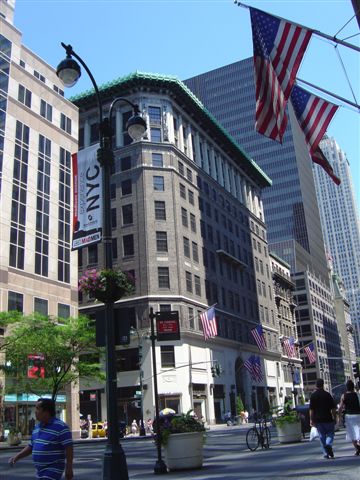
J.C. Penney has broken free of its suburban parking area to invade Herald Square, and the most frequent question on New York’s collective lips seems to be: Why? (read more)

The new JCPenney at the Manhattan Mall in New York (former home to Gimbels, Stern's and A&S) is open and flourishing in an otherwise dismal retail market. What better way to celebrate its arrival and success by sending the New York Times fashion reporter Cintra Wilson into the store for a review. Ms. Wilson gives the store enough backhanded compliments and outright insults that's almost a parody of a serious article, even for the Fashion & Style section.

Consider this excerpt:

J. C. Penney has always trafficked in knockoffs that aren’t quite up to Canal Street’s illegal standards. It was never “get the look for less” so much as “get something vaguely shaped like the designer thing you want, but cut much more conservatively, made in all-petroleum materials, and with a too-similar wannabe logo that announces your inferiority to evil classmates as surely as if you were cursed to be followed around by a tuba section.”

Just like all good clichés, this hackneyed statement is partly based in truth, but not so much that no one would be able say it definitively. Penney’s is no runway show, but its offerings are no worse than those of Target, Kohl's or even most of the private label merchandise at Macy's.

Considering the questionable (and largely overpriced even at a discount) merchandise that passes for fashion in the dozens of off-price store that cover Manhattan, JCPenney seems like a measure of clarity. At least what you want is likely in your size.

You also have to consider that every other large scale retailer that has been in this mall since the fall of Gimbels has tanked. Stern's, for all of its history as the "Show Biz Store," looked more like a bad infomercial when they were there. Steve & Barry's was even worse, stretching its bland wares into an oversized space that was doomed to fail. Don't get me started on the perpetually lackluster specialty stores in this mall. JCPenney is a strong enough name that it could be a serious contender with the right amount of traffic.

UPDATE: Apparently neither the public or Ms. Wilson's bosses liked the article very much.
The Insult Was Extra Large
NYTimes Issues Apology For Cintra Wilson Article


Monday, June 02, 2008

Newbury Street icon Louis seeks someplace trendier

Louis Boston, a fixture on Newbury Street (in Boston) that helped usher luxury retail into the city, will move out of its historic building when its lease expires in 2010, opening up the marquee 40,000 square foot space for the first time in 20 years. (more)

Sunday, June 01, 2008

Legendary designer Yves Saint Laurent dies at 71

By ELAINE GANLEY

PARIS (AP) — Legendary designer Yves Saint Laurent, who reworked the rules of fashion by putting women into elegant pantsuits that came to define how modern women dressed, died Sunday evening, a longtime friend and associate said. He was 71.

Pierre Berge said Saint Laurent died at his Paris home following a long illness.

A towering figure of 20th century fashion, Saint Laurent was widely considered the last of a generation that included Christian Dior and Coco Chanel and made Paris the fashion capital of the world, with the Rive Gauche, or Left Bank, as its elegant headquarters.

In the fast-changing world of haute couture, Saint Laurent was hailed as the most influential and enduring designer of his time. From the first YSL tuxedo and his trim pantsuits to see-through blouses, safari jackets and glamorous gowns, Saint Laurent created instant classics that remain stylish decades later.

When the designer announced his retirement in 2002 at age 65 and the closure of the Paris-based haute couture house he had founded 40 years earlier, it was mourned in the fashion world as the end of an era. His ready-to-wear label, Rive Gauche, which was sold to Gucci in 1999, still has boutiques around the world.

In October 2006, Saint Laurent slipped and fell outside a Paris restaurant during Fashion Week, suffering slight scratches but reminding fans of the perennially fragile designer's advancing age.

Saint Laurent was born Aug. 1, 1936, in Oran, Algeria, where his father worked as a shipping executive. He first emerged as a promising designer at the age of 17, winning first prize in a contest sponsored by the International Wool Secretariat for a cocktail dress design.

A year later in 1954, he enrolled at the Chambre Syndicale school of haute couture, but student life lasted only three months. He was introduced to Christian Dior, then regarded as the greatest creator of his day, and Dior was so impressed with Saint Laurent's talent that he hired him on the spot.

When Dior died suddenly in 1957, Saint Laurent was named head of the House of Dior at the age of 21. The next year, his first solo collection for Dior — the "trapeze" line — launched Saint Laurent's stardom. The trapeze dress — with its narrow shoulders and wide, swinging skirt — was a hit, and a breath of fresh air after years of constructed clothing, tight waists and girdles.

In 1960, Saint Laurent was drafted into military service — an experience that shattered the delicate designer, who by the end of the year was given a medical discharge for nervous depression.

Bouts of depression marked his career. Berge, the designer's longtime business partner and former romantic partner, was quoted as saying that Saint Laurent was born with a nervous breakdown.

Saint Laurent returned to the spotlight in 1962, opening his own haute couture fashion house with Berge. The pair later started a chain of Rive Gauche ready-to-wear boutiques.

Life Magazine hailed his first line under his own label as "the best collection of suits since Chanel."

Berge has said that Saint Laurent's gift to fashion was that he empowered women after Chanel had freed them.

Nowhere was Saint Laurent's gift more evident than the valedictory fashion show that marked his retirement in January 2002.

Forty years of fashion were paraded in a 300-piece retrospective that blurred the boundaries of time, mixing his creations of yesterday and today in one stunning tribute to the endurance of Saint Laurent's style. He also designed costumes for theater and film.

There was the simple navy blue pea coat over white pants, which the designer first showed in 1962 when he opened his couture house and kept as one of his hallmarks.

His "smoking," or tuxedo jacket, of 1966 remade the tux as a high fashion statement for both sexes. It remained the designer's trademark item and was updated yearly until he retired.

Also from the 60s came Beatnik chic — a black leather jacket and knit turtleneck with high boots — and sleek pantsuits that underlined Saint Laurent's statement on equality of the sexes. He showed that women could wear "men's clothes," which when tailored to the female form became an emblem of elegant femininity.

"More than any other designer since Chanel, YSL represented Paris as the style leader," The Independent of London wrote in an editorial after Saint Laurent's retirement. "By putting a woman in a man's tuxedo, he changed fashion forever, in a style that never dated."

In his own words, Saint Laurent said he felt "fashion was not only supposed to make women beautiful, but to reassure them, to give them confidence, to allow them to come to terms with themselves."

Some of his revolutionary style was met with resistance. There are famous stories of women wearing Saint Laurent pantsuits who were turned away from hotels and restaurants in London and New York.

One scandal centered on the designer himself, when he posed nude and floppy-haired for a photographer in 1971, wearing only his trademark thick black glasses, to promote his perfume.

Saint Laurent's rising star was eternalized in 1983, when the Metropolitan Museum of Art devoted a show to his work, the first ever to a living designer.

Subsequent shows at the Hermitage in St. Petersburg and in Beijing made him a French national treasure, and he was awarded the Legion d'Honneur in 1985.

When France basked in the glory of its 1998 World Cup soccer final, it was Saint Laurent who took center field pre-kick off with an on-field retrospective at the Stade de France.

In 1999, Saint Laurent sold the rights of his label to Gucci Group NV, ceding control of his Rive Gauche collection, fragrances, cosmetics and accessories for US$70 million cash and royalties.

Industry insiders cited friction between Saint Laurent and Gucci's creative director, Tom Ford, as a likely factor in the fashion guru's decision to retire three years later. Ford stepped down in 2003.

When he bowed out of fashion in 2002, Saint Laurent spoke of his battles with depression, drugs and loneliness, though he gave no indication that those problems were directly tied to his decision to stop working.

"I've known fear and terrible solitude," he said. "Tranquilizers and drugs, those phony friends. The prison of depression and hospitals. I've emerged from all this, dazzled but sober."

Associated Press writers Rachid Aouli and Joelle Diderich contributed to this report.

Wednesday, January 16, 2008

Nike set to release 23rd Air Jordan

BEAVERTON, Ore. (AP) -- It's gotta be the shoes, right?

No other basketball shoe has changed the face of business, athletics and marketing like the Air Jordan. This month, Nike releases the 23rd edition, and it is expected to be just as venerated as its predecessors.

The sleek design and link to Michael Jordan's jersey number make it a touchstone in the line. It's also Nike's first basketball shoe designed under its "Considered" ethos, which aims to reduce waste and use environmentally friendly materials wherever possible.

The Air Jordan XX3 will be released in three hyped-up rounds from January to February, starting with a limited edition to be sent to only 23 retailers to be sold for $230 and concluding with the national launch at $185.

There had been talk at Nike about retiring the shoe at No. 23, because of his iconic jersey number. But company officials won't say whether this will be the last of the line. Neither will Jordan.

"You'll just have to wait and see," Jordan said in an e-mail to The Associated Press, responding to questions about the upcoming release.

Before launching the first shoe in 1985, Nike had just signed Jordan for $2.5 million over five years. Nike won't say what Jordan's current contract with the company is worth.

Jordan's deal with Nike opened the door for sneaker manufacturers to chase after athletes, signing them up --sometimes just out of high school-- for multimillion-dollar contracts in hopes of being able to cash in on the next superstar. It sent sneaker prices to new heights, which has since generated a backlash against selling pricey shoes to basketball-loving kids.

"The Air Jordan franchise created the most coveted basketball footwear in the world and changed the basketball landscape forever," said Nike Brand President Charlie Denson.

Unlike most basketball shoes to date, which were often white and utilitarian, the Air Jordan was a shock of black and red. It was initially banned by the NBA for not conforming with other players' shoes.

Jordan continued to wear them and was fined $5,000 a game, which Nike paid.

"Nobody expected the mass hysteria created by its release," Jordan, who has been a part-owner of the Charlotte Bobcats since 2006, said in his e-mail to The AP.

A new edition was launched each year, and release dates had to be moved to the weekends to keep kids from skipping school to get a pair.

The frenzy got dangerous. People were mugged and even killed for the shoes.

The Air Jordans helped spawn a subculture of collectors, who line up at stores to buy the shoe's latest edition.

Jordan said he never expected that the shoe would become an icon.

"Like every kid growing up, I dreamed of making winning shots at the buzzer and I was fortunate to live out that dream, but never in my wildest dreams did I ever entertain the idea of the success of the Air Jordan franchise," he said.

The Air Jordans moved basketball shoes from true high-tops or low-tops to a middle range and used unheard of styles, such as patent leather toes and elephant print.

As Jordan's success grew on the courts, so did Nike's in the shoe industry.

People from the streets to the suburbs were wearing $100-plus basketball shoes, which was unheard of at the time.

That price is the norm today, but it has launched a backlash, such as the partnership between New York Knicks player Stephon Marbury and the Steve & Barry's store chain to sell basketball shoes for $14.98 -- a direct stab at pricey sneakers like Air Jordans.

At that time, the Air Jordan captured a mix of design, marketing, athleticism and player charisma that hadn't been seen before in the industry -- everyone wanted to "Be Like Mike."

"Athletes had been endorsing products for years prior to this," said Tinker Hatfield, Nike's Vice President of Innovation Design and Special Projects.

"But they were just signing their name to the shoe. I think there was a very understandable difference...Michael's personality and even the changes in the game and inspiration from other walks of life were all sort of being designed into this product and that made it more interesting."

Jordan and Hatfield work together on the design and function on many of the Air Jordan shoes. Jordan has final say on design matters.

Air Jordan was the lightning in the bottle that every company hopes for.

Advertising images of Jordan soaring across the sky were ubiquitous. Spike Lee could be heard hollering "It's gotta be the shoes" on television. And Jordan's outstretched arms with the swoosh nearby adorned walls across the country.

Nike quickly moved from a running company and newcomer to the basketball category to the market leader. Some industry estimates put Nike's current share of the basketball shoe market at about 85 percent. Far behind are Adidas and Reebok.

The idea of adding such unusual style to a product or so closely aligning with a personality was novel at the time, but it paid off.

Other companies tried to follow suit but it was like trying to come up with the next Harry Potter or iPhone for basketball.

The relationship completely changed the idea of sports marketing. Companies now make athlete sponsorships the centerpiece of their business, spending millions signing them and designing product lines and marketing platforms around them.

Jordan's original deal seems like a pittance compared to multimillion-dollar contracts inked these days, such as Nike's $90 million agreement with LeBron James.

"The beginning of the Jordan era marked a new and more sophisticated approach to leveraging an athlete," said Paul Swangard, managing director of the Warsaw Sports Marketing Center at the University of Oregon.

Like any bet, athletic companies take their risks -- some pay off, like Tiger Woods or LeBron James. But some don't, a la Michael Vick. Nike terminated its contract with Vick last August after his plea agreement on dogfighting charges.

Jordan was spun off into its own division in 1997, a move that some high up in Nike questioned when Jordan retired.

But the business is a key component, with new players signing on under the brand. Nike has spun that Jordan swagger into performance and luxury apparel for men and woman.

The Air Jordan remains the pinnacle piece for shoe collectors. The original Air Jordan 1 can sell for thousands of dollars, depending on various factors.

Jordan said: "It blows my mind that even after five years removed from the game the shoe would be stronger than ever and I would still be greeted by fans as if I had just won a championship all over again."

Wednesday, September 19, 2007

Got Crocs? Be Careful on the Escalator

WASHINGTON (AP) — At rail stations and shopping malls around the world, reports are popping up of people, particularly young children, getting their toes caught in escalators. The one common theme seems to be the clunky soft-soled clogs known by the name of the most popular brand, Crocs. [read more]

Monday, September 10, 2007

Most women own 19 pairs of shoes -- some secretly

Belinda Goldsmith

NEW YORK (Reuters Life!) - American women have come out of the closet with a secret -- most own about 19 pairs of shoes and some have hidden purchases from their partners. [Read more at Reuters]

Tuesday, August 21, 2007

Sunday, August 12, 2007

Lord & Taylor to launch $10m celebrity model-focused rebranding ad campaign

WGSN

Department store group Lord & Taylor is set to launch a $10m celebrity model-focused rebranding campaign to spotlight both its updated image and 181-year heritage. The campaign will debut in mid-August and run through the Holiday season.

Showcasing the results of a four-year repositioning, the campaign features a cast of celebrities that include models Carolyn Murphy, Lauren Hutton, Jacquetta Wheeler, Hanne Termote, Megan McNeirney and Erin Heatherton, as well as artist Ed Ruscha, socialites Lauren Davis and Lydia Hearst, plus the children of John McEnroe and Clint Eastwood.

"The stunning images depicted in this campaign will signify Lord & Taylor's relevance in the speciality department store arena," noted CEO Jane Elfers.

Created by ad-man David Lipman and shot in California by Mario Testino, the "striking ads project Lord & Taylor's innate style: unapologetically classic with a multigenerational attitude", said the retailer.

The images will appear in multi-page spreads in the September issues of Vogue and Vanity Fair and in ads featured in W, Harper's Bazaar, Elle, Town & Country, Cookie, In Style, Interview and GQ as well as in major national newspapers.

In addition, 25 billboards will be placed in Boston, Chicago, Connecticut, Detroit, Philadelphia, New York, railroad stations in upscale suburban areas and the Bryant Park Tents during New York Fashion Week.

As part of the re-branding, a $250m capital budget has been earmarked over the next five years by NRDC Equity Partners, which purchased Lord & Taylor from Federated for $1.1bn in 2006.

Wednesday, June 27, 2007

Liz Claiborne passes away at 78

Chain Store Age

Fashion designer Liz Claiborne has died, the company she founded said Wednesday. She was 78.

Claiborne died Tuesday after suffering from cancer for a number of years, said Gwen Satterfield, personal assistant to Claiborne.

Claiborne founded Liz Claiborne Inc. in 1976 along with her husband Art Ortenberg and Leonard Boxer. Their aim was to create a collection of fashions aimed at the growing number of women entering the work force.

The clothes became an instant hit, and the company went public in 1981. By 1985, Liz Claiborne Inc. was the first company founded by a woman to be listed in the Fortune 500, according to the company's Web site. The company, whose brands now include Ellen Tracy, Dana Buchman and Juicy Couture, generated sales of almost $5 billion last year.

Liz Claiborne retired from day-to-day operations in 1989.

Thursday, May 31, 2007

A Traditionalist Walks a Fine Line

Shoemaker Allen Edmonds Aims to Reach Younger Men By Touting Old-School Quality

By Christina Binkley
The Wall Street Journal


When it comes to shoes, conventional wisdom holds that most men today respond to fresh design, splashy advertising and styles conceived for younger feet.

Since turning itself into a high-fashion brand, Coach has been on a tear. Gucci and Prada have gobbled up the markets for luxury loafers and bags. In June in Milan, sexy-shoe designer Brian Atwood will show his first collection -- men's footwear -- as creative director for Swiss shoemaker Bally, which is seeking more fashion-conscious shoppers these days.

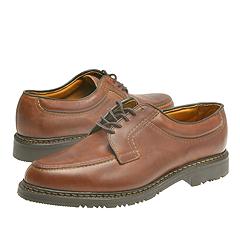
Then there's Allen Edmonds. Oxfords, tassel moccasins, penny loafers. Now here's a brand in need of resuscitation: eighty-five years old, with flat revenue and an aging boomer clientele.

Its new private-equity owners, Goldner Hawn Johnson & Morrison Inc., which bought an 86% stake last year, are now advocating an overhaul. But instead of following the rest of the high-fashion accessories industry, Allen Edmonds is digging in its heels. With a wingtip and a prayer, it's expanding with a strategy to make new assets of old-world service and quality...

Read more at The Wall Street Journal

Monday, February 26, 2007

Gap to close Forth & Towne chain

SAN FRANCISCO (AP) - Gap Inc. is closing the Forth & Towne chain that was supposed to help the struggling retailer sell more clothes to older women, aborting the 18-month expansion so management can concentrate on reviving the company's more established brands.

The decision announced Monday affects all 19 Forth & Towne stores opened since Gap unveiled the concept in West Nyack, N.Y., north of New York City in August 2005. Forth & Towne's other stores are located in Atlanta, Chicago, Houston, Seattle, San Francisco, Los Angeles, San Diego, San Jose and Santa Barbara.

The store closures are expected to be completed by the end of June, jettisoning about 550 jobs. Some of the affected employees may be transferred to one of the San Francisco-based company's other chains - Gap, Old Navy and Banana Republic.

Signaling that some layoffs are likely, Gap is budgeting $7 million to cover severance payments and other benefits for former Forth & Towne workers, according to a filing with the Securities and Exchange Commission.

Gap hoped to develop Forth & Towne into a specialty channel catering to women older than 35 who grew up in Gap jeans but found themselves sized out in the market in middle age. When it launched Forth & Towne, Gap estimated it only held a 3 percent share of over-35 female market compared to an 8 percent share of women shoppers under 35. Gap had hoped to woo boomers - who are at the peak of their earnings and spending power - back with a store that combined the service of a boutique, the broad offerings of a department store - and a more forgiving fit.

"Forth & Towne was a great test of a promising concept and an illustration of the innovative risks you need to take in our business," said Gap Chairman Bob Fisher. "We made the tough decision to close the brand and focus our efforts on stabilizing the existing businesses."

Fisher has been Gap's interim chief executive officer since last month when the retailer ended the nearly 4 1/2-year rein of Paul Pressler after a dismal holiday shopping season that represented a new low point in a prolonged sales funk.

In a key measure of a retailer's health, Gap's same-store sales fell 7 percent last year, deteriorating from a 5 percent decline in 2005. The closely watched yardstick measures sales at stores open at least a year.

Despite its troubles, Gap intends to continue investing in other promising concepts, including a recently launched online shoe store called Piperlime, company spokesman Greg Rossiter said.

Although abandoning Forth & Towne will drive up Gap's expenses by about $40 million during the first half of this year, industry analysts believe the company will be better off without the potential albatross.

"This brand never gained much traction, suffered from fit, style, and image problems and became a big distraction," Lazard Capital Markets analyst Todd Slater wrote in a Monday research note.

Retail analyst Jennifer Black said the expansion never made much sense, given Gap's troubles connecting with shoppers of all ages. "The landscape is so competitive that each retailer has to have a clear reason to be (in existence) and Forth & Towne, never had that," she said.

Gap shares fell 16 cents Monday to close at $19.65 on the New York Stock Exchange.

Scrapping Forth & Towne also may free up some merchandising talent to help with the turnaround efforts at the Gap and Old Navy chains. Analysts are particularly intrigued with the possibility that Forth & Towne's current president, Gary Muto, might now return to Gap, a chain that he led from August 2002 through September 2004.

Gap's sales improved during most of Muto's tenure at the chain. "If he were to return to the Gap brand, (it) would be a positive influence on the division," Stifel, Nicolaus & Co. analyst Richard Jaffe wrote in a Monday research note.

If Muto were to come back to the Gap, it probably wouldn't be as president because the company just promoted Marka Hansen - the former head of Banana Republic - to that job earlier this month.

Muto also once ran Banana Republic, making him a possible candidate to return to an upscale chain that has emerged as the best-performing of Gap's three brands.

Gap and Muto haven't agreed on a new assignment yet, Rossiter said. The company is expected to discuss the ramifications of the Forth & Towne closure Thursday when it reviews its fourth-quarter results in a conference call with analysts.

Forth & Towne's closure underscores the challenges facing clothing retailers catering to the graying baby-boom generation. Many merchants like Gap recently have been intensifying their focus on the niche, inspired by Chico's FAS Inc.'s successful formula for targeting boomers.

But now even Chico's is hitting a rough patch, having registered a 2.2 percent gain last fiscal year in its same-store sales. Chico's slowing same-store sales growth followed double-digit increases in the previous two years.

Sunday, February 11, 2007

A Winter White That Works for Spring


By DAVID COLMAN

WHATEVER the charms of the International Tennis Hall of Fame gala, held every year during the United States Open, looking for men’s fashion trends there would seem to be a fool’s errand.

But at last September’s event, the tennis legend Stan Smith spotted a spring look months ahead of time: a group of stylish young men had come in black tie and brand-new Stan Smiths, the white, stripe-free Adidas sneakers that have done more to enshrine Mr. Smith’s name in the annals of pop culture than his tennis record ever did.

“It was pretty neat,” said Mr. Smith, 60, who won the United States Open in 1969 and had the shoe named after him in 1971. “For me, they’re my work shoe.”

And now city men are wearing them to work, too, bringing sprightly new meaning to the WASPy old-man expression “white shoe.” A combination of factors — hip-hop stars who brag that they wear a new pair of clean white Nike Air Force 1’s every day; designers like Marc Jacobs (who has worn Stan Smiths since junior high) and John Varvatos (who made Converse Jack Purcells and Chuck Taylors must-haves again) — have converged to make the all-white, old-school sneaker into Le Shoe for the smart set.

They are, it turns out, perfect for young, for old, for rich, for poor. They go with jeans, a suit, even a tux; you can wear them to work, to play and even to appear on Oprah (as Mr. Jacobs did). They can be cheap (basic Stan Smith’s are $55 at adidas.com) or not (the 25th anniversary Air Force 1’s are $2,000 at Barneys New York) or in between. They even come with a brand of fashion approval: several designers now offer their own version of the white sneaker, among them Stefano Pilati at Yves Saint Laurent, Neil Barrett, Dries van Noten and Miuccia Prada.

Sneaker craziness may not sound like anything new, but this time there’s a rub, and like it or not, it involves a toothbrush.

“They need to be clean,” said Daniel Peres, the editor of Details. “It’s a good look, a right-out-of-the-box-clean pair of white sneakers, and it’s the only kind you can wear with dressier clothes, nice jeans or even a suit.” But he reiterated his proviso. “Some people do everything they can to make them look worn and dirty, which is wrong. I’ve seen fashion editors in the Tuileries Gardens in Paris, shuffling their feet in the dirt to make their Chucks look worn in. I just stood there in horror.”

According to a nurses’ advisory site, the best way to keep white shoes dazzling is with Murphy’s Oil Soap and a toothbrush, and those white rubber soles might call for a go with whitewall-tire cleaner. Or you can subcontract the work and take them to the shoeshine man.

Sean Donovan, a sneaker collector who just bought a fresh pair of Stan Smiths for a new job (as a salesman at the Marc Jacobs store, in fact), said he was careful to keep his new shoes in rotation with, say, his white Air Force 1’s. He sprays them immediately with water and stain repellent, which makes normal scuffs easy to wipe off. “If you want to get crazy, you can go at them with an old toothbrush and some Soft Scrub,” he said.

Mr. Donovan, who has about 65 pairs of sneakers, agreed that clean is key. “A white shoe, it makes you feel fresh,” he said. “It’s like when you wash and iron your clothes, it makes you feel like everything’s together.”

Given the care the humble shoes require, the current trend is not without a kind of upended silliness. “It’s really turned an ordinary product into a luxury product,” said Bradley Carbone, an editor at Complex magazine, an urban young men’s magazine, which, naturally enough, follows sneaker obsessions closely. “A few years ago when you had rappers like Fat Joe and Jay-Z talking about wearing a new pair every day, people responded by trying to keep theirs as crisp and clean as possible. So it has an aspirational seal to it, even though it’s on an inexpensive shoe.”

While Mr. Peres likes the look, he won’t be sporting it any time soon. “They draw all attention to your feet,” he said. “I don’t want to have to compete with my shoes.”

Monday, January 29, 2007

Gap Is in Need of a Niche

By MICHAEL BARBARO and HILLARY CHURA

In the fall of 2004, Gap put on a splashy ad campaign called, “How do you wear it?” with Lenny Kravtiz and Sarah Jessica Parker. It featured the pair dancing in customized Gap jeans — his with metal studs down the seam; hers with a waist-to-cuff velvet ribbon.

It was just the kind of envelope-pushing fashion Gap needed to compete with popular new designer-inspired denim brands like Diesel, Rock & Republic and Seven for All Mankind.

But there was a catch: the bedazzled jeans, which Gap called a “celebration of personal style,” could not be found at its stores.

Consumers had to buy a pair of basic, unembellished jeans at the store and customize them at a special training sessions held at some Gaps, or take a trip to Home Depot and Jo-Ann Fabrics and figure it out themselves.

The marketing tease is a small case study in what has ailed Gap, which ousted its chief executive, Paul S. Pressler, this week after years of dismal performance at its Gap and Old Navy divisions.

At a time when small, narrowly focused fashion brands — Coach, Juicy Couture, Tahari, Laundry — have become ascendant in American retailing, Gap has served up a steady diet of simple, unobjectionable casual clothing designed to appeal to everyone.

How do they wear it, as the ads asked? Increasingly, they just do not.

In an era of niches, when exclusion is as vital as inclusion, Gap has become an anachronism: a single chain, selling only its own brand, with one point of view, chasing shoppers from birth to death.

“If you stand for everything in fashion today, you stand for nothing,” said Paul R. Charron, the former chief executive of Liz Claiborne, who is credited with revitalizing the clothing company by purchasing fast-growing brands like Juicy Couture and Lucky Brand.

“Brands like the Gap, brands broadly available,” Mr. Charron said, “have a special challenge to be relevant in a period when focus and exclusivity are so important.”

Indeed, consumers are abandoning the chain in staggering numbers. Sales at stores open at least a year, a standard measure of a retailer’s health, have fallen or remained stagnant for 28 of the last 30 months.

And the declines have not been small. Sales fell 8 percent in December and November and 7 percent in October — the most crucial months of the year. The word “disappointing” became a common refrain in every monthly news release explaining Gap’s performance.

Gap operates three divisions: Gap, Old Navy and Banana Republic. All three have struggled, but only Banana Republic is on the rebound.

Niche brands, by contrast, have done so well that they have even reversed the fortunes of the American department store. In the last year, the performance of department stores like Nordstrom and Macy’s has quietly overtaken that of specialty clothing retailers like Gap.

The reason? “Consumers want brands, and we are all about brands,” said Stephen I. Sadove, chief executive of Saks Inc., whose sales have improved sharply in the last year on the strength of designer labels like Tahari and Theory.

“It’s very hard for the specialty clothing stores to keep themselves cutting-edge and fresh,” Mr. Sadove said. “There is a lot of sameness.”

Or walk into the handful of specialty clothing chains like Abercrombie & Fitch, American Apparel and Anthropologie, stores that, like Gap, design their own clothing but have managed to thrive by appealing to small slivers of the public.

Those stores’ environments leave no doubt who their shopper is supposed to be — vintage-loving, 30-something urban women (at Anthropologie); trend-obsessed, preppy teenagers (at Abercrombie & Fitch); and socially conscious hipsters in their 20s and 30s (at American Apparel.)

Abercrombie & Fitch is openly hostile to what it considers the wrong customer — typically anyone over 30 — warding them off with booming music, dark shades on the front windows and teenage employees standing out front.

Gap has veered to the other extreme, putting out a welcome mat to nearly everyone, with well-lighted, sparsely decorated stores and ageless fashions.

“The definition of a specialty store is focus,” said Howard Davidowitz, chairman of Davidowitz & Associates, a national retail consulting firm and investment bank.

Gap does not have that focus, Mr. Davidowitz said. And in trying to meet the needs of infants, teenagers, and even the elderly, its designers play it safe, season after season. “The merchandise is booooooring,” Mr. Davidowitz added. “Too basic.”

Patricia Longo, a 36-year-old makeup artist who lives in Manhattan, is the kind of style-obsessed shopper who has little use for Gap these days. She wears Ugg boots, a Betsey Johnson bag, a Pepe Jeans jacket and a cotton taupe Ella Moss dress.

“They don’t have the new fads,” she said of Gap. “When I look for something new and young and trendy, Gap is not coming to my head.”

And it is not that she buys only designer clothes. Ms. Longo covets designer knockoffs, which is why she shops at H&M, the Swedish retailer known for its fresh-from-the-runway fashions.

So what is Gap to do?

A Gap spokesman, Greg Rossiter, said the company was “totally committed to returning these brands to the leadership they enjoyed for so many years.”

For that to happen, retail analysts said, the chain could start by shrinking, to give its clothes the kind of cachet that Gap had decades ago, before it operated 1,295 stores (not to mention hundreds more Banana Republic and Old Navy stores, which bring the total to more than 3,000). Abercrombie & Fitch, for example, has 361 stores for its flagship brand.

Next, analysts said, it could experiment with brands, as several new specialty clothing stores have started to do. When Martin & Osa, a clothing store aimed at people in their 30s created by American Eagle Outfitters, opened in 2006, it carried its own store brand as well as bags from North Face, sunglasses from Ray-Ban and track jackets from Adidas.

Gap used to carry Levi’s jeans but stopped in 1991. Today, it stocks a single outside brand, Converse sneakers.

Finally, Gap could focus on a narrow group of consumers, and tailor clothing to meet their needs — a prospect that would probably require the chain to become much smaller. “They have to pick out a demographic and go after it with a maniacal focus, to the exclusion of anyone else,” said Bob Buchanan, an analyst at A. G. Edwards & Sons.

“If there is one thing you cannot be in the middle of the mall anymore, it is all things to all people,” he added. “And that is what Gap has been trying to do.”

Friday, January 26, 2007

Thanks to Baltimore, Air Force 1 still flying

Nike sneaker boasts 25 years of loyal fans

By Tanika White
Baltimore Sun reporter

BALTIMORE - In the 2002 hit "Air Force Ones," the rapper Nelly extolled his love for the sneaker in the song's title: "I need two pair," he drawled. "Give me two pair."

Clearly Nelly is not from Baltimore. If he were, he'd have far more than just two pairs.

Nike is launching a major promotion for the 25th anniversary of its Air Force 1 - a sneaker that Baltimore had a major role in saving and helping to become an urban fashion sensation of the past generation.

In contrast to the product hype often manufactured on Madison Avenue, the sneaker's following grew initially by word of mouth, before the Internet and with little TV advertising. The shoe originated in 1982, when Nike sales were one-15th what they are now and its future endorsement king, Michael Jordan, was still a freshman at the University of North Carolina.

Curiously, the buzz for the Air Force 1 centered in Baltimore, far from the major fashion centers and the only place where the model was sold for a time after it was all but discontinued.

"No city is as important to the Air Force 1 as Baltimore," Nike acknowledged in a booklet it sent to retailers recently for the 25th anniversary promotion. "The city rebirthed the shoe and set in motion a series of events that would change the way sneakers were perceived in the marketplace."

Nelly's two pairs wouldn't suffice for Melvin Bartee, for example. He has amassed at least 100 pairs of the $80 sneakers over the years, their orange boxes stacked to the ceiling in the basement of his East Baltimore home. "I don't even go down there to look for a pair anymore. I just buy new ones," said Bartee, 41, a youth basketball coach at the Cecil-Kirk Recreational Center.

Keith Holly of West Baltimore said he has at least 50 pairs of Air Force 1's. He buys them two at a time, wears them twice, maybe three times, then gives them away.

And even a trans-Atlantic distance couldn't stem Michael Boateng's passion for Air Force 1's. When he attended high school in West Africa, Boateng, now 29, said, "My parents mailed me the new ones when they came out."

While Nike helped shape the modern athletic wear industry with its line named for Jordan, the lesser-known Air Force 1 model has been the Oregon company's biggest seller, footwear expert John Shanley said. The shoe generated roughly $1 billion a year for the company at its peak, about $600 million in more recent years.

"I remember going to the malls at 7 a.m. and kids would be in line for those shoes," said Shanley, a New York-based analyst who covers the athletic wear industry for Susquehanna Financial Group. "There's no other shoe that ever created that kind of thing. Maybe some of the Jordans."

In 1982, Nike introduced the Air Force 1 as a high-performance basketball shoe. Moses Malone, who became the first basketball player to go directly to the pros from high school after declining an offer to play at the University of Maryland, was one of the first to wear the sneakers, starting a fad in urban areas.

"Back then, shoes had a limited run," Nike spokesman KeJuan Wilkins said. "They'd come out and then they'd go away forever."

By 1983, Nike was ready to discontinue the model for newer styles. But three Baltimore-area retailers at the time - Charley Rudo Sports, Cinderella Shoes and Downtown Locker Room - banded together to implore Nike executives to reconsider.

"The shoes were blowing out of my store," recalled Harold Rudo, then the footwear buyer for his father's store, Charley Rudo Sports. "I flew out to [Nike's headquarters in] Portland, Oregon, and met with the second-in-command."

Rudo and cohorts from the other two sporting goods stores persuaded Nike initially to continue selling two styles of Air Force 1's - white with royal blue, and white with chocolate brown - but only in their stores in Baltimore.

The first weekend the sneakers were re-introduced in Baltimore, Rudo said, he sold more than 100 pairs.

"Then, we started popping out new styles, color by color by color by color. We brought out one to two colors a month," said Rudo, who is known even today as "Mr. Shoe." "We were exclusive, the Three Amigos."

In pre-Internet days, word of mouth propelled sneaker-heads along the East Coast to Baltimore for Air Force 1's.

"We had people coming from New York, Washington, D.C.," Rudo said. "They were coming from all over Pennsylvania. They knew we had 'em, and they'd all come running to Baltimore to buy them from us."

Eventually, Nike concluded that Baltimore was on to something. About 10 years after the shoes' exclusive run in Baltimore, the company re-released the Air Force 1 nationally in the mid-1990s.

"This is something that is now on a global level," said Wilkins, the company spokesman. "People in Japan love the Air Force 1. People in Brazil love the Air Force 1. To think that it really started in Baltimore is kind of amazing. ... It has moved from being a performance shoe to a cultural icon."

Until Nike announced a 25th anniversary promotional campaign for the Air Force 1, only a select few were aware of Baltimore's role in popularizing the model early on.

"So often you think of L.A., New York, Chicago for this kind of thing," said Mike May, spokesman for the Sporting Goods Manufacturers Association.

While Nike poured millions into promoting its Jordan line, it barely advertised the Air Force 1, lending the sneaker an underground appeal. Like Converse's canvas Chuck Taylors and Adidas' Superstar model, Nike's Air Force 1 became a phenomenon with a clean, simple look. As more colors were added, buyers continued to clamor for the shoe because no matter the outfit, there was an Air Force 1 to go with it.

"You can basically get any color to match your clothes, whatever you feel like wearing," said Boateng of East Baltimore. "I've worn 'em to church. I'll be wearing a blazer and then I'll have on my Air Forces."

Today, there are more than 1,700 different styles of Air Force 1's, although the shoe is essentially the same as in 1982 - unusual for Nike sneakers, even Air Jordans. There are versions in patent leather, multi-colored styles and some designed by graffiti artists. Wealthy rap artists and celebrities often take a pair of Air Force 1's and upgrade the "swoosh" with designer monograms, such as Louis Vuitton's signature LVs.

After-purchase customization of the Air Force 1 has become a cottage industry for some city artists and retailers.

Dwayne Gillard, 27, of West Baltimore, had one of his five pairs of white-on-white Air Force 1's professionally decorated at Mondawmin Mall with "Hundred Grand Federation," the logo for his side business as a rapper.

"You gotta have a pair of Air Force 1's. You put 'em on at night, and I swear you look like your feet are glowing," Gillard said. "Then you gotta have a second pair. The second pair you gotta get somebody to customize 'em for you. The third pair is the backup for that first pair. And the fourth and fifth is for when nobody's selling them no more. I got five right now because I know come May, I'm not gonna be able to find 'em."

Baltimore retailers sometimes struggle to meet demand, said Jeffrey Bowden, a spokesman for DTLR, formerly the Downtown Locker Room, which now operates from Atlanta to Chicago.

"It's absolutely a phenomenon," Bowden said. "It's clearly the Baltimore shoe. There were times there where it was hard for us to keep them in stock, through all sizes, from kids' all the way up to men's.

"That real hard-core demographic, they're like, 'Hey, I need a new pair of Airs,' just because they got a scuff on them. And they've got to have every color when they come out," he said. "I'm even guilty of that. I've had hundreds over the years."

Nike officials can't explain why the shoe has had such a foothold in Baltimore, but they are grateful for the love.

To promote the 25th anniversary version of the Air Force 1 - and the just-released Air Force 25 sneaker - the company built a pricey in-store display at DTLR in Mondawmin Mall, one of the first stores to originally sell the Air Force 1, Nike said.

The display shows players of the past in flight jumpsuits, such as Malone, beside a "second coming" of current stars such as LeBron James and Kobe Bryant, who are promoting the new Air Force 25s.

Local sellers don't expect the relationship to wane anytime soon.

"Twenty years from now ... it's going to be the same thing," said Greg Vaughan, manager of Mondawmin Mall's DTLR and a former salesman at Charley Rudo Sports, one of the three stores that saved the shoe. "I'm watching generations of kids growing right into it."

Thursday, January 25, 2007

i LV u

How much do you love Louis Vuitton?

Obviously, the iconic French fashion brand has become increasingly popular over the past few years across a wide spectrum of socioeconomic classes, spawning any number of imitators in its wake. But is it special enough to theme your entire wedding based on the classic LV coated cavas pattern?

I got this email the other day and it cracked me up (I've been on a 'posting spam' kick lately). Don't know if these picturea are real, but they sure are laughable.

The happy bride and groom.

A very creative fabric treatment on the train of the bride's dress.

Good enough to eat?

Only a fine automaker like Oldsmobile is worthy of the LV emblem. :-)

Friday, January 19, 2007

Speaking Chic to Power

LEADING ROLE - Nancy Pelosi, the speaker of the House, brings to her new position a sense of style that is admired on both sides of the aisle as well as in other departments in Washington.

By LIZETTE ALVAREZ

LAUDING someone for their style on Capitol Hill is a lot like celebrating the best surfer on Florida’s Gulf Coast — it’s all relative, and some would argue irrelevant. Washington has never embraced fashion (nor, for that matter, has the fashion world embraced Washington), and for understandable reasons. In political circles, fashion is a loaded term, smacking of frivolity and vanity.

So, to a large extent, politicians have been fashion agnostic, sticking stubbornly to their dark blue suits, red power ties, multicolored scarves and lacquered hair.

But with the ascent of Nancy Pelosi, 66, widely recognized and admired for her Armani and easy fashion savvy, the days of the dowdy Washington dress code may be numbered. At least that is the hope of a number of women on Capitol Hill, Republicans and Democrats, who see Mrs. Pelosi, the new speaker of the House, as a fashion leader, too.

What’s more, these women do not altogether fear that their seriousness as politicians will be undermined by speaking aloud about hem lengths or helmet hair, or what one of them, Representative Mary Bono, calls the “St. John uniform,’’ a reference to the safe brand of choice on Capitol Hill.

“I am so sick of the matronly box — the rest of America doesn’t dress like that,” said Ms. Bono, 45, who, with her Palm Springs address, affection for the martial arts and her marriage to the late Sonny Bono, is decidedly un-Washingtonian.

“We all want to be taken seriously and you certainly don’t want to be too sexy,” added Ms. Bono, a California Republican, “but you have to maintain your femininity. Pelosi is a beautiful dresser. I’m hoping she has great impact — fashion-speaking, not politically speaking.”

During her first week on the job, Mrs. Pelosi clinched votes in the House on the minimum wage, financing for stem cell research and Medicare drug prices, drawing two veto threats (for research and drugs) from a notoriously veto-averse president.

And she did it looking preternaturally fresh, with a wardrobe that, while still subdued and overreliant on suits, has seldom spruced the halls of Congress. On Jan. 9, a Tuesday, she wore an impeccable black and white tweed skirt suit, with strong shoulders and the jacket nipped at the waist; on Wednesday, she draped a red shawl insouciantly around a red suit outside the White House; and on Thursday, she appeared in a mod, deep-blue velvet, slimming pantsuit.

Fashion authorities say Mrs. Pelosi should be applauded for her color choice (burgundy on Jan. 4, the day she was sworn in), her playfulness with jewelry (chunky, but tasteful, including signature Tahitian pearls) and her suit selection (from velvet to tweed), all of which can be imitated at a more affordable price by women who are not wealthy. Women are already taking note of her style; orders of Tahitian pearls have skyrocketed.

“She wears the clothes and the clothes don’t wear her, and that is the way it should be,” said Pamela Fiori, the editor-in-chief of Town & Country magazine, who emphasized that Mrs. Pelosi’s words are nonetheless more important than her clothes. “If she can have a little bit of influence in the Senate and House or in the home, that is not such a bad thing.”

Just raising the issue of a powerful woman’s wardrobe choices strikes some people as sexist, an undermining of her talents and qualifications. And last week, when a reporter approached several of the female members of the House and Senate, or their staff, to talk fashion, some did not want to engage. Others cringed, at least initially. But when the conversation veered into the nitty-gritty — what do you wear, where do you buy it, what image do you want to project — the women in politics happily chatted away.

“Ah, Ferragamo,” said Senator Dianne Feinstein, 73, a California Democrat, admitting she spoils her feet as a form of revenge on the Capitol’s marble floors.

Women in politics are the first to say that they give serious thought to their appearance because, like it or not, voters at home, powerbrokers on the Hill and the news media are all mindful of the slightest faux pas. It is wrong to look too risqué, they say. But isn’t it retrograde to equate looking good with being empty-headed?

“As women policy makers become more trusted on the issues, they may feel there is more leeway,” Representative Stephanie Herseth, 36, a South Dakota Democrat, said optimistically. She recently got an earful for lightening her hair.

The men have it much easier because unlike women, they seldom are punished for fashion mistakes.

So it is understandable that women in politics are so skittish about their choices. Senator Hillary Rodham Clinton, 59 was tortured for her monthly makeovers when she was first lady. Secretary of State Condoleezza Rice, 52 photographed wearing black knee-high boots, an above-the-knee black skirt and a military-style black coat in 2005, was called a dominatrix by the fashion critic of The Washington Post.

Women in politics are still operating in a male world and don’t want to appear as lacking gravitas.

“This is still essentially a man’s town,” said Susan Molinari, a Republican and the former representative from Staten Island who runs the Washington Group, a government relations and lobbying firm. “Elected officials deal with serious subjects and want to be taken extremely seriously. You evaluate everything you wear. Does this detract? Does this get in the way of my message?”

Even Speaker Pelosi has her limits. Her staff members, after repeated requests, declined to talk about her clothing choices for this article. In a recent interview on “60 Minutes,” Mrs. Pelosi said her husband often buys clothes for her.

The truth is that women’s choices on Capitol Hill are often dictated by their job. Legislators are constantly walking long distances across punishing floors (comfortable, low-heeled shoes are a must), wrestling with finicky furniture (think durable fabrics) and hopping from committee rooms to fund-raisers (versatility is key). It is not enough to look good for a mere three hours, which is why many women favor St. John knits.

“You want something that isn’t fragile, that won’t shred at the sight of a splinter,” said Representative Ellen Tauscher, 55, a California Democrat, who calls the wood furniture she sits on in committee rooms “older than I am.”

“At the same time, you want people listening to what you are saying and not looking at what you are wearing,” said Ms. Tauscher, who is a leader on military issues.

To say that constituents do not care about fashion or image is simply not the case for most politicians. Representative Debbie Wasserman Schultz, 40, a Florida Democrat, said her constituents love to talk about her look.

When she started straightening her hair, her new look landed in newspapers and elicited an avalanche of commentary, mostly positive. The change did not detract from her seriousness; she is now chief deputy whip.

“I say to my constituents, ‘Give me advice,’ ” she said. “And my seniors, everyone, says, ‘Debbie, get yourself a haircut.’ If I look like a schlepper, I’ll hear about it.”

She, too, reaches for the St. John uniform (despite Ms. Bono’s wish). But unlike some other lawmakers, she adheres to a strict budget. Her St. John wardrobe was purchased on eBay, sometimes by her husband, she confided: “You can’t buy that stuff in the store. It’s expensive.”

In fact, the orange skirt suit she wore one day on the House floor last week was Valentino. “Rodeodriveresale.com,” she said conspiratorially. “You know how expensive Valentino is?”

Recalling her entree into Washington politics, Ms. Wasserman Schultz said, “I had to dress more conservative.”

“But being dowdy is not effective, either,” she added. Her closest friend, she recalled, recently ordered her to “stop dressing like your mother.”

Does she feel any freedom to be bold? “Not around here,” she said.

There has been progress. Image consultants said Senator Clinton appears to have finally found her fashion center — long Nehru-ish jackets with pants, often in black, a vivid shirt underneath and bold jewelry. Her hair mostly compliments her age and standing. In fact, many women senators now embrace the black pantsuit. On one day last week, 6 out of 16 of them walked the Senate chamber in black pantsuits.

With so many images of scantily clad celebrities and so few of well-dressed professional women, every little bit helps.

“You don’t have to grow up to look like a librarian,” said Lauren Solomon, founder and director of LS Image Associates, which has clients in the corporate and political fields. “But you don’t have to look like a hooker, either.”

Wednesday, January 17, 2007

Sneakerheads love to show off footwear

By Sarah Skidmore, Associated Press Writer

PORTLAND, Ore. --Matt Halfhill is crazy about sneakers. He worked in a shoe store as a teenager, buying shoes on clearance. He has charmed his wife with kicks, buying limited edition pink and red Nikes for her on Valentine's Day. He collects them obsessively, lining the walls of his home with about 500 pairs of shoes. Welcome to the world of the sneakerhead, where shoes reign supreme.

Collectors range from casual fans of sneaker fashion to those who buy and sell shoes like a cardboard-encased commodity. True fanatics will camp out overnight for the latest pair, buy multiple pairs (in case one gets scuffed) and sometimes even wear them.

It's an obsession that has been gaining traction in recent years, even as sneaker sales have grown only slowly. There are Web sites, magazines, books, movies and radio shows dedicated to sneaker culture. There have even been television shows, like ESPN2's "It's About the Shoes" that included tours of collectors' enormous closets.

"I think people are more aware (of sneaker culture), the general public, because of the media and Internet," said Alex Wang, creative director for Sole Collector magazine and admitted shoe aficionado.

Sneakers have been a part of urban culture for decades. Run DMC rapped about "My Adidas" in the 1980s, and it remains a part of hip hop culture with famous sneakerhead artists like Missy Elliot and Fat Joe.

But sneaker love has spread. British teen pop star Lilly Allen sings about her "trainers" and rocks them onstage while wearing a posh dress.

Everyone from Manhattan businessmen to Midwestern teens are coming in with a hankering for shoes, store owners say.

"You can tell so much about a person by what they have on their feet," said Andre Speed, 36, at a Portland specialty sneaker store called Lifted. "You might not have the freshest outfit but if you have the kicks, you are going to get the respect."

Shoes can cost hundreds and even thousands of dollars depending on their cachet.

"The scene is on fire," Speed said.

Shoe makers are feeding off the energy. They work with artists to develop specialized pairs, such as Puma's electric blue and red trainers designed by Brazilian artist Frederico Uribe. There are stores where people can order styles of their own.

Shoe companies regularly rerelease old favorites and also market updated styles and limited edition shoes.

Adidas released 30 NBA Superstar shoes -- one for each team in the NBA -- in December. Shoes flew off the shelves.

In February the company will offer several player-specific shoes, like a Tim Duncan pair that incorporates his tattoos into the design and will only be available at the NBA All-Star weekend in Las Vegas.

Nike celebrated the 25th anniversary of its Air Force 1 last month with a huge party in New York where there were 1,040 different versions of the shoe on display.

One attendee described it as "awesome, out of control awesome."

The rest of us can catch a replay on Jan. 13 on MTV, which is airing highlights of the party as part of a special on the culture surrounding Air Force 1.

Some sneaker designers have become celebrities themselves, such as Tinker Hatfield, Nike's legendary leader of the Innovation Kitchen, who is the star of sneakerhead events.

Adidas has heard from university equipment managers who get calls from sneakerheads looking for shoes that aren't available to the public.

"It's absolutely amazing. Even if it's the smallest niche, they'll buy all of them," said Terrell Clark, a spokesman for Adidas USA, based in Portland.

NPD Group, a market research firm, estimates total U.S. footwear sales were nearly $42 billion in 2005, up 9 percent from the year before. But of that, athletic shoes only grew 3 percent.

Industry analysts say sneakerheads make up a small but crucial part of the shoe industry.

"There is incredible value for how it exists for the company as a tool for them to take a pulse for what kids will see as hip and relevant," said Paul Swangard, managing director of the Warsaw Sports Marketing Center at the University of Oregon. "You are always trying to find the Pied Piper for the industry."

Shoe collectors dictate what will be hot and what will be bought.

"Nike gets really great fashion and trend ideas from these kids, who are really cutting-edge," said John Shanley, a clothing and accessories industry analyst for Susquehanna Financial Group. "They can capitalize on (that) down the road from a mass production mode."

So shoe companies are compelled to reach out to sneakerheads.

They offer "quick hit" shoes, which might have a hundred or so pairs, and pop-up stores, which open for a day or week to sell a limited edition shoe and then disappear.

"It's always changing," said Dave Ortiz, co-owner of popular New York store Dave's Quality Meat. "As long as people have feet, they are going to have shoes. Walking around barefoot is not going to come back into style."

Shoe experts point to a mix of popular culture, nostalgia, technology and disposable income as drivers for the increased fascination with sneakers.

"It's hard to explain to a regular person," Wang said. "There is always a memory or a story with a sneaker, even if you aren't into it -- you had sneakers at one point."

Originals like Adidas Shell Toes or Puma classics remain strong. Anything related to Air Jordan, which revolutionized the industry with its mix of style, technology and an iconic player, remains hot more than 20 years after its debut. And some East Coast stores say they are seeing a lot of Vans heading off their shelves lately.

"That is the good thing about sneakers in general," said Wang, who prefers running shoes from Asics and Nike. "Everyone has a preference."

Collectors say they have a hard time specifying why they love their kicks so much.

"My wife thinks I'm crazy," said Halfhill, who runs a Web site called nicekicks.com. "She does complain to me to stop talking about shoes all the time."

But it's been a financially lucrative obsession for some. They say they could make a down payment on a house or pay off a car loan if they sold their collection -- not that they would.

Collecting sneakers is no different from collecting baseball cards or Barbie dolls, said Wang, who grew up watching basketball and worshipping Michael Jordan.

"It's just another hobby."

And sneakers are his.

Changing The Game On Nike

How budget sneakers are tripping up its basketball business

By Stanley Holmes
BusinessWeek

Like the National Basketball Assn.'s top-tier Dallas Mavericks, Nike Inc. continues to display a potent offense. Its recent second-quarter profit surged 8%, to $326 million, and sales jumped 10%, to $3.8 billion. The stock, up about 15% over the past 12 months, continues to fly high. "The brand is strong," Nike CEO Mark Parker told analysts in December. "The company is growing."

But the sporting goods giant is facing a full-court press at the heart of its U.S. business: basketball footwear. Industrywide unit sales of basketball shoes dropped 16% last year, says market research firm SportScanINFO. And Nike, which counts on basketball gear for an estimated 30% to 40% of its U.S. revenues, acknowledged last month that footwear inventories were 15% higher than a year ago. Running shoes and the apparel business remain strong, but John Shanley, who tracks the industry for Susquehanna Financial Group, says Nike will have to sell a lot of shoes in the coming weeks or suffer a possible hit to earnings. Nike CFO Donald Blair told analysts he believed the inventory overhang would not "have a material negative impact."

Nike has been the king of the basketball sneaker since the 1980s, when Michael Jordan-branded shoes first became a fashion statement on and off the court. But the current Jordan line is losing some cachet among suburban and inner-city kids. While a new release of the Air Jordan Retro did well over Christmas, some of the latter-day Jordan models are being sold at unusually deep discounts.

Nike has been betting on NBA up-and-comer LeBron James to help it make the transition from the Jordan era. In 2003 the company announced it would pay the Cleveland Cavaliers forward $90 million over a decade to promote its shoes. But while the new Zoom LeBron IV shoe has sold well, James is not a Jordan-caliber endorser, in part because the NBA is not the draw it was when Jordan was a star.

It's no secret that for the past few years, kids have been trading in their high-tops for skateboarding shoes made by the likes of Vans, dc, and Skechers. But the big news in the sneaker world is the advent of the cheap basketball shoe. Case in point: the Starbury One, which sells for $14.98. Made and sold by the discount clothing chain Steve & Barry's, the sneaker is endorsed by New York Knicks guard Stephon Marbury, who says 3 million pairs have sold since its August debut.

The Starbury and its ilk have the potential to undermine Nike's basketball sneaker business. According to researcher npd Group Inc., the low-cost shoe market—sneakers under $50—has grown nearly 9% over the past two years and now makes up more than half of the $16.5 billion of branded athletic footwear sold each year in the U.S. Nike sells its own cheap sneakers, but doesn't have much traction against such low-cost entrants as the $35 Amp runner, a creation from Payless ShoeSource. "If I were a branded athletic company right now, I'd be reconsidering my whole approach," says Jeffrey Bliss, president of Javelin Group, a sports marketing firm.

Nike has overcome big challenges before. It continues to dominate the basketball sneaker market and still sells 95% of $100-plus shoes. It has a hit with the Converse Inc. Dwayne Wade, a sneaker endorsed by the Miami Heat guard that retails for $100. Thanks to strong demand for the shoe, Nike says revenue at its Converse unit rose nearly 50% during the most recent quarter. The question for Nike is whether the current hunger for cheap sneakers is building long-term momentum or is little more than a fad.

Monday, December 18, 2006

Walgreens Adds Apparel

Chain Store Age

Deerfield, Ill. - December 18 - Walgreens is going after Target and Wal-Mart shoppers by introducing apparel and other lifestyle merchandise, according to Women’s Wear Daily.

The report said Walgreen Co. wants to differentiate itself from Rite-Aid, CVS and other drug store competitors. The chain began selling apparel inside stores last year. By next year, the chain says all stores will feature new merchandise.

“We’ve always been a strong destination for health and beauty, and now we’re layering on the fashion, jewelry, accessories and appeal angle to even further meet shoppers’ lifestyle needs,” a Walgreen spokeswoman told Women’s Wear Daily.

Sunday, November 12, 2006

What makes a suit worth thousands?

By Valli Herman,
Los Angeles Times Staff Writer

A finely tailored suit is a feat of engineering in cloth. Properly fitted to the body, a suit can refine a physique by broadening shoulders, shaping waists, elongating legs and smoothing out bulges.

Just as men have become connoisseurs of fine watches, wine and automobiles, they've also embraced artisan tailors who have elevated suit making to both a luxury and an art. Becoming well versed in fine tailoring requires that shoppers learn about construction details that add to quality.

The Italian fashion house of Domenico Vacca is among the few companies committed to handwork and construction techniques that are so complex they were nearly lost. Though Vacca's $4,000 ready-to-wear suits for men and women are almost completely handmade, some of the techniques that go into his products are available at lower prices. Vacca explained what to look for in a quality suit, most of which will cost about $1,000 and more.

• Stripes, plaids or other patterns should match at seams, particularly in visible areas such as the yoke, lapel, pockets and side seams. Further, the pattern in the sleeve should align with the suit body.

• Fabric should be resilient and drape well. It should feel good, not stiff or scratchy. A fine wool can be crumpled in your hand — or worn for hours in a meeting — and resist wrinkles.

• The linings, interfacings and padding should be stitched into the garment by hand to perform their jobs invisibly. Quality garments have graduated layers of a lightweight canvas stitched to the interior, not glued in with fusible materials. A canvas lining allows a jacket to breathe and flex with the wearer and also stabilizes the fabric in varying climates. Linings should not pucker or shift after dry cleaning or wearing.

• Stress points, such as the edges of pockets, should be reinforced with hand-stitched tacking or, for less expensive suits, by machine.

• The upper portion of the lapels should lie flat against the chest, but as they descend toward the buttonholes should bend ever so slightly to roll and stand away from the body. Like a haircut that is wash and wear, the lapels should be so effectively stitched and cut that they stay in place without being pressed flat.

• Buttonholes should be handmade and functional or, at the very least, machine made and exactingly trimmed. The buttons should be sewn with a reinforced shank.

• On a machine-made suit, sleeves set into the armhole should not pucker on the exterior of the armhole.

• The interior construction of pockets, seams and linings should float invisibly beneath the jacket's shell. Pockets should never gap and rarely reveal their contents.

• The shoulder padding should not be bulky or shift.

• The trouser waistband should be constructed in pieces and with ample seam allowance to aid future alterations. It should have interior buttons to attach suspenders.

• On handmade suits such as Vacca's, you should expect to see tiny hand-stitches employed to stabilize and beautify construction. Look for it along the edges of lapels, on top of waistband darts, along the fly and on top of belt loops.

• Small extravagances should be incorporated for your pleasure and comfort, including perhaps a thread loop behind the left lapel to anchor the stem of your boutonniere, a loop above the fly to anchor your belt buckle to your waistband, pleats built into linings to add ease of movement, a lot of extra buttons and thread, and, with Vacca's suits, a hidden pants pocket accessible only if you take off your trousers.

• A staff of well-trained tailors can rebuild a suit to fit your body, not merely nip a cuff here or there.