Showing posts with label mall. Show all posts

Thursday, December 31, 2009

My 2009 in Photos

Inauguration 2009
January - Barack Obama is the 44th President of the United States.

IKEA Charlotte
February - IKEA comes to Charlotte.

Katz's Delicatessen
March - Only in New York

L'Enfant Plaza Station - Washington Metro
April - Brutalism can be cool...

Balthazar
May - ...so can paying too much for dinner.

Oriole Park at Camden Yards
June - An American pastime...

Independence Day 2009
July - ...and a family tradition.

Bill's Truck Stop
August - Beauty's where you find it...

Silver Diner
September - ...often finding it by accident.

U2 360° Tour Charlottesville 017
October - Icons of rock...

SouthPark
November - ...icon of retail.

Biltmore House
December - With a dramatic finish.

Happy New Year, Y'all!

Sunday, November 08, 2009

on the closing of Waldenbooks and B. Dalton Bookseller

One of the joys of my childhood was going to Tanglewood Mall on a Saturday afternoon and checking out what was new at Waldenbooks and B. Dalton Bookseller. It’s hard to remember in a post-superstore and internet world how good these stores were, but they actually were decent stores with good selections in their heyday. They were at least as good as a typical Barnes & Noble and Borders, just smaller and lacking the chairs and coffee.

IMO what killed them was the shifting of corporate focus by their parent companies. After Barnes & Noble and Borders took of in the ’90s, both B. Dalton and Waldenbooks became de-facto outlets for their corporate families and started filling the fronts of their stores with worthless bargain book sections: poorly conceived clearance aisles filled with low quality books that should never have been published in the first place. The over-abundance of loss leaders shrunk the traditional book selections to a shadow of their former selves and ruined the two chains’ reputations as sources for quality books.

Even though Barnes & Noble corporate eventually saw the light and integrated the Barnes & Noble search and order capabilities into their B.Dalton mall stores, Borders corporate steadfastly refused to bring Waldenbooks in line with Borders search and order capabilities until Waldenbooks got so small they couldn’t support their own system.

It doesn’t take a retail genius to figure out that the companies were de-emphasizing the mall stores in favor of a larger, more profitable format and that the reduced selection of a modern Waldenbooks and B.Dalton would eventually make they easy to dispose of if the mall business never recovered (and it hasn’t so far).

It’s sad to think of how many small and medium sized cities will now have no new general-interest bookstore thanks to B. Dalton and Waldenbooks’ closures. Danville, Va. and Bluefield, W.Va. immediately come to mind: somewhat isolated cities that don’t have enough college-educated customers to be considered for a book superstore but yet have enough population to support one. Cities like these will be solely at the mercy of Walmart and the like, which only stock books they figure will sell to a mainstream audience and little else.

This is an embarrassing and depressing situation. Why should people in typically sized American cites have to travel 60 miles or more just to buy a non-New York Times bestseller book in person? I just hope that a company like Books-A-Million will step up and bring some essential choice and selection back to these towns.

Thursday, August 13, 2009

Playing to the Middle

By CINTRA WILSON
Published: August 13, 2009

J.C. Penney has broken free of its suburban parking area to invade Herald Square, and the most frequent question on New York’s collective lips seems to be: Why? (read more)

The new JCPenney at the Manhattan Mall in New York (former home to Gimbels, Stern's and A&S) is open and flourishing in an otherwise dismal retail market. What better way to celebrate its arrival and success by sending the New York Times fashion reporter Cintra Wilson into the store for a review. Ms. Wilson gives the store enough backhanded compliments and outright insults that's almost a parody of a serious article, even for the Fashion & Style section.

Consider this excerpt:

J. C. Penney has always trafficked in knockoffs that aren’t quite up to Canal Street’s illegal standards. It was never “get the look for less” so much as “get something vaguely shaped like the designer thing you want, but cut much more conservatively, made in all-petroleum materials, and with a too-similar wannabe logo that announces your inferiority to evil classmates as surely as if you were cursed to be followed around by a tuba section.”

Just like all good clichés, this hackneyed statement is partly based in truth, but not so much that no one would be able say it definitively. Penney’s is no runway show, but its offerings are no worse than those of Target, Kohl's or even most of the private label merchandise at Macy's.

Considering the questionable (and largely overpriced even at a discount) merchandise that passes for fashion in the dozens of off-price store that cover Manhattan, JCPenney seems like a measure of clarity. At least what you want is likely in your size.

You also have to consider that every other large scale retailer that has been in this mall since the fall of Gimbels has tanked. Stern's, for all of its history as the "Show Biz Store," looked more like a bad infomercial when they were there. Steve & Barry's was even worse, stretching its bland wares into an oversized space that was doomed to fail. Don't get me started on the perpetually lackluster specialty stores in this mall. JCPenney is a strong enough name that it could be a serious contender with the right amount of traffic.

UPDATE: Apparently neither the public or Ms. Wilson's bosses liked the article very much.
The Insult Was Extra Large
NYTimes Issues Apology For Cintra Wilson Article


Sunday, July 19, 2009

This is why people don’t go to the mall anymore.

I was at the mall last week with my mom. She was buying a new pair of jeans and I was attempting to buy concert tickets.

Her search for pair of basic jeans was successful only after going to several stores and enduring dozens of pairs of slim-fit, low-rise stretch models clearly not marketed towards the majority of American women. Until she dug for an hour in JCPenney and settled for a less than stellar pair that was the only one that fit that wasn’t severely flared, distressed or heavily decorated, she almost left empty handed.

Go online, they say. But what is the mall there for if everything I need is online?

Who are the buyers for these stores aiming for? The “thin, Middle American, mid-thirties mom with kids” demographic is almost overserved at the mall, and by and large she’s not at the mall in the first place because she doesn’t have time to shop. Yet all the stores are filled with merchandise for her and, largely, her alone.

Teenagers are also heavily marketed to, but they’re usually price conscious in this economic age and looking for deals. No deals are to be found when the stores still think it’s 2005 and try to push aspirational merchandise. Bling is dead, y’all. $2.50 gas and random layoffs killed it. Kids are trying to pay for their cars, cell phones and apartments, not Air Jordans and Louis Vuitton handbags.

The fat, the old and, notably, men and kids get short shrift with the mall too. Need that in a 2x, folks? Go to the back of the store and dig through embarrassing garbage to find something that still probably doesn’t fit. Are you tall? Go elsewhere unless you only like blue polos. Need a suit for church? You MIGHT find it, but it’s either too cheap to last or too expensive (and form fitting) to bother purchasing. Need shoes? They’re too wide, too short, too cheap or too “boogie,” and that’s just at Sears! How about some cool toys or the latest electronic gadget? Sorry, we don’t carry those!

Go online, they say. But what is the mall there for if everything I need is online?

As for me, I left empty handed. I needed concert tickets for U2’s performance in Charlottesville, and since I can’t get affordable high speed internet service, I attempted to ditch the online purchase of same and buy them at my local Ticketmaster outlet, which the website suggested as an alternative. My somewhat friendly Ticketmaster rep informed me that contrary to what the website says, the purchase in person of tickets for a show TWO HOURS AWAY in the SAME STATE was impossible, because Ticketmaster was a “regional operation” and the Roanoke and Charlottesville weren’t in the same region. She suggested I go online.

That accomplished a lot. I could have bought them online in the first place.

Go online, they say. But what is the mall there for if everything I need is online?

Long story short, I got my tickets and I’m headed to Charlottesville to see U2 in October. It took a half hour of frustration online on Ticketmaster’s website to get them, during which I endured several up-sell attempts including event insurance, promising to cover my tickets if something happens (with no mention AT ALL about what constitutes a claim, much less how to file it, and a handy “print your own tickets” utility that somehow costs $2.50 more than having them mail the damn things to you.

This is what I was hoping to avoid by going to the mall.

Carry on.

Wednesday, May 20, 2009

Malls of America: R.I.P.

As of today, the much appreciated Malls of America blog has been removed from Blogger. Keith Milford's work over the past several years chronicling the history of retail was legendary and remarkably thorough. The commentary was always informative and fun, and the photo quality was consistently good.

Malls of America was around for a couple of years before new posts came to an abrupt, unexplained end about a year and a half ago, but it served as the inspiration for at least a half-dozen blogs and websites. I was a supporter to the end, and I kept going back to the site for a while hoping to see new posts. Alas, it was not to be.

If you've never seen the site, check out the archived version before it's too late.

Tuesday, May 22, 2007

A Pall on The Mall

Note from Steve: this article focuses on my collegues over at labelscar.com, a great mall history site if there ever was one. It also mentions frequent steve's blog contributor Mitch Glaser's excellent All the Malls of Southern California

Are dead malls worth saving?

Lissa Harris
The Weekly Dig, Boston

As a kid in suburban Rhode Island in the ’80s, [Jason] Damas (left) was, naturally, a mall rat, spending his spare time at the Rhode Island Mall food court and his spare quarters in the Aladdin’s Castle arcade. What’s odd is that he never grew out of it. One rainy day when he was 18, he drove to the Lincoln Mall a few towns over for no reason at all, and spent the day just watching people come and go. It was a bit of an epiphany for Damas...

...Now living in suburban Boston, the 26-year-old Damas is an avid historian—albeit a historian who writes under the pen name “Caldor,” taken from a now-defunct Northeastern retail chain that went belly-up in 1999...

Last year, Damas and [Ross] Schendel launched Labelscar (labelscar.com)—a blog, an ambitious retail history project and a state of mind, with a name that manages to be at the same time both poetic and technical....

Read More at The Weekly Dig.

Tuesday, May 08, 2007

Hudson Belk gives men their space

Updated 6/5/07 with additional information (see below)

Stand-alone Men's Store opens at Crabtree Valley Mall with more clothes, shoes

Sue Stock, Staff Writer
The News & Observer

RALEIGH - Employees at the new Hudson Belk Men's Store in Raleigh's Crabtree Valley Mall are still arranging displays and unpacking merchandise, but the store was ready enough to open its doors Sunday afternoon.

Belk has moved into the top floor of what used to be Lord & Taylor, bringing mahogany shelves, racks of polo shirts, an expanded shoe department and legions of khaki pants.

The arrival of the 68,000-square-foot Belk Men's Store signals a new approach in this market by the longtime shopping staple.

This is Belk's first stand-alone Men's Store in the area, though it has 15 others in cities such as Danville, Va. It's also the biggest Men's Store the Charlotte retailer has ever built.

Company executives acknowledge that it's a strategy that won't work everywhere.

Shopping centers have to generate enough sales and traffic to make a stand-alone store worthwhile, said Steve Pernotto, the executive vice president.

"It has to be a highly productive center, and we look at sales per square foot and profitability," he said. "We look at the current and the future. You need to look out at where you're going to be in the next couple of years."

Other Belk Men's Stores have been successful, Pernotto said.

He declined to offer specific figures but said a store's sales would typically rise by a few hundred dollars per additional square foot.

The Belk Men's Store at Crabtree is double the size of the old men's department, with 34,000 additional square feet.

Still, despite all the optimism, customers were a bit confused.

Those who visited the old men's department were greeted by empty shelves, a few sales racks and a sign directing them to the new Men's Store.

Mitch Danforth, a senior civil engineering major at N.C. State University, was surprised by the speed of the transition.

"I came to Belk on Saturday and looked at sports jackets, and I came back today and found they had moved," he said. "But they kept the sale prices, so I'm fine."

Belk executives say the confusion will only be temporary. "Change always takes a little time for people to get used to it," store manager Lee O'Rourke said "You'll start to see lots of advertising as we lead into our official grand opening."

Some shoppers Monday were waiting to see whether the new store would retain their favorite qualities from the old store.

Cary resident Al Blalock said he's a fast shopper who goes into the store, gets what he wants and leaves.

"I liked coming to Belk because I didn't feel like someone had to escort me around," Blalock said. "As long as that stays the same, I'm OK."

Alienating shoppers such as Blalock is the last thing Belk wants to do. Overall at Belk stores, 70 percent of the shoppers in the men's department are women.

The Men's Stores offer a chance to appeal directly to men, with no makeup counters or perfume-spraying attendants to dodge and a decor of dark wood and dark colors, Pernotto said.

"The female's going to shop there, regardless, for their husband," Pernotto said. "We think we'll increase the percent of males that shop in our location instead of shopping at another location."

Cary resident Wayne Harris, said he will spend a lot of time in the new Men's Store. He already shops at men's specialty stores such as Liles Clothing Studio in North Hills.

"I think a big percentage of guys just don't like to shop," he said. "But maybe that's because there's not enough selection. ... This will definitely be a shot in the arm for men's shopping around here. They've been needing this."

Other shoppers wondered whether the store was too sophisticated.

"The main focus is on the business attire," said Raleigh resident Curtis Brown, a recent N.C. State University graduate. "Their fashion sense for the younger generation isn't really that much."

Renovation in the old men's department in the original Belk store starts Monday, O'Rourke said. Cosmetics, accessories and intimate apparel will expand into the space. The work will be completed in November.

The new Belk Men's Store will have its grand opening June 1.
__________

Belk's for men jazzed up
Samantha Thompson Smith, Staff Writer
The News & Observer

RALEIGH - Burberry at Belk? That's just one of the big surprises at the new stand-alone Belk men's store that recently opened in the old Lord & Taylor space at Crabtree Valley Mall.

Here's another shocker: 7 for All Mankind jeans. A few of which sell for $198.

Grandad's Belk? Clearly not.

Finally Belk has done to men's fashion what it started doing for women a few years ago. The new store is a pleasant surprise; a mix of old faithfuls that Belk shoppers grew up with -- Saddlebred, Levi's and Ralph Lauren -- coupled with brands you wouldn't expect at Belk. Among them: Gitman Brothers button-downs, Ferragamo ties, Donald Pliner loafers and Paper Denim & Cloth jeans.

They don't come with traditional Belk pricing, either. The Ferragamo ties sell for $135. Burberry button downs cost $115.

There's still plenty of what we're used to. There are plenty of Meeting Street button-downs, and the store has hundreds of Polo shirts -- so many, the Polo shop is among the largest in the Southeast.

But if you want to take it up a notch, here's the place to look. The store also sells higher-end suits by Burberry and Hugo Boss. The selection of Joseph Abboud has expanded. And there's Tommy Bahama wear both for weekends and for work.

The new space is one of the biggest shops for men's clothing and accessories in the area, taking up 68,000 square feet, more than double the retail space of its old location in the lower level of the Crabtree Belk store.

The changes have been a long time coming. Nordstrom and Saks both came into the market a few years ago stocking trendy, big-name brands appealing to more fashion-conscious male shoppers.

Stay tuned. Merchandisers are waiting to see what customers like. Then they plan to edit the selection once they get a better feel for customer demand, says Travis Groome, a Belk merchandise coordinator.

Monday, February 26, 2007

A Shopping Center is Born

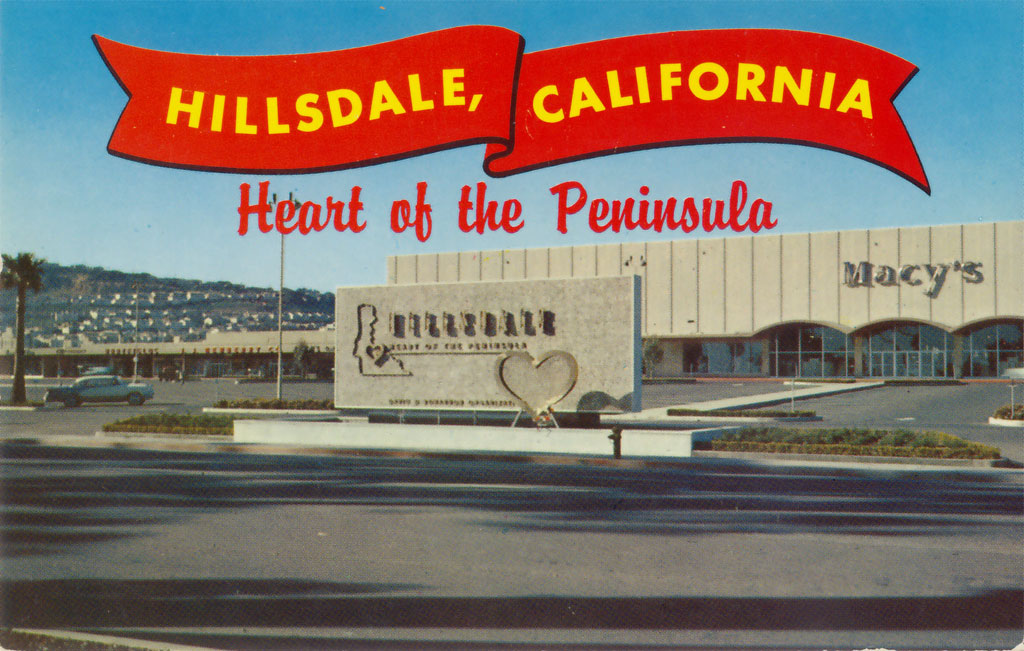
David at Retail Memories From Coast to Coast uploaded 2 videos (split) about Hillsdale Shopping Center in San Mateo, California, as it was in 1957 when it opened.

The videos show the center before it was enclosed, activities related to it, and vintage fashions, stores and signage. They serve as almost a class as to "how to shop" in what was then a new style of commerce.

Check them out. I think you'll enjoy them.

A Shopping Center is Born

(photo courtesy of Scott at BIGMallrat's Malls in Northern California and Reno Blog)

Tuesday, December 12, 2006

Blogging the MALL

By Mike Janssen

The malls of our youth have changed irrevocably over the years. Some have even closed their doors for good. But, some nostalgic shoppers are now enshrining cherished mall-hopping memories with an up-to-the-minute technology — the blog.

Over the past few years, devotees of mall lore and history have launched online troves of photos, postcards, floor plans and old newspaper ads with blogs. Labelscar, Malls of America and BIGMallrat's Malls in Northern California and Reno are just a few. And though shopping is often seen as a woman's favorite pastime, many of these mall bloggers are men — an oddity they're at a loss to explain.

The sites have attracted hundreds of readers daily, eager to relive their own mall memories. A community has sprung up that uses LiveJournal, a popular personal blogging tool, and a Remembering Retail forum on Yahoo! boasts 430 members.

Malls of America (mallsofamerica.blogspot.com), one of the most popular and frequently updated mall blogs, features new pictures of vintage malls nearly every day, along with awestruck commentaries free of even a hint of irony.

“If that ain't Heaven, I'd sure like to know what is,” wrote proprietor Keith Milford of a '60s-era photo of Westland Center in Westland, Mich., in which the promenade is lined with bizarre, towering structures that resemble mutant dandelions.

A vintage picture of kids at a shopping-mall fountain sent Milford into a reverie — “the relaxing sound of the gurgling fountains, the shimmering ripples on the surface, the glistening coins blinking up at you from the fountain's tiled bottom, all mixed with the murmuring din of busy shoppers and lulling Muzak echoing throughout the mall in the background.”

Milford, 40, is among the older mall bloggers, but shares an idyllic view of the malls he visited as a kid with fellow fanatics. They also rue the ways in which malls have changed over time, shedding their aesthetic frills of yesteryear: murals, sculptures, birdcages and huge fountains and courtyards. To these bloggers, today's malls seem more homogenized and, sadly, less central to the social life and shopping routines of today's suburbanites.

“They're a huge part of our landscape in this country,” says Labelscar's Jason Damas, 26. “And yet, not many people are shedding a tear over it.”

Damas, whose Web site Labelscar receives 400 unique visits per day, has not received any comments from mall managers, developers or owners.

Damas's passion for malls is rooted in his youth in Newport, R.I., where the nearest mall with any stores worth patronizing, the Rhode Island Mall in Warwick, was a 45-minute drive away.

At Rhode Island Mall, Damas relished the freedom to wander off from his parents for a little while to play video games, eat junk food and buy alternative rock albums. Going there was an “event,” he says.

It was there he discovered a compilation of British indie rock bands that spawned an abiding passion for music. “It was not a planned purchase — it was hanging out at the mall that brought it on,” says Damas who blogs under the name Caldor in homage to the defunct department store chain.

That warm fuzzy feeling
Scott Parsons, who covers California malls as BIGMallrat (bigmallrat.blogspot.com), says malls remind him of outings with his mother and grandmother, who would often visit three malls in a day.

“It's like comfort food in some respects,” he says. “They provided so much for us when we were growing up. We'd look at the birds in the cages, play in the water fountains, all these things you can't do anymore.”

“Looking back, you get warm fuzzy feelings,” Parsons says.

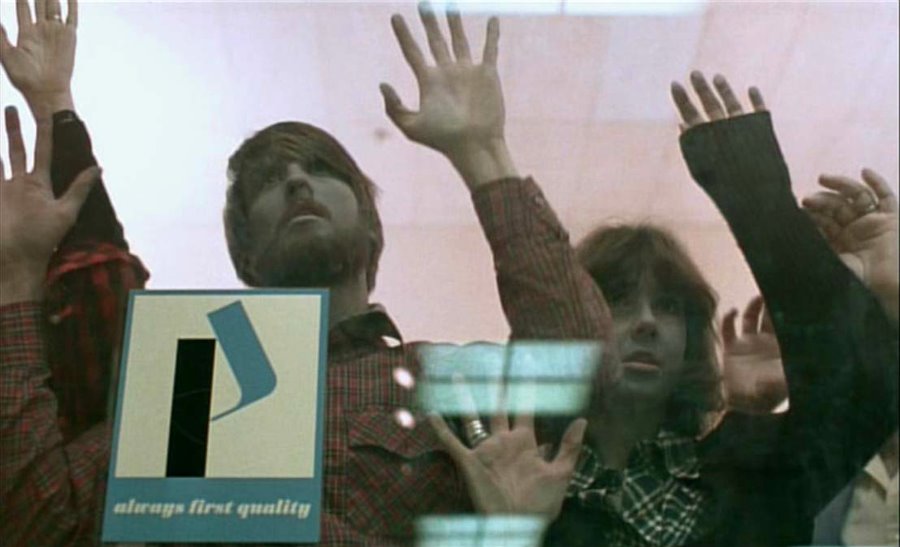
Milford also enjoyed his childhood shopping trips but joined the ranks of mall fanatics after seeing the 1979 horror film Dawn of the Dead, in which the protagonists, seeking refuge from zombies, hole up inside Monroeville Mall, just outside Pittsburgh.

In the early 1980s Milford became “utterly obsessed” with the film and Monroeville Mall. He asked the mall for brochures and floor plans and even built a digital recreation of the center in a 3-D computer modeling program, which allowed him to put himself inside a vintage reconstruction of the mall.

Milford's obsession later grew to include vintage malls in general. (He also maintains blogs devoted to pop culture depictions of Satan, Halloween and Santa Claus, as well as one highlighting YouTube videos of busty, scantily clad women.)

“One of my biggest fantasies has always been to somehow have a huge deserted shopping mall all to myself at night — not so much for all the ‘stuff’ there, but more so I can freely explore the place and run around in it to my heart's content,” Milford says. “I'll be the first to admit that my own enjoyment of malls actually comes from a slightly weird and very personal place.”

The rise of blogging offered Milford and other mall fans a home for their stores of memorabilia and historical research. Milford launched Malls of America in June 2005 because no other Web site catered to his appetite for “lots and lots of groovy photos!”

Parsons, 37, was early to the Web with his Guide to Northern California Malls, which he started in 1998. But, it was not until December that he started its companion blog, when he discovered two boxes of mall-related materials stowed away in his attic — industry magazines, newspaper clippings and hundreds of directories from malls in the western United States and Canada that he has hoarded since the 1970s.

Milford and Parsons, as well as many other of the writers, run their sites using Blogger, a Web-based service that furnishes free site hosting through its Blogspot service.

The mall bloggers buttress their collections of mall materials by scouring eBay, searching other Web sites and visiting libraries, flea markets and estate and garage sales. Their posts often link to related online resources such as mall Web sites, Wikipedia entries and aerial images of malls found via Google Maps.

Damas and co-blogger Ross Schendel take a more encyclopedic approach to mall history on Labelscar (labelscar.com), named after the mark that remains on a building's façade long after a sign has been removed. The bloggers met on America Online in the late '90s and discovered a mutual love for malls and road trips.

Damas and Schendel met in person at the University of Wisconsin in Madison and made pilgrimages to many malls of the Midwest. Damas estimates that together and individually they have visited two-thirds of the country's enclosed malls. He often extends business trips to give himself an extra day or two for visiting malls, then details his travels in lengthy posts illustrated with many photos of the properties.

Their professions suit their unusual hobby. Schendel, a grad student, studies the geographic information systems that are sometimes used to plan retail developments. Damas works in search-engine optimization and brings a marketer's eye to his analyses of malls and their financial fortunes.

Competitive spirit
Labelscar and other mall blogs attract loyal visitors who contribute reminiscences and submit selections from their own caches of old ads and photos. The bloggers also read each other's sites, commenting on posts and collaborating on the creation of a collective store of knowledge.

Damas acknowledges that a competitive spirit fuels his blogging. “You always want to be the first one to get the story,” he says.

As a whole, the blogs embody their authors' dreams of paying tribute to what may be a fading piece of Americana.

“I hope it serves to not only remind people of all the aesthetic design, beauty and character we've lost from our classic malls at this point,” Milford says, “but, also that there's a need to consciously appreciate and celebrate those places, as well as the people who designed and built them.”

Their efforts are time-consuming. Parsons estimates he puts in 10 to 40 hours a week on his mall guide and its accompanying blog, often starting after getting home at 5 p.m. from his job as a technical writer — “I have to cut myself off, really.”

Milford too spends at least a few hours a day on Malls of America, including weekends, which inspires awe among his fellow bloggers. Damas calls the blog a “must see.” Parsons is similarly impressed.

“It would be interesting to talk to him in real life,” he says. “Wow, this person is more of a mall geek than I am. What kind of person is that?”

Mall Blog Roll

Retail Traffic Magazine

BIGMALLRAT'S MALLS IN NORTHERN CALIFORNIA AND RENO BLOG
bigmallrat.blogspot.com
Companion to a website launched in 1998, this blog offers contemporary news about NoCal malldom as well as memories and memorabilia from decades past.

GEORGIA RETAIL MEMORIES
georgiaretailmemories.blogspot.com
This infrequently updated site covers the history of malls and other retail outlets in Georgia and the South, with many photos.

LABELSCAR
labelscar.com
Mall enthusiasts Jason Damas and Ross Schendel write detailed chronologies and commentaries on malls all over the country and in Canada that are living, dying or somewhere in between. Numerous photos accompany their posts.

MALL HALL OF FAME
mall-hall-of-fame.blogspot.com
A relative newcomer to the mall blog scene, inspired by Malls of America (see below).

MALLS OF AMERICA
mallsofamerica.blogspot.com
Keith Milford indulges his love of vintage mall design and paraphernalia with frequent posts highlighting photos, postcards, videos and more. Readers contribute their own memories.

THAT MALL'S SICK AND THAT STORE'S DEAD!
sickmalls.blogspot.com
Anita Rose, an assistant editor at deadmalls.com, focuses mainly on the fates of two malls in Hampton, Va.: Newmarket Fair and Coliseum Mall.

Sunday, November 12, 2006

Mall-aise: Shopping Malls as seen by Herman Krieger

Tuned In (Photo by Herman Krieger)

Photographer Herman Krieger recently emailed me about his photo essay on malls in Oregon (or anywhere, for that matter) called Mall-aise. It's very striking and I figured it would be of interest to LiveMalls readers.

Mall-aise: Shopping Malls as seen by Herman Krieger

Monday, November 06, 2006

Vote for Tysons Corner Proposal May Upset Work on Master Plan

Macerich Co. plans to expand the 38-year-old Tysons Corner Center by wrapping it with buildings as tall as 30 stories. (Washington Post)

By Alec MacGillis
Washington Post Staff Writer

McLEAN, Va. - Fairfax County officials are considering approving a major expansion of the Tysons Corner Center mall even as the county is in the middle of a much-touted effort to draft a new master plan for future development of the area.

This month, a consulting firm on a $1 million taxpayer-funded contract will start working with a county task force to draw up a plan for Tysons's future. Meanwhile, though, county officials are on the verge of approving the mall expansion, which would reshape the heart of Tysons with a ring of towers including a hotel, offices and more than 1,000 apartments.

The mall designs have generally been well received. But some residents question why the county is considering the proposal now, with officials still in the middle of the effort to rethink Tysons. Why spend so much time and money on planning, they ask, if the future of such pivotal parcels as Tysons Corner Center is already settled?

"They're wasting their time and our money, is the bottom line," said John Foust, a member of the McLean Citizens Association who testified last month in favor of deferring the mall proposal until after the new master plan is done.

Underlying the debate is the question of how to proceed with the overhaul of Tysons, which Fairfax leaders want to transform from an outsized, traffic-clogged office park into a vibrant, walkable downtown, aided by the expected arrival of Metrorail in 2012.

To guide this transformation, the Board of Supervisors appointed a 35-member task force last year to produce a new "comprehensive plan" for Tysons. Due next year, it is expected to include calls for an urban-style street grid and more high-rise construction around the four proposed Metro stations.

The task force is meeting regularly and getting considerable outside help: The county has set aside more than $600,000 for two consulting firms to collect public comments and create traffic models, and it awarded a $1 million contract last month for urban design consulting to PB Placemaking, a unit of construction giant Parsons Brinckerhoff.

But the transformation of Tysons is well underway, particularly in the center of the area, around the site of the proposed Metro station on Route 123 between Tysons Corner Center and the Tysons Galleria mall. In 2003, the county approved a proposal from Lerner Enterprises for eight high-rise office towers at Tysons II, even though the plans go against the county's preference for more residential space at Tysons.

Now comes Macerich Co., the California-based owner of Tysons Corner Center, with its plans to expand the 38-year-old mall by wrapping it with buildings as tall as 30 stories. The plans call for adding 3.5 million square feet to the 78-acre property over the next decade, a 150 percent increase. But rather than wait for the new master plan and whatever increase in density it will allow, Macerich is submitting its proposal under the existing 1994 plan, which it says allows for the expansion it is seeking.

Some residents argue that the proposal should not be approved under the existing plan because the project doesn't include the road upgrades required by the current master plan for a major increase in density. Macerich is offering to widen Routes 123 and 7 and expand the Westpark Drive bridge over Route 123, but critics say it should also build two grade-separated interchanges on International Drive or should have to wait for the new master plan.

"What happens at Tysons now is really historic stuff, and rather than doing one chunk in one way and another in another way, we argue that it be part of a broader comprehensive vision," said Will Elliott, a spokesman for the Vienna-based activist group FairGrowth.

Macerich officials say that the company's road offers are more than adequate and note that they applied months before the task force was formed. "We are clearly outside the purview" of the task force, said the company's attorney, Antonio Calabrese. "There's some serious posturing going on here."

In addition, he said, the mall proposal is in tune with the Tysons vision being discussed by the task force. The proposal includes a greater share of residential space than the Lerner one has, with 1,350 apartments, and a higher proportion of affordable units; it encourages mass transit use by limiting parking and keeping the mall open after stores close so commuters can walk through it to and from the station; and it features such public spaces as a large plaza with an ice rink.

The proposal, which was strongly endorsed by the county staff, is scheduled to be voted on by the Planning Commission next month, after which it will go before supervisors. If it is approved, future development on nearly 200 acres in the middle of the 1,700-acre Tysons area will be settled in advance of the new master plan.

Supervisor Linda Q. Smyth (D-Providence), who represents Tysons, acknowledged that the timing was not ideal but said it is possible that the new consultants could be granted a quick review of the mall's plans or that Macerich could be asked to leave open the chance of later revisions to reflect the findings of the task force.

Board of Supervisors Chairman Gerald E. Connolly (D) rejected the notion that the proposal diminished the task force's relevance, saying there is still plenty to work on, including development at the other three Metro stations, a street grid and improving pedestrian connections.

Amy Tozzi, a task force member from McLean, isn't so sure. It would be better, she said, if Macerich held off so there could be coordination among county officials and landowners about who would pay for which infrastructure upgrades called for by the task force.

"For developers to be trying to rush in and get under the wire is not in keeping" with the planning effort, she said. "We certainly would rather have the whole package."

Tuesday, October 31, 2006

Zombies Take Over Monroeville Mall

ThePittsburghChannel.com

MONROEVILLE, Pa. -- Most Pittsburghers know zombie movie guru George Romero is a Pittsburgher, too, and his "Night of the Living Dead" and subsequent "living-dead" flicks were shot right here in the burgh.

On Sunday, a special walk to honor Romero might make it into the Guinness Book of World Records.

Hundreds of wannabe zombies shuffled through the halls of the Monroeville Mall in an attempt to beat the world record for largest zombie walk.

Parts of Romero's "Dawn of the Dead," the sequel to "Night of the Living Dead," were shot at the mall in 1977.

Just like in the movie, zombies subsist on human brains, but, they're helping those who need more than just grey matter to survive.

"All zombies were encouraged to bring a canned food item with them, and I'm also here to eat some brains," said zombie Ryan Dolton, of Donora.

Before entering, the zombies went through make-up, and dropped off the food items for the Greater Pittsburgh Food Bank.

Zombies were encouraged to stay in character by just shuffling about, murmuring the word, "Brains." That meant no technology, cell phones or cameras.

As for the record, "I think we got it doubled at this point," said event organizer Professor MC Square. "Pittsburgh is the zombie capital of the world."

Video still from Dawn of the Dead courtesy of Keith at Malls of America.

Monday, October 23, 2006

Mall finds classic music keeps teens away

TAMPERE, Finland, Oct. 23 (UPI) -- At least two towns in Finland have discovered that classical music may not soothe young troublemakers -- but does drive them away.

The Koskikeskus Shopping Center in Tampere broadcasts classic radio from loudspeakers at its back entrance. The entrance, which provides shelter from bad weather, had tended to attract groups of teenagers who hung out to talk and smoke.

During recent construction, the mall was able to test the effect of the music. Sure enough, when the loudspeakers were silent teens gathered again, Helsinki Sonomat reported.

Another town, Lojha, took up the idea this summer, using early church music in a park that had become a teen gathering place. Now, music fills the air from mid-afternoon to 10 p.m.

Local business owners say that vandalism and other problems have dropped since the music began.

The Tampere mall adopted the classical music idea a decade ago, modeling it on successful experiments in the United States and Britain.

Wednesday, October 11, 2006

Lord & Taylor to leave Water Tower Place


Lord & Taylor, Water Tower Place, Chicago, Illinois. (photo by Justin Hall, 2003)

Water Tower Place store to close in spring as owner of indoor mall takes back space; fate of retailer's suburban Chicago outlets is unclear

By Sandra Jones
Chicago Tribune staff reporter

CHICAGO - Lord & Taylor plans to shutter its Water Tower Place store next spring, a move that diminishes the New York retailer's presence in the Chicago area and frees up one of the most prominent locations on the Magnificent Mile.

The decision to leave Michigan Avenue comes one day after investment group NRDC Equity Partners LLC acquired the 48-store chain from Federated Department Stores Inc. for $1.1 billion.

News of the closing follows the conversion of Marshall Field's, also at Water Tower Place, to Macy's last month and changes the face of one of the busiest shopping corners in the city. The two department stores opened as the anchors of Water Tower Place in 1975 and helped the indoor mall--a pioneer in bringing suburban-style shopping to the city--become one of the most popular tourist destinations in Chicago, with an estimated 20 million visitors a year.

Water Tower Place's owner, General Growth Properties Inc., has been eager to redevelop the Lord & Taylor space since acquiring the mall from Maryland's Rouse Co. in 2004.

NRDC, for its part, is concentrating on reviving the storied Lord & Taylor brand, particularly in the Northeast, where the retailer has been a fixture in New York for more than a century. The Purchase, N.Y.-based group, which also owns a stake in Linens 'n Things Inc., plans to put $150 million in capital improvements into Lord & Taylor stores and just hired former Saks Fifth Avenue CEO Christina Johnson to help them.

Lord & Taylor has suffered from neglect under a string of owners, most recently May Department Stores Co. It closed 32 of its weaker stores starting in 2003 and endured several turnaround attempts, losing its luster along the way.

Lord & Taylor is getting out of the Mag Mile property because the lease is up and General Growth wants to take back the space, said Johnson.

"This is not a decision of our making," said Johnson. "We would have liked to have remained."

Still, it is unclear if NRDC will keep the remaining four Lord & Taylor stores in the Chicago area. The Chicago-area stores combined generate roughly $120 million in sales, according to a person familiar with the stores. That's less than 10 percent of the chain's $1.4 billion in annual sales last year.

The remaining stores are at Northbrook Court in Northbrook, Woodfield mall in Schaumburg, Oakbrook Center in Oak Brook and Old Orchard in Skokie.

The Northbrook Court store is the most likely to be closed, according to a person familiar with the plans. General Growth is close to a deal to take the space back from NRDC and will most likely redevelop it.

General Growth officials declined to comment on the Northbrook store's future and declined to disclose plans for the Water Tower space.

"We're looking at a bunch of options," said Mitch Feldman, Water Tower's general manager. It will take three to six months to finalize plans, he said.

NRDC's Johnson also declined to comment specifically on the Northbrook store, but said, "We have no plans to close any stores."

Lord & Taylor's sales at the Mag Mile outpost have been declining for years, ringing up an estimated $25 million to $30 million a year, down from as much as $50 million in the store's heyday, according to people familiar with the store.

General Growth has been looking for ways to boost Water Tower's sales from a relatively mediocre $500 per square foot to as much as $900 within three to five years.

Department stores have traditionally paid minimal rent in exchange for their drawing power. Breaking up the seven-level, 140,000-square-foot Lord & Taylor space into smaller units aimed at specialty stores and restaurants would allow General Growth to generate high rents, said Allen Joffe, retail real estate broker at Baum Realty Group Inc. in Chicago. "Spaces like that don't come on the market very often," he said.

American Girl Place, located just down the street, looked at the site this year as a way to expand its doll store and playland for girls. Von Maur, the Davenport, Iowa-based department store, has also been eager to expand in Chicago and has had its eye on Lord & Taylor real estate.

American Girl officials couldn't be reached for comment.

New York based retail consultant Burt Flickinger predicts that despite Lord & Taylor's loyal customers in the Northeast, it has a chance to improve its business in Chicago, particularly as Macy's wrestles to attract shoppers disenchanted with its takeover of Marshall Field's.

"There is definitely a place for Lord & Taylor," said Flickinger. "When they've got their merchandising magic working for them, it's a very productive store. With consumers being very disappointed that Marshall Field's is gone, there's a great opportunity."

Wednesday, October 04, 2006

The Bergen Mall on myspace

LiveMalls fan Jordan Berson sent me a link to his myspace tribute to New Jersey's iconic Bergen Mall. There are lots of great pictures and commentary about the Paramus mall, one of the first large suburban shopping centers in America.

I think if you like this site and LiveMalls, you will love his page.

myspace.com/bergen_mall

Tuesday, October 03, 2006

Barneys Sparkles in Dallas

Fashion retailer opens large flagship store at NorthPark, designed by Gensler

visualstore.com

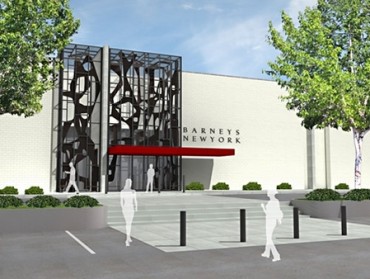
Jones Apparel Group Inc. (Bristol, Pa.) has opened its new Barneys New York flagship store at Dallas’ NorthPark Center.

The 88,000-square-foot space was designed by Gensler (San Francisco) in tandem with the Barneys in-house design team. It’s the luxury fashion retailer's third-largest flagship location (after New York and Beverly Hills, Calif.). However, in a departure from its usual presence in upscale urban settings, the new Barneys is located in a mall.

The exterior of the space is highlighted by a sculptural glowing steel and glass “light box” embedded in the store's expansive 35-foot white brick façade. Gensler collaborated with fine artists, including sculptor John Paul Phillipe and decorative artist Jonathan Adler, in developing both the exterior and interior designs.

"The design of Barneys New York in Dallas is architecture at the service of retail," said Lance Boge, Gensler's design director for the new store. "In drawing on the recognizable sculptural forms created by artist John-Paul Phillipe for Barneys internationally, we've designed a façade as a piece of sculpture and even established an architectural branded doorway into Barneys — a façade that is art, architecture and brand."

Phillipe is a long-time Barneys' collaborator who created the signature steel sculpture at Barneys' Tokyo location, among others. “The creative synthesis of artist and architect resulted in a visually striking glass and steel curtainwall vestibule structure that transparently encases a multi-dimensional steel sculpture,” said Boge. “The structure functions as the major external entrance to the store, transforming the building itself into a work of sculpture. A bold red cantilevered steel slab emerges from the entrance structure to create an elegant red porte cochere awning balancing above and defining a waiting area for valet parking.”

Inside, Gensler defined its task as capturing the taste, luxury and humor of the Barneys brand while creating an environment with its own personality. “The iconic style of Barneys New York is a perfect fit for Dallas' fashion-conscious consumer," said Jeff Henry, Gensler's interior design director for the store. "Designed to flow effortlessly, the major interior elements—floors, walls, ceilings—work together to create a sculptural stage that supports the unique merchandise and witty presentations. Wrapped around all of this are sumptuous materials that assert the Barneys New York unmistakable point of view."

Spiraling between the two floors, the wood, limestone, and steel staircase forms a directional focal point for shoppers. The stair's steel structure is built with the same cut shapes as the exterior sculpture; the railing features glass etched with a pattern that also references the exterior. Supported by a single steel beam, the stairway is light and transparent, cascading down and culminating midway with a platform to be used as an ad hoc runway for fashion events.

The interior features such luxury materials and finishes as Italian plaster, end-grain oak flooring, hammered steel, Lucite, ombred-limestone mosaics, and black-stained oak with gold cerusing. To emphasize the fine art theme throughout the store and mall, four artists (Carter Kustera, Terrence Gower, Adler and Phillipe) contributed original artwork including mixed-media and painted murals and silhouettes, sculpture, ceramic artwork, and even custom furnishings and interior design for the new personal shopping area.

Thursday, September 07, 2006

Askin' for a little respect

Samantha Thompson Smith, Staff Writer
The News and Observer, Raleigh, N.C.


RALEIGH, N.C. -- All we ask, Macy's, is that you don't break our hearts.

We can't take it from another department store chain, you see. We've been through enough already.

It's not that we haven't been welcoming. For almost two decades, we've opened our arms and hearts to new department store chains to the Triangle -- chains that promised us the best, but often didn't actually deliver.

You see, after Hecht's took over Thalhimers in the early 1990s, it opened its new Crabtree Valley Mall store. We were promised an "A" store -- packed with brands that weren't already in the market and were considered high-end, designer, contemporary. In the end, we got Lauren, Tommy Hilfiger, Liz Claiborne and Nautica. Nice stuff, but most of it wasn't exclusive or different. In fact, it was a lot like what we already had at Belk.

It got more painful than that. Who could forget the slow, painful death of Lord & Taylor at Crabtree? It, too, was promised to be an "A" store when it opened in 1995 packed with many of the same merchandise -- such as Tahari and Oleg Cassini -- as at Lord & Taylor stores in bigger markets.

By the time it closed in late February, it was a messy outlet type of store full of two-seasons-old clothes from other defunct Lord & Taylor stores.

We're still not sure how our relationship is going with Nordstrom and Saks Fifth Avenue. However, there are some signs the stores aren't giving us the best they have to offer.

Take the Nordstorm at Durham's The Streets at Southpoint. And then look at the 16-page Nordstrom ad in the September Vogue magazine. The ad is packed with brands that aren't in the store: Chloe shoes, Zac Posen handbags, Proenza Schouler coats. At least we can get them online at www.nordstrom.com.

Then there's that little issue about the Charlotte Nordstrom at SouthPark mall, which carries contemporary designs by Tracy Reese, Chaiken, D&G and Milly.

And the Saks Fifth Avenue at Triangle Town Center still doesn't have some of the luxury brands, such as Gucci and Prada, we've been hoping for since it opened two years ago.

Of course, there hasn't always been disappointment. When Dillard's bought Ivey's in the early 1990s, Dillard's didn't make promises. The only real worry was that Dillard's wouldn't have sales as good as Ivey's used to. Today, Dillard's continues to improve its brand mix, including the addition of Kors by Michael Kors, Kenzie, BCBG Girls and David Meister, brands that help it stand out a bit from other department stores.

And who could forget the department store chain that raised us: Charlotte-based Belk. If anything, the chain has only gotten better. The Belk at Crabtree is among the only retailers in the state selling women's apparel by contemporary designer Marc Jacobs. It's also stocked with a collection of BCBG Max Azria, Elie Tahari and Theory separates and Betsey Johnson and Vera Wang dresses -- brands that used to only be found at specialty stores.

We'll give you a chance, Macy's. All we ask is that you do the same for us.

© Copyright 2006, The News & Observer Publishing Company

Sunday, September 03, 2006

Just browsing at the mall?

That's what you think

By Mindy Fetterman and Jayne O'Donnell, USA TODAY

As you step in the door of a retail store — whether it sells Gucci handbags, jeans for teens or hardware — you're being lured to shop and spend in ways so subtle you probably don't know what's happening to you.

Or your wallet.

Retailers know how you'll approach a store, where you'll hesitate, how to affect your mood, how to pique your desires, how to play to your aspirations. Everything in a store, from lighting to floor color to music to how goods are displayed, is meant in some way to get you to not just shop, but spend.

PHOTOS: Think you're just browsing?

"It's like a Broadway musical," says Deborah Mitchell, a marketing expert at the University of Wisconsin. "Nothing was put into that musical that wasn't thought through. It's the same in a highly orchestrated retail environment."

At a Sony Style store, for instance, the subtle fragrance of vanilla and mandarin orange — designed exclusively for Sony — wafts down on shoppers, relaxing them and helping them believe that this is a very nice place to be.

ADVICE: Understanding why you're shopping can help curb it

Everything in the store is designed to encourage touch, from the silk wallpaper to the smooth maple wood cabinets to the etched-glass countertops. Products are displayed like museum pieces and set up for you to touch and try.

Once you touch something, Sony figures, you'll buy it.

At a new Home Depot in the Atlanta suburb of Buckhead, the entranceway lures shoppers in with an open floor plan so they get a better "vista" of the store.

Floor-to-ceiling racks of goods, long the signature of the warehouse store, are further back. Lower displays of expensive goods — riding lawn mowers, upscale porch furniture and a home design center for redecorating kitchen, bath and flooring — are clustered so they're visible from the front door.

At a JCPenney, a "decompression area" at the front of the store lets shoppers get acclimated and calm down from the noise in the mall or on the street. Three dressed mannequins offer a taste of the season's hot trends and set up a line of sight to the shopping ahead.

At a Macy's department store, salespeople stand about 10 feet inside the entrance, ready to spritz visitors with perfume.

All are ways to engage you in the store and draw you in.

The sound
Music has been used by retailers for decades as a way to identify their stores and affect a shopper's mood, to make you feel happy, nostalgic or relaxed so you linger. Think of '50s cocktail bar music in a Pottery Barn.

But retailers are becoming more sophisticated in how they use music. JCPenney has just finished installing a new system for its stores that allows certain music to be played at certain times of the day. It can "zone" music by demographics, playing more Latin music in stores where there's a higher Hispanic population — all controlled by headquarters in Plano, Texas.

"Most people know they are being influenced subliminally when they shop," says Bernadette Schleis, whose company studies consumer behavior. "They just may not realize how much."

To help you understand what's happening when you go shopping, here's a guide: How Retailers Lure You to Shop and Buy.

The aroma
Anyone who's walked into a mall has been enticed by the smell of cinnamon buns or chocolate chip cookies. Now, retailers such as Sony and shirtmaker Thomas Pink are developing "signature scents" that you smell only in their stores.

"Scent is so closely aligned with your emotions, it's so primitive," says David Van Epps, president of ScentAir, a Charlotte company that develops exclusive scents for businesses, including Sony. His firm's revenue, number of employees and output have tripled in the past two years, he says.

"Imagine you're trying to create the same level of brand loyalty that Harley-Davidson has when a guy is willing to tattoo his arm with the words 'Harley-Davidson.' That's what we're going for."

Other retailers might not have signature scents, but they use fragrance. Bloomingdale's uses different essences in different departments: baby powder in the baby store; suntan lotion in the bathing suit area; lilacs in lingerie; cinnamon and pine scent during the holiday season.

"We even fragranced their outside (display) windows in New York last year," says Van Epps. "They did a Phantom of the Opera display, and we fragranced it with rose."

Thomas Pink pipes the smell of clean, pressed shirts into its stores. The essence of lavender wafts out of L'Occitane skin-care stores.

And if brightly colored window displays aren't enough to lure you into a Williams-Sonoma kitchen store, the scents from frequent cooking demonstrations may. "It feels like you are in someone else's house," says Michelle Bogan, a retail consultant for Kurt Salmon Associates.

Sony decided to create its own scent for its Sony Style stores as one way to make the consumer electronics it sells less intimidating, particularly to women. "From research, we found that scent is closest to the brain and will evoke the most emotion, even faster than the eye," says Dennis Syracuse, senior vice president of consumer retail sales. "Our scent helps us create an environment like no other."

How retailers use scent can be tricky, though, Mitchell says.

"Not everyone agrees what smells good."

The entrance
The scent may have lured you near, but what's in the entrance is the spring on the trap. That's where you'll see some of the glitziest, most expensive stuff in the store — the stuff you wish you could buy.

"The key businesses that draw women — the high-volume, high-profit goods — are right up front: handbags, cosmetics, jewelry and sometimes, intimate apparel," says Dan Butler, a National Retail Federation vice president.

The entrance is important because it hints at what's inside that you must have. "We're trying to give her ideas right as she's walking into the store," says Karen Meskey-Wilson, vice president of store design for JCPenney.

Stores that cater to teens often pick one hot item and heavily promote it in their windows to increase demand, says consultant Bogan. Gap is doing that this fall with denim. The new "skinny" jeans style may push people to update their wardrobes, she says.

"The idea is that there is so much excitement about great new jeans that you'll want to go out and buy some, even if you don't need jeans," she says.

Others use a less-is-more tactic. Abercrombie & Fitch lures teens into its Ruehl stores by not having merchandise visible from the mall. You have to go into the store, which looks like a Greenwich Village apartment inside, to see if you like anything. Once inside, the retailer hopes its soft lighting, couches and books will make you want to stay and buy.

In department stores, merchants battle to get the best spots up front for their goods; those that sell the most get the prime positions. Cosmetics, which never go on sale, are among the most profitable items sold in department stores, Butler says. Free makeovers lure clients in and create a "sense of connection and obligation," says consumer psychologist Kit Yarrow.

"A nationally known makeup artist can sell $30,000 in cosmetics in one day," says Butler of the NRF.

The flow
How you as a shopper move in and around a store is not, really, up to you.

You're funneled from the store's entrance past its most expensive goods through a maze of aisles and into departments that are set up as stores-within-a-store. Then you find yourself on "the racetrack," an oval aisle that carries you around the entire building to get a look at everything.

It's the same at a department store or a home renovation store or, on a different scale, in a specialty retailer

Mini-displays called "trend stations" are parked in the middle of aisles to stop shoppers' progress and entice them to look and buy.

Lifestyle vignettes, such as carefully constructed mini-bedrooms or mini-bathrooms, make shoppers stop and look. Home Depot is using such vignettes in its Buckhead store to showcase its expanded kitchen and bathroom goods, including new vessel sinks and architectural designs for cabinets. The displays may be adopted in other new and renovated stores.

"Customers are so much more sophisticated in décor and wanting to take a risk in their home. So we're getting more sophisticated in our presentation," says Kim McKesson, senior vice president of store merchandising. "Our bathrooms aren't just knock-down white cabinets anymore."

If you like the look, whatever the look is, you can have it right away. All goods in the displays are within arm's reach.

"It's incredible to watch people as they walk up, see the mannequins and pick up the whole outfit," says Meskey-Wilson of JCPenney. "We're seeing great sell-through."

Sony Style has mini-living rooms set up to showcase what its 40-inch flat-panel TV would look like over a fireplace. "We've had customers bring in their architect and say, 'Re-create this in my house. I want the whole setup,' " says Syracuse of Sony.

Narrow aisles crammed with goods are going away.

"Twenty years ago, the founders wanted you to get lost in the store," spokesman David Sandor says of Home Depot's founding partners, Bernard Marcus and Arthur Blank. That's why Home Depots were laid out with long narrow aisles and no cut-across in the middle of the store.

Now, Home Depot is widening its aisles and lowering displays so customers can touch and feel products. JCPenney is "really weeding out the stuff in our stores," says Mike Boylson, chief marketing officer. The retailer used to have eight to 10 rows of merchandise in each area. As it opens new stores or renovates existing ones, it's cutting that to four.

"You don't have to go through a sea of racks anymore," says Meskey-Wilson.

Most consumers come into a store and head to the right, says consultant Bogan. That's why retailers, including Williams Sonoma, put high-priced impulse items to the right of the front door, such as a $150 wine opener.

"The No. 1 thing retailers are trying to do is to get people to make impulse purchases," says Yarrow, also a business professor at San Francisco's Golden Gate University.

And you thought you had a list and were going to stick to it.

Monday, August 21, 2006

Will sale revive megamall Macy's?

With local management, store gets a makeover and new products

Allison Kaplan, Pioneer Press, St. Paul, Minn.

BLOOMINGTON, Minn. -- Junky, drab and rundown. Macy's Mall of America has done little to endear itself to Minnesotans, which helps explain the local apprehension about Marshall Field's stores being converted to Macy's next month.

Even the store manager at Macy's Mall of America acknowledges that environment has been the No. 1 customer complaint in recent years. Aisles were cluttered, displays were haphazard, fitting rooms were dingy and the merchandise was mediocre. The store, operated by Macy's California division, was totally out of touch with the local customer. In December, you were more likely to find bathing suits than winter coats. And that was reflected in annual sales, which plunged from a high of $58 million in the early 1990s, when the store first opened, to $35 million in recent years.

Macy's Mall of America was an orphan, abandoned by West Coast parents who initially were excited about giving birth to a store at the nation's largest mall but never understood their sole Midwestern child and finally stopped trying.

After more than a decade of flailing without any support system, Macy's Mall of America finally has found loving parents. As it turns out, they were here all along. Federated Department Store Inc.'s purchase of all 61 Marshall Field's stores has resulted in Field's Minneapolis-based executive team, which has long regretted its decision not to build a store at the successful Mall of America, being put in charge of the Macy's Mall of America store.

The new local leadership, now called Macy's North, spent the summer at Mall of America upgrading merchandise, clearing aisles, shampooing carpets and remodeling fitting rooms. Basically, trying to make the store look more like Field's, which -- stay with us here -- will be converted to Macy's as of Sept. 9. Their hope is that Minnesotans will embrace Macy's Mall of America with the same devotion they feel toward Field's stores.

But will fickle shoppers give Macy's Mall of America a second chance?

Retail expert Dave Brennan has his doubts. The one thing Macy's Mall of America always had going for it, even as the store deteriorated, was its uniqueness in this market.

"Now, that uniqueness is gone," said Brennan, co-director of the Institute for Retailing Excellence at the University of St. Thomas. Brennan conducts an annual holiday-spending survey, which has shown that in the past three years, local shoppers visited the Mall of America occasionally at most. "If anything, this isn't going to help the Mall of America."

The Mall of America is an unusual beast. At Macy's, tourists account for 40 percent of sales. The store is busier in July, when most malls are slow, than December, which is the busiest month for most retailers. That's because tourism peaks in the summer and trails off as the holidays approach and shoppers retreat to their "local" shopping center. Macy's Mall of America store manager Ed Buechel is determined to change that pattern.

The key could be coats.

A lack of warm coats on the selling floor in past winters was the most obvious sign that Macy's Mall of America wasn't the local department store. Decisions were made by California buyers, many of whom had never even visited Minnesota. This year, with Minneapolis-based Macy's North at the helm, the first wave of fall coats is already on display. Coats will get a prominent spot by the door, and there will be a much larger selection. Buechel expects to quadruple his outerwear business.

Throughout the store, more than four dozen national brands are being added -- upscale labels like Coach, Eileen Fisher and Joseph Abboud sportswear, which won't impress the Field's shopper but represent a marked improvement for Macy's Mall of America.

Still, better merchandise won't help if shoppers do not want to spend time in the store.

"Environment is a stronger influence on customers than they even realize," said Cindy Eliason, regional vice president of stores for Macy's North in charge of the Mall of America location. "This was a worn store. It's things you can't put your finger on, but they make a difference."

Sleek waiting areas with leather sofas and textured walls have been added outside the fitting rooms. Bathrooms have been upgraded. A new floor was installed in one section of the home department. Dark-wood display tables were swapped for more contemporary, light-wood models. Premium denim was taken off the racks and spread out on tables to give the young men's and women's departments a more modern look.

These tweaks may seem minor, but they affect shoppers' perceptions, said Lynn Robertson, president of Fame, a Minneapolis-based retail brand agency. "You don't notice the quality of materials used in stores -- flooring, ceiling, fixtures -- but it's visceral. You can feel it."

Macy's Mall of America is also getting new directional signs. ("Maybe we'll only have to tell customers where the bathrooms are 50 times a day instead of 150," Buechel joked.) Fifty price-checker machines for customer use are going to be prominently placed throughout the store, particularly in the home area, where many items don't have price tags. The store is now tied into the Field's computer system, so out-of-stock merchandise can be tracked to St. Paul or Roseville rather than New York.

Macy's salespeople, dressed in all black, cheered enthusiastically when executives recently announced these improvements at a pep rally to usher in the new era. Unlike Field's employees, many of whom seem apprehensive about the conversion, the attitude at the Mall of America store is upbeat. Now, someone cares about them.

"We had so many meetings through the years to talk about how to get into the Mall of America," said Ertugrul Tuzcu, who has been with the department store chain through several transformations, starting with Dayton's in 1978, through the Marshall Field's years and now as executive vice president of stores for Macy's North.

"Now, we have you," Tuzcu told Macy's Mall of America employees. "You are one of a kind in 800-plus stores."

Tuzcu took care not to sugarcoat this merger: "It's going to be a rocky road at times. There are all these people in the sandbox, and we have a lot to learn."

But no one flinched when he called for a 17 percent increase in sales for the fourth quarter at the Mall of America store. The sales staff was too busy celebrating the arrival of Gucci watches and Calvin Klein suits. Said Tuzcu, "We're counting on this store to be a major focus for us."