Showing posts with label JCPenney. Show all posts

Wednesday, November 18, 2009

JCPenney to stop publishing 'big book' catalogs

PLANO, Texas (AP) — J.C. Penney will stop publishing its twice-yearly "big book" catalogs, now that customers increasingly shop online.

Instead, J.C. Penney Co. says it will publish specialty catalogs and focus its efforts online, on the Web site jcp.com and on social networks. In part, the company says it is responding to consumer habits to view catalogs more as "look books."

The Plano, Texas, company will continue to publish its Christmas catalog and others, such as the "Little Red Book" for women's apparel and "Matters of Style" for men.

Eliminating the hefty twice-a-year catalogs will cut the company's paper use by 25 percent to 30 percent in 2010.

Thursday, August 13, 2009

Playing to the Middle

By CINTRA WILSON
Published: August 13, 2009

J.C. Penney has broken free of its suburban parking area to invade Herald Square, and the most frequent question on New York’s collective lips seems to be: Why? (read more)

The new JCPenney at the Manhattan Mall in New York (former home to Gimbels, Stern's and A&S) is open and flourishing in an otherwise dismal retail market. What better way to celebrate its arrival and success by sending the New York Times fashion reporter Cintra Wilson into the store for a review. Ms. Wilson gives the store enough backhanded compliments and outright insults that's almost a parody of a serious article, even for the Fashion & Style section.

Consider this excerpt:

J. C. Penney has always trafficked in knockoffs that aren’t quite up to Canal Street’s illegal standards. It was never “get the look for less” so much as “get something vaguely shaped like the designer thing you want, but cut much more conservatively, made in all-petroleum materials, and with a too-similar wannabe logo that announces your inferiority to evil classmates as surely as if you were cursed to be followed around by a tuba section.”

Just like all good clichés, this hackneyed statement is partly based in truth, but not so much that no one would be able say it definitively. Penney’s is no runway show, but its offerings are no worse than those of Target, Kohl's or even most of the private label merchandise at Macy's.

Considering the questionable (and largely overpriced even at a discount) merchandise that passes for fashion in the dozens of off-price store that cover Manhattan, JCPenney seems like a measure of clarity. At least what you want is likely in your size.

You also have to consider that every other large scale retailer that has been in this mall since the fall of Gimbels has tanked. Stern's, for all of its history as the "Show Biz Store," looked more like a bad infomercial when they were there. Steve & Barry's was even worse, stretching its bland wares into an oversized space that was doomed to fail. Don't get me started on the perpetually lackluster specialty stores in this mall. JCPenney is a strong enough name that it could be a serious contender with the right amount of traffic.

UPDATE: Apparently neither the public or Ms. Wilson's bosses liked the article very much.
The Insult Was Extra Large
NYTimes Issues Apology For Cintra Wilson Article


Tuesday, June 12, 2007

way to shop?

Macy's regional buying strategy is criticized

By SUZANNE KAPNERF
The New York Post

Even as Macy's spends millions of dollars to create a national brand through advertising and store renovations, behind the scenes the company still operates through seven regional buying offices, a system that analysts have panned as outdated and costly.

Macy's argues that its regional divisions allow it to better tailor merchandise for different stores, ensuring that marquee locations such as Macy's Herald Square carry more upscale items than do stores in less affluent neighborhoods.

But analysts point out that Macy's is one of the few large retailers to still rely on regional buying offices. J.C. Penney, Kohl's and Nordstrom are among those that have switched to central systems, yet manage to pepper stores with local flavor, these people said.

As Macy's sales continue to lag expectations, the company's cost structure is increasingly becoming a topic of conversation. This is especially true as savings from its merger with the May Department Stores Co. start to run their course.

"Macy's cost structure is too high, and, as a result, their prices are too high," said Robert Buchanan of A. G. Edwards. "That is a key reason why they are likely to lose market share."

Buchanan estimates that Macy's could save $100 million a year by eliminating all but two of its buying offices. He favors the retention of regional merchandise managers to ensure that products are tailored to individual stores.

Such a move would help bring Macy's expenses in line with competitors. According to Buchanan, Macy's expense-to- sales ratio is 32 percent compared with 27 percent for Nordstrom and 25 percent for both J.C. Penney and Kohl's.

Macy's has tried centralized buying in its home department with disastrous results, making it less likely the company would move quickly to streamline other divisions, observers said.

The move to central buying for bedding, furniture and other items for the home pre-dated Macy's, then known as Federated Department Stores, 2005 merger with the May Co.

Logistical problems with warehouse and distribution centers overwhelmed the Macy's team. Then the housing slump kicked in, further hurting sales of home goods, which have been among the company's weakest performers.

The pressure to cut costs by centralizing operations comes as Macy's finds it increasingly difficult to integrate the roughly 400 stores it acquired from the May Co.

Macy's is adding more promotions and adjusting merchandise through a seven-box grid. Prices range from good, better, best. Styles are lumped into four groups with traditional being the most conservative and fashion the most trendy.

Tinkering with the merchandise only works if consumers perceive products sold at Macy's to be of comparable or better value to what competitors are offering, analysts said.

For instance, towels sold at Macy's under its private label Charter Club brand for $16 stack up poorly against Target's Fieldcrest towels, which regularly go for $11.99, said Robert Passikoff of Brand Keys.

Sunday, September 03, 2006

Just browsing at the mall?

That's what you think

By Mindy Fetterman and Jayne O'Donnell, USA TODAY

As you step in the door of a retail store — whether it sells Gucci handbags, jeans for teens or hardware — you're being lured to shop and spend in ways so subtle you probably don't know what's happening to you.

Or your wallet.

Retailers know how you'll approach a store, where you'll hesitate, how to affect your mood, how to pique your desires, how to play to your aspirations. Everything in a store, from lighting to floor color to music to how goods are displayed, is meant in some way to get you to not just shop, but spend.

PHOTOS: Think you're just browsing?

"It's like a Broadway musical," says Deborah Mitchell, a marketing expert at the University of Wisconsin. "Nothing was put into that musical that wasn't thought through. It's the same in a highly orchestrated retail environment."

At a Sony Style store, for instance, the subtle fragrance of vanilla and mandarin orange — designed exclusively for Sony — wafts down on shoppers, relaxing them and helping them believe that this is a very nice place to be.

ADVICE: Understanding why you're shopping can help curb it

Everything in the store is designed to encourage touch, from the silk wallpaper to the smooth maple wood cabinets to the etched-glass countertops. Products are displayed like museum pieces and set up for you to touch and try.

Once you touch something, Sony figures, you'll buy it.

At a new Home Depot in the Atlanta suburb of Buckhead, the entranceway lures shoppers in with an open floor plan so they get a better "vista" of the store.

Floor-to-ceiling racks of goods, long the signature of the warehouse store, are further back. Lower displays of expensive goods — riding lawn mowers, upscale porch furniture and a home design center for redecorating kitchen, bath and flooring — are clustered so they're visible from the front door.

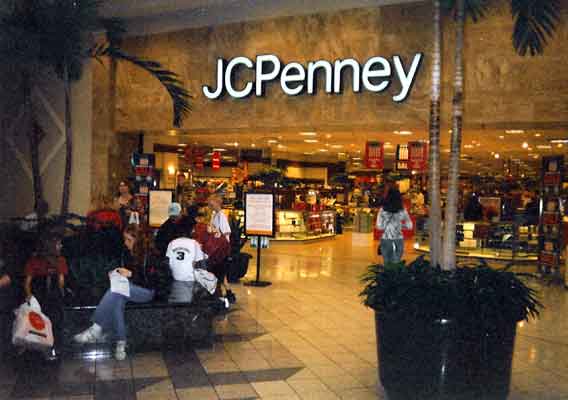
At a JCPenney, a "decompression area" at the front of the store lets shoppers get acclimated and calm down from the noise in the mall or on the street. Three dressed mannequins offer a taste of the season's hot trends and set up a line of sight to the shopping ahead.

At a Macy's department store, salespeople stand about 10 feet inside the entrance, ready to spritz visitors with perfume.

All are ways to engage you in the store and draw you in.

The sound
Music has been used by retailers for decades as a way to identify their stores and affect a shopper's mood, to make you feel happy, nostalgic or relaxed so you linger. Think of '50s cocktail bar music in a Pottery Barn.

But retailers are becoming more sophisticated in how they use music. JCPenney has just finished installing a new system for its stores that allows certain music to be played at certain times of the day. It can "zone" music by demographics, playing more Latin music in stores where there's a higher Hispanic population — all controlled by headquarters in Plano, Texas.

"Most people know they are being influenced subliminally when they shop," says Bernadette Schleis, whose company studies consumer behavior. "They just may not realize how much."

To help you understand what's happening when you go shopping, here's a guide: How Retailers Lure You to Shop and Buy.

The aroma
Anyone who's walked into a mall has been enticed by the smell of cinnamon buns or chocolate chip cookies. Now, retailers such as Sony and shirtmaker Thomas Pink are developing "signature scents" that you smell only in their stores.

"Scent is so closely aligned with your emotions, it's so primitive," says David Van Epps, president of ScentAir, a Charlotte company that develops exclusive scents for businesses, including Sony. His firm's revenue, number of employees and output have tripled in the past two years, he says.

"Imagine you're trying to create the same level of brand loyalty that Harley-Davidson has when a guy is willing to tattoo his arm with the words 'Harley-Davidson.' That's what we're going for."

Other retailers might not have signature scents, but they use fragrance. Bloomingdale's uses different essences in different departments: baby powder in the baby store; suntan lotion in the bathing suit area; lilacs in lingerie; cinnamon and pine scent during the holiday season.

"We even fragranced their outside (display) windows in New York last year," says Van Epps. "They did a Phantom of the Opera display, and we fragranced it with rose."

Thomas Pink pipes the smell of clean, pressed shirts into its stores. The essence of lavender wafts out of L'Occitane skin-care stores.

And if brightly colored window displays aren't enough to lure you into a Williams-Sonoma kitchen store, the scents from frequent cooking demonstrations may. "It feels like you are in someone else's house," says Michelle Bogan, a retail consultant for Kurt Salmon Associates.

Sony decided to create its own scent for its Sony Style stores as one way to make the consumer electronics it sells less intimidating, particularly to women. "From research, we found that scent is closest to the brain and will evoke the most emotion, even faster than the eye," says Dennis Syracuse, senior vice president of consumer retail sales. "Our scent helps us create an environment like no other."

How retailers use scent can be tricky, though, Mitchell says.

"Not everyone agrees what smells good."

The entrance
The scent may have lured you near, but what's in the entrance is the spring on the trap. That's where you'll see some of the glitziest, most expensive stuff in the store — the stuff you wish you could buy.

"The key businesses that draw women — the high-volume, high-profit goods — are right up front: handbags, cosmetics, jewelry and sometimes, intimate apparel," says Dan Butler, a National Retail Federation vice president.

The entrance is important because it hints at what's inside that you must have. "We're trying to give her ideas right as she's walking into the store," says Karen Meskey-Wilson, vice president of store design for JCPenney.

Stores that cater to teens often pick one hot item and heavily promote it in their windows to increase demand, says consultant Bogan. Gap is doing that this fall with denim. The new "skinny" jeans style may push people to update their wardrobes, she says.

"The idea is that there is so much excitement about great new jeans that you'll want to go out and buy some, even if you don't need jeans," she says.

Others use a less-is-more tactic. Abercrombie & Fitch lures teens into its Ruehl stores by not having merchandise visible from the mall. You have to go into the store, which looks like a Greenwich Village apartment inside, to see if you like anything. Once inside, the retailer hopes its soft lighting, couches and books will make you want to stay and buy.

In department stores, merchants battle to get the best spots up front for their goods; those that sell the most get the prime positions. Cosmetics, which never go on sale, are among the most profitable items sold in department stores, Butler says. Free makeovers lure clients in and create a "sense of connection and obligation," says consumer psychologist Kit Yarrow.

"A nationally known makeup artist can sell $30,000 in cosmetics in one day," says Butler of the NRF.

The flow
How you as a shopper move in and around a store is not, really, up to you.

You're funneled from the store's entrance past its most expensive goods through a maze of aisles and into departments that are set up as stores-within-a-store. Then you find yourself on "the racetrack," an oval aisle that carries you around the entire building to get a look at everything.

It's the same at a department store or a home renovation store or, on a different scale, in a specialty retailer

Mini-displays called "trend stations" are parked in the middle of aisles to stop shoppers' progress and entice them to look and buy.

Lifestyle vignettes, such as carefully constructed mini-bedrooms or mini-bathrooms, make shoppers stop and look. Home Depot is using such vignettes in its Buckhead store to showcase its expanded kitchen and bathroom goods, including new vessel sinks and architectural designs for cabinets. The displays may be adopted in other new and renovated stores.

"Customers are so much more sophisticated in décor and wanting to take a risk in their home. So we're getting more sophisticated in our presentation," says Kim McKesson, senior vice president of store merchandising. "Our bathrooms aren't just knock-down white cabinets anymore."

If you like the look, whatever the look is, you can have it right away. All goods in the displays are within arm's reach.

"It's incredible to watch people as they walk up, see the mannequins and pick up the whole outfit," says Meskey-Wilson of JCPenney. "We're seeing great sell-through."

Sony Style has mini-living rooms set up to showcase what its 40-inch flat-panel TV would look like over a fireplace. "We've had customers bring in their architect and say, 'Re-create this in my house. I want the whole setup,' " says Syracuse of Sony.

Narrow aisles crammed with goods are going away.

"Twenty years ago, the founders wanted you to get lost in the store," spokesman David Sandor says of Home Depot's founding partners, Bernard Marcus and Arthur Blank. That's why Home Depots were laid out with long narrow aisles and no cut-across in the middle of the store.

Now, Home Depot is widening its aisles and lowering displays so customers can touch and feel products. JCPenney is "really weeding out the stuff in our stores," says Mike Boylson, chief marketing officer. The retailer used to have eight to 10 rows of merchandise in each area. As it opens new stores or renovates existing ones, it's cutting that to four.

"You don't have to go through a sea of racks anymore," says Meskey-Wilson.

Most consumers come into a store and head to the right, says consultant Bogan. That's why retailers, including Williams Sonoma, put high-priced impulse items to the right of the front door, such as a $150 wine opener.

"The No. 1 thing retailers are trying to do is to get people to make impulse purchases," says Yarrow, also a business professor at San Francisco's Golden Gate University.

And you thought you had a list and were going to stick to it.
Friday, August 18, 2006

Calif. woman sues JCPenney after getting smacked by a dummy

LOS ANGELES (AP) - A woman is suing the J.C. Penney Co. after an alleged run-in with a store mannequin that she says left her with a cracked tooth, a bloodied head and recurring shoulder pain.

Diana Newton, 51, of Westminster, Calif., sued the Plano, Texas-based retailer last month in Orange County Superior Court. She contended she was cracked in the head by a legless female dummy at its Westminster Mall store.

Newton said the incident happened nearly a year ago in the women's department, as she was shopping for a blouse. The only one in her size was on the mannequin. As a salesclerk was removing the garment, the dummy's arm flew off and struck Newton's head, according to her lawsuit.

"I felt a burning sensation," she recalled.

Paramedics treated her bleeding scalp at the scene. Newton drove herself home, then had someone take her to a hospital for further treatment.

The blow also cracked a molar, which led to a root canal, she said.

The suit seeks unspecified damages.

A spokeswoman for J.C. Penney said the company doesn't comment on pending litigation.

Tuesday, July 25, 2006

nothing like a little retail nostalgia

This is a truly amazing find.

My friends over at Labelscar.com travel to malls all over the country checking out the retail oddities that dot our cities and towns. The photo above was taken in 2002 in Fremont, Nebraska at the Freemont Mall.

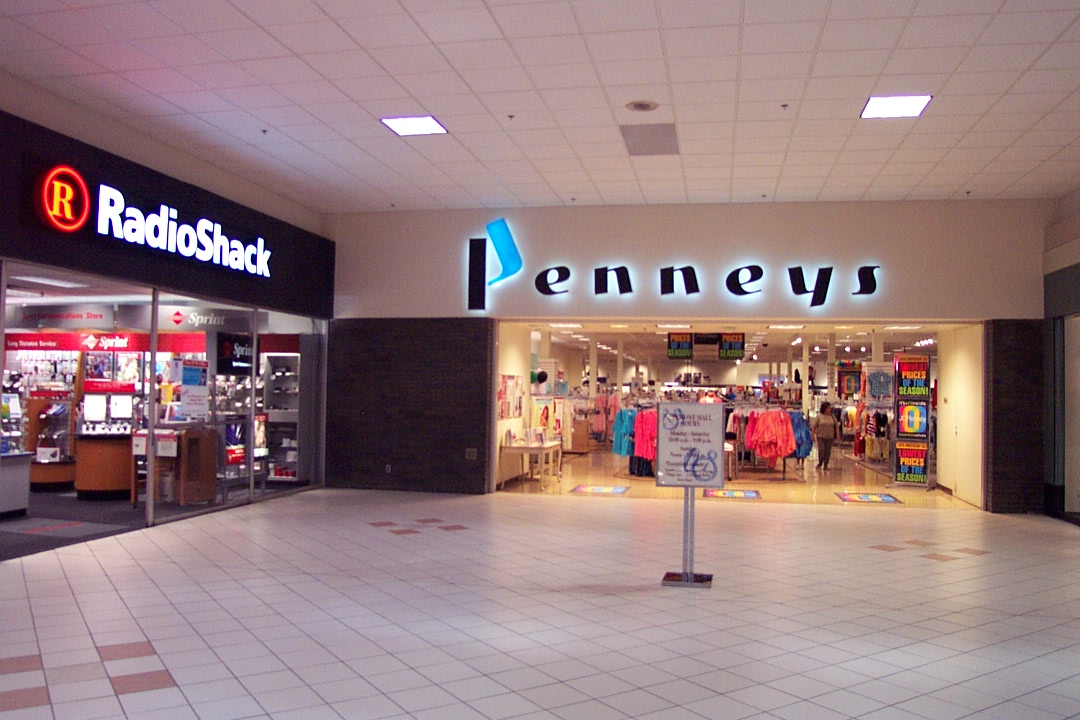
This, Steve-landers, is probably the oldest 1965-1971 era JCPenney signage still in active use. The dark letters with the neon background and turquoise P werre a familiar sight in malls across America for a long time.

Most JCPenney stores were updated throughout the 1980s to replace signage and expand clothing departments into former ‘hard goods’ areas of larger stores. Apparently they missed the mall entrance on this store. Not that I'm complaining :-)

I wish the electified nostalgia could have stretched to the exterior of this store, but the funky brown and white color scheme is still pretty sweet, even with the updated logo.

Check out their blog entry on this mall to see what I'm talking about.

Monday, June 19, 2006

Polo Penney's

Ralph Lauren reportedly developing an exclusive fashion line for J.C. Penney

visualstore.com

Polo Ralph Lauren Corp. (New York) is reportedly considering an exclusive partnership with J.C. Penney Co. Inc. (Plano, Texas), in which the fashion designer would develop a wide range of products in men's, women's, children's and home for the mid-price department store chain.

The deal reportedly could be signed next year.

Penney's, in the midst of a turnaround, has been attempting to develop more exclusive merchandise to attract younger, more fashion-minded customers.

Friday, May 05, 2006

Penney's in a Stream

Retailer to launch big store upgrade program based on the success of its Box One prototype

visualstore.com

JCPenney has announced plans to launch a major store upgrade program, based on the strong performance of its new Box One prototype.

The 1019-store retail chain said it plans to spend $1 billion renovating 250 existing stores and constructing more than 170 new ones by 2009. Ninety percent of the new stores will be built off-mall.

The company will open 27 stores this year and approximately 50 stores in each of the next three years. Roughly 80 percent of the new stores will open in large markets, with populations of 1 million people or more. The remaining stores will be open in mid-size markets with populations in the 100,000 - 300,000 range.

Penney will also complete renovations on over 50 stores this year and 65-70 per year through 2009. The new off-mall stores will be 80,000 - 100,000 square feet and will use the Box One design strategy, a combination of décor, aisle spacing and departmental adjacencies. The Box One concepts stores are producing sales of $200 per square foot in their first year and are expected to reach $250 per square foot as they mature.

Friday, April 21, 2006

Lifestyle Center Expansion at Valley View Mall Adds Barnes & Noble, Carrabba's and Panera Bread

CHATTANOOGA, Tenn., Apr 21, 2006 (BUSINESS WIRE) -- CBL & Associates Properties, Inc. today announced it will develop a new lifestyle center addition to Valley View Mall in Roanoke, VA, called "The District at Valley View." The lifestyle center will feature Barnes & Noble, plus fashion retailers and restaurants including Carrabba's Italian Grille, Abuelo's Mexican Food Embassy and Panera Bread.

The multi-million dollar project includes the addition and redevelopment of 76,000 square feet of space on the northeast quadrant of Valley View Mall, near the entrance to JCPenney and the main mall entrance. Construction is scheduled for completion by the end of the year.

The District at Valley View will feature an open-air, streetscape setting with unique and eye-catching storefronts, extensive landscaping and pedestrian-friendly walkways. The lifestyle expansion will also have abundant parking including curbside parking for shopper convenience.

Thursday, April 20, 2006

JCPenney to Launch Expansion Initiative

Chain Store Age

PLANO, Texas - JCPenney plans to invest about $3 billion to build 150 stores and renovate more than 200 others, marking the biggest expansion for the company since 1980, Women’s Wear Daily reported.

The retailer, which plans to focus on off-the-mall units, pinpointed at least 400 markets where it aims to open stores and will add 27 new locations to its existing 1,019 stores this year. Penney said it plans to renovate more than 200 stores in the next four years.

The expansion is a part of an effort to up its competitive edge by targeting consumer lifestyles. For example, the company is creating a new career line for women (E. 5th), increasing its Internet presence, enhancing its bridal market and developing more private brands.

Tuesday, April 11, 2006

JCPenney to Open Sephora Stores

NEW YORK (AP) - JC Penney Co. said Tuesday it will open Sephora stores within its department stores starting this fall, under an agreement with the high-end cosmetics retailer aimed at luring young female customers.

Sephora will open "store-within-stores" and be the exclusive seller of beauty products in JCPenney, which has been trying to shed its image as a middle-market department store operator with younger, more modern merchandise and marketing.

Sephora, which is owned by Paris-based luxury goods maker LVMH Moet Hennessy Louis Vuitton, operates more than 500 stores worldwide selling high-end cosmetics, perfume and other beauty products from different brands.

Under the agreement, each JC Penney Sephora will be located in the department store center and feature the display cases and trained salespeople who work in standalone Sephora stores.

Sephora will also be the exclusive online beauty products seller on Penney's Web site through a link to its store from Sephora.com from JCP.com, which recently posted $1 billion in annual revenue.

JC Penney said the agreement with Sephora reflected its strategy of reaching out to young women, which represents a "significant and rapidly growing factor."

Friday, February 24, 2006

J.C. Penney opens store in Providence Place mall

Providence Business News

J.C. Penney has opened its first-ever department store in Providence, Rhode Island. The new store, at Providence Place mall, opened Friday at 10 a.m. with a ribbon-cutting celebration.

Although new to Providence, the 103-year-old retailer has served Rhode Island since 1927. The new store will contribute approximately 120 jobs to the city's economy, the company said.

The J.C. Penney store is replacing the former Lord & Taylor spot at the mall.

Wednesday, February 22, 2006

Found a Penney in Times Square

Retailer to open “virtual store” in New York

visualstore.com

JCPenney Co. Inc. (Plano, Texas) will open a 15,000-square-foot virtual store in New York's Time Square next month, to launch a new spring ad campaign.

The "JCPenney Experience" will coincide with the Academy Awards television presentation on March 5. Penney has been a sponsor of the show for four years.

The store, at 42nd Street and Broadway, will sell items from the company's spring collections, including its large assortment of private brands. Transactions will be completed at interactive kiosks inside the store. Aside from debuting its spring ad campaign during the awards show, Penney said it also will launch a marketing campaign via broadcast and print advertising and online.

Wednesday, December 21, 2005

J.C. Penney rejuvenates its image

Andrea K. Walker, The Baltimore Sun

BALTIMORE--Connie Johnson this holiday season is doing something she never thought possible -- buying all her gifts from J.C. Penney Co. Inc.

The nurse from Ellicott City who considers herself fairly fashion forward used to think the department store's selection of apparel was dowdy. Then one day while wandering through the store at The Mall in Columbia to get to another retailer, she noticed the clothes at J.C. Penney had become surprisingly trendy.

"At one time their clothes looked very cheap, but now they're up to par with Hecht Co. and they have excellent prices, too," said Johnson, loaded down with sweatshirts and several Pierre Cardin shirt and tie sets for her husband and brothers.

In retailing's version of the tortoise and the hare, much attention has been heaped on industry giants Wal-Mart and Target, on Federated's creation of a national Macy's brand and on the new marriage of Sears and Kmart. But the one of the best performances this season is being posted by Penney's, the 103-year-old chain based in Plano, Texas that caters to "middle America."

J.C. Penney has spent the last five years implementing a plan to rejuvenate its image and distinguish itself from other department stores, which as a group have failed to keep pace with a new generation of shoppers. Penney's brought in fashionable designs such as nicole by Tracey Miller and Bisou Bisou, made its distribution and buying process more efficient and created an aggressive marketing campaign. Its holiday-shopping television commercials, using Electric Light Orchestra's "Livin' Thing" of 1976 as theme music, are ubiquitous.

And so far, the efforts seem to be paying off.

Early sales figures show that J.C. Penney is one of the few department stores winning customers back. It reported a 3.5 percent sales increase last month. Federated Department Stores, whose stores include Macy's and Hecht's, reported a 3.4 percent decline last month.

Even upscale department stores, typically more immune to factors such as high gas prices, have struggled this season. Seattle-based Nordstrom Inc. posted a 2.8 percent increase in sales, less than the 4.6 percent increased that analysts expected. Saks Inc. saw a slim 0.1 percent sales increase at all of its stores.

At the J.C. Penney store in Columbia recently, the lines were long even on a workday as customers picked up specials on everything from men's wallets and pajamas to lady's sweaters.

J.C. Penney was in worse shape in 2000. Its market share had slipped significantly as it lost ground to growing discounters and retailers more in tune to the latest fashion trends. Analysts at the time said the company's stores were outdated, its merchandise stale and its marketing insignificant.

The company brought in retail veteran Allen Questrom, who reinvigorated Neiman Marcus in the late 1980s, led Federated out of bankruptcy in the 1990s and helped turn around Barney's New York. Questrom put the chain on a plan that focused on improving the shopping experience for customers. New signs were installed and the checkout lines were moved into more accessible "customer service" clusters throughout the store.

Most important, a new emphasis was put on merchandise. Merchandise selection -- most notably fashion -- is the bread and butter of a department store.

"If you don't have the merchandise customers want, they have plenty of other places to go spend their money and they know it," said Ken Bernhardt, professor of marketing at the Robinson College of Business at Georgia State University in Atlanta. "You've got a segment of people who have plenty of money and a closet full of clothes. So it takes something different and unique to attract those dollars."

J.C. Penney had been keeping the core customer that had shopped its stores for years, but was losing the next generation.

"Mom went, but her daughter didn't keep going," said Richard Hastings, vice president and retail analyst at Bernard Sands in New York.

Under Questrom's direction, J.C. Penney overhauled a lot of the behind-the-scene functions, centralizing buying and distribution. Before individual stores decided what to stock and ordered from the vendors of their choice. There was little consistency between stores. A customer might see a shirt in one J.C. Penney location and attempt, without success, to buy it later at another.

Buying decisions once made at the store level are now made at headquarters. Support centers throughout the country now receive merchandise from vendors and ferry it out to different stores. Clothing is sorted at the centers and arrives at the stores hung in boxes -- unlike before when they came folded and often wrinkled. The new process makes for better presentation and allows Penney's buyers to keep up with the fashion trends more quickly.

The latest fashions could be found at the Columbia Mall store recently -- sequined shrugs and tank tops, cropped jackets and jeans with rhinestones. High-fashion designer Michele Bohbot, who once sold her trendy line at the likes of Bloomingdale's, now has an exclusive contract with J.C. Penney. Nicole Miller, also known for high fashion, introduced a more affordable line for J.C. Penney earlier this year. The department store has also introduced a new line called "Mix It" aimed at the teen-age shopper.

"The merchandise has changed over the last couple of years and customers are responding to what they see," said Quinton Crenshaw, a J.C. Penney spokesman. "It's about trying to get some style in there that inspires the customer to buy."

J.C. Penney's describes its traditional shopper as 35 to 54 years old with household incomes between $35,000 and $85,000. The new fashion lines have also helped attract a more contemporary, younger shopper -- a finicky consumer whose attention it is difficult to keep.

"It's hard for any kind of department store, whether it's Kohl's or J.C. Penney to pull a dedicated Abercrombie and Fitch shopper," Hastings said. "But they're in the game. What you're doing is you're keeping your mature shopper very happy Then you slowly keep working on your younger shopper."

J.C. Penney's heavy promotions have helped it this Christmas season. It was one of the first retailers to begin holiday bargains, rolling out sales in October. It mails out two to three circulars a week during the holiday season and has a heavy rotation of television commercials. Its "early bird" specials last throughout the season, unlike most retailers who reserve those sales for Black Friday, the day after Thanksgiving which is known as the traditional start to the holiday season.

J.C. Penney could also be benefiting this season from shaky consumer confidence. Some shoppers have said they will spend less because of roller-coaster gas prices and anticipation of high home heating bills.

"I think in this instance what enables Penney's success is that the high-end department stores don't offer the items of value or innovation that the consumer is looking for, regardless of income," said Wendy Liebmann, president of WSL Strategic Retail, a marketing and consulting firm. "There's nothing fabulous out there to buy so why spend more. If there was some hot item, they would find the money. That's what the good plastic is for."

When Questrom took the helm of J.C. Penney, he set out to achieve an earnings increase of 6 to 8 percent by 2005. The company met those goals a year early, posting a 7.1 percent gain last year, up from 1.7 in 2000.

Crenshaw said the company is now in growth mode. In 2003, it began building stores outside of malls, a strategy it plans to continue this year as enclosed malls continue to struggle. The company will also continue to offer new designs.

Pam Schickler is one customer who likes the changes. The mother of two from Ellicott City shopped J.C. Penney as a teen-ager, but the store stopped appealing to her in her 20s. With the new fashions, she recently bought herself a sweater and purse while picking up a gift certificate as a gift.

"They have a lot of selection of stuff that is in style," Schickler said. "I had stopped coming, but now I find myself coming back."

Monday, December 12, 2005

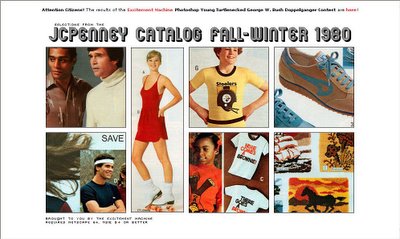
JCPenney Catalog Fall/Winter 1980

from Yahoo! Picks

Remember 1980? Odd color palettes and synthetic fabrics were all the rage, and these questionable fashions could be found shimmering on the pages of the JCPenney catalog.

This site provides scans of numerous pages from the two-and one-half-decade-old Penney's Fall/Winter collection. Check out a real hoot of an owl-themed bathroom, a disturbing bearded skier, comfortable bowling shoes ("always a point-maker"), and, of course, Underoos. If these teasers whet your appetite, browse the entire hideous collection of clothes that beg the question, "What were we thinking?"

Related: it came from the 1971 sears catalog

Friday, August 26, 2005

Report says future dim for mid-level dept. stores

BY SANDRA GUY Business Reporter
Chicago Sun-Times

Is there a future for middle-America department stores?

No, two retail experts said in a report released Monday.

"The mid-market department store will disappear altogether," said Wendy Liebmann and Candace Corlett, principals in WSL Strategic Retail in New York.

Carson Pirie Scott & Co., as well as regional department stores such as Dillard's and Belk's, must either move upscale or become part of a mass-market national chain to survive, Liebmann and Corlett wrote in a report titled "Department Stores Are Transformed."

Department stores will split into two types -- big national chains such as Macy's, J.C. Penney and Sears, or upscale stores in niche markets, such as Nordstrom, Neiman Marcus and perhaps Saks Fifth Avenue.

They call it the "supersize or specialize" model of 21st century retail success.

Two long-time stalwarts of Chicago's retail scene are getting new owners, and separate developments Monday showed just how much the retail landscape is changing.

* Marshall Field's announced it is remodeling its downtown Minneapolis store much like the flagship store at 111 N. State in Chicago, including opening a Barbara's Bookstore and other exclusive boutiques.

The Field's in Minneapolis will feature a Louis Vuitton boutique four times the size of the existing one, and a shop dedicated to Signoria di Firenze hand-embroidered Italian luxury linens. The Minneapolis store already has introduced several boutiques that made their United States debut at the State Street store, such as Field's Culinary Studio, Levenger reading and writing accessories and British menswear shops Thomas Pink and Alexandre Savile Row.

A Field's spokeswoman said the company has yet to decide whether Field's employees will staff the boutiques or whether the suppliers will hire their own workers.

Field's is scheduled to be taken over by Macy's parent company, Federated Department Stores, by Nov. 1.

Federated CEO Terry Lundgren has yet to say what he will do with Field's boutiques, but he has increased the lines of exclusive merchandise sold at Macy's to set it apart from rivals.

Department stores are stepping up their efforts to be unique.

Nordstrom on Monday announced it had bought a majority stake in luxury designer stores Jeffrey New York and Jeffrey Atlanta, and hired owner Jeffrey Kalinsky as Nordstrom's director of designer merchandising for men and women.

*Bids reportedly were submitted Monday for Carson's and four other regional department stores owned by Saks Inc.

Bids also were submitted for the more upscale Saks Fifth Avenue and the department stores as one package.

A Saks spokeswoman was unavailable to comment further, but analysts have said the entire company could sell for anywhere from $22 a share to $30 a share.

The future of Saks Fifth Avenue's store at 700 N. Michigan and Carson's flagship at 1 S. State St. is uncertain.

A sale of Saks Fifth Avenue's stores in Chicago and New York could be part of the deal if all of Saks operations are sold, analysts have speculated.

Speculation also centers on changes at the Carson's store at 1 S. State, a Louis Sullivan design that has undergone a $17 million upgrade and could be transformed by new tenants.

As for mass merchants, Sears and Penney are building stand-alone stores away from malls, but their willingness to invest heavily in them isn't known. Sears will open 48 "Sears Essentials" stores by Oct. 29, but the Hoffman Estates-based retailer has yet to release a construction schedule for 2006.

Thursday, June 30, 2005

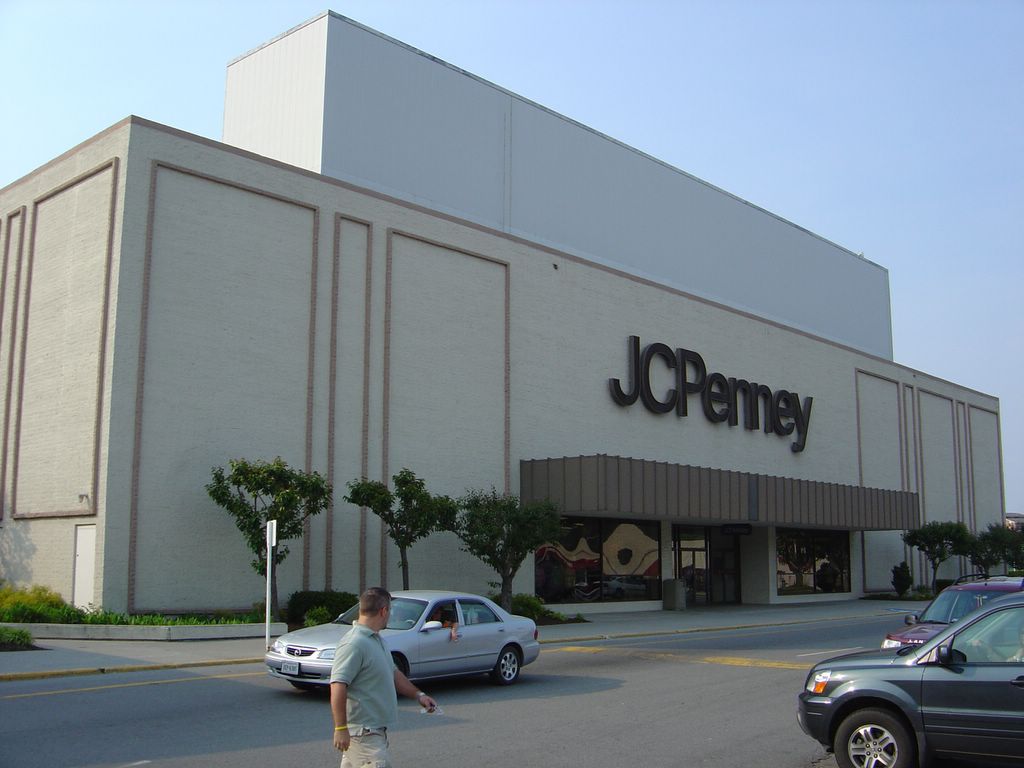
JCPenney, Valley View Mall, Roanoke, Virginia. Lower level entrance. Photographed with camera phone 6/30/05.

Friday, June 10, 2005

random retail shots


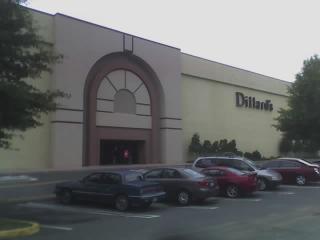
Dillard's, Four Seasons Town Centre, Greensboro, North Carolina.


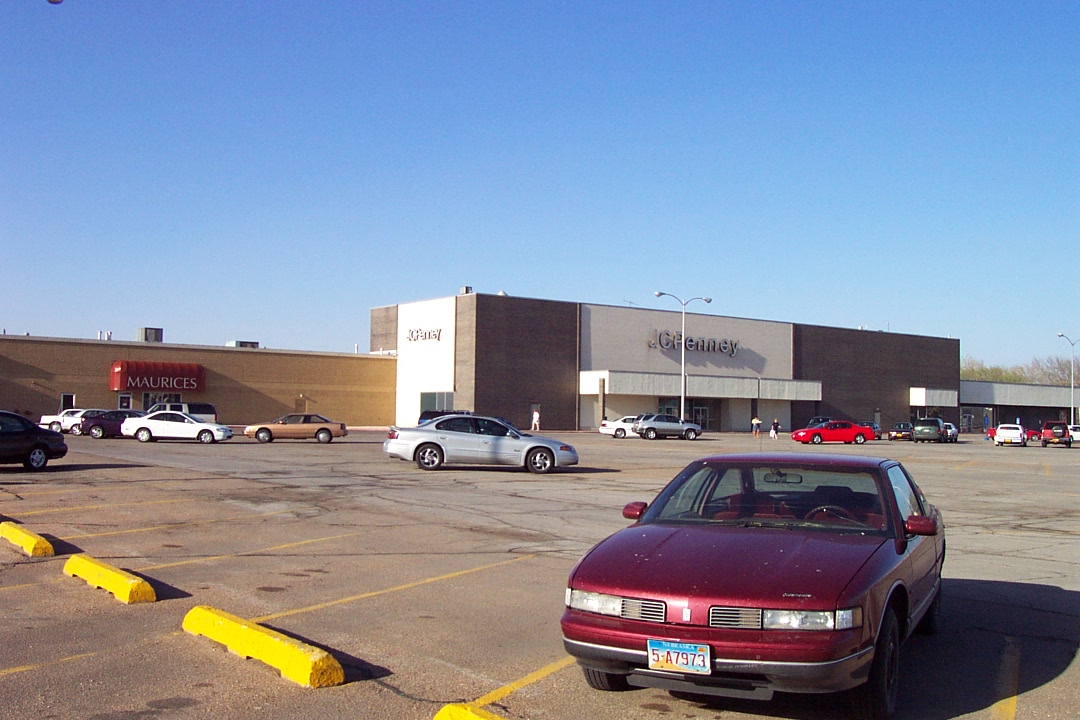
JCPenney, Four Seasons Town Centre, Greensboro, North Carolina.


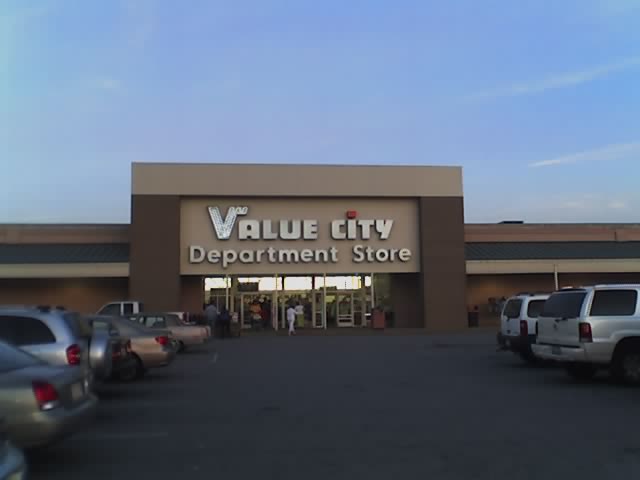
Value City, Danville Plaza, Danville, Virginia.


JCPenney, Hanes Mall, Winston-Salem, North Carolina.

Monday, June 06, 2005

i COULD scan it, but i'm not supposed to...

I had a moment of frustration at JCPenney in Greensboro Saturday. They send out $10 coupons to their charge customers for Mother's Day and Father's Day and I'll use them to buy gifts for Mom and Dad.

I have a hard time shopping for Dad because, like the typical older man, he needs everything and likes nothing you pick out for him. I dug through these ungodly piles of polos to find his size and found a Nike baseball cap (he’s bald and wears them all the time) that would look nice with it.

After nearly an hour of searching for the perfect gift at Penney’s I brought my stuff to the counter, coupon in hand. I thought the coupon I had was valid yesterday and tried to use it for Dad’s stuff. The lady said she couldn't scan the coupon until today, so I didn't get the merchandise. The thing that pisses me off the most is that she could have easily scanned the coupon and it would have worked (she even admitted this) but she wouldn’t do it and got an attitude about it when I asked her to try it.

I may go back this week but I really liked the stuff I picked out and I figure it'll be gone when I get back there.

That’s life I guess. She didn’t want to get in trouble and I didn’t look at my coupon well enough. I guess in some ways I’m complaining for nothing, but it was still frustrating.