Showing posts with label shopping. Show all posts

Sunday, December 13, 2009

Holidays on Display

The main aisle of Marshall Field & Co., Chicago, circa 1955. (National Museum of American History, Smithsonian Institution)

Holidays on Display examines the art, industry, and history of holiday display across the United States. Focusing on parading culture and department store retail display, primarily between the 1920s and 1960s, when holiday displays were considered commercial endeavors equally rewarding for the American public, the exhibition showcases numerous photographs, postcards and rendering illustration of parade floats and window displays—including the Macy’s Thanksgiving Day parade and Marshall Field & Company Christmas windows—as well as objects relating to the early creation of these displays.

“Holidays on Display” will be on view at the National Museum of American History through November 2010

Link to Smithsonian Institution
Online Exhibition
Press Realease
Asked and Answered | Holidays on Display

Monday, November 23, 2009

Nordstrom Rack to open first N.C. store in Durham

Seattle-based Nordstrom, Inc. announced plans to open its first Nordstrom Rack in North Carolina. The new 33,000-square-foot store will be located at Renaissance Center in Durham. The store is expected to open in fall 2010.

The center is located across the street from Nordstrom’s full-line store at The Streets at Southpoint, which opened seven years ago.

Wednesday, November 18, 2009

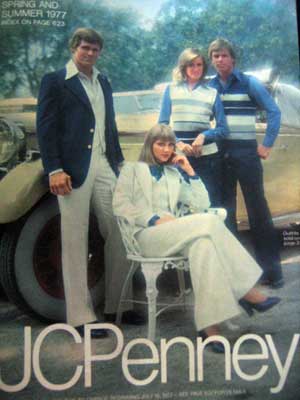
JCPenney to stop publishing 'big book' catalogs

PLANO, Texas (AP) — J.C. Penney will stop publishing its twice-yearly "big book" catalogs, now that customers increasingly shop online.

Instead, J.C. Penney Co. says it will publish specialty catalogs and focus its efforts online, on the Web site jcp.com and on social networks. In part, the company says it is responding to consumer habits to view catalogs more as "look books."

The Plano, Texas, company will continue to publish its Christmas catalog and others, such as the "Little Red Book" for women's apparel and "Matters of Style" for men.

Eliminating the hefty twice-a-year catalogs will cut the company's paper use by 25 percent to 30 percent in 2010.

Sunday, November 08, 2009

on the closing of Waldenbooks and B. Dalton Bookseller

One of the joys of my childhood was going to Tanglewood Mall on a Saturday afternoon and checking out what was new at Waldenbooks and B. Dalton Bookseller. It’s hard to remember in a post-superstore and internet world how good these stores were, but they actually were decent stores with good selections in their heyday. They were at least as good as a typical Barnes & Noble and Borders, just smaller and lacking the chairs and coffee.

IMO what killed them was the shifting of corporate focus by their parent companies. After Barnes & Noble and Borders took of in the ’90s, both B. Dalton and Waldenbooks became de-facto outlets for their corporate families and started filling the fronts of their stores with worthless bargain book sections: poorly conceived clearance aisles filled with low quality books that should never have been published in the first place. The over-abundance of loss leaders shrunk the traditional book selections to a shadow of their former selves and ruined the two chains’ reputations as sources for quality books.

Even though Barnes & Noble corporate eventually saw the light and integrated the Barnes & Noble search and order capabilities into their B.Dalton mall stores, Borders corporate steadfastly refused to bring Waldenbooks in line with Borders search and order capabilities until Waldenbooks got so small they couldn’t support their own system.

It doesn’t take a retail genius to figure out that the companies were de-emphasizing the mall stores in favor of a larger, more profitable format and that the reduced selection of a modern Waldenbooks and B.Dalton would eventually make they easy to dispose of if the mall business never recovered (and it hasn’t so far).

It’s sad to think of how many small and medium sized cities will now have no new general-interest bookstore thanks to B. Dalton and Waldenbooks’ closures. Danville, Va. and Bluefield, W.Va. immediately come to mind: somewhat isolated cities that don’t have enough college-educated customers to be considered for a book superstore but yet have enough population to support one. Cities like these will be solely at the mercy of Walmart and the like, which only stock books they figure will sell to a mainstream audience and little else.

This is an embarrassing and depressing situation. Why should people in typically sized American cites have to travel 60 miles or more just to buy a non-New York Times bestseller book in person? I just hope that a company like Books-A-Million will step up and bring some essential choice and selection back to these towns.

Thursday, August 13, 2009

Playing to the Middle

By CINTRA WILSON
Published: August 13, 2009

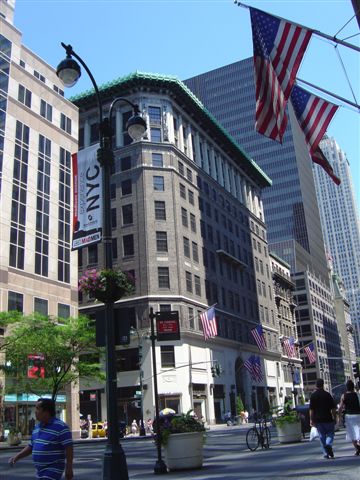
J.C. Penney has broken free of its suburban parking area to invade Herald Square, and the most frequent question on New York’s collective lips seems to be: Why? (read more)

The new JCPenney at the Manhattan Mall in New York (former home to Gimbels, Stern's and A&S) is open and flourishing in an otherwise dismal retail market. What better way to celebrate its arrival and success by sending the New York Times fashion reporter Cintra Wilson into the store for a review. Ms. Wilson gives the store enough backhanded compliments and outright insults that's almost a parody of a serious article, even for the Fashion & Style section.

Consider this excerpt:

J. C. Penney has always trafficked in knockoffs that aren’t quite up to Canal Street’s illegal standards. It was never “get the look for less” so much as “get something vaguely shaped like the designer thing you want, but cut much more conservatively, made in all-petroleum materials, and with a too-similar wannabe logo that announces your inferiority to evil classmates as surely as if you were cursed to be followed around by a tuba section.”

Just like all good clichés, this hackneyed statement is partly based in truth, but not so much that no one would be able say it definitively. Penney’s is no runway show, but its offerings are no worse than those of Target, Kohl's or even most of the private label merchandise at Macy's.

Considering the questionable (and largely overpriced even at a discount) merchandise that passes for fashion in the dozens of off-price store that cover Manhattan, JCPenney seems like a measure of clarity. At least what you want is likely in your size.

You also have to consider that every other large scale retailer that has been in this mall since the fall of Gimbels has tanked. Stern's, for all of its history as the "Show Biz Store," looked more like a bad infomercial when they were there. Steve & Barry's was even worse, stretching its bland wares into an oversized space that was doomed to fail. Don't get me started on the perpetually lackluster specialty stores in this mall. JCPenney is a strong enough name that it could be a serious contender with the right amount of traffic.

UPDATE: Apparently neither the public or Ms. Wilson's bosses liked the article very much.
The Insult Was Extra Large
NYTimes Issues Apology For Cintra Wilson Article


Saturday, November 22, 2008

WSJ - Bagging Holiday Shoppers (featuring someone you know)

An excerpt from WSJ.com - Bagging Holiday Shoppers:

In a few weeks, Steven Swain will make his annual pilgrimage to New York from Rocky Mount, Va., to visit the Christmas tree in Rockefeller Center and see the holiday window displays at Macy's, Saks Fifth Avenue and Barneys New York.

You may have heard of this fellow....

Monday, June 02, 2008

Newbury Street icon Louis seeks someplace trendier

Louis Boston, a fixture on Newbury Street (in Boston) that helped usher luxury retail into the city, will move out of its historic building when its lease expires in 2010, opening up the marquee 40,000 square foot space for the first time in 20 years. (more)

Thursday, October 25, 2007

Macy's to invigorate flagship store

Launches ad campaign, "Take Me to State Street"

Sandra M. Jones
Chicago Tribune

CHICAGO - Macy's Inc. is unveiling a brand campaign aimed at breathing new life into its downtown State Street flagship store, which has alienated some shoppers since converting from Marshall Field's last year [more]

Monday, September 10, 2007

Most women own 19 pairs of shoes -- some secretly

Belinda Goldsmith

NEW YORK (Reuters Life!) - American women have come out of the closet with a secret -- most own about 19 pairs of shoes and some have hidden purchases from their partners. [Read more at Reuters]

Tuesday, August 21, 2007

Sunday, August 12, 2007

Lord & Taylor to launch $10m celebrity model-focused rebranding ad campaign

WGSN

Department store group Lord & Taylor is set to launch a $10m celebrity model-focused rebranding campaign to spotlight both its updated image and 181-year heritage. The campaign will debut in mid-August and run through the Holiday season.

Showcasing the results of a four-year repositioning, the campaign features a cast of celebrities that include models Carolyn Murphy, Lauren Hutton, Jacquetta Wheeler, Hanne Termote, Megan McNeirney and Erin Heatherton, as well as artist Ed Ruscha, socialites Lauren Davis and Lydia Hearst, plus the children of John McEnroe and Clint Eastwood.

"The stunning images depicted in this campaign will signify Lord & Taylor's relevance in the speciality department store arena," noted CEO Jane Elfers.

Created by ad-man David Lipman and shot in California by Mario Testino, the "striking ads project Lord & Taylor's innate style: unapologetically classic with a multigenerational attitude", said the retailer.

The images will appear in multi-page spreads in the September issues of Vogue and Vanity Fair and in ads featured in W, Harper's Bazaar, Elle, Town & Country, Cookie, In Style, Interview and GQ as well as in major national newspapers.

In addition, 25 billboards will be placed in Boston, Chicago, Connecticut, Detroit, Philadelphia, New York, railroad stations in upscale suburban areas and the Bryant Park Tents during New York Fashion Week.

As part of the re-branding, a $250m capital budget has been earmarked over the next five years by NRDC Equity Partners, which purchased Lord & Taylor from Federated for $1.1bn in 2006.

Tuesday, June 12, 2007

way to shop?

Macy's regional buying strategy is criticized

By SUZANNE KAPNERF
The New York Post

Even as Macy's spends millions of dollars to create a national brand through advertising and store renovations, behind the scenes the company still operates through seven regional buying offices, a system that analysts have panned as outdated and costly.

Macy's argues that its regional divisions allow it to better tailor merchandise for different stores, ensuring that marquee locations such as Macy's Herald Square carry more upscale items than do stores in less affluent neighborhoods.

But analysts point out that Macy's is one of the few large retailers to still rely on regional buying offices. J.C. Penney, Kohl's and Nordstrom are among those that have switched to central systems, yet manage to pepper stores with local flavor, these people said.

As Macy's sales continue to lag expectations, the company's cost structure is increasingly becoming a topic of conversation. This is especially true as savings from its merger with the May Department Stores Co. start to run their course.

"Macy's cost structure is too high, and, as a result, their prices are too high," said Robert Buchanan of A. G. Edwards. "That is a key reason why they are likely to lose market share."

Buchanan estimates that Macy's could save $100 million a year by eliminating all but two of its buying offices. He favors the retention of regional merchandise managers to ensure that products are tailored to individual stores.

Such a move would help bring Macy's expenses in line with competitors. According to Buchanan, Macy's expense-to- sales ratio is 32 percent compared with 27 percent for Nordstrom and 25 percent for both J.C. Penney and Kohl's.

Macy's has tried centralized buying in its home department with disastrous results, making it less likely the company would move quickly to streamline other divisions, observers said.

The move to central buying for bedding, furniture and other items for the home pre-dated Macy's, then known as Federated Department Stores, 2005 merger with the May Co.

Logistical problems with warehouse and distribution centers overwhelmed the Macy's team. Then the housing slump kicked in, further hurting sales of home goods, which have been among the company's weakest performers.

The pressure to cut costs by centralizing operations comes as Macy's finds it increasingly difficult to integrate the roughly 400 stores it acquired from the May Co.

Macy's is adding more promotions and adjusting merchandise through a seven-box grid. Prices range from good, better, best. Styles are lumped into four groups with traditional being the most conservative and fashion the most trendy.

Tinkering with the merchandise only works if consumers perceive products sold at Macy's to be of comparable or better value to what competitors are offering, analysts said.

For instance, towels sold at Macy's under its private label Charter Club brand for $16 stack up poorly against Target's Fieldcrest towels, which regularly go for $11.99, said Robert Passikoff of Brand Keys.

Thursday, June 07, 2007

The NYC Profit Calculator (Macy's edition)

If you have ever wondered how a place like Macy's in Herald Square stays in business, here's an idea.

Related Story
The Profit Calculator -- New York Magazine

Developers show off Lord & Taylor, Whole Foods plan

Mark Ginocchio,
The Stamford Advocate

STAMFORD, Conn. -- Jun. 5 -- Developers yesterday unveiled an artist's rendering of an expanded Lord & Taylor department store at Bulls Head with a Whole Foods Market on the ground floor.

The site would include a new 190,000-square-foot Lord & Taylor store, a 60,000-square-foot Whole Foods and 50,000 square feet of retail space with vendors to be determined.

The changes are part of a nationwide makeover of the department store chain, Lord & Taylor Chairman Richard Baker said.

"Every inch will be brand new," Baker said during a news conference at the Stamford Government Center. "It will be the most special Lord & Taylor in the chain."

When he acquired the department store chain in October, Lord & Taylor was a "dusty brand," Baker said. The company is investing $500 million nationally to revitalize it.

The Stamford project, which must be approved by city boards, is being developed by National Realty & Development Corp. of Purchase, N.Y.

The specialty grocer Whole Foods has "knocked on doors" in Stamford for a while, Mayor Dannel Malloy said.

The closest Whole Foods stores are in Greenwich and White Plains, N.Y. The company recently bought the Wild Oats chain, which has a store in Westport.

Bringing in a Whole Foods is great but "one of the most exciting parts is that Lord & Taylor is enlarging, while other stores have been downsizing," Malloy said.

Sandra Goldstein, executive director of the Downtown Special Services District, said she has received a number of calls asking for a Whole Foods downtown.

"As much as we would want one downtown, we are very supportive of this program," Goldstein said of the Lord & Taylor development between High Ridge and Long Ridge roads at Bulls Head, the large intersection with Cold Spring Road, Summer Street and Bedford Street.

Thursday, May 31, 2007

A Traditionalist Walks a Fine Line

Shoemaker Allen Edmonds Aims to Reach Younger Men By Touting Old-School Quality

By Christina Binkley
The Wall Street Journal


When it comes to shoes, conventional wisdom holds that most men today respond to fresh design, splashy advertising and styles conceived for younger feet.

Since turning itself into a high-fashion brand, Coach has been on a tear. Gucci and Prada have gobbled up the markets for luxury loafers and bags. In June in Milan, sexy-shoe designer Brian Atwood will show his first collection -- men's footwear -- as creative director for Swiss shoemaker Bally, which is seeking more fashion-conscious shoppers these days.

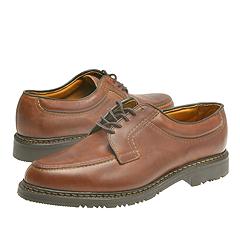
Then there's Allen Edmonds. Oxfords, tassel moccasins, penny loafers. Now here's a brand in need of resuscitation: eighty-five years old, with flat revenue and an aging boomer clientele.

Its new private-equity owners, Goldner Hawn Johnson & Morrison Inc., which bought an 86% stake last year, are now advocating an overhaul. But instead of following the rest of the high-fashion accessories industry, Allen Edmonds is digging in its heels. With a wingtip and a prayer, it's expanding with a strategy to make new assets of old-world service and quality...

Read more at The Wall Street Journal

Friday, May 25, 2007

10022-SHOE

Reuters

New York's famed Saks Fifth Avenue department store plans to open a shoe department so big it has been granted its own ZIP code, 10022-SHOE, the company said on Thursday.

Saks said it plans to nearly double the number of shoes for sale and take over the entire eighth floor of its flagship store in Manhattan. The expanded department will open in September under the name 10022-SHOE.

"10022-SHOE will also hold a place in U.S. history as the first floor to be granted its own designated ZIP code by the United States Post Office," Saks said in a statement.

The news may delight women with shoe obsessions to rival that of former Philippines first lady Imelda Marcos.

"Visitors to the new eighth floor will be greeted by a seemingly endless array of shoes," the statement said.

Tuesday, May 08, 2007

Hudson Belk gives men their space

Updated 6/5/07 with additional information (see below)

Stand-alone Men's Store opens at Crabtree Valley Mall with more clothes, shoes

Sue Stock, Staff Writer
The News & Observer

RALEIGH - Employees at the new Hudson Belk Men's Store in Raleigh's Crabtree Valley Mall are still arranging displays and unpacking merchandise, but the store was ready enough to open its doors Sunday afternoon.

Belk has moved into the top floor of what used to be Lord & Taylor, bringing mahogany shelves, racks of polo shirts, an expanded shoe department and legions of khaki pants.

The arrival of the 68,000-square-foot Belk Men's Store signals a new approach in this market by the longtime shopping staple.

This is Belk's first stand-alone Men's Store in the area, though it has 15 others in cities such as Danville, Va. It's also the biggest Men's Store the Charlotte retailer has ever built.

Company executives acknowledge that it's a strategy that won't work everywhere.

Shopping centers have to generate enough sales and traffic to make a stand-alone store worthwhile, said Steve Pernotto, the executive vice president.

"It has to be a highly productive center, and we look at sales per square foot and profitability," he said. "We look at the current and the future. You need to look out at where you're going to be in the next couple of years."

Other Belk Men's Stores have been successful, Pernotto said.

He declined to offer specific figures but said a store's sales would typically rise by a few hundred dollars per additional square foot.

The Belk Men's Store at Crabtree is double the size of the old men's department, with 34,000 additional square feet.

Still, despite all the optimism, customers were a bit confused.

Those who visited the old men's department were greeted by empty shelves, a few sales racks and a sign directing them to the new Men's Store.

Mitch Danforth, a senior civil engineering major at N.C. State University, was surprised by the speed of the transition.

"I came to Belk on Saturday and looked at sports jackets, and I came back today and found they had moved," he said. "But they kept the sale prices, so I'm fine."

Belk executives say the confusion will only be temporary. "Change always takes a little time for people to get used to it," store manager Lee O'Rourke said "You'll start to see lots of advertising as we lead into our official grand opening."

Some shoppers Monday were waiting to see whether the new store would retain their favorite qualities from the old store.

Cary resident Al Blalock said he's a fast shopper who goes into the store, gets what he wants and leaves.

"I liked coming to Belk because I didn't feel like someone had to escort me around," Blalock said. "As long as that stays the same, I'm OK."

Alienating shoppers such as Blalock is the last thing Belk wants to do. Overall at Belk stores, 70 percent of the shoppers in the men's department are women.

The Men's Stores offer a chance to appeal directly to men, with no makeup counters or perfume-spraying attendants to dodge and a decor of dark wood and dark colors, Pernotto said.

"The female's going to shop there, regardless, for their husband," Pernotto said. "We think we'll increase the percent of males that shop in our location instead of shopping at another location."

Cary resident Wayne Harris, said he will spend a lot of time in the new Men's Store. He already shops at men's specialty stores such as Liles Clothing Studio in North Hills.

"I think a big percentage of guys just don't like to shop," he said. "But maybe that's because there's not enough selection. ... This will definitely be a shot in the arm for men's shopping around here. They've been needing this."

Other shoppers wondered whether the store was too sophisticated.

"The main focus is on the business attire," said Raleigh resident Curtis Brown, a recent N.C. State University graduate. "Their fashion sense for the younger generation isn't really that much."

Renovation in the old men's department in the original Belk store starts Monday, O'Rourke said. Cosmetics, accessories and intimate apparel will expand into the space. The work will be completed in November.

The new Belk Men's Store will have its grand opening June 1.
__________

Belk's for men jazzed up
Samantha Thompson Smith, Staff Writer
The News & Observer

RALEIGH - Burberry at Belk? That's just one of the big surprises at the new stand-alone Belk men's store that recently opened in the old Lord & Taylor space at Crabtree Valley Mall.

Here's another shocker: 7 for All Mankind jeans. A few of which sell for $198.

Grandad's Belk? Clearly not.

Finally Belk has done to men's fashion what it started doing for women a few years ago. The new store is a pleasant surprise; a mix of old faithfuls that Belk shoppers grew up with -- Saddlebred, Levi's and Ralph Lauren -- coupled with brands you wouldn't expect at Belk. Among them: Gitman Brothers button-downs, Ferragamo ties, Donald Pliner loafers and Paper Denim & Cloth jeans.

They don't come with traditional Belk pricing, either. The Ferragamo ties sell for $135. Burberry button downs cost $115.

There's still plenty of what we're used to. There are plenty of Meeting Street button-downs, and the store has hundreds of Polo shirts -- so many, the Polo shop is among the largest in the Southeast.

But if you want to take it up a notch, here's the place to look. The store also sells higher-end suits by Burberry and Hugo Boss. The selection of Joseph Abboud has expanded. And there's Tommy Bahama wear both for weekends and for work.

The new space is one of the biggest shops for men's clothing and accessories in the area, taking up 68,000 square feet, more than double the retail space of its old location in the lower level of the Crabtree Belk store.

The changes have been a long time coming. Nordstrom and Saks both came into the market a few years ago stocking trendy, big-name brands appealing to more fashion-conscious male shoppers.

Stay tuned. Merchandisers are waiting to see what customers like. Then they plan to edit the selection once they get a better feel for customer demand, says Travis Groome, a Belk merchandise coordinator.

Tuesday, February 27, 2007

Federated Plans to Change Name to Macy's

MSN Money & Business Wire reports

The management of Federated Department Stores wants to change the company's name. The retailer said a vote on changing its name to Macy's Group will occur at the company's annual meeting May 18. If approved, the name change will go into effect June 1.

"We're no longer a federation of retail stores; Macy's is 90% of our business," CEO Terry Lundgren told CNBC today.

Federated Department Stores, Inc. was originally chosen as the company's name in 1929 by a group of family-owned department stores that joined together under a corporate holding company umbrella.

Federated became an operating company in 1945, and its portfolio over the years has included various regional department store names.

In 2005 and 2006, all regional nameplates were converted to Macy's. The company today operates only Macy's and Bloomingdale's stores, with both brands expanding nationwide.

Monday, February 26, 2007

Gap to close Forth & Towne chain

SAN FRANCISCO (AP) - Gap Inc. is closing the Forth & Towne chain that was supposed to help the struggling retailer sell more clothes to older women, aborting the 18-month expansion so management can concentrate on reviving the company's more established brands.

The decision announced Monday affects all 19 Forth & Towne stores opened since Gap unveiled the concept in West Nyack, N.Y., north of New York City in August 2005. Forth & Towne's other stores are located in Atlanta, Chicago, Houston, Seattle, San Francisco, Los Angeles, San Diego, San Jose and Santa Barbara.

The store closures are expected to be completed by the end of June, jettisoning about 550 jobs. Some of the affected employees may be transferred to one of the San Francisco-based company's other chains - Gap, Old Navy and Banana Republic.

Signaling that some layoffs are likely, Gap is budgeting $7 million to cover severance payments and other benefits for former Forth & Towne workers, according to a filing with the Securities and Exchange Commission.

Gap hoped to develop Forth & Towne into a specialty channel catering to women older than 35 who grew up in Gap jeans but found themselves sized out in the market in middle age. When it launched Forth & Towne, Gap estimated it only held a 3 percent share of over-35 female market compared to an 8 percent share of women shoppers under 35. Gap had hoped to woo boomers - who are at the peak of their earnings and spending power - back with a store that combined the service of a boutique, the broad offerings of a department store - and a more forgiving fit.

"Forth & Towne was a great test of a promising concept and an illustration of the innovative risks you need to take in our business," said Gap Chairman Bob Fisher. "We made the tough decision to close the brand and focus our efforts on stabilizing the existing businesses."

Fisher has been Gap's interim chief executive officer since last month when the retailer ended the nearly 4 1/2-year rein of Paul Pressler after a dismal holiday shopping season that represented a new low point in a prolonged sales funk.

In a key measure of a retailer's health, Gap's same-store sales fell 7 percent last year, deteriorating from a 5 percent decline in 2005. The closely watched yardstick measures sales at stores open at least a year.

Despite its troubles, Gap intends to continue investing in other promising concepts, including a recently launched online shoe store called Piperlime, company spokesman Greg Rossiter said.

Although abandoning Forth & Towne will drive up Gap's expenses by about $40 million during the first half of this year, industry analysts believe the company will be better off without the potential albatross.

"This brand never gained much traction, suffered from fit, style, and image problems and became a big distraction," Lazard Capital Markets analyst Todd Slater wrote in a Monday research note.

Retail analyst Jennifer Black said the expansion never made much sense, given Gap's troubles connecting with shoppers of all ages. "The landscape is so competitive that each retailer has to have a clear reason to be (in existence) and Forth & Towne, never had that," she said.

Gap shares fell 16 cents Monday to close at $19.65 on the New York Stock Exchange.

Scrapping Forth & Towne also may free up some merchandising talent to help with the turnaround efforts at the Gap and Old Navy chains. Analysts are particularly intrigued with the possibility that Forth & Towne's current president, Gary Muto, might now return to Gap, a chain that he led from August 2002 through September 2004.

Gap's sales improved during most of Muto's tenure at the chain. "If he were to return to the Gap brand, (it) would be a positive influence on the division," Stifel, Nicolaus & Co. analyst Richard Jaffe wrote in a Monday research note.

If Muto were to come back to the Gap, it probably wouldn't be as president because the company just promoted Marka Hansen - the former head of Banana Republic - to that job earlier this month.

Muto also once ran Banana Republic, making him a possible candidate to return to an upscale chain that has emerged as the best-performing of Gap's three brands.

Gap and Muto haven't agreed on a new assignment yet, Rossiter said. The company is expected to discuss the ramifications of the Forth & Towne closure Thursday when it reviews its fourth-quarter results in a conference call with analysts.

Forth & Towne's closure underscores the challenges facing clothing retailers catering to the graying baby-boom generation. Many merchants like Gap recently have been intensifying their focus on the niche, inspired by Chico's FAS Inc.'s successful formula for targeting boomers.

But now even Chico's is hitting a rough patch, having registered a 2.2 percent gain last fiscal year in its same-store sales. Chico's slowing same-store sales growth followed double-digit increases in the previous two years.

A Shopping Center is Born

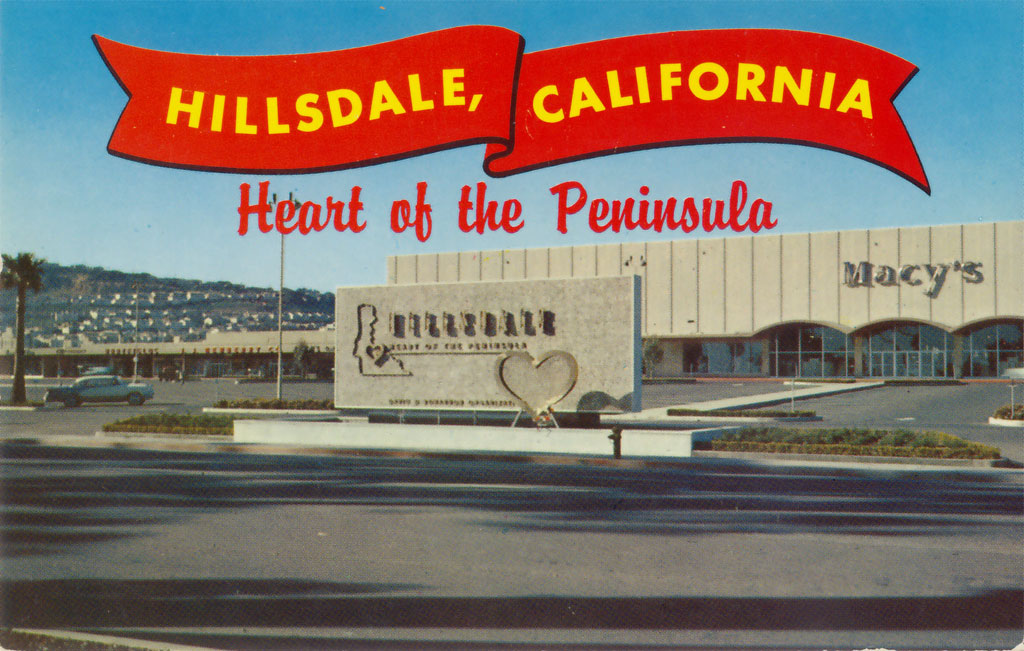
David at Retail Memories From Coast to Coast uploaded 2 videos (split) about Hillsdale Shopping Center in San Mateo, California, as it was in 1957 when it opened.

The videos show the center before it was enclosed, activities related to it, and vintage fashions, stores and signage. They serve as almost a class as to "how to shop" in what was then a new style of commerce.

Check them out. I think you'll enjoy them.

A Shopping Center is Born

(photo courtesy of Scott at BIGMallrat's Malls in Northern California and Reno Blog)