 Admittedly, it's been a while, but I had to share this sneaker article.
Showing posts with label shoes. Show all posts
Showing posts with label shoes. Show all posts
Tuesday, September 30, 2008


Wednesday, January 16, 2008
Nike set to release 23rd Air Jordan
 BEAVERTON, Ore. (AP) -- It's gotta be the shoes, right?
No other basketball shoe has changed the face of business, athletics and marketing like the Air Jordan. This month, Nike releases the 23rd edition, and it is expected to be just as venerated as its predecessors.
The sleek design and link to Michael Jordan's jersey number make it a touchstone in the line. It's also Nike's first basketball shoe designed under its "Considered" ethos, which aims to reduce waste and use environmentally friendly materials wherever possible.
The Air Jordan XX3 will be released in three hyped-up rounds from January to February, starting with a limited edition to be sent to only 23 retailers to be sold for $230 and concluding with the national launch at $185.
There had been talk at Nike about retiring the shoe at No. 23, because of his iconic jersey number. But company officials won't say whether this will be the last of the line. Neither will Jordan.
"You'll just have to wait and see," Jordan said in an e-mail to The Associated Press, responding to questions about the upcoming release.
Before launching the first shoe in 1985, Nike had just signed Jordan for $2.5 million over five years. Nike won't say what Jordan's current contract with the company is worth.
Jordan's deal with Nike opened the door for sneaker manufacturers to chase after athletes, signing them up --sometimes just out of high school-- for multimillion-dollar contracts in hopes of being able to cash in on the next superstar. It sent sneaker prices to new heights, which has since generated a backlash against selling pricey shoes to basketball-loving kids.
"The Air Jordan franchise created the most coveted basketball footwear in the world and changed the basketball landscape forever," said Nike Brand President Charlie Denson.
Unlike most basketball shoes to date, which were often white and utilitarian, the Air Jordan was a shock of black and red. It was initially banned by the NBA for not conforming with other players' shoes.
Jordan continued to wear them and was fined $5,000 a game, which Nike paid.
"Nobody expected the mass hysteria created by its release," Jordan, who has been a part-owner of the Charlotte Bobcats since 2006, said in his e-mail to The AP.
A new edition was launched each year, and release dates had to be moved to the weekends to keep kids from skipping school to get a pair.
The frenzy got dangerous. People were mugged and even killed for the shoes.
The Air Jordans helped spawn a subculture of collectors, who line up at stores to buy the shoe's latest edition.
Jordan said he never expected that the shoe would become an icon.
"Like every kid growing up, I dreamed of making winning shots at the buzzer and I was fortunate to live out that dream, but never in my wildest dreams did I ever entertain the idea of the success of the Air Jordan franchise," he said.
The Air Jordans moved basketball shoes from true high-tops or low-tops to a middle range and used unheard of styles, such as patent leather toes and elephant print.
As Jordan's success grew on the courts, so did Nike's in the shoe industry.
People from the streets to the suburbs were wearing $100-plus basketball shoes, which was unheard of at the time.
That price is the norm today, but it has launched a backlash, such as the partnership between New York Knicks player Stephon Marbury and the Steve & Barry's store chain to sell basketball shoes for $14.98 -- a direct stab at pricey sneakers like Air Jordans.
At that time, the Air Jordan captured a mix of design, marketing, athleticism and player charisma that hadn't been seen before in the industry -- everyone wanted to "Be Like Mike."
"Athletes had been endorsing products for years prior to this," said Tinker Hatfield, Nike's Vice President of Innovation Design and Special Projects.
"But they were just signing their name to the shoe. I think there was a very understandable difference...Michael's personality and even the changes in the game and inspiration from other walks of life were all sort of being designed into this product and that made it more interesting."
Jordan and Hatfield work together on the design and function on many of the Air Jordan shoes. Jordan has final say on design matters.
Air Jordan was the lightning in the bottle that every company hopes for.
Advertising images of Jordan soaring across the sky were ubiquitous. Spike Lee could be heard hollering "It's gotta be the shoes" on television. And Jordan's outstretched arms with the swoosh nearby adorned walls across the country.
Nike quickly moved from a running company and newcomer to the basketball category to the market leader. Some industry estimates put Nike's current share of the basketball shoe market at about 85 percent. Far behind are Adidas and Reebok.
The idea of adding such unusual style to a product or so closely aligning with a personality was novel at the time, but it paid off.
Other companies tried to follow suit but it was like trying to come up with the next Harry Potter or iPhone for basketball.
The relationship completely changed the idea of sports marketing. Companies now make athlete sponsorships the centerpiece of their business, spending millions signing them and designing product lines and marketing platforms around them.
Jordan's original deal seems like a pittance compared to multimillion-dollar contracts inked these days, such as Nike's $90 million agreement with LeBron James.
"The beginning of the Jordan era marked a new and more sophisticated approach to leveraging an athlete," said Paul Swangard, managing director of the Warsaw Sports Marketing Center at the University of Oregon.
Like any bet, athletic companies take their risks -- some pay off, like Tiger Woods or LeBron James. But some don't, a la Michael Vick. Nike terminated its contract with Vick last August after his plea agreement on dogfighting charges.
Jordan was spun off into its own division in 1997, a move that some high up in Nike questioned when Jordan retired.
But the business is a key component, with new players signing on under the brand. Nike has spun that Jordan swagger into performance and luxury apparel for men and woman.
The Air Jordan remains the pinnacle piece for shoe collectors. The original Air Jordan 1 can sell for thousands of dollars, depending on various factors.
Jordan said: "It blows my mind that even after five years removed from the game the shoe would be stronger than ever and I would still be greeted by fans as if I had just won a championship all over again."
Wednesday, September 19, 2007
Got Crocs? Be Careful on the Escalator
 WASHINGTON (AP) — At rail stations and shopping malls around the world, reports are popping up of people, particularly young children, getting their toes caught in escalators. The one common theme seems to be the clunky soft-soled clogs known by the name of the most popular brand, Crocs. [read more]
Monday, September 10, 2007
Most women own 19 pairs of shoes -- some secretly
Belinda Goldsmith
NEW YORK (Reuters Life!) - American women have come out of the closet with a secret -- most own about 19 pairs of shoes and some have hidden purchases from their partners. [Read more at Reuters]
NEW YORK (Reuters Life!) - American women have come out of the closet with a secret -- most own about 19 pairs of shoes and some have hidden purchases from their partners. [Read more at Reuters]
Thursday, May 31, 2007
A Traditionalist Walks a Fine Line
Shoemaker Allen Edmonds Aims to Reach Younger Men By Touting Old-School Quality
By Christina Binkley
The Wall Street Journal
 When it comes to shoes, conventional wisdom holds that most men today respond to fresh design, splashy advertising and styles conceived for younger feet.
Since turning itself into a high-fashion brand, Coach has been on a tear. Gucci and Prada have gobbled up the markets for luxury loafers and bags. In June in Milan, sexy-shoe designer Brian Atwood will show his first collection -- men's footwear -- as creative director for Swiss shoemaker Bally, which is seeking more fashion-conscious shoppers these days.
Then there's Allen Edmonds. Oxfords, tassel moccasins, penny loafers. Now here's a brand in need of resuscitation: eighty-five years old, with flat revenue and an aging boomer clientele.
Its new private-equity owners, Goldner Hawn Johnson & Morrison Inc., which bought an 86% stake last year, are now advocating an overhaul. But instead of following the rest of the high-fashion accessories industry, Allen Edmonds is digging in its heels. With a wingtip and a prayer, it's expanding with a strategy to make new assets of old-world service and quality...
Read more at The Wall Street Journal
By Christina Binkley
The Wall Street Journal
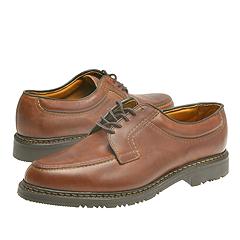 When it comes to shoes, conventional wisdom holds that most men today respond to fresh design, splashy advertising and styles conceived for younger feet.
Since turning itself into a high-fashion brand, Coach has been on a tear. Gucci and Prada have gobbled up the markets for luxury loafers and bags. In June in Milan, sexy-shoe designer Brian Atwood will show his first collection -- men's footwear -- as creative director for Swiss shoemaker Bally, which is seeking more fashion-conscious shoppers these days.
Then there's Allen Edmonds. Oxfords, tassel moccasins, penny loafers. Now here's a brand in need of resuscitation: eighty-five years old, with flat revenue and an aging boomer clientele.
Its new private-equity owners, Goldner Hawn Johnson & Morrison Inc., which bought an 86% stake last year, are now advocating an overhaul. But instead of following the rest of the high-fashion accessories industry, Allen Edmonds is digging in its heels. With a wingtip and a prayer, it's expanding with a strategy to make new assets of old-world service and quality...
Read more at The Wall Street Journal
Friday, May 25, 2007
10022-SHOE
 Reuters
New York's famed Saks Fifth Avenue department store plans to open a shoe department so big it has been granted its own ZIP code, 10022-SHOE, the company said on Thursday.
Saks said it plans to nearly double the number of shoes for sale and take over the entire eighth floor of its flagship store in Manhattan. The expanded department will open in September under the name 10022-SHOE.
"10022-SHOE will also hold a place in U.S. history as the first floor to be granted its own designated ZIP code by the United States Post Office," Saks said in a statement.
The news may delight women with shoe obsessions to rival that of former Philippines first lady Imelda Marcos.
"Visitors to the new eighth floor will be greeted by a seemingly endless array of shoes," the statement said.
Sunday, February 11, 2007
A Winter White That Works for Spring

By DAVID COLMAN
WHATEVER the charms of the International Tennis Hall of Fame gala, held every year during the United States Open, looking for men’s fashion trends there would seem to be a fool’s errand.
But at last September’s event, the tennis legend Stan Smith spotted a spring look months ahead of time: a group of stylish young men had come in black tie and brand-new Stan Smiths, the white, stripe-free Adidas sneakers that have done more to enshrine Mr. Smith’s name in the annals of pop culture than his tennis record ever did.
“It was pretty neat,” said Mr. Smith, 60, who won the United States Open in 1969 and had the shoe named after him in 1971. “For me, they’re my work shoe.”
And now city men are wearing them to work, too, bringing sprightly new meaning to the WASPy old-man expression “white shoe.” A combination of factors — hip-hop stars who brag that they wear a new pair of clean white Nike Air Force 1’s every day; designers like Marc Jacobs (who has worn Stan Smiths since junior high) and John Varvatos (who made Converse Jack Purcells and Chuck Taylors must-haves again) — have converged to make the all-white, old-school sneaker into Le Shoe for the smart set.
They are, it turns out, perfect for young, for old, for rich, for poor. They go with jeans, a suit, even a tux; you can wear them to work, to play and even to appear on Oprah (as Mr. Jacobs did). They can be cheap (basic Stan Smith’s are $55 at adidas.com) or not (the 25th anniversary Air Force 1’s are $2,000 at Barneys New York) or in between. They even come with a brand of fashion approval: several designers now offer their own version of the white sneaker, among them Stefano Pilati at Yves Saint Laurent, Neil Barrett, Dries van Noten and Miuccia Prada.
Sneaker craziness may not sound like anything new, but this time there’s a rub, and like it or not, it involves a toothbrush.
“They need to be clean,” said Daniel Peres, the editor of Details. “It’s a good look, a right-out-of-the-box-clean pair of white sneakers, and it’s the only kind you can wear with dressier clothes, nice jeans or even a suit.” But he reiterated his proviso. “Some people do everything they can to make them look worn and dirty, which is wrong. I’ve seen fashion editors in the Tuileries Gardens in Paris, shuffling their feet in the dirt to make their Chucks look worn in. I just stood there in horror.”
According to a nurses’ advisory site, the best way to keep white shoes dazzling is with Murphy’s Oil Soap and a toothbrush, and those white rubber soles might call for a go with whitewall-tire cleaner. Or you can subcontract the work and take them to the shoeshine man.
Sean Donovan, a sneaker collector who just bought a fresh pair of Stan Smiths for a new job (as a salesman at the Marc Jacobs store, in fact), said he was careful to keep his new shoes in rotation with, say, his white Air Force 1’s. He sprays them immediately with water and stain repellent, which makes normal scuffs easy to wipe off. “If you want to get crazy, you can go at them with an old toothbrush and some Soft Scrub,” he said.
Mr. Donovan, who has about 65 pairs of sneakers, agreed that clean is key. “A white shoe, it makes you feel fresh,” he said. “It’s like when you wash and iron your clothes, it makes you feel like everything’s together.”
Given the care the humble shoes require, the current trend is not without a kind of upended silliness. “It’s really turned an ordinary product into a luxury product,” said Bradley Carbone, an editor at Complex magazine, an urban young men’s magazine, which, naturally enough, follows sneaker obsessions closely. “A few years ago when you had rappers like Fat Joe and Jay-Z talking about wearing a new pair every day, people responded by trying to keep theirs as crisp and clean as possible. So it has an aspirational seal to it, even though it’s on an inexpensive shoe.”
While Mr. Peres likes the look, he won’t be sporting it any time soon. “They draw all attention to your feet,” he said. “I don’t want to have to compete with my shoes.”
Friday, January 26, 2007
Thanks to Baltimore, Air Force 1 still flying
 Nike sneaker boasts 25 years of loyal fans
By Tanika White
Baltimore Sun reporter
BALTIMORE - In the 2002 hit "Air Force Ones," the rapper Nelly extolled his love for the sneaker in the song's title: "I need two pair," he drawled. "Give me two pair."
Clearly Nelly is not from Baltimore. If he were, he'd have far more than just two pairs.
Nike is launching a major promotion for the 25th anniversary of its Air Force 1 - a sneaker that Baltimore had a major role in saving and helping to become an urban fashion sensation of the past generation.
In contrast to the product hype often manufactured on Madison Avenue, the sneaker's following grew initially by word of mouth, before the Internet and with little TV advertising. The shoe originated in 1982, when Nike sales were one-15th what they are now and its future endorsement king, Michael Jordan, was still a freshman at the University of North Carolina.
Curiously, the buzz for the Air Force 1 centered in Baltimore, far from the major fashion centers and the only place where the model was sold for a time after it was all but discontinued.
"No city is as important to the Air Force 1 as Baltimore," Nike acknowledged in a booklet it sent to retailers recently for the 25th anniversary promotion. "The city rebirthed the shoe and set in motion a series of events that would change the way sneakers were perceived in the marketplace."
Nelly's two pairs wouldn't suffice for Melvin Bartee, for example. He has amassed at least 100 pairs of the $80 sneakers over the years, their orange boxes stacked to the ceiling in the basement of his East Baltimore home. "I don't even go down there to look for a pair anymore. I just buy new ones," said Bartee, 41, a youth basketball coach at the Cecil-Kirk Recreational Center.
Keith Holly of West Baltimore said he has at least 50 pairs of Air Force 1's. He buys them two at a time, wears them twice, maybe three times, then gives them away.
And even a trans-Atlantic distance couldn't stem Michael Boateng's passion for Air Force 1's. When he attended high school in West Africa, Boateng, now 29, said, "My parents mailed me the new ones when they came out."
While Nike helped shape the modern athletic wear industry with its line named for Jordan, the lesser-known Air Force 1 model has been the Oregon company's biggest seller, footwear expert John Shanley said. The shoe generated roughly $1 billion a year for the company at its peak, about $600 million in more recent years.
"I remember going to the malls at 7 a.m. and kids would be in line for those shoes," said Shanley, a New York-based analyst who covers the athletic wear industry for Susquehanna Financial Group. "There's no other shoe that ever created that kind of thing. Maybe some of the Jordans."
In 1982, Nike introduced the Air Force 1 as a high-performance basketball shoe. Moses Malone, who became the first basketball player to go directly to the pros from high school after declining an offer to play at the University of Maryland, was one of the first to wear the sneakers, starting a fad in urban areas.
"Back then, shoes had a limited run," Nike spokesman KeJuan Wilkins said. "They'd come out and then they'd go away forever."
By 1983, Nike was ready to discontinue the model for newer styles. But three Baltimore-area retailers at the time - Charley Rudo Sports, Cinderella Shoes and Downtown Locker Room - banded together to implore Nike executives to reconsider.
"The shoes were blowing out of my store," recalled Harold Rudo, then the footwear buyer for his father's store, Charley Rudo Sports. "I flew out to [Nike's headquarters in] Portland, Oregon, and met with the second-in-command."
Rudo and cohorts from the other two sporting goods stores persuaded Nike initially to continue selling two styles of Air Force 1's - white with royal blue, and white with chocolate brown - but only in their stores in Baltimore.
The first weekend the sneakers were re-introduced in Baltimore, Rudo said, he sold more than 100 pairs.
"Then, we started popping out new styles, color by color by color by color. We brought out one to two colors a month," said Rudo, who is known even today as "Mr. Shoe." "We were exclusive, the Three Amigos."
In pre-Internet days, word of mouth propelled sneaker-heads along the East Coast to Baltimore for Air Force 1's.
"We had people coming from New York, Washington, D.C.," Rudo said. "They were coming from all over Pennsylvania. They knew we had 'em, and they'd all come running to Baltimore to buy them from us."
Eventually, Nike concluded that Baltimore was on to something. About 10 years after the shoes' exclusive run in Baltimore, the company re-released the Air Force 1 nationally in the mid-1990s.
"This is something that is now on a global level," said Wilkins, the company spokesman. "People in Japan love the Air Force 1. People in Brazil love the Air Force 1. To think that it really started in Baltimore is kind of amazing. ... It has moved from being a performance shoe to a cultural icon."
Until Nike announced a 25th anniversary promotional campaign for the Air Force 1, only a select few were aware of Baltimore's role in popularizing the model early on.
"So often you think of L.A., New York, Chicago for this kind of thing," said Mike May, spokesman for the Sporting Goods Manufacturers Association.
While Nike poured millions into promoting its Jordan line, it barely advertised the Air Force 1, lending the sneaker an underground appeal. Like Converse's canvas Chuck Taylors and Adidas' Superstar model, Nike's Air Force 1 became a phenomenon with a clean, simple look. As more colors were added, buyers continued to clamor for the shoe because no matter the outfit, there was an Air Force 1 to go with it.
"You can basically get any color to match your clothes, whatever you feel like wearing," said Boateng of East Baltimore. "I've worn 'em to church. I'll be wearing a blazer and then I'll have on my Air Forces."
Today, there are more than 1,700 different styles of Air Force 1's, although the shoe is essentially the same as in 1982 - unusual for Nike sneakers, even Air Jordans. There are versions in patent leather, multi-colored styles and some designed by graffiti artists. Wealthy rap artists and celebrities often take a pair of Air Force 1's and upgrade the "swoosh" with designer monograms, such as Louis Vuitton's signature LVs.
After-purchase customization of the Air Force 1 has become a cottage industry for some city artists and retailers.
Dwayne Gillard, 27, of West Baltimore, had one of his five pairs of white-on-white Air Force 1's professionally decorated at Mondawmin Mall with "Hundred Grand Federation," the logo for his side business as a rapper.
"You gotta have a pair of Air Force 1's. You put 'em on at night, and I swear you look like your feet are glowing," Gillard said. "Then you gotta have a second pair. The second pair you gotta get somebody to customize 'em for you. The third pair is the backup for that first pair. And the fourth and fifth is for when nobody's selling them no more. I got five right now because I know come May, I'm not gonna be able to find 'em."
Baltimore retailers sometimes struggle to meet demand, said Jeffrey Bowden, a spokesman for DTLR, formerly the Downtown Locker Room, which now operates from Atlanta to Chicago.
"It's absolutely a phenomenon," Bowden said. "It's clearly the Baltimore shoe. There were times there where it was hard for us to keep them in stock, through all sizes, from kids' all the way up to men's.
"That real hard-core demographic, they're like, 'Hey, I need a new pair of Airs,' just because they got a scuff on them. And they've got to have every color when they come out," he said. "I'm even guilty of that. I've had hundreds over the years."
Nike officials can't explain why the shoe has had such a foothold in Baltimore, but they are grateful for the love.
To promote the 25th anniversary version of the Air Force 1 - and the just-released Air Force 25 sneaker - the company built a pricey in-store display at DTLR in Mondawmin Mall, one of the first stores to originally sell the Air Force 1, Nike said.
The display shows players of the past in flight jumpsuits, such as Malone, beside a "second coming" of current stars such as LeBron James and Kobe Bryant, who are promoting the new Air Force 25s.
Local sellers don't expect the relationship to wane anytime soon.
"Twenty years from now ... it's going to be the same thing," said Greg Vaughan, manager of Mondawmin Mall's DTLR and a former salesman at Charley Rudo Sports, one of the three stores that saved the shoe. "I'm watching generations of kids growing right into it."
Wednesday, January 17, 2007
Sneakerheads love to show off footwear
By Sarah Skidmore, Associated Press Writer
PORTLAND, Ore. --Matt Halfhill is crazy about sneakers. He worked in a shoe store as a teenager, buying shoes on clearance. He has charmed his wife with kicks, buying limited edition pink and red Nikes for her on Valentine's Day. He collects them obsessively, lining the walls of his home with about 500 pairs of shoes. Welcome to the world of the sneakerhead, where shoes reign supreme.
Collectors range from casual fans of sneaker fashion to those who buy and sell shoes like a cardboard-encased commodity. True fanatics will camp out overnight for the latest pair, buy multiple pairs (in case one gets scuffed) and sometimes even wear them.
It's an obsession that has been gaining traction in recent years, even as sneaker sales have grown only slowly. There are Web sites, magazines, books, movies and radio shows dedicated to sneaker culture. There have even been television shows, like ESPN2's "It's About the Shoes" that included tours of collectors' enormous closets.
"I think people are more aware (of sneaker culture), the general public, because of the media and Internet," said Alex Wang, creative director for Sole Collector magazine and admitted shoe aficionado.
Sneakers have been a part of urban culture for decades. Run DMC rapped about "My Adidas" in the 1980s, and it remains a part of hip hop culture with famous sneakerhead artists like Missy Elliot and Fat Joe.
But sneaker love has spread. British teen pop star Lilly Allen sings about her "trainers" and rocks them onstage while wearing a posh dress.
Everyone from Manhattan businessmen to Midwestern teens are coming in with a hankering for shoes, store owners say.
"You can tell so much about a person by what they have on their feet," said Andre Speed, 36, at a Portland specialty sneaker store called Lifted. "You might not have the freshest outfit but if you have the kicks, you are going to get the respect."
Shoes can cost hundreds and even thousands of dollars depending on their cachet.
"The scene is on fire," Speed said.
Shoe makers are feeding off the energy. They work with artists to develop specialized pairs, such as Puma's electric blue and red trainers designed by Brazilian artist Frederico Uribe. There are stores where people can order styles of their own.
Shoe companies regularly rerelease old favorites and also market updated styles and limited edition shoes.
Adidas released 30 NBA Superstar shoes -- one for each team in the NBA -- in December. Shoes flew off the shelves.
In February the company will offer several player-specific shoes, like a Tim Duncan pair that incorporates his tattoos into the design and will only be available at the NBA All-Star weekend in Las Vegas.
Nike celebrated the 25th anniversary of its Air Force 1 last month with a huge party in New York where there were 1,040 different versions of the shoe on display.
One attendee described it as "awesome, out of control awesome."
The rest of us can catch a replay on Jan. 13 on MTV, which is airing highlights of the party as part of a special on the culture surrounding Air Force 1.
Some sneaker designers have become celebrities themselves, such as Tinker Hatfield, Nike's legendary leader of the Innovation Kitchen, who is the star of sneakerhead events.
Adidas has heard from university equipment managers who get calls from sneakerheads looking for shoes that aren't available to the public.
"It's absolutely amazing. Even if it's the smallest niche, they'll buy all of them," said Terrell Clark, a spokesman for Adidas USA, based in Portland.
NPD Group, a market research firm, estimates total U.S. footwear sales were nearly $42 billion in 2005, up 9 percent from the year before. But of that, athletic shoes only grew 3 percent.
Industry analysts say sneakerheads make up a small but crucial part of the shoe industry.
"There is incredible value for how it exists for the company as a tool for them to take a pulse for what kids will see as hip and relevant," said Paul Swangard, managing director of the Warsaw Sports Marketing Center at the University of Oregon. "You are always trying to find the Pied Piper for the industry."
Shoe collectors dictate what will be hot and what will be bought.
"Nike gets really great fashion and trend ideas from these kids, who are really cutting-edge," said John Shanley, a clothing and accessories industry analyst for Susquehanna Financial Group. "They can capitalize on (that) down the road from a mass production mode."
So shoe companies are compelled to reach out to sneakerheads.
They offer "quick hit" shoes, which might have a hundred or so pairs, and pop-up stores, which open for a day or week to sell a limited edition shoe and then disappear.
"It's always changing," said Dave Ortiz, co-owner of popular New York store Dave's Quality Meat. "As long as people have feet, they are going to have shoes. Walking around barefoot is not going to come back into style."
Shoe experts point to a mix of popular culture, nostalgia, technology and disposable income as drivers for the increased fascination with sneakers.
"It's hard to explain to a regular person," Wang said. "There is always a memory or a story with a sneaker, even if you aren't into it -- you had sneakers at one point."
Originals like Adidas Shell Toes or Puma classics remain strong. Anything related to Air Jordan, which revolutionized the industry with its mix of style, technology and an iconic player, remains hot more than 20 years after its debut. And some East Coast stores say they are seeing a lot of Vans heading off their shelves lately.
"That is the good thing about sneakers in general," said Wang, who prefers running shoes from Asics and Nike. "Everyone has a preference."
Collectors say they have a hard time specifying why they love their kicks so much.
"My wife thinks I'm crazy," said Halfhill, who runs a Web site called nicekicks.com. "She does complain to me to stop talking about shoes all the time."
But it's been a financially lucrative obsession for some. They say they could make a down payment on a house or pay off a car loan if they sold their collection -- not that they would.
Collecting sneakers is no different from collecting baseball cards or Barbie dolls, said Wang, who grew up watching basketball and worshipping Michael Jordan.
"It's just another hobby."
And sneakers are his.
Changing The Game On Nike
How budget sneakers are tripping up its basketball business
By Stanley Holmes
BusinessWeek
Like the National Basketball Assn.'s top-tier Dallas Mavericks, Nike Inc. continues to display a potent offense. Its recent second-quarter profit surged 8%, to $326 million, and sales jumped 10%, to $3.8 billion. The stock, up about 15% over the past 12 months, continues to fly high. "The brand is strong," Nike CEO Mark Parker told analysts in December. "The company is growing."
But the sporting goods giant is facing a full-court press at the heart of its U.S. business: basketball footwear. Industrywide unit sales of basketball shoes dropped 16% last year, says market research firm SportScanINFO. And Nike, which counts on basketball gear for an estimated 30% to 40% of its U.S. revenues, acknowledged last month that footwear inventories were 15% higher than a year ago. Running shoes and the apparel business remain strong, but John Shanley, who tracks the industry for Susquehanna Financial Group, says Nike will have to sell a lot of shoes in the coming weeks or suffer a possible hit to earnings. Nike CFO Donald Blair told analysts he believed the inventory overhang would not "have a material negative impact."
Nike has been the king of the basketball sneaker since the 1980s, when Michael Jordan-branded shoes first became a fashion statement on and off the court. But the current Jordan line is losing some cachet among suburban and inner-city kids. While a new release of the Air Jordan Retro did well over Christmas, some of the latter-day Jordan models are being sold at unusually deep discounts.
Nike has been betting on NBA up-and-comer LeBron James to help it make the transition from the Jordan era. In 2003 the company announced it would pay the Cleveland Cavaliers forward $90 million over a decade to promote its shoes. But while the new Zoom LeBron IV shoe has sold well, James is not a Jordan-caliber endorser, in part because the NBA is not the draw it was when Jordan was a star.
It's no secret that for the past few years, kids have been trading in their high-tops for skateboarding shoes made by the likes of Vans, dc, and Skechers. But the big news in the sneaker world is the advent of the cheap basketball shoe. Case in point: the Starbury One, which sells for $14.98. Made and sold by the discount clothing chain Steve & Barry's, the sneaker is endorsed by New York Knicks guard Stephon Marbury, who says 3 million pairs have sold since its August debut.
The Starbury and its ilk have the potential to undermine Nike's basketball sneaker business. According to researcher npd Group Inc., the low-cost shoe market—sneakers under $50—has grown nearly 9% over the past two years and now makes up more than half of the $16.5 billion of branded athletic footwear sold each year in the U.S. Nike sells its own cheap sneakers, but doesn't have much traction against such low-cost entrants as the $35 Amp runner, a creation from Payless ShoeSource. "If I were a branded athletic company right now, I'd be reconsidering my whole approach," says Jeffrey Bliss, president of Javelin Group, a sports marketing firm.
Nike has overcome big challenges before. It continues to dominate the basketball sneaker market and still sells 95% of $100-plus shoes. It has a hit with the Converse Inc. Dwayne Wade, a sneaker endorsed by the Miami Heat guard that retails for $100. Thanks to strong demand for the shoe, Nike says revenue at its Converse unit rose nearly 50% during the most recent quarter. The question for Nike is whether the current hunger for cheap sneakers is building long-term momentum or is little more than a fad.
Monday, November 20, 2006
Foot Locker Denies Buyout Rumors, Details New Concepts
 Chain Store Age
NEW YORK - Foot Locker denied on Friday that it was exploring a potential sale of the company, according to a Reuters report.
Speculation was heightened by the company's hiring of an advisory firm in August and by Foot Locker's refusal to comment on any buyout interest. On Friday, CEO Matthew Serra dispelled the rumors on a conference call with analysts.
On the same call, Serra discussed plans for a new concept, called "Footquarters," that will be focused on inexpensive footwear for the entire family. Approximately 60% of merchandise will be athletic shoes. Dress and casual shoes, which carry higher profit margins than athletic footwear, will comprise the rest.
“We feel that our buying power in the athletic segment will give us enhanced margins vs. our competition, so I personally believe it could be a very large division,” Serra said.
The company plans to open up to 70 Footquarters stores in 2007, with the first group to open in April or May and the second in the fall.
In addition, Foot Locker is opening a chain of athletic hat stores, called “Champs Sports Just Hats.” The stores will try to take market share from Genesco’s Hat World chain.
Wednesday, October 18, 2006
Sole searching: The global quest for limited edition sneaks, duds
By Kathryn Wexler
McClatchy Newspapers
MIAMI - Jason Odio is a 21-year-old party promoter for the Opium Group whose workday doesn't end until sunrise.
Isaiah Orlen is 27 and recently got law and business degrees from the University of Miami.
Their interests intersect - in their closets. Both love limited edition sneakers and clothing; things others don't have and might not be able to get.
"Just the rush of grabbing that box, of knowing I got that sneaker is exciting," said Orlen, a Coconut Grove, Fla., resident and collector for a decade. "There's an addiction."
Graffiti artists, graphic designers and even mainstream companies such as Nike and Adidas have figured out that releasing designs in shockingly small numbers can whip up an international buying frenzy, tons of talk - and plenty of collateral cool.
Sold exclusively through select boutiques that compete for accounts, the garb is promoted through Internet sites, blogs or word of mouth, endowing the phenomenon with an edgy, secret-society feel.
Nike's official Web site, for instance, makes no reference to its line of sneakers hardest to come by, called "Tier Zero." Danny Waserstein, whose family-run Shoe Gallery in Miami sells limited edition items, estimates there are about nine stores worldwide that get Tier Zero.
"These big companies don't advertise," said Waserstein, 31. "It's `publicized' through the street - underground."
Plenty of luxe brands like Herms and Louis Vuitton make a limited number of super-high-end handbags. Nabbing one is a matter of money or stardom.
Landing limited edition hoodies, T-shirts or sneakers requires knowledge, patience and hustle. The items are targeted mostly to young men, ages 15 to 35, and prices aren't much higher than mass-market merchandise - usually between $100 and $200 for sneakers. A hot secondary market now exists on eBay.com, where the garb can command three times its original price.
Some peg the movement to the late 1980s, when New York City scenesters started rejecting regular clothing as muffling self-expression. The indie strain persists. Graphics tend to be irreverent, ironic or cynical.
Odio owns a shirt by 10 Deep that has the character from the old Purple Punch ads but says, "Purple Punch with codeine." Another shirt 10 Deep released this summer has a skull with dollar signs in its eyes and the caption, "The Summer of No Love."
Collecting has become a phenomenon without borders. Web sites cite shops in Tokyo and Barcelona as often as those in New York City. It is not the purview of a single culture, geographic area or ethnicity.
"We get Latin kids, we get African-American kids, we get Japanese kids," Waserstein said.
Nor is there any one type of music associated with the phenomenon, like uber-baggy jeans and Tommy Hilfiger clothing were with rap music.
What the enthusiasts share, really, is their enthusiasm. That, and the conviction that they're renegades of a sort.
Said Dao-Yi Chow, co-owner and buyer for Addict, an upscale shop in Miami Beach, Fla., that is very picky about its limited edition stock, "People are really particular of their individuality and not wearing what everybody else has."
Even when you know where to go, you can't always nail what you want.
When Nike issued a release date of Jan. 28, 2006, for its Air Jordan Defining Moments Package (a set of two pairs of sneakers for $300), Shoe Gallery received exactly 24 sets. Each customer was allowed only one.
"We had guys sleep out (over) two days," Waserstein said.
Collectors say they know the limits on production are entirely artificial. It's not as though the items are handmade or fabricated with hard-to-get material. In some cases, clothing is more a question of limited distribution than limited manufacturing.
Still, it's that very restriction that brings status. Some have an awesome reverence for the goods: "I've been scared to wear a couple of things," said Odio. "For instance, I got Reebok Miami Vice (limited) edition shoes, and I'm afraid of them being scuffed."
These days, the most influential shops collaborate with clothing and even sneaker companies for exclusive designs and releases. Chow, for instance, who in the late 1990s helped open Footwork, a notable but now defunct boutique in Manhattan's East Village, has commissioned fashion caps by the Buffalo-based designer New Era. Only four dozen will be made, and they will sell only at Arrive, for $65.
Orlen sees a common sensibility among limited edition collectors: "They're a little fed up with corporate America."
But how anti-corporate is patronizing a billion-dollar corporation like Nike?
"It almost doesn't mean anything now when you say limited edition," Chow said, "because big companies are doing something for cachet of the brands."
Orlen notes the irony. Still, he just loves securing hot releases, like his Nike Air with ostrich stripes or those in crazy patent leather - and the attention they bring from others who recognize them.
"Did Nike choose to produce them in limited pairs? Yes. Is that good? Yes. Because I don't want people walking around with a style that I'm wearing."
Wednesday, October 04, 2006
Vulture vs. Rob Walker
(Submitted to steve's blog by Al Cabino)
Check out The Vulture's interview with Rob Walker, the New York Times Magazine's consumer ace. Your head will walk away awash with new frameworks and sparkling ideas.
ON SNEAKERS, T-SHIRTS, GETTING OVER AND SELLING OUT
SOLVING THE RIDDLE OF HIS $250 MYSTERY SHOES
THE GENIUS AND STUPIDITY OF DOWNTOWN MANHATTAN
Saturday, September 23, 2006
Athletic Shoes Transcend Athletes; Sneakers Now a Wardrobe Staple

Athletic shoes have become as commonplace as blue jeans in America. Among Leisure Trends Group findings: 96 percent of Americans ages 16 and older own at least one pair of athletic shoes, even though just 58 percent of the population participates in sports and recreation in any three-month period.
Boulder, CO -- (PR.COM) -- Athletic shoes have become as commonplace as blue jeans in America. Leisure Trends Group announces recent results from its ongoing national syndicated study on American leisure time. Among the findings: 96 percent of Americans ages 16 and older own at least one pair of athletic shoes, even though just 58 percent of the population participates in sports and recreation in any three-month period.
Leisure Trends senior analysts found that 75 percent of all Americans assert that fashion trumps comfort, performance and durability when determining which athletic shoe to buy. Also intriguing: for all its market penetration, athletic footwear continues to find new markets. “Athleisure” footwear is giving street shoes a run for the money, sneaking into coffee shops, casual Fridays and ever more formal settings.
“One quarter of all Americans own four or more different types of athletic shoes to suit the whims of fashion and the various activities and sports they pursue,” explained Leisure Trends Group Research Director Laurel Hyslop, PhD.
Predictably, income levels determine dollars spent on athletic shoes. Those making less than $40,000 per year spend $122 annually on athletic shoes. Those making more than $80,000 spend nearly twice as much, or $211 annually. This wealthiest segment of America is among the best customers of the hottest new trend in athletic footwear, sport sandals, the most purely fashion forward and least practical footwear in the athletic shoe world.
Athletic footwear purchases cut across all age groups, with males age 16 to 24 spending the most, a whopping $220 per year. Meanwhile their grandparents age 64 and older spend the least - less than $100 per year - although these seniors place the highest importance on athletic footwear.
Thursday, September 21, 2006
thoughts from a trunk show
Note from Steve: I apologize in advance for geeking out on this post. You can see all the shoes mentioned at Allen-Edmonds.
I had a chance to meet a representative from the Allen-Edmonds shoe company today at Davidsons in Roanoke. He was there for a trunk show featuring AE’s fall line. I went during my lunch hour, so I didn’t have long to peruse, but I have to say, I was impressed with the selections.
I was there to see the Wilbert, which the sales rep, Drew, did not include in his selection. I still ended up ordering it, with a generous discount, but it would have been nice to have seen it in person first. Of course, after I ordered it, I get a flyer from the Burlington, NC AE outlet offering a $25 discount on factory seconds October 5-15, but that’s neither here nor there. If I’m buying first quality and supporting a local store (so that they can get more trunk shows), it’s no big deal.
I also wanted to see the Walden, but I learned that it’s being more or less phased put in favor of the new Hanover. The main difference between the two pinch penny loafers is a slightly higher vamp and amore oblique toe on the Hanover. The Hanover is also available in chili calf, which looked very slick in person. I’m undecided about the new toes, though. It looks good on the foot, but it’s a little funky when you just look at it.
Some highlights from the new collection:
-- The Delray is now available in Brogue (dark-brown) suede, which looks very nice in person
-- The Taunton is a new double-gore boot that seems to be in an R.M. Williams vein, but distinctly AE in shape. This is available in Snuff (medium-brown) suede, which seems to work pretty well for the design.
The most disappointing things I saw were the new Casual Comfort Collection styles. I know there is a market for the fashion-forward and ‘comfort’ styles in this line, but they are positively awful in person. Drew had on a pair of the Daytripper with an otherwise well chosen sportcoat and trouser combo, and they pretty much killed everything else he was wearing. I couldn’t look down.
The only thing that saves them is the quality of the leather, which is excellent, but I wouldn’t be caught dead in any of them. The look is either too Steve Madden or SAS, depending on the model. Considering you can buy either of those brands at a deep discount (and since AE doesn’t offer recrafting as an option on the Casual Comfort Collection), they would be the better deal. Either that or wait for the warehouse sale.
What I Like About Dracula
 By DAVID COLMAN
IT’S easy — too easy — for a working man to look good today, thanks to a sea of slim-cut suits, snappy dress shirts and an Equinox in every upscale Zip code. How’s a guy to keep his edge?
Well, if having smarter ideas, logging longer hours or being a bigger mensch than the next guy does not do the trick, there is the Wall Street mohawk. This latest bit of stockbroker savagery is a modified take on the already modified original: a crew cut around the sides and back with a mop of hair at the crown.
“I noticed it a few years ago in London,” said the New York hairstylist John Barrett. “The stockbroker types down in the City were getting their hair cut this way. It took a while to cross the Atlantic, but there are definitely guys now with conservative jobs who want an edgier look, and they come in every three or four weeks to get it.”
The do may not yet have a zingy name — the CEO-hawk? — and may seem a rather tepid version of the shellacked spikes of yore or even the “faux-hawk” that has been a hipster fave of late. But its low-key style is part of a mystique that some corporate raiders love.
“That’s the thing, “ Mr. Barrett said. “It can look very Brooks Brothers by day. They say, ‘I don’t quite want a mohawk, but I want to be able to make it look like that at night.’ ”
The same can be said for a subtly aggressive trend in men’s clothes, one that lets a man express his latent Goth-rocker self while still playing by at least some of the company rules. The NoLIta men’s wear company Barker Black made its name with corp-Goth accessories like wingtips with uppers faintly perforated with a skull pattern; this season, with skulls everywhere, it introduced rep ties with a more understated design: diagonal stripes of crossbones.
Around the corner, the men’s shop Duncan Quinn sells suits and shirts with red linings and cuffs — for just a hint of blood — as well as silk ties bearing dragons, crowns and Maltese crosses. The look is meant to suggest both the gentility and ferocity of the business world.
“Whether it’s a tie with a dragon or a cross, it relates to the old idea of putting on 50 pounds of armor and hacking away at each other,” Mr. Quinn said. “In the business world, everything is a competition, so I like having an underlying connection. It’s not just a piece of eye candy.”
Jewelry designers, too, are offering dryly barbed pieces for men — silver talon rings, bleeding-heart cuff links, carnelian signet rings — with just a hint of menace.
No one owns the look this season as does Alexander McQueen. His vampire-fantasy runway show might not have screamed suit and tie, but it concealed an array of beautifully tailored suits and shirts that are now in stores. Finally, those Damons, Damiens, Gideons and Gabriels born in the late 1970’s (“The Omen” came out in 1976) have something to wear to day jobs on the Street. Why style yourself as a Master of the Universe when the Dark Prince has the better wardrobe?
Mr. McQueen said he wanted to tap into a decadent 1920’s British-peer lifestyle, one with accouterments like velvet evening jackets, a valet (one named, say, Renfield) and a little packet of Sen-Sen to get the whiff of blood off your breath. “It’s more about the richness and aristocracy of Dracula,” he said. “And about a sense of history, like finding an old jacket in the attic and being able to carry it off.”
And in a way, it is about restoring dignity to the word “Goth,” which he all but sneered at. “Goth to me means Camden Market and teenagers in L.A. buying stuff on the Internet,” he said. “I prefer the word ‘dark.’ There’s a richness, a romanticism there.”
Whether they indulge in the haircut or the clothes, men are quick to downplay the idea that they flaunt any kind of edge at work.
“Eyeliner’s not my thing,” said Chris Sharp, who works on the trading floor for a Wall Street firm and was seduced away from Dunhill suits to McQueen, he said, because of the tailoring, not the skull-print ties. “I have one of the ties — my wife gave it to me. It’s fun for an evening out, but not for a client meeting.”
“For me, edgy is a single-breasted suit with a peak lapel,” he added. “I’m getting fitted for one on Saturday.”
Be warned, mortals. That’s how it all started with Count Dracula. With a peak lapel.
Friday, September 01, 2006
cabino vs. the vancouverite
Al Cabino, our favorite internationally renowned sneakerographer is at it again, this time talking to The Vancouverite, one of Canada's premier tastemakers:
The Vancouverite Interview
Al is also developing his first sneaker magazine for launch in late-2006/early-2007.
The Vancouverite Interview
Al is also developing his first sneaker magazine for launch in late-2006/early-2007.
Tuesday, August 29, 2006
save $140

I got an unintentional discount at Nordstrom just in time for my 31st birthday.
A friend alerted me to a webpage on Nordstrom’s website where Allen-Edmonds Park Avenue oxfords were priced at $154. While that doesn’t seem like a bargain to most of you, consider that these shoes typically retail for just under $300, with some places charging more. The factory seconds are even over $200 usually.
I hesitated at first, but I love a good deal and could not resist.
Good thing I decided to get them, because shortly after, Nordstrom apparently realized their mistake and the shoes went back up to $294. I already had mine ordered though.
Saturday, August 26, 2006
Stayin' laced
Athletes share an unabashed love for their kicks
Arash Markazi
Sports Illustrated
I guess you could call it an addiction. One without meetings, 12-step programs or support groups (at least none that I know of). It's why I instantaneously look down at a stranger's shoes rather than their eyes when I first meet them. Why I cramp my feet into size nine Fire Red Jordan IV's because the 10s were all sold out. Why it's perfectly normal to go shopping with my girl and roll home with more bags than her. Why I still feel secure in my masculinity while arguing about a shoe's colorway and trying on my boy's new pair of Air Force 1s before going out on a Friday night.
Those who know, know, and those who don't have at least been exposed to sneaker heads, also known as "heads" -- a rare breed of individuals who live and breathe the materials that surround their feet. You may have spotted them rumbling in the streets of New York for a pair of Nike Pigeon Dunks, camping out in the San Francisco rain for days to get their hands on the new Jordans and throwing down more than $1,500 for a pair of kicks they'll never wear but brag about owning.
You may also have spotted them on the field or on the court, as some of the biggest athletes today are also some of the biggest sneaker heads. From Terrell Owens and Michael Vick to Dwyane Wade and Allen Iverson, today's superstars are not only endorsing sneakers, they are collecting them. Dedicating entire closets to their hundreds of pairs of shoes, many of which are organized by brand and color, like Reggie Bush's, so he can perfectly match them with the right shirt and hat combo in the morning. While it is impossible for me relate to multimillion-dollar athletes in terms of their outlandish collections of cars, homes and jewelry, the one area in which I can communicate with them is their sneakers.
It was the only thing that brought a smile to Warren Sapp's face when I ran into him earlier this year in Houston. He gushed about how big a head he was after I complimented him on his white-on-white Air Force 1s. "I want to open up a sneaker head shop in Florida," he said as he enlarged a picture of a room full of shoes he had taken on his Sidekick. "This is what you'll see when I'm online."
It elicited an unusually deep response from Kobe Bryant when I asked about the three-pronged logo on the tongue of his new Zoom Kobe 1s. He compared it to a samurai warrior's shield that protected him and made him stronger. "I wanted a shoe that was mine," he said. "I wanted to see myself in the shoes. When I look at my shoes, I want them to reflect who I am as a player. I want to be inspired by my shoes."
It caused Gary Payton to sound like a fashion designer when I asked him what shoes I should wear to the ESPYs. "You have to go with the Air Force 1s, that's my shoe," he said. "Everybody wears them because you can wear them with anything. I got a dozen different colorways at home, white-on-white, red-on-white, blue-on-white, brown-on-white. I got a collection, but the white-on-white is the best. You can never go wrong with that."
While heads might be everywhere today, from suits to rappers rocking their custom Air Force 1s, that hasn't always been the case. What was once a small subculture has now evolved into a billion-dollar industry that everyone wants a piece of. There are dozens of books and magazines out there dedicated to the sneaker culture, as well as television shows and documentaries chronicling its impact and origins.
While some might complain about the commercialization and proliferation of the once underground game, it's hard to argue with all the advancements that have been made. You might not earn the same badge of honor for scoring a hard-to-find pair online today as you would 20 years ago, when it took you a month and a gas bill twice as expensive as the sneakers you were looking for, but the love of the shoe remains the same. Whether it takes you a few seconds or a few months to find that precious pair, the feeling you get when you lace them up doesn't change.
Although the game is global now, New York City has always been the mecca for heads. In a city dependent on public transportation and where cars are more a luxury than a necessity, most NYC heads use their kicks to express themselves the same way someone elsewhere might by rolling in Gallardo or Giovanna wheels. It's also why other metropolitan cities such as London, Hong Kong and Tokyo quickly became trendsetters in the sneaker game early on.
It used to be a little harder being a sneaker head in Los Angeles, where most people only walk to and from their valeted cars and pay health club dues if they want to walk more than a mile. There's no hour-long train rides where you keep your head down and scope out what your competition is rocking. That, however, is changing as heads here are beginning to open shops and boutiques and throw sneaker parties in L.A.
"Back when I was coming up, everybody could care less about what you were wearing on your feet; it was more about getting into a car," says rapper Ice Cube. "Now the shoe is the new car. It seems like everybody realizes they can't afford the super-fly cars that they see but they can afford the shoes. Now, shoes are just as big as cars. It's really about style."
Style is certainly the biggest influence in the game. Most heads aren't looking to buy the newest pair of Jordans to play in them, but to put them on ice (save them without wearing them) or rock them at a club or a special occasion. The days of buying sneakers strictly to play in them are as long gone as the days of NBA All-Star wearing Pro-Keds. "It's taken these shoe companies a long time to realize they need to really identify with style-makers and not just athletes," said Cube. "Most of the people that buy shoes don't play in them. You now see these companies getting behind hip-hop community and not just athletes to sell their shoes."
As the sneaker culture continues to evolve, with rappers such as 50-Cent and Jay-Z getting into the mix, graffiti artists such as Futura and Stash using kicks as their canvases, and boutiques like Undefeated and Blends opening up stores left and right, my addiction will no doubt continue to grow. It probably doesn't help that Los Angeles, which had no sneaker boutiques less than five years ago, has about a dozen now. That's fine by me -- maybe the chances of finding a size 10 Fire Red Jordan IV instead of squeezing my feet into the only nine left in the city will now increase.
Ricky Bobby's sneakers
 (submitted to steve's blog by Al Cabino)
Ricky Bobby's Pumas have been eBayed! They even come with a Certificate Of Authenticity from Columbia Pictures.
Click on the movie poster above to see the auction.
Subscribe to:
Posts (Atom)