By AL BAKER
NEW YORK - A syndicated disc jockey with one of the city's leading hip-hop radio stations was arrested this afternoon for making on-air threats to track down and sexually abuse the 4-year-old daughter of a rival, the police said.
Troi Torain, known as D.J. Star, was arrested for threatening to sexually abuse the 4-year-old daughter of a rival, police said.
Troi Torain, the disc jockey known by the name D.J. Star, was charged with endangering the welfare of a child, the Manhattan district attorney's office said. Law enforcement officials had launched an investigation into his remarks on Thursday after reviewing a transcript of his recent rants about D.J. Envy and his family.
The police called Mr. Torain to police headquarters in Lower Manhattan this afternoon and ordered him to surrender his target pistol license and his weapon, a .9-millimeter handgun, they said. When he arrived, he was arrested by detectives from the police department's Hate Crimes Unit, they said.
Mr. Torain's arrest comes after days of complaints from many quarters about his May 3 on-air tirade against D.J. Envy, a rival who works for WQHT-FM, known as Hot 97.
Mr. Torain's lawyer, Benjamin Brafman, said today that what his client said about his rival and his family was "inappropriate, it was offensive." But, he went on, "it was not criminal."
He said Mr. Torain had apologized for his remarks, which were part of an ongoing exchange between two competitor D.J.'s.
"This starts out as warring, competing radio stations and inappropriate comments being made on both sides of this dispute and at the end of the day it spirals out of control and it ends up with an arrest," he said.
"This did not start with Star," Mr. Brafman said. "At the end of the day, I think the charges will be dismissed."
On Wednesday night Mr. Torain was dismissed by WWPR-FM, known as Power 105, one of the top-rated stations in the city. The station, owned by Clear Channel Communications of San Antonio, also apologized to anyone offended by the comments.
The next day, City Councilman Peter F. Vallone Jr., of Queens, a former prosecutor and the head of he Public Safety Committee, sent a letter with a transcript of D.J. Star's remarks directly to Police Commissioner Raymond W. Kelly. Another City Council member also sent a letter alleging that what the disc jockey said amounted to a hate crime, the police said.
At a news conference earlier that day, City Council members, who said they had been contacted by the wife of the rival, D.J. Envy, played an excerpt from a May 3 broadcast in which Mr. Torain mentioned D.J. Envy's wife and two children and threatened to track down and sexually abuse his daughter, who is 4. .
"I will come for your kids," Mr. Torain, 42, said in the excerpt, adding that he would pay $500 to anyone who told him where the girl attended school.
On Thursday, council members held a second news conference and insisted that they would not be satisfied unless Mr. Torain was prosecuted. The lawmakers have also called for a Federal Communications Commission investigation.
Today, Mr. Vallone, the father of two girls, ages 10 and 12, said he was pleased by news of the arrest.
"We needed this arrest to send a clear signal that society won't put up with this despicable type of behavior," he said.
He said many members of the council were "more than disgusted" by Mr. Torain's remarks.
Sewell Chan and Lola Ogunnaike also contributed reporting for this article.
Friday, May 12, 2006


al cabino: space cadet?
My friend, sneaker activist Al Cabino, is the first person to ever be interviewed on SpaceCadetz, a blog on the 'best of MySpace'
Click on the title above to access it.
Click on the title above to access it.
Thais insulted by shoes with royal symbol
SYDNEY, May 11 (UPI) -- An Australian artist received angry complaints from the Thai Consulate after painting the Thai flag and a symbol of Thailand's king on a pair of sneakers.
To the Thai people, wearing the royal "Garuda" symbol -- half-man, half-bird -- on one's feet is considered a grave insult to their revered monarch.
The artist, who asked not to be named, runs a part-time business at his Melbourne home. He and his younger brother painted the sneakers as requested by an Australian man of Thai heritage for $239. He then posted a picture of the sneakers, along with a range of other sneaker designs, on his Web site.
After hearing from the Thai Consulate, the artist apologized and said he would remove the image from his Web site, The Australian reported Thursday.
An official at the Thai Foreign Ministry in Bangkok said the sight of shoes carrying Thailand's red, white and blue striped flag along with the "Garuda" symbol had "hurt the feelings of Thais."
To the Thai people, wearing the royal "Garuda" symbol -- half-man, half-bird -- on one's feet is considered a grave insult to their revered monarch.
The artist, who asked not to be named, runs a part-time business at his Melbourne home. He and his younger brother painted the sneakers as requested by an Australian man of Thai heritage for $239. He then posted a picture of the sneakers, along with a range of other sneaker designs, on his Web site.
After hearing from the Thai Consulate, the artist apologized and said he would remove the image from his Web site, The Australian reported Thursday.
An official at the Thai Foreign Ministry in Bangkok said the sight of shoes carrying Thailand's red, white and blue striped flag along with the "Garuda" symbol had "hurt the feelings of Thais."
You’ve got male
Romantic comedies catch new audience: guys
By Lisa Tolin
Associated Press
Forget the chick flick. It’s time for the metrosexual movie.
We’re not talking about those macho, action-packed manly movies that jam into your multiplex. No, these movies are filled with sensitive men, adolescents in 30-something bodies, men who go wobbly in the knees when they meet a foxy lady.
The Tribeca Film Festival played host to quite a few, but they’re just the latest in a rising tide of romantic comedies aimed squarely at men: “The 40-Year-Old Virgin,” “Wedding Crashers,” “Hitch” and “Sideways” among them.
The protagonists are crude. Immature. Loutish, even.
But they might just have captured a moment in the zeitgeist, one that could toss romantic comedy queens Julia Roberts, Reese Witherspoon and Cameron Diaz out on their keisters.
“Hollywood is in one of those funks that historically it goes into every 20 years or so where the old formulas aren’t selling anymore,” says Dennis Bingham, who teaches film studies at Indiana University-Purdue University Indianapolis. “So there’s going to be a lot of experimentation: ‘Let’s try male-oriented romantic comedies and see if that works.’ ”
At Tribeca, there are some new additions to the growing genre. “The Groomsmen,” an Ed Burns film, tracks a Peter Pannish gang having one last blowout before Burns’ character gets hitched. They reunite their band, get stinkin’ drunk and shove each other a lot while grappling with serious issues such as sexuality, infertility and, of course, growing up.
The conceit of “Full Grown Men” is that the main character (Matt McGrath) is not one, at least mentally. He’s in his 30s with an insensitive brand of insouciance that translates into playing with action figures and insulting his best friend. When his wife asks how he plans to celebrate ruining the best thing that ever happened to him, he responds: “I’m going to Diggityland.”
And “Kettle of Fish” features a middle-aged lothario (Matthew Modine) who is just commitment-phobic enough to chase after a married woman while snubbing the single one in front of his face (Gina Gershon). It’s an old premise, but in recent years the romantic yearners have tended to be Meg Ryan or Sandra Bullock. The men were the supporting cast.
Don’t wanna grow up
“Full Grown Men” writer and director David Munro, 42, said he took inspiration from his own friends, who refused to cut their hair or otherwise conform to traditional notions of adulthood as they got older.
“If you look around you – and I was in advertising for several years before I went back to film school – so many commercials show men doing cannonballs into pools and show men driving their trucks up a mountain,” he says. “Even products like Converse sneakers, they sell to adults. I don’t think you would have caught my dad dead in sneakers.”
The films are tapping into a real feeling among 20- and 30-something men that growing up isn’t as easy as it looks.
Bingham, author of “Acting Male: Masculinities in the Films of James Stewart, Jack Nicholson, and Clint Eastwood,” points to the growing number of men living with their parents into early adulthood. And he notes that there are more women than men graduating from high school and going on to college.
“This is a much more serious era than 10 years ago, and I think men feel more pressure to grow up,” Bingham says. “We’re looking around and saying do we have a generation of men who are still in diapers?”
Diapers or no, the men still want sex (lots of it) and, eventually, love. But first, they’ve got work to do. Many of the films are born from the idea that “men are basically kind of uncivilized and feral and need to be gussied up and brought into the ways of polite society in order to attract a woman,” Bingham says.
Men and movies come of age
As much as the films reflect a moment in the culture, they might reflect the coming of age of American independent film.
With films such as “Clerks” in the 1990s, Kevin Smith helped usher in a batch of movies about 20-somethings and their angst. Now that those directors are in their 30s, they might be ready for an early mid-life crisis.
In movies such as Alexander Payne’s “Sideways,” men look around and realize their lives aren’t quite what they expected. They can either keep floundering or grow up and move on – usually with a little help from the love of a good woman.
As much as films such as “The 40-Year-Old Virgin” and “Wedding Crashers” revel in their laddish ways, the end message is the same: It’s better to grow up. Just not too much.
“Clearly our culture wants some kind of balance,” Bingham says. “People have to be grown up, but on the other hand we don’t want them to be so grown up that they just become drudges and automatons.”
Keeping a sense of whimsy and wonder needn’t undo the positive parts of adulthood: hard work, dedication and loyalty.
“It’s not an either-or thing,” Munro says. He identifies with his action-figure-loving main character: “I don’t have a G.I. Joe collection, but I kind of think they’re cool.”
By Lisa Tolin
Associated Press
Forget the chick flick. It’s time for the metrosexual movie.
We’re not talking about those macho, action-packed manly movies that jam into your multiplex. No, these movies are filled with sensitive men, adolescents in 30-something bodies, men who go wobbly in the knees when they meet a foxy lady.
The Tribeca Film Festival played host to quite a few, but they’re just the latest in a rising tide of romantic comedies aimed squarely at men: “The 40-Year-Old Virgin,” “Wedding Crashers,” “Hitch” and “Sideways” among them.
The protagonists are crude. Immature. Loutish, even.
But they might just have captured a moment in the zeitgeist, one that could toss romantic comedy queens Julia Roberts, Reese Witherspoon and Cameron Diaz out on their keisters.
“Hollywood is in one of those funks that historically it goes into every 20 years or so where the old formulas aren’t selling anymore,” says Dennis Bingham, who teaches film studies at Indiana University-Purdue University Indianapolis. “So there’s going to be a lot of experimentation: ‘Let’s try male-oriented romantic comedies and see if that works.’ ”
At Tribeca, there are some new additions to the growing genre. “The Groomsmen,” an Ed Burns film, tracks a Peter Pannish gang having one last blowout before Burns’ character gets hitched. They reunite their band, get stinkin’ drunk and shove each other a lot while grappling with serious issues such as sexuality, infertility and, of course, growing up.
The conceit of “Full Grown Men” is that the main character (Matt McGrath) is not one, at least mentally. He’s in his 30s with an insensitive brand of insouciance that translates into playing with action figures and insulting his best friend. When his wife asks how he plans to celebrate ruining the best thing that ever happened to him, he responds: “I’m going to Diggityland.”
And “Kettle of Fish” features a middle-aged lothario (Matthew Modine) who is just commitment-phobic enough to chase after a married woman while snubbing the single one in front of his face (Gina Gershon). It’s an old premise, but in recent years the romantic yearners have tended to be Meg Ryan or Sandra Bullock. The men were the supporting cast.
Don’t wanna grow up
“Full Grown Men” writer and director David Munro, 42, said he took inspiration from his own friends, who refused to cut their hair or otherwise conform to traditional notions of adulthood as they got older.
“If you look around you – and I was in advertising for several years before I went back to film school – so many commercials show men doing cannonballs into pools and show men driving their trucks up a mountain,” he says. “Even products like Converse sneakers, they sell to adults. I don’t think you would have caught my dad dead in sneakers.”
The films are tapping into a real feeling among 20- and 30-something men that growing up isn’t as easy as it looks.
Bingham, author of “Acting Male: Masculinities in the Films of James Stewart, Jack Nicholson, and Clint Eastwood,” points to the growing number of men living with their parents into early adulthood. And he notes that there are more women than men graduating from high school and going on to college.
“This is a much more serious era than 10 years ago, and I think men feel more pressure to grow up,” Bingham says. “We’re looking around and saying do we have a generation of men who are still in diapers?”
Diapers or no, the men still want sex (lots of it) and, eventually, love. But first, they’ve got work to do. Many of the films are born from the idea that “men are basically kind of uncivilized and feral and need to be gussied up and brought into the ways of polite society in order to attract a woman,” Bingham says.
Men and movies come of age
As much as the films reflect a moment in the culture, they might reflect the coming of age of American independent film.
With films such as “Clerks” in the 1990s, Kevin Smith helped usher in a batch of movies about 20-somethings and their angst. Now that those directors are in their 30s, they might be ready for an early mid-life crisis.
In movies such as Alexander Payne’s “Sideways,” men look around and realize their lives aren’t quite what they expected. They can either keep floundering or grow up and move on – usually with a little help from the love of a good woman.
As much as films such as “The 40-Year-Old Virgin” and “Wedding Crashers” revel in their laddish ways, the end message is the same: It’s better to grow up. Just not too much.
“Clearly our culture wants some kind of balance,” Bingham says. “People have to be grown up, but on the other hand we don’t want them to be so grown up that they just become drudges and automatons.”
Keeping a sense of whimsy and wonder needn’t undo the positive parts of adulthood: hard work, dedication and loyalty.
“It’s not an either-or thing,” Munro says. He identifies with his action-figure-loving main character: “I don’t have a G.I. Joe collection, but I kind of think they’re cool.”
Thursday, May 11, 2006
Long Shorts, or Short Pants, as Office Wear
 By RUTH LA FERLA
DRESS codes these days are as elastic as a bungee cord, expanding to accommodate all manner of once unthinkable workplace infractions: midriff-baring T-shirts, visible bra straps, slips that double as skirts and jeans paraded everywhere, save for those last redoubts of propriety, the courtroom and the church supper.
This year that increasingly flexible standard has stretched to encompass shorts, of all things — not the tight-fitting Daisy Duke variety, but crisply tailored, razor-creased versions with hemlines that hover chastely at the knees. Called city shorts by some of the merchants who promote them, they are intended, as the name suggests, to be worn around town and on the job.
"Women of every age and type are embracing shorts," said Stephanie Solomon, a women's fashion director at Bloomingdale's, where sales of elongated, street-worthy styles are outpacing dresses as the first retail hit of the spring. Still, for stores like Bloomingdale's, which heralded spring as the season of the dress, the success of shorts confounded expectations.
"We felt the dress would overpower shorts because it was something you could wear to work," Ms. Solomon said. But many women are buying shorts instead because, she said, they too "are acceptable now at the office."
And well beyond. Elisabeth Hasselbeck, a host of "The View" on ABC, strolled down Spring Street in SoHo last Friday wearing a pair of tapered shorts from Theory with a snug denim jacket. She was carrying a quilted leather Marc Jacobs bag. Her ensemble had taken her from a business meeting to a quasi-formal lunch and shopping. "These shorts are serious and refined," she said, "but they have some travel in them."
So versatile are the new shorts that quite a few women said they were stockpiling them, buying multiples at chains like Zara and Marshalls, where they sell for under $100, and snapping up more extravagant alternatives at citadels of luxury like Chanel, where shorts range in price from $800 to about $1,100. Most were gussying them up for the city with cashmere cardigans, linen jackets, brief coats and wide belts.
"Shorts are definitely a movement, very strong," said Wayne Mahler, the fashion coordinator of Linda Dresner, the boutique in Manhattan and Birmingham, Mich. Sought-after looks vary from cargo shorts by Dsquared to more formal knee-length versions in khaki, white cotton and tropical wool. Customers routinely couple favorite styles from houses like Tuleh and Marni with jackets and three-quarter coats. "As part of an ensemble, they acquire a bit of seriousness," Mr. Mahler said, "and that's what's turned this into a very popular look."
So successful, in fact, that retailers and consumers alike are championing shorts as the jaunty foundation of a spring wardrobe, one as functional as jeans, but with a surprise hint of refinement. "Compared to some jeans, shorts are a step toward civilization," said David Wolfe, a creative director with the Doneger Group, which forecasts retail trends.
Their popularity was all but ensured, he said, when fashion's premier influence peddlers, the stylists and junior editors attending New York Fashion Week last winter, showed off their spray-can-bronzed legs under shorts. The look was promptly picked up by their celebrity clients and soon thereafter by legions of Hollywood copycats. "In this food chain, the trend does eventually trickle down to the retailers," Mr. Wolfe said, "and they present it in such a way that the average woman thinks it's O.K."
Consider Michelle Stein, a fashion public relations executive, who wears shorts to work two or three days a week. "It's interesting how shorts have really infiltrated the executive wardrobe," Ms. Stein observed, explaining that many of her friends in offices more formal than her own have adopted shorts as a workday uniform. "As for me, they're an integral part of my wardrobe, another option besides the black dress."
Some women initially resisted the trend, which surfaced as early as a year ago. Michelle Braverman sells plenty of dress shorts at Anthropologie in Houston, but she has no personal affection for the style. "Nobody has great knees," she said dryly.
Until recently, Kristyn Hume, an animator who works in an office in Midtown Manhattan, preferred skirts and jeans to shorts because, she said, "I thought shorts would show too much skin."
But last week's unseasonably balmy temperatures softened her skepticism. "I wear these to work," Ms. Hume said of the abbreviated khakis she had combined with a pale green sweater.
"They're not so different from a skirt," she reasoned. "They have the same amount of fabric."
It is hardly a surprise that some employers frown on inappropriately sporty or revealing styles. "We have a rule here that shorts can be no more than three inches above the knee," said Anna Befanis, who sells cosmetics at Bergdorf Goodman.
Even in a law office, though, shorts are not necessarily an affront to convention. Last week, Melissa Gluck, a lawyer in New York, wore shorts to work with a tank top and a tiny black sweater. She conceded that her outfit might cause a stir if she wore it to court, but was quick to add that it would probably pass muster if she paired the shorts with a jacket.
So newly minted is the shorts trend that as late as a week ago, some merchants were still fumbling to give them a catchy handle. "I call them longs," Mr. Mahler said, joking that the term might lend the style a certain gravity. At Marshalls, where popular looks vary from denim cargo shorts to mariner shorts with brass buttons, long tapering styles have been designated "skimmers."
" 'City shorts' — that's so confusing," Mr. Wolfe complained. "What does it tell you about how and where to wear them?
"The style is fine," he said, adding emphatically, "Now we need a name."
may 11 article - bee is for beauty
 This one’s on the Savannah Bee Company, honey-based beauty products available at Bath & Body Works.
Hot date or daddy material? Just look
By Peter Gorner
Chicago Tribune
CHICAGO - Just from looking at a man's face, women can sense how much he likes children, gauge his testosterone level and decide whether he would be suitable as a husband, research published Tuesday suggests.
Scientists in Chicago and California photographed men's faces and asked women to rate them on whether they seemed to like children, on their masculinity, on their physical attractiveness and on whether they seemed kind.
Then, the women rated them on their potential as long- and short-term lovers.
The masculine men -- those with a large jaw, prominent cheekbones, straighter eyebrows, thinner lips and a heavy beard -- were found to be attractive as short-term romantic partners.
But for long-term relationships, women were more drawn to men who they thought were interested in children.
The study indicates male hormone levels and affinity for children may play a role in determining how attractive men are to women -- albeit on a subconscious level.
``Our data suggest that women are picking up on facial cues that may be related to paternal qualities,'' said the lead author of the paper, James Roney of the University of California-Santa Barbara. ``The more they perceived the men as liking kids, the more likely they could see having a long-term relationship.''
The women were surprisingly adept at reading subtle signals, Roney said.
The study's female subjects accurately determined from the photos which men had high testosterone levels -- they perceived the men as more masculine. They also could pick out the men who had expressed the most interest in children.
``Our study shows that women don't just look for masculinity; they also see cues for interest in infants, and they're very accurate in judging both,'' said Dario Maestripieri, a behavioral biologist at the University of Chicago and co-author of the study, which appeared in the Proceedings of the Royal Society B: Biological Sciences, a British journal.
``They're attracted to one or the other, depending on whether they're interested in a short- or long-term partner.''
The research suggests that our behavior may be affected by genetic programming that evolved to increase species survival, said Daniel Alkon of the Blanchette Rockefeller Neurosciences Institute in Morgantown, W.Va., and Washington, D.C.
``It looks like all of us are responding to many non-verbal cues and pieces of information of which we're not really conscious that may have some origins in the hard-wired parts of the brain,'' Alkon said.
In the study, researchers measured the testosterone levels of 39 male undergraduate students at the University of Chicago, based on saliva samples. They determined the men's affinity for children by asking them to choose between photos of an adult or a baby and to rate their interest.
The researchers stressed that they have no idea whether the men who expressed more interest in children would turn out to be good fathers.
Photos of the men were then shown to 29 female students at the University of California-Santa Barbara.
It makes sense that these women tended to be drawn to the more masculine men as short-term romantic partners, the researchers said, because high-testosterone males can better fight off disease and might pass down that trait.
But although masculine-faced males might have good genes, they are seen as poor parents. Conversely, more feminine-faced males are perceived as better parents and better long-term partners.
The researchers can only guess what aspects of the men's faces clued in the women about their interest in children. While Maestripieri guessed it might have something to do with ``a more rounded face, a gentler face,'' Roney said the answer might be found in their expressions.
Chicago Tribune
CHICAGO - Just from looking at a man's face, women can sense how much he likes children, gauge his testosterone level and decide whether he would be suitable as a husband, research published Tuesday suggests.
Scientists in Chicago and California photographed men's faces and asked women to rate them on whether they seemed to like children, on their masculinity, on their physical attractiveness and on whether they seemed kind.
Then, the women rated them on their potential as long- and short-term lovers.
The masculine men -- those with a large jaw, prominent cheekbones, straighter eyebrows, thinner lips and a heavy beard -- were found to be attractive as short-term romantic partners.
But for long-term relationships, women were more drawn to men who they thought were interested in children.
The study indicates male hormone levels and affinity for children may play a role in determining how attractive men are to women -- albeit on a subconscious level.
``Our data suggest that women are picking up on facial cues that may be related to paternal qualities,'' said the lead author of the paper, James Roney of the University of California-Santa Barbara. ``The more they perceived the men as liking kids, the more likely they could see having a long-term relationship.''
The women were surprisingly adept at reading subtle signals, Roney said.
The study's female subjects accurately determined from the photos which men had high testosterone levels -- they perceived the men as more masculine. They also could pick out the men who had expressed the most interest in children.
``Our study shows that women don't just look for masculinity; they also see cues for interest in infants, and they're very accurate in judging both,'' said Dario Maestripieri, a behavioral biologist at the University of Chicago and co-author of the study, which appeared in the Proceedings of the Royal Society B: Biological Sciences, a British journal.
``They're attracted to one or the other, depending on whether they're interested in a short- or long-term partner.''
The research suggests that our behavior may be affected by genetic programming that evolved to increase species survival, said Daniel Alkon of the Blanchette Rockefeller Neurosciences Institute in Morgantown, W.Va., and Washington, D.C.
``It looks like all of us are responding to many non-verbal cues and pieces of information of which we're not really conscious that may have some origins in the hard-wired parts of the brain,'' Alkon said.
In the study, researchers measured the testosterone levels of 39 male undergraduate students at the University of Chicago, based on saliva samples. They determined the men's affinity for children by asking them to choose between photos of an adult or a baby and to rate their interest.
The researchers stressed that they have no idea whether the men who expressed more interest in children would turn out to be good fathers.
Photos of the men were then shown to 29 female students at the University of California-Santa Barbara.
It makes sense that these women tended to be drawn to the more masculine men as short-term romantic partners, the researchers said, because high-testosterone males can better fight off disease and might pass down that trait.
But although masculine-faced males might have good genes, they are seen as poor parents. Conversely, more feminine-faced males are perceived as better parents and better long-term partners.
The researchers can only guess what aspects of the men's faces clued in the women about their interest in children. While Maestripieri guessed it might have something to do with ``a more rounded face, a gentler face,'' Roney said the answer might be found in their expressions.
Wednesday, May 10, 2006
Boston makes Filene's site a landmark
Thomas C. Palmer Jr.
The Boston Globe
The Boston Landmarks Commission last night unanimously voted to give protected status to a Downtown Crossing block of buildings housing Filene's department store, meaning two of the four buildings in the complex must be substantially preserved.
The commission voted on a petition filed in the 1980s but moved to the top of its priority list because Federated Department Stores Inc., which last year bought the parent company of Filene's, is closing the store and selling the buildings.
Designation of landmark status means the facades of the two buildings must be largely retained, and the prospective new owner, Vornado Realty Trust of New York, will have to work with the panel as it redevelops the site.
Although the guidelines that were approved applied to the whole block, from Washington to Hawley streets, and Franklin to Summer streets, only the main 1912 Filene's store building and a 1905 former glassware and china seller's building on the opposite corner must be retained.
The 1912 building was one of the last designed by famed Chicago architect Daniel Burnham, and one of only three in New England.
Two newer buildings on the remaining two corners, built in 1951 and 1973, are expected to be demolished, and one or more towers are likely to be proposed. Vornado executives have a policy of declining to comment publicly, and neither they nor their lawyer would comment yesterday.
But the lawyer, Matthew J. Kiefer of Goulston & Storrs PC, said Vornado's substantial deposit on the property is scheduled to be no longer refundable after today, the end of the buyer's "due diligence" period to study the site. Kiefer opposed a suggestion to delay the commission's vote for two weeks, and the members agreed.
After Vornado closes on the purchase, it is expected to file redevelopment plans with the city. No price has been disclosed, though real estate specialists estimate the deal at around $90 million.
The Filene's building is 125 feet high, and the block is zoned for a maximum of 155 feet. But any new redevelopment -- which will involve retail stores but could also include some combination of hotel, residential, and office space -- is expected to be considerably taller, if approved by city officials.
Filene's Basement, which is owned by a separate company, will remain in the building.
In a letter, one area resident urged the commission not to require that the clock and carillon on the building -- which chimes and plays music -- be restored to service. It formerly played songs like "Hey, Look Me Over" repeatedly, the resident wrote, and, "I feel tortured by them."
The commission staff had done a historical analysis of the block and held a public hearing. City officials had indicated they wanted a substantial portion of the block, if not all of it, protected.
Federated, the Cincinnati-based owner of Macy's department stores, merged last year with the parent company of Filene's. It is closing the Boston store, now having a clearance sale, and department stores it purchased in several other regions. The historic Filene's building is one of dozens that Federated put on the market last year.
Filene's Basement, owned by a separate company, occupies the floors below street level. It has a long lease for the space and will be a significant player in any changes that are made on the block -- demolition, construction, or remodeling.
The 1912 main building is considered the most valuable of the four. A group of Boston residents who petitioned for landmark status, one of whom attended last evening's meeting, called it "one of the best examples of early 20th century Monumental Beaux Arts commercial architecture in Boston."
The eight-story structure is already on the National Register of Historic Places.
Eighty Boston buildings are designated individually as landmarks, in addition to whole districts, such as Beacon Hill. In all, Boston has about 7,700 buildings that are considered historic.
The Legislature created the Boston Landmarks Commission in 1975, after complaints over a Victorian building that housed the Jordan Marsh department store was torn down. Macy's is now in that location in a modern building.
The Boston Globe
The Boston Landmarks Commission last night unanimously voted to give protected status to a Downtown Crossing block of buildings housing Filene's department store, meaning two of the four buildings in the complex must be substantially preserved.
The commission voted on a petition filed in the 1980s but moved to the top of its priority list because Federated Department Stores Inc., which last year bought the parent company of Filene's, is closing the store and selling the buildings.
Designation of landmark status means the facades of the two buildings must be largely retained, and the prospective new owner, Vornado Realty Trust of New York, will have to work with the panel as it redevelops the site.
Although the guidelines that were approved applied to the whole block, from Washington to Hawley streets, and Franklin to Summer streets, only the main 1912 Filene's store building and a 1905 former glassware and china seller's building on the opposite corner must be retained.
The 1912 building was one of the last designed by famed Chicago architect Daniel Burnham, and one of only three in New England.
Two newer buildings on the remaining two corners, built in 1951 and 1973, are expected to be demolished, and one or more towers are likely to be proposed. Vornado executives have a policy of declining to comment publicly, and neither they nor their lawyer would comment yesterday.
But the lawyer, Matthew J. Kiefer of Goulston & Storrs PC, said Vornado's substantial deposit on the property is scheduled to be no longer refundable after today, the end of the buyer's "due diligence" period to study the site. Kiefer opposed a suggestion to delay the commission's vote for two weeks, and the members agreed.
After Vornado closes on the purchase, it is expected to file redevelopment plans with the city. No price has been disclosed, though real estate specialists estimate the deal at around $90 million.
The Filene's building is 125 feet high, and the block is zoned for a maximum of 155 feet. But any new redevelopment -- which will involve retail stores but could also include some combination of hotel, residential, and office space -- is expected to be considerably taller, if approved by city officials.
Filene's Basement, which is owned by a separate company, will remain in the building.
In a letter, one area resident urged the commission not to require that the clock and carillon on the building -- which chimes and plays music -- be restored to service. It formerly played songs like "Hey, Look Me Over" repeatedly, the resident wrote, and, "I feel tortured by them."
The commission staff had done a historical analysis of the block and held a public hearing. City officials had indicated they wanted a substantial portion of the block, if not all of it, protected.
Federated, the Cincinnati-based owner of Macy's department stores, merged last year with the parent company of Filene's. It is closing the Boston store, now having a clearance sale, and department stores it purchased in several other regions. The historic Filene's building is one of dozens that Federated put on the market last year.
Filene's Basement, owned by a separate company, occupies the floors below street level. It has a long lease for the space and will be a significant player in any changes that are made on the block -- demolition, construction, or remodeling.
The 1912 main building is considered the most valuable of the four. A group of Boston residents who petitioned for landmark status, one of whom attended last evening's meeting, called it "one of the best examples of early 20th century Monumental Beaux Arts commercial architecture in Boston."
The eight-story structure is already on the National Register of Historic Places.
Eighty Boston buildings are designated individually as landmarks, in addition to whole districts, such as Beacon Hill. In all, Boston has about 7,700 buildings that are considered historic.
The Legislature created the Boston Landmarks Commission in 1975, after complaints over a Victorian building that housed the Jordan Marsh department store was torn down. Macy's is now in that location in a modern building.
Riled brides
Items on gift lists dropped in Field's-Macy's transition
Greta Guest
Detroit Free Press
DETROIT -- Marshall Field's conversion to Macy's has gotten bumpy for some brides-to-be.
A number of brides who have registered at the department store for their gifts have found the items discontinued. And some who registered again with new product selections found those items discontinued, too.
Laurin Gracey, 24, a real estate agent from Farmington Hills, said she was driven to register at Target after being frustrated twice in her attempts to select items at Marshall Field's that would be in stock for her Oct. 14 wedding to Thomas Parker, 27, of Detroit.
Gracey said she registered in March and received an e-mail from Marshall Field's telling her to check the registry for discontinued items. Since most of her items were discontinued, Gracey and Parker registered a second time but items were discontinued again.
"It is just not worth all the stress," Gracey said.
Some Marshall Field's merchandise is being phased out by Federated Department Stores in preparation for the September changeover to Macy's. It is just one of many changes expected in the coming months as Federated converts the 62 stores mostly clustered in Detroit, Chicago and Minneapolis.
It was unclear Tuesday how many brides were affected or became so frustrated with the process of multiple registering appointments at Marshall Field's that they decided to go elsewhere like Gracey.
Gracey alone walked away from a list worth more than $4,000 in sales to Marshall Field's.
Jennifer McNamara, spokeswoman for Minneapolis-based Marshall Field's, said she wasn't sure how many items were discontinued or the number of brides affected. The company began notifying brides of the potential for discontinued items in March and "takes their feedback very seriously," she said.
She said some of the merchandise being phased out is part of the normal process the store goes through to update its assortments. The retailer is recommending that brides do not register for Field's private-label merchandise such as Field Gear because that will be gone by September.
The store has registered 100,000 couples since 2000, McNamara said Tuesday.
"The gift registry has been an important hallmark of Marshall Field's and will be an important part of Macy's," she said. "We have a long tradition of that and want to continue having that strong emotional connection with our customers."
Marshall Field's was the first department store to offer a gift registry in the 1890s and was the first to computerize it in 1985, the company said. Now, the $19-billion registry industry is more competitive with specialty retailers such as Crate & Barrel, Williams-Sonoma and Home Depot taking more business from department stores.
Still, the registry has always been a significant part of Marshall Field's business and angering brides is the last thing the retailer can afford, said Carol Dowling, co-owner of Bellocchio, an upscale resale shop in Royal Oak. Dowling is a former vice president of stores for Hudson's, which became Marshall Field's.
"Your wedding is such an emotional time, you don't want to have to deal with this. There are too many choices out there to make errors," Dowling said.
Retailers see value beyond the registry, where most goods are sold at full retail price. It is often the first step to building a lifelong relationship with customers, she said.
While Macy's and Marshall Field's, both middle-market department stores, carry much of the same merchandise, in some cases they do not.The registry problems primarily affect brides whose wedding dates are before the 62 Marshall Field's stores change to Macy's. And the registry will change to Macy's sooner, according to the Web site, on July 30. Then, brides will register directly with Macy's.
While Marshall Field's put together a list of registry items that are sold by both Macy's and Marshall Field's and are considered safe items to register for, some brides have not found that to be the case.
TheKnot.com, a popular bridal Web site, is rife with chatter about how Marshall Field's has become a hassle for brides. One bride said that half of her items were put on clearance: "All my bedding and dinnerware is gone! I am thinking about canceling my registry there altogether!"
Stephanie Hoff, senior retail analyst with investment firm Edward Jones in St. Louis, said that Federated Department Stores already figured into its financial projections some lost sales at the stores that will change to the Macy's nameplate. But she doubts that the business would be lost for good.
"The flip side is if Federated can do a good job with the rebranding effort and can give consumers a good reason to shop at Macy's, over time any ill feelings people have will probably subside."
Greta Guest
Detroit Free Press
DETROIT -- Marshall Field's conversion to Macy's has gotten bumpy for some brides-to-be.
A number of brides who have registered at the department store for their gifts have found the items discontinued. And some who registered again with new product selections found those items discontinued, too.
Laurin Gracey, 24, a real estate agent from Farmington Hills, said she was driven to register at Target after being frustrated twice in her attempts to select items at Marshall Field's that would be in stock for her Oct. 14 wedding to Thomas Parker, 27, of Detroit.
Gracey said she registered in March and received an e-mail from Marshall Field's telling her to check the registry for discontinued items. Since most of her items were discontinued, Gracey and Parker registered a second time but items were discontinued again.
"It is just not worth all the stress," Gracey said.
Some Marshall Field's merchandise is being phased out by Federated Department Stores in preparation for the September changeover to Macy's. It is just one of many changes expected in the coming months as Federated converts the 62 stores mostly clustered in Detroit, Chicago and Minneapolis.
It was unclear Tuesday how many brides were affected or became so frustrated with the process of multiple registering appointments at Marshall Field's that they decided to go elsewhere like Gracey.
Gracey alone walked away from a list worth more than $4,000 in sales to Marshall Field's.
Jennifer McNamara, spokeswoman for Minneapolis-based Marshall Field's, said she wasn't sure how many items were discontinued or the number of brides affected. The company began notifying brides of the potential for discontinued items in March and "takes their feedback very seriously," she said.
She said some of the merchandise being phased out is part of the normal process the store goes through to update its assortments. The retailer is recommending that brides do not register for Field's private-label merchandise such as Field Gear because that will be gone by September.
The store has registered 100,000 couples since 2000, McNamara said Tuesday.
"The gift registry has been an important hallmark of Marshall Field's and will be an important part of Macy's," she said. "We have a long tradition of that and want to continue having that strong emotional connection with our customers."
Marshall Field's was the first department store to offer a gift registry in the 1890s and was the first to computerize it in 1985, the company said. Now, the $19-billion registry industry is more competitive with specialty retailers such as Crate & Barrel, Williams-Sonoma and Home Depot taking more business from department stores.
Still, the registry has always been a significant part of Marshall Field's business and angering brides is the last thing the retailer can afford, said Carol Dowling, co-owner of Bellocchio, an upscale resale shop in Royal Oak. Dowling is a former vice president of stores for Hudson's, which became Marshall Field's.
"Your wedding is such an emotional time, you don't want to have to deal with this. There are too many choices out there to make errors," Dowling said.
Retailers see value beyond the registry, where most goods are sold at full retail price. It is often the first step to building a lifelong relationship with customers, she said.
While Macy's and Marshall Field's, both middle-market department stores, carry much of the same merchandise, in some cases they do not.The registry problems primarily affect brides whose wedding dates are before the 62 Marshall Field's stores change to Macy's. And the registry will change to Macy's sooner, according to the Web site, on July 30. Then, brides will register directly with Macy's.
While Marshall Field's put together a list of registry items that are sold by both Macy's and Marshall Field's and are considered safe items to register for, some brides have not found that to be the case.
TheKnot.com, a popular bridal Web site, is rife with chatter about how Marshall Field's has become a hassle for brides. One bride said that half of her items were put on clearance: "All my bedding and dinnerware is gone! I am thinking about canceling my registry there altogether!"
Stephanie Hoff, senior retail analyst with investment firm Edward Jones in St. Louis, said that Federated Department Stores already figured into its financial projections some lost sales at the stores that will change to the Macy's nameplate. But she doubts that the business would be lost for good.
"The flip side is if Federated can do a good job with the rebranding effort and can give consumers a good reason to shop at Macy's, over time any ill feelings people have will probably subside."
Tuesday, May 09, 2006
Federated Puts $1.2B Price Tag on Lord & Taylor
 chainstoreage.com
NEW YORK - Federated Department Stores Inc. put a $1.2 billion price tag on its 49-unit Lord & Taylor division, Women’s Wear Daily reported. Even though the asking price is within Wall Street’s valuation range, some deem the price too steep. The business had sales of $1.56 billion in 2005.
Federated put Lord & Taylor up for sale in January after it announced that the chain didn’t fit into its strategy to build up its Macy’s and Bloomingdale’s nameplates. The group acquired Lord & Taylor last year through its $17 billion purchase of May’s Department Stores. Federated hopes to complete its divesture of Lord & Taylor by the end of 2006.
Machine may peddle electronics at renamed Field's
Ellen P. Gabler, Staff Writer
Minneapolis/St. Paul Business Journal
MINNEAPOLIS - When Macy's takes over Marshall Field's this fall, shoppers might find themselves buying from vending machines.
But instead of plunking in quarters, they would swipe a credit card and reach in for a $300 iPod.
The concept, called Zoom@Macy's, targets tech-savvy young customers, a key demographic the department-store chain needs to remain relevant in a competitive retail scene, said Frank Guzzetta, chairman of Macy's North, the Minneapolis-based division that will oversee Upper Midwest operations.
Guzzetta said Zoom is one way Macy's is modernizing its retail strategy. He spoke this week before a group of business reporters and editors at a national journalism conference in Minneapolis.
Other strategies he mentioned included stocking the hottest brands, continually updating displays to make stores look fresh and better matching merchandise with demographic data collected by each Macy's location.
"The only way we're going to survive is [by] being much more nimble," Guzzetta said.
The Zoom robotic store brings the same kind of convenience to retail as the ATM has brought to banking, said Gower Smith, founder and CEO of San Francisco-based Zoom Systems.
The 30- to 40-square-foot structures encase popular, high-end products behind glass. Customers stand at a computer touch screen and choose whether they'd like to buy an iPod nano or an iPod with video, for example. Add some earphones, maybe an AC adapter, and it's time to check out. After the shopper swipes a credit or debit card, a robotic arm gently pushes the product into a mobile delivery bucket, which returns to the customer.
Just like buying products over the Internet, customers can mail in merchandise they wish to return.
Officials at Macy's parent company, Cincinnati-based Federated Department Stores Inc., wouldn't comment on Zoom, except to confirm that it's in at least one Macy's store in San Francisco. A local spokeswoman said there's no signed agreement for Zoom in Macy's North stores.
This fall, however, Federated will convert hundreds of department stores -- including Marshall Field's -- to the Macy's brand, leaning heavily on economies of scale to increase profitability at its stores.
Zoom would be a cheap way to spice up the Macy's brand, said George Rosenbaum, president of Leo J. Shapiro & Associates, a retail consultancy in Chicago.
"I think it's almost irrelevant whether or not this actually produces revenues," he said. "It's a signal that says, 'Macy's is pretty hip and has done something different [than] at Marshall Field's.' "
Marshall Field's already sells a few iPods in its men's accessories department, but the department store hasn't had a larger electronics section for years.
Smith wouldn't comment on his business relationship with Macy's, but said the robotic store format is ideal for retailers because it essentially runs itself. With Zoom, high-priced items such as consumer electronics don't need to be locked up or have watchful sales assistants nearby.
Zoom stores generate between $1,000 and $15,000 per square foot each year. That compares with about $200 to $500 per square foot annually for traditional retail stores, Smith said. Department stores also get a small cut of the profits.
Zoom has 100 stores open so far in hotels, airports, grocery stores and at least one Macy's. The company is targeting 10,000 stores within five years.
Minneapolis/St. Paul Business Journal
MINNEAPOLIS - When Macy's takes over Marshall Field's this fall, shoppers might find themselves buying from vending machines.
But instead of plunking in quarters, they would swipe a credit card and reach in for a $300 iPod.
The concept, called Zoom@Macy's, targets tech-savvy young customers, a key demographic the department-store chain needs to remain relevant in a competitive retail scene, said Frank Guzzetta, chairman of Macy's North, the Minneapolis-based division that will oversee Upper Midwest operations.
Guzzetta said Zoom is one way Macy's is modernizing its retail strategy. He spoke this week before a group of business reporters and editors at a national journalism conference in Minneapolis.
Other strategies he mentioned included stocking the hottest brands, continually updating displays to make stores look fresh and better matching merchandise with demographic data collected by each Macy's location.
"The only way we're going to survive is [by] being much more nimble," Guzzetta said.
The Zoom robotic store brings the same kind of convenience to retail as the ATM has brought to banking, said Gower Smith, founder and CEO of San Francisco-based Zoom Systems.
The 30- to 40-square-foot structures encase popular, high-end products behind glass. Customers stand at a computer touch screen and choose whether they'd like to buy an iPod nano or an iPod with video, for example. Add some earphones, maybe an AC adapter, and it's time to check out. After the shopper swipes a credit or debit card, a robotic arm gently pushes the product into a mobile delivery bucket, which returns to the customer.
Just like buying products over the Internet, customers can mail in merchandise they wish to return.
Officials at Macy's parent company, Cincinnati-based Federated Department Stores Inc., wouldn't comment on Zoom, except to confirm that it's in at least one Macy's store in San Francisco. A local spokeswoman said there's no signed agreement for Zoom in Macy's North stores.
This fall, however, Federated will convert hundreds of department stores -- including Marshall Field's -- to the Macy's brand, leaning heavily on economies of scale to increase profitability at its stores.
Zoom would be a cheap way to spice up the Macy's brand, said George Rosenbaum, president of Leo J. Shapiro & Associates, a retail consultancy in Chicago.
"I think it's almost irrelevant whether or not this actually produces revenues," he said. "It's a signal that says, 'Macy's is pretty hip and has done something different [than] at Marshall Field's.' "
Marshall Field's already sells a few iPods in its men's accessories department, but the department store hasn't had a larger electronics section for years.
Smith wouldn't comment on his business relationship with Macy's, but said the robotic store format is ideal for retailers because it essentially runs itself. With Zoom, high-priced items such as consumer electronics don't need to be locked up or have watchful sales assistants nearby.
Zoom stores generate between $1,000 and $15,000 per square foot each year. That compares with about $200 to $500 per square foot annually for traditional retail stores, Smith said. Department stores also get a small cut of the profits.
Zoom has 100 stores open so far in hotels, airports, grocery stores and at least one Macy's. The company is targeting 10,000 stores within five years.
Nordstrom in New York?
 Peter Nordstrom indicates an interest, perhaps in the Lord & Taylor location
visualstore.com
Nordstrom Inc. (Seattle) has indicated its intentions to open a store in Manhattan - perhaps purchasing the flagship Lord & Taylor store on Fifth Avenue, which new parent Federated Department Stores Inc. (Cincinnati) has said it will sell.
"We're certainly interested in being here," said Peter Nordstrom, the retailer's president of stores, speaking at a luncheon for British designers earlier this month. "If someone had a great location with 100,000 square feet in New York, we'd listen. We would also consider doing small stores elsewhere."
Nordstrom said the retailer would be flexible in terms of Manhattan locations. "SoHo is great," he said. "Bloomingdale's showed us what's possible there." And Nordstrom noted that Jeffrey Kalinsky, now the retailer's director of designer merchandising, showed the possibilities of an out-of-the-way neighborhood nobody had considered when he opened his first store in the Meatpacking District.
big bad hair
As proof I haven't totally lost my sense of humor this week, I offer these choice photos from the book Big Hair by James Innes-Smith. Enjoy.
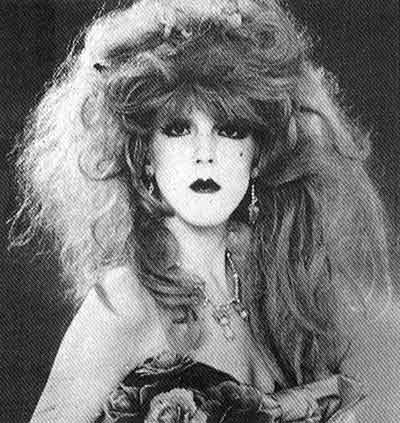 First runner-up in the 1983 Stevie Nicks look-a-like contest.
 So much to comment about on this one. One thing is the whole shaved-comma motif she's got going. Another interesting thing is how this lady successfully combined Michael Jackson's Afro'ed '70s style with his current heavily makeup-ed look. Brilliant.
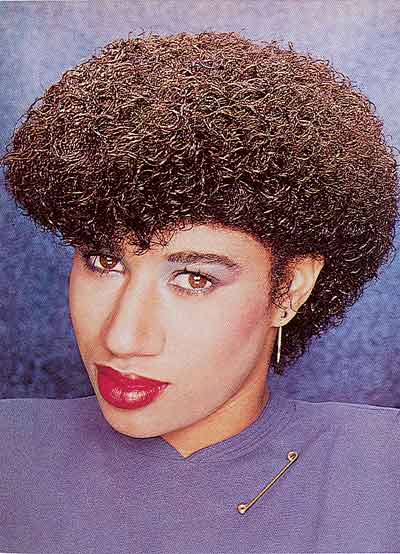 Can anybody else hear "Juicy Fruit" by Mtume playing in the background of this photoshoot? Seriously, I don't know this chick, but I think she needs to slack up on the hairspray. Her jherri curl is looking very dry.
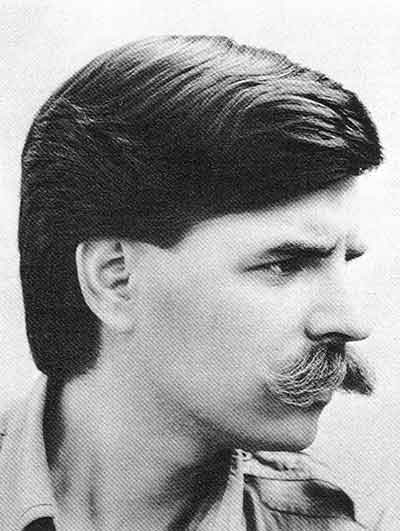 Jeff Foxworthy, the early years.
 This is a stickup! Give me all your braid spray and nobody gets hurt.
 First runner-up in the 1983 Stevie Nicks look-a-like contest.
 So much to comment about on this one. One thing is the whole shaved-comma motif she's got going. Another interesting thing is how this lady successfully combined Michael Jackson's Afro'ed '70s style with his current heavily makeup-ed look. Brilliant.
 Can anybody else hear "Juicy Fruit" by Mtume playing in the background of this photoshoot? Seriously, I don't know this chick, but I think she needs to slack up on the hairspray. Her jherri curl is looking very dry.
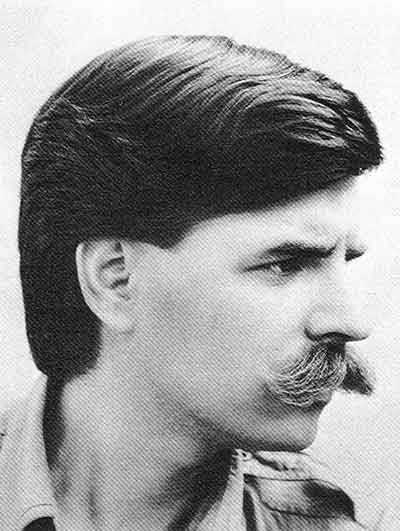 Jeff Foxworthy, the early years.
 This is a stickup! Give me all your braid spray and nobody gets hurt.
Monday, May 08, 2006
Montreal Canadiens, UNICEF, MTV, The Washington Post, Phil Knight, Michael Jordan...
A new Al Cabino interview in Hypocritical Mass, y'all
Saturday, May 06, 2006
Paul Wall Preps Reality Show About Big Weddings
 Kenny Rodriguez
 NobodySmiling.com
Houston rapper Paul Wall is developing a pilot for his own VH1 reality show, “My Big Fat Fabulous Wedding,” centered around the extravagant marriages of couples who spend upwards of $500,000 on their weddings.
Wall, who just recently got married, is working with Pink Sneakers -- the production company behind VH1’s “Hogan Knows Best” and MTV’s “True Life” series.
“We’re basically following couples planning big, over-the-top weddings who are spending insane amounts of money on flowers or bringing in big-name bands to their wedding,” said Pink Sneakers’ owner Kimberly Belcher Cowin.
“[It’ll show] the drama that goes into planning a wedding along with the concept of big money -- the people in that top tier who are planning these crazy bashes and spending jaw-dropping amounts of money.”
VH1 has already ordered eight half-hour episodes of “My Big Fat Fabulous Wedding,” and it plans on premiering the show sometime this fall.
Meanwhile, the People’s Champ is also prepping for his sophomore LP, Ain’t No 401 K For a Hustla. The album is expected to drop this year on Swisha House/Atlantic, although there is no release date as of yet.
Building Brands
How architects market themselves.
By Witold Rybczynski
Starchitects have long been the coveted designers of big new buildings—the Museum of Modern Art extension, the new Salt Lake City library, and the de Young Museum in San Francisco—but in recent months, the names of A-list designers such as Richard Meier, Robert A.M. Stern, and Charles Gwathmey have figured prominently in advertisements for high-end residential properties. Daniel Libeskind, Bernard Tschumi, Frank Gehry, and Herzog & De Meuron, who generally design cultural monuments, are all building luxury condominiums. From a developer's point of view, employing a famous architect is not only about adding design value, it's also about adding name recognition. In that sense, starchitects are transforming themselves from individual luminaries to companies bent on extending brand recognition throughout the world. The question, of course, is how much value a big-name architect actually adds to a real-estate project, and how architects became brands in the first place.
What makes an architect into a brand? Part of the recognition of a brand depends on what people who study such things call its "personality." Foster & Partners, whose Web site lists projects ranging from a congress hall in Kazakhstan to the Elephant House of the Copenhagen Zoo, is an international brand with a definite personality: Technical Solutions to Difficult Problems. Foster's chief rival is the Renzo Piano Building Workshop. The Piano brand, which conveys a sense of bespoke elegance, has been affixed to museums, airports, and office towers. It's more like Stylish Solutions to Any Problem.
Interestingly, neither Foster nor Piano has a house style; their designs vary considerably from project to project. This goes against the traditional notion that the work of celebrated architects should be individual and identifiable. But style can be a trap, as Richard Meier, with his persistent white walls and expanses of glass, found at the Getty Center, which seems to me like too much of a good thing. Michael Graves' Tuscan colors and simplified Classical forms likewise sometimes appear constraining. When I mentioned to a friend that Graves had recently built a building in Philadelphia, she said, "I didn't know that it was a real Graves; I thought it was a knockoff." Even Frank Gehry, who has perhaps the strongest architectural franchise in the world today—and recently designed a line of jewelry for Tiffany & Co.—sometimes seems hemmed in by his own success, as he builds yet another whimsical tour de force. The Tiffany necklace, by the way, looks like a very long key chain.
There are other sorts of architectural brands. Rem Koolhaas, who seems to have a love-hate relationship with his own celebrity, has shrewdly managed his OMA (Office of Metropolitan Architecture), turning it from a one-man studio into a brand. He has established a company ethos—one cannot really call it a style—in independent offices in Rotterdam, New York, and Beijing that have produced a variety of work, from a big-box convention center in Córdoba, Spain, to the crystalline Seattle Public Library and a dramatic nonskyscraper skyscraper in Beijing. The OMA ethos has a lot to do with cutting-edge problem-solving, which is perhaps why luxury condos are so far absent from the firm's portfolio.
There is nothing wrong with architects being given the opportunity to branch out—the great Vienna Secession architect Josef Hoffmann created some very beautiful jewelry—and greater public awareness of design is a good thing, but branding may turn out to have adverse effects. Most architectural careers are marked by a deliberate evolution—a slow simmer rather than a fast boil. The drive to establish their own unique brands pushes young architects to distinguish themselves early—too early. Moreover, public recognition of an architect's particular approach—Meier's minimalism, Stern's traditionalism, Santiago Calatrava's bravura—can serve to stymie the natural artistic evolution of a designer's style. Give the public what it likes and it simply wants more of the same. Remember New Coke? And that's not good for architects who want to explore rather than merely produce.
Witold Rybczynski is Slate's architecture critic.
By Witold Rybczynski
Starchitects have long been the coveted designers of big new buildings—the Museum of Modern Art extension, the new Salt Lake City library, and the de Young Museum in San Francisco—but in recent months, the names of A-list designers such as Richard Meier, Robert A.M. Stern, and Charles Gwathmey have figured prominently in advertisements for high-end residential properties. Daniel Libeskind, Bernard Tschumi, Frank Gehry, and Herzog & De Meuron, who generally design cultural monuments, are all building luxury condominiums. From a developer's point of view, employing a famous architect is not only about adding design value, it's also about adding name recognition. In that sense, starchitects are transforming themselves from individual luminaries to companies bent on extending brand recognition throughout the world. The question, of course, is how much value a big-name architect actually adds to a real-estate project, and how architects became brands in the first place.
What makes an architect into a brand? Part of the recognition of a brand depends on what people who study such things call its "personality." Foster & Partners, whose Web site lists projects ranging from a congress hall in Kazakhstan to the Elephant House of the Copenhagen Zoo, is an international brand with a definite personality: Technical Solutions to Difficult Problems. Foster's chief rival is the Renzo Piano Building Workshop. The Piano brand, which conveys a sense of bespoke elegance, has been affixed to museums, airports, and office towers. It's more like Stylish Solutions to Any Problem.
Interestingly, neither Foster nor Piano has a house style; their designs vary considerably from project to project. This goes against the traditional notion that the work of celebrated architects should be individual and identifiable. But style can be a trap, as Richard Meier, with his persistent white walls and expanses of glass, found at the Getty Center, which seems to me like too much of a good thing. Michael Graves' Tuscan colors and simplified Classical forms likewise sometimes appear constraining. When I mentioned to a friend that Graves had recently built a building in Philadelphia, she said, "I didn't know that it was a real Graves; I thought it was a knockoff." Even Frank Gehry, who has perhaps the strongest architectural franchise in the world today—and recently designed a line of jewelry for Tiffany & Co.—sometimes seems hemmed in by his own success, as he builds yet another whimsical tour de force. The Tiffany necklace, by the way, looks like a very long key chain.
There are other sorts of architectural brands. Rem Koolhaas, who seems to have a love-hate relationship with his own celebrity, has shrewdly managed his OMA (Office of Metropolitan Architecture), turning it from a one-man studio into a brand. He has established a company ethos—one cannot really call it a style—in independent offices in Rotterdam, New York, and Beijing that have produced a variety of work, from a big-box convention center in Córdoba, Spain, to the crystalline Seattle Public Library and a dramatic nonskyscraper skyscraper in Beijing. The OMA ethos has a lot to do with cutting-edge problem-solving, which is perhaps why luxury condos are so far absent from the firm's portfolio.
There is nothing wrong with architects being given the opportunity to branch out—the great Vienna Secession architect Josef Hoffmann created some very beautiful jewelry—and greater public awareness of design is a good thing, but branding may turn out to have adverse effects. Most architectural careers are marked by a deliberate evolution—a slow simmer rather than a fast boil. The drive to establish their own unique brands pushes young architects to distinguish themselves early—too early. Moreover, public recognition of an architect's particular approach—Meier's minimalism, Stern's traditionalism, Santiago Calatrava's bravura—can serve to stymie the natural artistic evolution of a designer's style. Give the public what it likes and it simply wants more of the same. Remember New Coke? And that's not good for architects who want to explore rather than merely produce.
Witold Rybczynski is Slate's architecture critic.
Sneaking in some history
John Petkovic, Cleveland Plain Dealer
These days, a pair of blingin' sneakers fetches $250 -- if your feet demand a designer logo or a microprocessor chip that does all sorts of weird things. And to think, way back when, Chuck Taylor was happy just running around in rubber and cloth. You've come a long way, sneaker:
Converse All Star: Yo, give it up for the godfather of street fashion. All the way from Indiana . . . Chuck Taylor -- a man who got tired of playing with sore feet and asked the Converse Rubber Shoe Co. to do something about it. In 1923, the Akron Firestones player became the first hoopster to endorse a shoe. Decades later, "Chucks" come in dozens of colors and designs, and punk rockers wear them more than players do.
Pro-Keds Royal: Made famous in 1949 by the NBA's first great, George Mikan, it became the street-smart shoe with '70s B-Boys.
Puma Clyde: Ex-Cavalier Walt Frazier turned low-top suede into going-out style with his 1968 shoe.
Nike Blazer: Elegant and simple, George "The Ice Man" Gervin's sneakers embodied '70s casual cool.
Converse All Star Pro: Dr. J wore the 1979 shoe while dunking a ball. In the '80s, techno-heads wore while dribbling on ecstasy.
Vans Slip-On: Cali skaters were already digging this checkered shoe by the mid- '70s. Dude, by '82, Jeff Spicoli turned it into a wicked fashion statement in "Fast Times at Ridgemont High."
Nike Air Jordan: "Michael Jordan changed fashion and basketball," says R&B guy Usher. It started with the release of this 1985 shoe, which fetched five times what other shoes sold for and kicked off upscale sneaker fashion.
Adidas Superstar: In '86, Run-DMC summoned fans to hold up their sneakers while rapping "My Adidas." The ode -- "Got a pair that I wear when I'm playin' ball / With the heel inside make me 10 feet tall"-- turned the shell-toe Superstar into the ultimate in playa footwear.
Converse Weapon: Larry Bird and Magic Johnson paved the way for The Weapon, this 1986 funky-colored high-top, geared toward street-smart fashion hounds and ballers alike. Yikes, the ad campaign featured rappin' basketball players.
Nike Air Alpha Force: "Charles Barkleys" became a street-smart icon -- in spite or because of that oh-so- '80s Velcro strap? By '88, Public Enemy penned an ode to the baller and helped turn the shoe into a rapper's delight.
The Reebok Pump: Every bull market is fraught with irrational exuberance. This '90s shoe, armed with, yep, an air pump, was it.
Prada Sport: With Adidas attracting pop-star endorsements and Euro fashionistas digging Pumas, Prada figured if you can't beat 'em, join 'em -- with a $250 sneaker.
Nike Zoom Generation: LeBron James in 2003 one-upped sneaker bling with this shoe, which boasts a reflective back to pay homage to his Hummer.
Adidas 1: This 21st century "smart" shoe is equipped with a microprocessor capable of making 5 million calculations per second to adjust heel cushioning. The perfect $250 gift -- for "The Six Million Dollar Man."
These days, a pair of blingin' sneakers fetches $250 -- if your feet demand a designer logo or a microprocessor chip that does all sorts of weird things. And to think, way back when, Chuck Taylor was happy just running around in rubber and cloth. You've come a long way, sneaker:
Converse All Star: Yo, give it up for the godfather of street fashion. All the way from Indiana . . . Chuck Taylor -- a man who got tired of playing with sore feet and asked the Converse Rubber Shoe Co. to do something about it. In 1923, the Akron Firestones player became the first hoopster to endorse a shoe. Decades later, "Chucks" come in dozens of colors and designs, and punk rockers wear them more than players do.
Pro-Keds Royal: Made famous in 1949 by the NBA's first great, George Mikan, it became the street-smart shoe with '70s B-Boys.
Puma Clyde: Ex-Cavalier Walt Frazier turned low-top suede into going-out style with his 1968 shoe.
Nike Blazer: Elegant and simple, George "The Ice Man" Gervin's sneakers embodied '70s casual cool.
Converse All Star Pro: Dr. J wore the 1979 shoe while dunking a ball. In the '80s, techno-heads wore while dribbling on ecstasy.
Vans Slip-On: Cali skaters were already digging this checkered shoe by the mid- '70s. Dude, by '82, Jeff Spicoli turned it into a wicked fashion statement in "Fast Times at Ridgemont High."
Nike Air Jordan: "Michael Jordan changed fashion and basketball," says R&B guy Usher. It started with the release of this 1985 shoe, which fetched five times what other shoes sold for and kicked off upscale sneaker fashion.
Adidas Superstar: In '86, Run-DMC summoned fans to hold up their sneakers while rapping "My Adidas." The ode -- "Got a pair that I wear when I'm playin' ball / With the heel inside make me 10 feet tall"-- turned the shell-toe Superstar into the ultimate in playa footwear.
Converse Weapon: Larry Bird and Magic Johnson paved the way for The Weapon, this 1986 funky-colored high-top, geared toward street-smart fashion hounds and ballers alike. Yikes, the ad campaign featured rappin' basketball players.
Nike Air Alpha Force: "Charles Barkleys" became a street-smart icon -- in spite or because of that oh-so- '80s Velcro strap? By '88, Public Enemy penned an ode to the baller and helped turn the shoe into a rapper's delight.
The Reebok Pump: Every bull market is fraught with irrational exuberance. This '90s shoe, armed with, yep, an air pump, was it.
Prada Sport: With Adidas attracting pop-star endorsements and Euro fashionistas digging Pumas, Prada figured if you can't beat 'em, join 'em -- with a $250 sneaker.
Nike Zoom Generation: LeBron James in 2003 one-upped sneaker bling with this shoe, which boasts a reflective back to pay homage to his Hummer.
Adidas 1: This 21st century "smart" shoe is equipped with a microprocessor capable of making 5 million calculations per second to adjust heel cushioning. The perfect $250 gift -- for "The Six Million Dollar Man."
Friday, May 05, 2006
Gas prices by ZIP, daily
Just enter your zip code in the site below, and it tells you which gas stations have the cheapest prices (and the highest) on gas in your zip code area. It's updated every evening.
http://autos.msn.com/everyday/gasstations.aspx?zip=&src=Netx
http://autos.msn.com/everyday/gasstations.aspx?zip=&src=Netx
Penney's in a Stream
Retailer to launch big store upgrade program based on the success of its Box One prototype
visualstore.com
JCPenney has announced plans to launch a major store upgrade program, based on the strong performance of its new Box One prototype.
The 1019-store retail chain said it plans to spend $1 billion renovating 250 existing stores and constructing more than 170 new ones by 2009. Ninety percent of the new stores will be built off-mall.
The company will open 27 stores this year and approximately 50 stores in each of the next three years. Roughly 80 percent of the new stores will open in large markets, with populations of 1 million people or more. The remaining stores will be open in mid-size markets with populations in the 100,000 - 300,000 range.
Penney will also complete renovations on over 50 stores this year and 65-70 per year through 2009. The new off-mall stores will be 80,000 - 100,000 square feet and will use the Box One design strategy, a combination of décor, aisle spacing and departmental adjacencies. The Box One concepts stores are producing sales of $200 per square foot in their first year and are expected to reach $250 per square foot as they mature.
visualstore.com
JCPenney has announced plans to launch a major store upgrade program, based on the strong performance of its new Box One prototype.
The 1019-store retail chain said it plans to spend $1 billion renovating 250 existing stores and constructing more than 170 new ones by 2009. Ninety percent of the new stores will be built off-mall.
The company will open 27 stores this year and approximately 50 stores in each of the next three years. Roughly 80 percent of the new stores will open in large markets, with populations of 1 million people or more. The remaining stores will be open in mid-size markets with populations in the 100,000 - 300,000 range.
Penney will also complete renovations on over 50 stores this year and 65-70 per year through 2009. The new off-mall stores will be 80,000 - 100,000 square feet and will use the Box One design strategy, a combination of décor, aisle spacing and departmental adjacencies. The Box One concepts stores are producing sales of $200 per square foot in their first year and are expected to reach $250 per square foot as they mature.
Thursday, May 04, 2006
2 for 1 Cabino
A couple of items from frequent steve's blog contributor Al Cabino:
Tom Cruise Runs For Nike
when will nike move on cabino's petition?
Tom Cruise Runs For Nike
when will nike move on cabino's petition?
A New Size for Denim: Extra Tight
By ERIC WILSON
WHENEVER people say, "You remind me of someone," I try to change the subject. Having been compared to Alfred E. Neuman, Doogie Howser and, during what seemed an eternal 1980's adolescence, Chip from "Kate & Allie," I fear this is a parlor game in which the cards are not stacked in my favor.
But a few years ago someone with a kind heart and poor vision suggested I looked a bit like James Dean. It was such an improbable surprise that I set out to emulate his look with white T-shirts and skintight jeans with rolled cuffs. That is, until I went looking for just the right pair of jeans. All of the stores were promoting boot-cut styles, which to me — or on me — looked like bell-bottoms.
Walking by Barneys New York a few weeks ago, I was reminded of that quest. A pair of $340 Acne jeans on a mannequin in the window were as snug as denim hosiery. Skinny jeans, as you may have heard, are back.
"After you wear them, you don't ever want to put on boot-leg pants again," the designer Mark Badgley had promised me. This spring Mr. Badgley and his partner, James Mischka, have been buying skinny jeans from labels with off-putting names like Acne and Nudie. The sudden popularity of those styles is most remarkable because they are skinny to an extreme. Some are even hard to put your foot through — or in my case, calves.
A possible reason for their unlikely appeal, as I discovered after road-testing a few models, is that the skinnier the silhouette, the easier it becomes to project another personality. But that, and the tight fit, can also be cause for discomfort.
One day I wore a pair of black jeans from a new label called Cheap Monday. They sell for $65 — hence the name — at a handful of retailers like Seven New York and Colette in Paris. The jeans stretched over my calves and bunched up at the knees like black earthworms, but they had the desired effect, drawing comments about Iggy Pop, Nick Cave and the Ramones. People stopped to reminisce about buying skinny jeans at places like Trash and Vaudeville or Lip Service.
But before long my lower back was aching inexplicably, perhaps from too much pressure on my spine, and all of the teasing about Keith Richards made my head ache (though not as badly as his). The skinny jeans had a life of their own, one that was exhausting and seemed to call for a lifestyle more exciting than spending Thursday nights at doggie obedience school.
"I have a saying that is ridiculous, but true," said Jonny Johansson, the creative director of Acne. "That is, 'Jeans are the perfect canvas for everything.' Pop culture, from the 50's with Marilyn Monroe and James Dean, and every interesting subculture that has happened since then, is built on an image of jeans. It is the most generic product and the most interesting product at the same time."
There are high-concept skinny jeans from Rick Owens with seams that trace the quadriceps. There are skinny jeans from Alexander McQueen that are stained to appear as if they had grown mold; these are sold with a disclaimer that says, "This denim may leave traces of color when it comes in contact with light clothing and furnishing fabrics." The Dior Homme designer Hedi Slimane, who gave wings to the louche aesthetic with his springtime homage to Pete Doherty, offers whiskered rock jeans in pale pink and pistachio, for $580.
Karl Lagerfeld's new collection includes skinny jeans sewn in Frankenstein patches, and John Varvatos designed a style that is a hybrid: roomy up top and strangling around the calves. Some feel nice for a few moments, as if your legs are being gently hugged into shape, but after walking a block, they become as claustrophobia-inducing as a fierce case of static cling. When I tried on a pair of Tsubi jeans in my normal waist size (30, thank you), I could barely button them, then turned around to discover the denim equivalent of a double chin.
After a day or two of wearing size 32 Tsubis (with stretch), I began to notice double takes from people on the street and started to feel like a pervert. The jeans stirred up body issues I never knew I had. By Friday I considered the possibility that I had become fat. To hide myself, I wore a boxy jacket and claimed it was part of the 80's trend.
"Some guys are just not comfortable being that well defined," said Alexandre Plokhov, the designer of the men's wear line Cloak. "But skinny jeans are pretty much a backlash against the boot-leg cut. When all the masses go right, a few people will go left."
For his store on Greene Street, Mr. Plokhov produced 200 pairs of a skinny style made of Japanese selvage denim with straight seams and trouser pockets that seem to magically eliminate unsightly bulges. At $390, they had nearly sold out.
Mr. Plokhov said he was surprised by the reaction, but mainstream denim makers suggest that more than a few people are going left. Greg Chait, the chief executive of Tsubi in the United States, said the company will sell $20 million in skinny jeans this year, about 40 percent of them for men. Tsubi's most popular styles, Dee Dee and Joey, both skinny, high-waist cuts, are named after members of the Ramones.
The market for denim styles with escalating prices has become so sophisticated that some companies claim to be able to predict where the skinny trend will lead. "Somewhere between October and next February, it will hit all parts of the country," said Jeff Rudes, the president of J Brand, which expects to ship more than 140,000 pairs of skinny women's jeans this year, with leg openings as narrow as 10 inches around. "This cycle is then good for 18 months to two years. It can't get any narrower than this without stopping blood flow."
I understood what he meant when I tried on the Acne jeans at Barneys. A mirror revealed that the results were not so much "Rebel Without a Cause" skinny as they were "West Side Story" unseemly. I blame the jeans.
WHENEVER people say, "You remind me of someone," I try to change the subject. Having been compared to Alfred E. Neuman, Doogie Howser and, during what seemed an eternal 1980's adolescence, Chip from "Kate & Allie," I fear this is a parlor game in which the cards are not stacked in my favor.
But a few years ago someone with a kind heart and poor vision suggested I looked a bit like James Dean. It was such an improbable surprise that I set out to emulate his look with white T-shirts and skintight jeans with rolled cuffs. That is, until I went looking for just the right pair of jeans. All of the stores were promoting boot-cut styles, which to me — or on me — looked like bell-bottoms.
Walking by Barneys New York a few weeks ago, I was reminded of that quest. A pair of $340 Acne jeans on a mannequin in the window were as snug as denim hosiery. Skinny jeans, as you may have heard, are back.
"After you wear them, you don't ever want to put on boot-leg pants again," the designer Mark Badgley had promised me. This spring Mr. Badgley and his partner, James Mischka, have been buying skinny jeans from labels with off-putting names like Acne and Nudie. The sudden popularity of those styles is most remarkable because they are skinny to an extreme. Some are even hard to put your foot through — or in my case, calves.
A possible reason for their unlikely appeal, as I discovered after road-testing a few models, is that the skinnier the silhouette, the easier it becomes to project another personality. But that, and the tight fit, can also be cause for discomfort.
One day I wore a pair of black jeans from a new label called Cheap Monday. They sell for $65 — hence the name — at a handful of retailers like Seven New York and Colette in Paris. The jeans stretched over my calves and bunched up at the knees like black earthworms, but they had the desired effect, drawing comments about Iggy Pop, Nick Cave and the Ramones. People stopped to reminisce about buying skinny jeans at places like Trash and Vaudeville or Lip Service.
But before long my lower back was aching inexplicably, perhaps from too much pressure on my spine, and all of the teasing about Keith Richards made my head ache (though not as badly as his). The skinny jeans had a life of their own, one that was exhausting and seemed to call for a lifestyle more exciting than spending Thursday nights at doggie obedience school.
"I have a saying that is ridiculous, but true," said Jonny Johansson, the creative director of Acne. "That is, 'Jeans are the perfect canvas for everything.' Pop culture, from the 50's with Marilyn Monroe and James Dean, and every interesting subculture that has happened since then, is built on an image of jeans. It is the most generic product and the most interesting product at the same time."
There are high-concept skinny jeans from Rick Owens with seams that trace the quadriceps. There are skinny jeans from Alexander McQueen that are stained to appear as if they had grown mold; these are sold with a disclaimer that says, "This denim may leave traces of color when it comes in contact with light clothing and furnishing fabrics." The Dior Homme designer Hedi Slimane, who gave wings to the louche aesthetic with his springtime homage to Pete Doherty, offers whiskered rock jeans in pale pink and pistachio, for $580.
Karl Lagerfeld's new collection includes skinny jeans sewn in Frankenstein patches, and John Varvatos designed a style that is a hybrid: roomy up top and strangling around the calves. Some feel nice for a few moments, as if your legs are being gently hugged into shape, but after walking a block, they become as claustrophobia-inducing as a fierce case of static cling. When I tried on a pair of Tsubi jeans in my normal waist size (30, thank you), I could barely button them, then turned around to discover the denim equivalent of a double chin.
After a day or two of wearing size 32 Tsubis (with stretch), I began to notice double takes from people on the street and started to feel like a pervert. The jeans stirred up body issues I never knew I had. By Friday I considered the possibility that I had become fat. To hide myself, I wore a boxy jacket and claimed it was part of the 80's trend.
"Some guys are just not comfortable being that well defined," said Alexandre Plokhov, the designer of the men's wear line Cloak. "But skinny jeans are pretty much a backlash against the boot-leg cut. When all the masses go right, a few people will go left."
For his store on Greene Street, Mr. Plokhov produced 200 pairs of a skinny style made of Japanese selvage denim with straight seams and trouser pockets that seem to magically eliminate unsightly bulges. At $390, they had nearly sold out.
Mr. Plokhov said he was surprised by the reaction, but mainstream denim makers suggest that more than a few people are going left. Greg Chait, the chief executive of Tsubi in the United States, said the company will sell $20 million in skinny jeans this year, about 40 percent of them for men. Tsubi's most popular styles, Dee Dee and Joey, both skinny, high-waist cuts, are named after members of the Ramones.
The market for denim styles with escalating prices has become so sophisticated that some companies claim to be able to predict where the skinny trend will lead. "Somewhere between October and next February, it will hit all parts of the country," said Jeff Rudes, the president of J Brand, which expects to ship more than 140,000 pairs of skinny women's jeans this year, with leg openings as narrow as 10 inches around. "This cycle is then good for 18 months to two years. It can't get any narrower than this without stopping blood flow."
I understood what he meant when I tried on the Acne jeans at Barneys. A mirror revealed that the results were not so much "Rebel Without a Cause" skinny as they were "West Side Story" unseemly. I blame the jeans.
J. Crew To Launch New Retail Brand
Chain Store Age
NEW YORK - Millard Drexler, who built Gap into a retail institution and then went on to turn around J. Crew, will introduce a new casual brand called Madewell this fall, Women’s Wear Daily (WWD) reported Tuesday.
Madewell is being launched as a women-only line focused on "timeless and ageless" casual merchandise, with price points 20% to 30% lower than J. Crew, with 80% of the selection priced under $100.
The first Madewell store will open in Dallas in late August, followed by another in Los Angeles. A third opening is likely by yearend. WWD reported that although it is being developed by J. Crew, no connection will be apparent to consumers.
The project has been in the works for about a year and has been kept quiet by a team of about 10 employees. The brand is led by Drexler, chairman and CEO of J. Crew Group, and Liz Meltzer, head of Madewell merchandising and planning.
Meltzer joined J. Crew about a year ago from Calvin Klein, where she was VP of merchandising for jeans. She worked with Drexler at Banana Republic in the early ‘90s. In the mid‘90s, she worked with him again at J. Crew.
With Drexler’s successful track record, Madewell could ultimately represent a broadside against Gap, Abercrombie & Fitch and American Eagle Outfitters.
"I can't predict what's going to happen," Drexler told the publication. "Everybody in the world, including Wal-Mart, started with one store. If I dream about it, I like to think [Madewell] could be a big business. But right now, we look at it day to day."
Madewell stores will be 3,000 sq. ft., about half the size of J. Crew stores.
NEW YORK - Millard Drexler, who built Gap into a retail institution and then went on to turn around J. Crew, will introduce a new casual brand called Madewell this fall, Women’s Wear Daily (WWD) reported Tuesday.
Madewell is being launched as a women-only line focused on "timeless and ageless" casual merchandise, with price points 20% to 30% lower than J. Crew, with 80% of the selection priced under $100.
The first Madewell store will open in Dallas in late August, followed by another in Los Angeles. A third opening is likely by yearend. WWD reported that although it is being developed by J. Crew, no connection will be apparent to consumers.
The project has been in the works for about a year and has been kept quiet by a team of about 10 employees. The brand is led by Drexler, chairman and CEO of J. Crew Group, and Liz Meltzer, head of Madewell merchandising and planning.
Meltzer joined J. Crew about a year ago from Calvin Klein, where she was VP of merchandising for jeans. She worked with Drexler at Banana Republic in the early ‘90s. In the mid‘90s, she worked with him again at J. Crew.
With Drexler’s successful track record, Madewell could ultimately represent a broadside against Gap, Abercrombie & Fitch and American Eagle Outfitters.
"I can't predict what's going to happen," Drexler told the publication. "Everybody in the world, including Wal-Mart, started with one store. If I dream about it, I like to think [Madewell] could be a big business. But right now, we look at it day to day."
Madewell stores will be 3,000 sq. ft., about half the size of J. Crew stores.
More Federated Sales
Retailer sells more 11 department store locations
visualstore.com
Federated Department Stores Inc. (Cincinnati) has signed an agreement to sell 11 department store locations to The Macerich Co. (Santa Monica, Calif.), a real estate investment trust.
The stores, all located within malls owned by Macerich, are: Filene's at Danbury (Conn.) Fair Mall; Macy's at Fiesta Mall (Mesa, Ariz.); Macy's at Paradise Valley (Phoenix); Macy's at Lakewood Center (Los Angeles); Macy's at Inland Center (San Bernardino, Calif.); Robinsons-May and a Macy's apparel-only store in The Oaks (Thousand Oaks, Calif.); Robinsons-May at Scottsdale (Ariz.) Fashion Square; Robinsons-May at Los Cerritos (Calif.) Center; Robinsons-May at Pacific View Mall (San Buenaventura, Calif.); and Robinsons-May at Santa Monica (Calif.) Place.
Terms of the sales were not disclosed, but Federated said it expects $400-$500 million in after-tax proceeds.
visualstore.com
Federated Department Stores Inc. (Cincinnati) has signed an agreement to sell 11 department store locations to The Macerich Co. (Santa Monica, Calif.), a real estate investment trust.
The stores, all located within malls owned by Macerich, are: Filene's at Danbury (Conn.) Fair Mall; Macy's at Fiesta Mall (Mesa, Ariz.); Macy's at Paradise Valley (Phoenix); Macy's at Lakewood Center (Los Angeles); Macy's at Inland Center (San Bernardino, Calif.); Robinsons-May and a Macy's apparel-only store in The Oaks (Thousand Oaks, Calif.); Robinsons-May at Scottsdale (Ariz.) Fashion Square; Robinsons-May at Los Cerritos (Calif.) Center; Robinsons-May at Pacific View Mall (San Buenaventura, Calif.); and Robinsons-May at Santa Monica (Calif.) Place.
Terms of the sales were not disclosed, but Federated said it expects $400-$500 million in after-tax proceeds.
Chanel, CK1 and now Play-Doh?
 Elizabeth Pezzullo
The Free Lance-Star
You know when Kramer on "Seinfeld" came up with the brilliant idea of bottling a scent that smelled like the beach? Well, the folks at Hasbro may be thinking along the same lines.
The toy manufacturer is coming out with a fragrance that smells like Play-Doh. You know, that yucky, stinky colored goop that kids go gaga over. Some Einstein in marketing obviously believes that lovely bouquet is worth bottling.
The fragrance is a limited edition, hallmarking the mudlike molding's 50th birthday.
Look for it this summer at Ulta cosmetics stores and online at sephora.com. It retails for $19 for a 1-ounce bottle.
Who knows what might happen. Kramer's idea--naturally mocked by Jerry--was ripped off by Calvin Klein and became a big seller.
may 4 article - Borders Rewards
 This is an article on the Borders Rewards program, which is also valid at Waldenbooks. It came out pretty well.
At age 50, Play-Doh refuses to get old
By JENEE OSTERHELDT
Knight Ridder Newspapers
Perhaps it's the way it squishes through your fingers.
Maybe it's the sharp scent.
Or it could be the creative freedom.
Whatever it is, Play-Doh is celebrating its 50th anniversary this year, and its makers aren't sharing their recipe for success with anybody.
It's definitely a mix of water, flour and probably lots of salt, because that's part of its signature smell and what keeps people tasting it. (Don't say you haven't tasted it.)
Hasbro exec Leigh Anne Cappello says the ingredients for Play-Doh are mostly the same today as they were when it was first sold as an off-white modeling compound in 1956. Only now there are plenty of colors. And this year, Hasbro is introducing a 50-pack.
Cappello says that aside from new colors, there have been "some minor tweaks to make it softer and squishier."
Part of Play-Doh's ability to grow with the generations is that it really is tested by kids and approved by moms, she says.
"From 2 to 102, people enjoy playing with Play-Doh. And it allows children limitless ways to express themselves creatively and to have something in their minds that is beautiful to share with their friends and family."
Aside from the secret ingredients and imagination factor, Brandon Faith Harrell says marketing strategies also have helped Play-Doh stay relevant.
"As a child, I didn't know there was any other clay besides Play-Doh," says Harrell, a 29-year-old metalsmith. "It was advertised so much, that when my teacher gave me this dough, and it wasn't in the yellow container, I was like, 'What's this stuff?' ... I like Play-Doh because it doesn't get stuck under your fingernails."
She says Play-Doh inspired her.
"It was my earliest three-dimensional media," says Harrell, who has created a Play-Doh dispenser, a Play-Doh-inspired incense burner and other Play-Doh-inspired pieces.
She also likes Play-Doh because it's not a gender-specific toy.
"It's one of the few toys that any kid can play with. And Play-Doh has a great formula. It smells good and you can taste it, and you won't die if you eat it. I never ate it but I liked to lick it sometimes," Harrell admits. "Who doesn't?"
Cappello says she has never tasted Play-Doh but says it is nontoxic.
How does she envision the future of Play-Doh?
"As long as it is squishing through the hands of children everywhere, it's as limitless as the compound itself."
Knight Ridder Newspapers
Perhaps it's the way it squishes through your fingers.
Maybe it's the sharp scent.
Or it could be the creative freedom.
Whatever it is, Play-Doh is celebrating its 50th anniversary this year, and its makers aren't sharing their recipe for success with anybody.
It's definitely a mix of water, flour and probably lots of salt, because that's part of its signature smell and what keeps people tasting it. (Don't say you haven't tasted it.)
Hasbro exec Leigh Anne Cappello says the ingredients for Play-Doh are mostly the same today as they were when it was first sold as an off-white modeling compound in 1956. Only now there are plenty of colors. And this year, Hasbro is introducing a 50-pack.
Cappello says that aside from new colors, there have been "some minor tweaks to make it softer and squishier."
Part of Play-Doh's ability to grow with the generations is that it really is tested by kids and approved by moms, she says.
"From 2 to 102, people enjoy playing with Play-Doh. And it allows children limitless ways to express themselves creatively and to have something in their minds that is beautiful to share with their friends and family."
Aside from the secret ingredients and imagination factor, Brandon Faith Harrell says marketing strategies also have helped Play-Doh stay relevant.
"As a child, I didn't know there was any other clay besides Play-Doh," says Harrell, a 29-year-old metalsmith. "It was advertised so much, that when my teacher gave me this dough, and it wasn't in the yellow container, I was like, 'What's this stuff?' ... I like Play-Doh because it doesn't get stuck under your fingernails."
She says Play-Doh inspired her.
"It was my earliest three-dimensional media," says Harrell, who has created a Play-Doh dispenser, a Play-Doh-inspired incense burner and other Play-Doh-inspired pieces.
She also likes Play-Doh because it's not a gender-specific toy.
"It's one of the few toys that any kid can play with. And Play-Doh has a great formula. It smells good and you can taste it, and you won't die if you eat it. I never ate it but I liked to lick it sometimes," Harrell admits. "Who doesn't?"
Cappello says she has never tasted Play-Doh but says it is nontoxic.
How does she envision the future of Play-Doh?
"As long as it is squishing through the hands of children everywhere, it's as limitless as the compound itself."
Wednesday, May 03, 2006
Whole Foods to add SouthPark store
CHARLOTTE - Whole Foods Market plans to open a second supermarket in Charlotte.
The store will occupy 50,000 square feet at the southwest corner of Sharon Road and Colony Road, east of SouthPark mall.
The store, slated to open in 2009, will feature parking on two levels.
The previously announced Charlotte Whole Foods Market on Elizabeth Avenue is scheduled to open in 2008.
"SouthPark is a booming neighborhood and the perfect location for Whole Foods Market's second Charlotte store," said Scott Allshouse, regional president for Whole Foods Market. "We listened to the many requests from the Charlotte community to open stores here, especially in the SouthPark area, and this new location was chosen because of those requests.
The Texas-based company, which sells natural and organic food, has stores in the United States, Canada and the United Kingdom.
The store will occupy 50,000 square feet at the southwest corner of Sharon Road and Colony Road, east of SouthPark mall.
The store, slated to open in 2009, will feature parking on two levels.
The previously announced Charlotte Whole Foods Market on Elizabeth Avenue is scheduled to open in 2008.
"SouthPark is a booming neighborhood and the perfect location for Whole Foods Market's second Charlotte store," said Scott Allshouse, regional president for Whole Foods Market. "We listened to the many requests from the Charlotte community to open stores here, especially in the SouthPark area, and this new location was chosen because of those requests.
The Texas-based company, which sells natural and organic food, has stores in the United States, Canada and the United Kingdom.
Louis Rukeyser, Television Host, Dies at 73
 BY JAMES GRANT
Louis Rukeyser, the exquisitely tailored and pun-loving television host who helped millions of Americans believe that they could get rich in the stock market, or at least begin to understand it, died yesterday at his home in Greenwich, Conn. He was 73.
He died of multiple myeloma, said his brother Bud Rukeyser.
When "Wall Street Week" was broadcast for the first time on Nov. 20, 1970, probably nobody, not even the always self-assured Mr. Rukeyser, dreamed that the show would run for 32 years while attracting the biggest audience on public television and making its host a celebrity in the improbable field of light-hearted, free-market-oriented financial commentary. The Dow Jones Industrial Average was then languishing, and the population of American mutual funds numbered a scant 323.
And though the Dow continued to languish (not until 1982 did it push above 1,000, a mark it had first set in 1966), "Wall Street Week" prospered. "I invented the job of economic commentary on television," Mr. Rukeyser said in 1980. He was already well along in inventing the medium of investment broadcasting.
"Fridays at 8:30 find me — amply fed, digestive organs ruminating contentedly to the rhythmic sloshing of martini juice — sitting in my Louis Quinze armchair awaiting another installment of 'Wall Street Week,' " wrote Russell Baker in The New York Times at the beginning of the show's second decade. "By 8:33 my mind is reeling so wildly with gyrations of the Dow Jones average and the pinwheeling of money funds, Treasury bills and gold markets that I often require a calming infusion of brandy."
The show attained its biggest audience, some six million viewers, in the mid-1980's.
Mr. Rukeyser, though he prodded the financial gurus who appeared on the program to forecast the stock market (the rosier the outlook, the better he liked it, as a rule), he usually kept his own predictive counsel.
But when, in 1980, he uncharacteristically ventured part way out on a limb — "I think we have entered the decade of the common stock," he said — he proved only partly correct. In fact, the market had embarked on a nearly two-decade up-cycle, and Mr. Rukeyser was started on his own professional bull market.
"Wall Street Week" had as its point of origin not the beating heart of American finance in Lower Manhattan but the leafy Baltimore suburb of Owings Mills, Md. The show was the brainchild of Anne Truax Darlington, a producer with Maryland Public Broadcasting, and the original corps of panelists was recruited from the Baltimore financial community, not previously noted for its telegenic possibilities.
Mr. Rukeyser's supporting cast members (later augmented by experts from outside Baltimore) became little celebrities in their own right. "I get recognized in bus lines," one long-serving panelist, Monte Gordon, remarked in 1990. "I get recognized when I'm eating in restaurants. There's a lot of psychic satisfaction to being on the show."
There was money at stake, too. The value of an appearance on "Wall Street Week" to each week's "special guest"— mutual-fund portfolio manager, bank trust officer, economist — climbed as the bull stock market went higher and higher.
"So how badly do people want to get on?" The Times asked a New York publicist, Len Kessler, in 1990. "It's spelled k-i-l-l," said Mr. Kessler.
Louis Richard Rukeyser was second of four sons of the financial journalist Merryle S. Rukeyser, who wrote a syndicated column in the Hearst newspapers.
Louis Rukeyser graduated from the Woodrow Wilson School of Princeton University in 1954. He took a reporting job at The Baltimore Sun and, within five years, was made London bureau chief, an unusually swift rise through the newsroom ranks. He joined ABC News in 1965 as a correspondent and commentator. Not until 1973 did he judge it safe to quit his day job for a still-unproven "Wall Street Week."
It was a decision that he never regretted. After 20 years on the air, Mr. Rukeyser was earning $300,000 a year from the show and $1 million or more in annual speaking income, each speech bearing the same title, "What's Ahead for the Economy" — the echo of the title of a book he wrote for Simon & Schuster in 1983.
He produced, in addition, a thrice-weekly newspaper column and a book on investing ("How to Make Money in Wall Street," Doubleday, 1974). Later he added a pair of newsletters, Louis Rukeyser's Wall Street and Louis Rukeyser's Mutual Funds. He flew first class, loved to gamble, slept in the best and gaudiest suites in the finest hotels and dressed every inch the sybarite he was. In 1991, The Fashion Foundation of America pronounced him the "best-dressed man in finance."
The host of "Wall Street Week" ("with Louis Rukeyser," he never failed to add to the show's title) and self-described champion of the "little guy" could be openly contemptuous of professional investors, a sentiment many of them warmly reciprocated. Mr. Rukeyser reserved his most withering scorn for the "gloomy Guses" and "Wrong-Way Corrigans" who warned of financial troubles that, during the prosperous 1990's, never transpired.
An eternal bull on the stock market, the more bullish, and less tolerant of dissenting bears he became, the higher the averages climbed. On the program of Nov. 5, 1999, Mr. Rukeyser announced the firing of the veteran panelist Gail Dudak for her 156 consecutive weeks of bearishly errant forecasting. Ms. Dudak heard the news from her neighbors the next morning. The stock market peaked four months later.
Though "Wall Street Week" never fell from the top of the heap of TV financial programs (a pile that owed much of its impressive height to Mr. Rukeyser's success), viewership slipped as stock prices fell and as competition from other financial media increased. In March 2002, Maryland Public TV announced that the snowy-haired Mr. Rukeyser would be eased out to make room for a youth movement led by the staff of Fortune Magazine.
Mr. Rukeyser would have none of it. "I want you to rise up out of your chairs," he summoned his viewers from the set of "Wall Street Week' the next Friday evening, "not to shout, 'I'm mad as hell and not going to take it anymore!' but," he added, to "write or e-mail your local PBS station saying you heard Louis Rukeyser is still going to have a program and that you'd like to see it."
Mr. Rukeyser was fired. But he quickly re-established the show at CNBC. He took pride in his new success and glee in the spectacle of Maryland Public Broadcasting suffering a forced retrenchment as his sponsors decamped from public television with him. (The Fortune version of "Wall Street Week" was canceled in 2005.)
Failing health forced Mr. Rukeyser off the air in 2003. He was presented with the Gerald Loeb Lifetime Achievement Emmy for Business and Financial Reporting in 2004.
Besides his brother Bud, of West Palm Beach, Fla., he is survived by his wife, Alexandra; three daughters, Beverley Bellisio of Middletown, Conn., Susan Rukeyser of Amarillo, Tex., and Stacy Rukeyser of West Hollywood, Calif.; two grandchildren; and two other brothers, William S., of Knoxville, Tenn., and Robert, of Greenwich.
One cost of celebrity for Mr. Rukeyser was the jibes he would have to bear while indulging his fondness for casino gambling. No sooner had he settled into a blackjack game, he once recalled, than someone would ask him if the odds at the table were really better than those on Wall Street.
James Grant was a panelist on "Wall Street Week" for 10 years, beginning in 1988.
Tuesday, May 02, 2006

SouthPark mall expands with luxury retailers
Ashley M. London, Staff Writer
Charlotte Business Journal
CHARLOTTE - Three luxury retailers new to the Carolinas are planning stores in the SouthPark mall wing that will house the new the Neiman Marcus anchor store.
Hermes, BCBGMaxAzria and Ralph Lauren will occupy three of the five available spaces in the wing leading to the entrance of the Neiman Marcus store, which is slated to open Sept. 15.
"This is what we always envisioned -- stores that are not only exclusive to the area but that are exclusive to the Carolinas," says Nicole Bostic, SouthPark mall director of marketing. "These stores are an important step in the continuation to broaden the overall retail landscape in the SouthPark area."
Hermes will occupy a 3,000-square-foot space next door to Burberry. The store will carry 14 product categories of Les Metiers Hermes, which comprise leather goods, scarves, perfumes, ties and ready-to-wear collections for men and women. Watches, jewelry, Art de Vivre and Art de Table will also be features of the store.
Hermes is slated to open in the fall before the holiday shopping season begins.
BCBGMaxAzria will occupy 2,568 square feet next to the new Ralph Lauren store. The retailer will offer women's ready to wear, evening dresses, bridal, denim, eyewear, shoes and more.
BCBGMazAzria also will open in the fall.
Ralph Lauren will open a 4,200-square-foot store next to Louis Vuitton. The store will sell men's and women's apparel, accessories and will feature decorative elements unique to Charlotte.
Ralph Lauren is slated to open in August.
"The addition of these high-end retailers to the Neiman Marcus wing solidifies SouthPark as Charlotte's quintessential luxury shopping center," Bostic says.
Only two store spaces remain in the luxury wing of the mall owned by Indianapolis-based Simon Property Group Inc. The real estate investment trust has pumped more than $100 million into renovating, revamping and recreating SouthPark.
The retailers that will occupy those spaces will be announced in 60 to 90 days, Bostic says.
Charlotte Business Journal
CHARLOTTE - Three luxury retailers new to the Carolinas are planning stores in the SouthPark mall wing that will house the new the Neiman Marcus anchor store.
Hermes, BCBGMaxAzria and Ralph Lauren will occupy three of the five available spaces in the wing leading to the entrance of the Neiman Marcus store, which is slated to open Sept. 15.
"This is what we always envisioned -- stores that are not only exclusive to the area but that are exclusive to the Carolinas," says Nicole Bostic, SouthPark mall director of marketing. "These stores are an important step in the continuation to broaden the overall retail landscape in the SouthPark area."
Hermes will occupy a 3,000-square-foot space next door to Burberry. The store will carry 14 product categories of Les Metiers Hermes, which comprise leather goods, scarves, perfumes, ties and ready-to-wear collections for men and women. Watches, jewelry, Art de Vivre and Art de Table will also be features of the store.
Hermes is slated to open in the fall before the holiday shopping season begins.
BCBGMaxAzria will occupy 2,568 square feet next to the new Ralph Lauren store. The retailer will offer women's ready to wear, evening dresses, bridal, denim, eyewear, shoes and more.
BCBGMazAzria also will open in the fall.
Ralph Lauren will open a 4,200-square-foot store next to Louis Vuitton. The store will sell men's and women's apparel, accessories and will feature decorative elements unique to Charlotte.
Ralph Lauren is slated to open in August.
"The addition of these high-end retailers to the Neiman Marcus wing solidifies SouthPark as Charlotte's quintessential luxury shopping center," Bostic says.
Only two store spaces remain in the luxury wing of the mall owned by Indianapolis-based Simon Property Group Inc. The real estate investment trust has pumped more than $100 million into renovating, revamping and recreating SouthPark.
The retailers that will occupy those spaces will be announced in 60 to 90 days, Bostic says.
Harvard Economist Galbraith, 97, Dies
 Harvard Economist and Political Adviser John Galbraith Dies After Dispensing Decades of Wisdom
By BRANDIE M. JEFFERSON Associated Press Writer
BOSTON - In the 1950s, John Kenneth Galbraith cautioned that corporations were becoming too powerful. In the 1960s he warned President Kennedy about the dangers of unilateral military action abroad.
He continually criticized conservative administrations' fiscal policies. He tried to bring environmental issues into the limelight.
"He was a half of a century ahead of his time," said his biographer, Richard Parker.
Galbraith, a Harvard economist and behind-the-scenes political adviser to Democratic presidents, died late Saturday of natural causes, his son said. He was 97.
His influence remained relevant long after his 1958 work "The Affluent Society" argued that the American economy produced individual wealth but did not adequately address public needs such as schools.
British Finance Minister Gordon Brown said Galbraith advised him and others in recent years with insights into the modern age.
"Even in recent years in his 90s he was never slow to give me and others advice and he will be remembered for his erudition, his wit and eloquence, and particularly for his economic insights into our age," Brown said.
The Canadian-born economist and unabashed liberal served as adviser to Democratic presidents from Franklin D. Roosevelt to Bill Clinton and was John F. Kennedy's ambassador to India.
Galbraith, who was outspoken in his support of government intervention in social and economic problems, became a larger figure on the American political scene after World War II.
Sen. Edward Kennedy lauded Galbraith's "profound commitment to social justice."
"I know how much President Kennedy admired his genius, valued his friendship and loved his extraordinary wit, and so did I," the Massachusetts Democrat said. "Our affluent society is a fairer and more just society today because of Ken, and no one who knew him will ever forget him."
Although an economist, his impact reached far beyond economic circles. He thought across disciplines, Benjamin Freeman, a Harvard economics professor and friend of Galbraith's said, "Not just in the field (of economics), but broadening the discourse to encompass the world at large."
It was this integration of different topics that gave Galbraith unique foresight about politics and economics in America, said Parker, who wrote "John Kenneth Galbraith: His Life, His Politics, His Economics."
A review of Parker's biography in the March edition of the Journal of Economic Literature argued that, although Galbraith was the "best known" economist in the 50s and 60s, "he was not then, and will never be, regarded as a great economist by economists, because he produced no theories, which is what great economists are supposed to do," wrote University of Warwick economist Robert Skidelsky. He described Galbraith as an "eminent public figure moralist, controversialist, stylist, wit who happened to profess economics."
But former Harvard President Derek Bok said Galbraith was distinct from other economists because he wrote for a general audience, something that critics have cited as a weak spot.
"He used his wit ... very tellingly to make points about society," Bok said Sunday. "He was not one to express anger. But he was an expert in using his wit to attack (people he disagreed with) by making people laugh."
One of those people was economist Arthur Laffer, most famous for the Laffer curve, a tool he uses to support a supply-side economics model that suggests, in some situations, tax-cuts can pay for themselves.
During debates, Laffer and Galbraith were often pitted against each other; Galbraith the far-left liberal and Laffer the ambassador of "Reaganomics."
"He was witty, he was charming, he had a turn of phrase that was unbelievable," Laffer said.
Galbraith took jabs at Laffer's trickle-down theory, describing it thus: "If you feed the horse enough oats, the sparrow will survive on the highway."
But, Laffer said, they had endless fun and invigorating debates.
"The world is not just made up of people who turn out to be right," he said. "It is the debate that's critical... It is the debate that moves the world forward. And there is no one better to debate than John Kenneth Galbraith."
After graduating from the University of Toronto in 1931, Galbraith moved to the U.S. where he earned his Ph.D. in economics from the University of California. He taught at Harvard from 1934 to 1939 and at Princeton University from 1939 to 1942.
Galbraith returned to Harvard in 1948, remaining active on the faculty until his retirement in 1975.
"The Affluent Society," published in 1958, became one of Galbraith's most influential and praised works. In 1999 a panel of judges assembled by the Modern Library, a publishing house, listed the book as No. 46 on its list of the century's 100 best English-language works of nonfiction.
Galbraith was married in 1937 to Catherine Atwater. They had three sons, Alan, Peter and James.
Services have not yet been scheduled.
"His mind was wonderful, right up until the end," Alan Galbraith said. "He had a wonderful and full life."
Midnight move at Macy's
In a barely detectable overnight effort, Macy's at three Baltimore area malls relocated to vacant former Hecht's stores.
Andrea K. Walker, The Baltimore Sun
BALTIMORE -- After hearing people talk for several days about Macy's moving to bigger digs on the other side of Marley Station, Sandra Richardson went to the mall in Glen Burnie yesterday to see for herself what the hype was all about.
She peered through a small opening at the front of the store's new location and noted that it was bright and spacious. But it still looked like any other department store, she said.
"I came to peek in the window for myself," said Richardson, kitchen manager at a fast-food restaurant. "I was curious to see what was inside."
The Macy's at Marley Station was one of three in the area involved in a real estate game of musical chairs last weekend resulting from the merger of Federated Department Stores Inc. and May Department Stores Inc. Under the deal, the Hecht's store chain is being shut down this year to be replaced with a national Macy's nameplate.
The Hecht's at Marley Station Mall, as well as those at White Marsh and Owings Mills malls in Baltimore County, were the first to close several weeks ago. In an overnight move Sunday night, Macy's moved into the old Hecht's spaces at the three malls.
Today, the three new Macy's are open for business.
The big moves, which had been anticipated by curious customers and mall employees, were virtually invisible to anyone but Macy's workers.
Paige Walker, 16, and Bryttani Dews, 17, tried to get a peek at the new Macy's yesterday but said the doors were blocked. All three Macy's were closed yesterday.
The little bit of remodeling on the outside of the Marley Station store, including a new sign, made the girls more anxious to come back when it opens.
"I think it will be much better than the old spot," Walker said.
Workers moved goods throughout Sunday night while most people were asleep. Merchandise was loaded on trucks and moved from one dock to the next.
Employees moved racks of clothes through the mall after other mall businesses were gated shut for the night, mall managers and a Macy's spokeswoman said.
"It's been a constant question for the many months, ever since the whole Federated and May acquisition became public," said Christopher Schardt, general manager at White Marsh Mall. "In the end, all customers would see probably is trucks backing up to their loading docks. The bulk of the move was done during off hours."
Lori Mullins, manager at The Bombay Company furniture store at Marley Station, said the transformation was quick. "One day the store is full," she said, "and the next day, it's empty."
The move had little impact on the malls, which will have to change their directories and store maps. Their workers have also had to field questions from customers.
"The move has been in our mind pretty seamless," said Charmaine Lawrence, general manager at Marley Station. "I'm sure it's quite intense for Macy's."
Macy's was practically clandestine about the move. There was no fancy advertising, and the company wouldn't allow reporters inside the store during the process. The company put small signs in front of its stores and sent notices to credit-card holders.
Yesterday at Marley Station, Macy's displayed 20 percent-off coupons at the mall's main information kiosk. A look through a window showed a department store that was almost completely set up, from displays of shoes to stacks of perfume boxes to prom dresses hanging from racks.
The move was so quiet that some people didn't realize it had happened. But the coverings over the doors of the old Hecht's space put in place several weeks ago were enough to whet curiosity.
"People have been asking a lot of questions," said Melissa Elliott, a manager at Kay Jewelers at Marley Station. "It's created a lot of buzz. People are curious about the whole thing."
Many people want to know about Boscov's, the Reading, Pa.-based department store chain that will move later this year into the spaces left vacant by the Macy's move. Federated moved Macy's into the more prominent former Hecht's spaces.
Some yesterday expressed a bit of nostalgia for Hecht's. "It's kind of sad remembering shopping there as a kid," said Jeanne Klingler, a school media assistant.
Others were more ambivalent about the change. "It doesn't really matter," said Mary Bohlman of Millersville. "I just usually shop where the sales are."
Andrea K. Walker, The Baltimore Sun
BALTIMORE -- After hearing people talk for several days about Macy's moving to bigger digs on the other side of Marley Station, Sandra Richardson went to the mall in Glen Burnie yesterday to see for herself what the hype was all about.
She peered through a small opening at the front of the store's new location and noted that it was bright and spacious. But it still looked like any other department store, she said.
"I came to peek in the window for myself," said Richardson, kitchen manager at a fast-food restaurant. "I was curious to see what was inside."
The Macy's at Marley Station was one of three in the area involved in a real estate game of musical chairs last weekend resulting from the merger of Federated Department Stores Inc. and May Department Stores Inc. Under the deal, the Hecht's store chain is being shut down this year to be replaced with a national Macy's nameplate.
The Hecht's at Marley Station Mall, as well as those at White Marsh and Owings Mills malls in Baltimore County, were the first to close several weeks ago. In an overnight move Sunday night, Macy's moved into the old Hecht's spaces at the three malls.
Today, the three new Macy's are open for business.
The big moves, which had been anticipated by curious customers and mall employees, were virtually invisible to anyone but Macy's workers.
Paige Walker, 16, and Bryttani Dews, 17, tried to get a peek at the new Macy's yesterday but said the doors were blocked. All three Macy's were closed yesterday.
The little bit of remodeling on the outside of the Marley Station store, including a new sign, made the girls more anxious to come back when it opens.
"I think it will be much better than the old spot," Walker said.
Workers moved goods throughout Sunday night while most people were asleep. Merchandise was loaded on trucks and moved from one dock to the next.
Employees moved racks of clothes through the mall after other mall businesses were gated shut for the night, mall managers and a Macy's spokeswoman said.
"It's been a constant question for the many months, ever since the whole Federated and May acquisition became public," said Christopher Schardt, general manager at White Marsh Mall. "In the end, all customers would see probably is trucks backing up to their loading docks. The bulk of the move was done during off hours."
Lori Mullins, manager at The Bombay Company furniture store at Marley Station, said the transformation was quick. "One day the store is full," she said, "and the next day, it's empty."
The move had little impact on the malls, which will have to change their directories and store maps. Their workers have also had to field questions from customers.
"The move has been in our mind pretty seamless," said Charmaine Lawrence, general manager at Marley Station. "I'm sure it's quite intense for Macy's."
Macy's was practically clandestine about the move. There was no fancy advertising, and the company wouldn't allow reporters inside the store during the process. The company put small signs in front of its stores and sent notices to credit-card holders.
Yesterday at Marley Station, Macy's displayed 20 percent-off coupons at the mall's main information kiosk. A look through a window showed a department store that was almost completely set up, from displays of shoes to stacks of perfume boxes to prom dresses hanging from racks.
The move was so quiet that some people didn't realize it had happened. But the coverings over the doors of the old Hecht's space put in place several weeks ago were enough to whet curiosity.
"People have been asking a lot of questions," said Melissa Elliott, a manager at Kay Jewelers at Marley Station. "It's created a lot of buzz. People are curious about the whole thing."
Many people want to know about Boscov's, the Reading, Pa.-based department store chain that will move later this year into the spaces left vacant by the Macy's move. Federated moved Macy's into the more prominent former Hecht's spaces.
Some yesterday expressed a bit of nostalgia for Hecht's. "It's kind of sad remembering shopping there as a kid," said Jeanne Klingler, a school media assistant.
Others were more ambivalent about the change. "It doesn't really matter," said Mary Bohlman of Millersville. "I just usually shop where the sales are."
The Beat Goes On
Federated sells seven more properties to Simon Group, some to be converted to Nordstrom and Dillard's
visualstore.com
Simon Property Group Inc. (Indianapolis) has signed a definitive agreement with Federated Department Stores Inc. (Cincinnati) to buy seven Federated buildings.
The seven stores, all at Simon properties, are: Filene's at Burlington (Mass.) Mall; L.S. Ayres at Castleton Square Mall, (Indianapolis); Macy's at Pheasant Lane Mall (Nashua, N.H.); Marshall Field's at University Park Mall (Mishawaka, Ind.); Famous-Barr at Eastland Mall (Evansville, Ind.); L.S. Ayres at Greenwood (Ind.) Park Mall; and Macy's at South Shore Plaza (Braintree, Mass.).
Simon Properties said it would construct new Nordstrom stores at Burlington Mall, South Shore Plaza and Northshore Mall. A Dillard's will occupy the former L.S. Ayres store at Eastland Mall.
Simon and Federated also agreed to terminate the operating leases of Macy's stores at Ross Park Mall (Pittsburgh) and Northshore Mall (Peabody, Mass.).
And Federated announced that the Robinsons-May store at Fashion Valley Mall (San Diego) and Filene's at Mall at Chestnut Hill (Newton, Mass.) will be converted to Bloomingdale's. It is anticipated that these stores will reopen as Bloomingdale's in the fourth quarter of this year.
visualstore.com
Simon Property Group Inc. (Indianapolis) has signed a definitive agreement with Federated Department Stores Inc. (Cincinnati) to buy seven Federated buildings.
The seven stores, all at Simon properties, are: Filene's at Burlington (Mass.) Mall; L.S. Ayres at Castleton Square Mall, (Indianapolis); Macy's at Pheasant Lane Mall (Nashua, N.H.); Marshall Field's at University Park Mall (Mishawaka, Ind.); Famous-Barr at Eastland Mall (Evansville, Ind.); L.S. Ayres at Greenwood (Ind.) Park Mall; and Macy's at South Shore Plaza (Braintree, Mass.).
Simon Properties said it would construct new Nordstrom stores at Burlington Mall, South Shore Plaza and Northshore Mall. A Dillard's will occupy the former L.S. Ayres store at Eastland Mall.
Simon and Federated also agreed to terminate the operating leases of Macy's stores at Ross Park Mall (Pittsburgh) and Northshore Mall (Peabody, Mass.).
And Federated announced that the Robinsons-May store at Fashion Valley Mall (San Diego) and Filene's at Mall at Chestnut Hill (Newton, Mass.) will be converted to Bloomingdale's. It is anticipated that these stores will reopen as Bloomingdale's in the fourth quarter of this year.
Long-popular insult may be on way out
Dane Schiller
San Antonio Express-News
MEXICO CITY — A centuries-old insult — drawn from a brutal chapter in history — could soon turn extinct, thanks to America swallowing up Mexican culture.
For generations, it has been popular here to insult anyone who prefers imported clothes, food, music or even spouses by calling them Malinchistas, from the name La Malinche, which was given to an indigenous teen girl who became the translator, concubine and property of Spanish conquistador Hernán Cortés.
She served as his negotiator and is said to have given birth to the first child of European-Indian blood after Cortés conquered this land in the 1520s.
If it were not for her ability to speak Spanish and Indian dialects, Spain might have had a far harder time dominating the region.
"She betrayed the Aztecs," college student Andrea Medina, 21, said as she stood beneath a National Palace mural containing an image of La Malinche and Cortés.
Calling someone by her name "is not a nice thing to say — to the contrary."
Despite the knee-jerk distaste for her memory, there are songs, books, poems, a street, a neighborhood and even a volcano named after La Malinche, who also was known as Malintzin.
She is the most widely known woman in Mexican history after the Virgin of Guadalupe.
But in time, using her name in vain could become passé. Thanks in part to the effects of free trade and the record numbers of immigrants living and working in the United States, it is becoming less and less foreign to display foreign ways.
Especially American ways. Eating pizza and wearing sneakers are becoming, simply put, Mexican. If a middle-class Mexican family doesn't spend at least part of a Saturday at a new Wal-Mart or Sam's Club, something is wrong.
Those businesses, along with other U.S. companies, particularly fast-food franchises, have sprouted across Mexico.
"Before, it was sandals and a zarape; now it is sneakers and a workout suit, " Mexico City sociologist Roberto Bermúdez Sánchez said.
Hurling Malinche or Malinchista as insults, he said, "is losing significance, as with time, there is more and more identifying with the United States."
The trend is obvious throughout society, from Mexico's most wealthy, who can travel abroad to shop for the latest styles, to the poor, whose sons often come home with new clothes and customs after working north of the border.
"It is different," Maribel Garduño, 22, who works for a video production company, said of foreign-made products. "Sometimes it is just about the style. Fabrics are better."
A preference for foreign things is a touchy disposition for Mexicans, who for hundreds of years have been invaded or dominated by foreign powers, including the United States, which gobbled up half its neighbor's territory with the 1848 Treaty of Guadalupe Hidalgo.
La Malinche's child with Cortés is symbolically considered the birth of mestizos —people with combined European and Indian ancestry.
The mixed race claimed to this day by most Mexicans contains both sides of the conflict that created Mexico. Resentment, anger and confusion linger, said Geraldine Calvo, a Mexico City psychologist.
"It is an identity problem for Mexicans," she said. "In one way, they resent (foreigners). In another, they want to be like them."
Inés Hernández-Avila, a professor at the University of California at Davis, said La Malinche has taken an unfair pounding.
"There is still some pretty intense Indian hating in Mexico. I think that is part of it," she said.
When Cortés arrived, he was given a tribute of 20 women, including La Malinche.
Hernández-Avila and others agree that La Malinche made the best of the situation for herself and her family. She was baptized and gained status and benefits in colonial society.
Given her background and young age — perhaps the early teens when Cortés arrived — some find it amazing that she knew how to speak to leaders at the highest level of her society.
"Excuse me if they are going to blame her — what were men doing?" Hernández-Avila said of the long-popular view of La Malinche as someone who sold out her people to foreign invaders.
A children's book gives one idea of how La Malinche might defend herself and her actions.
"No one can say anything about me," the author writes, taking on the first-person voice of La Malinche. "I was sold as a slave and separated from my family when I was very young."
Still, hundreds of years later, she remains branded a traitor.
Mexico historian Salvador Reyes Equiguas said a lot will never be known.
"The story is very much fragmented, a piece here and a piece there," he said. "There is no complete truth to this story."
San Antonio Express-News
MEXICO CITY — A centuries-old insult — drawn from a brutal chapter in history — could soon turn extinct, thanks to America swallowing up Mexican culture.
For generations, it has been popular here to insult anyone who prefers imported clothes, food, music or even spouses by calling them Malinchistas, from the name La Malinche, which was given to an indigenous teen girl who became the translator, concubine and property of Spanish conquistador Hernán Cortés.
She served as his negotiator and is said to have given birth to the first child of European-Indian blood after Cortés conquered this land in the 1520s.
If it were not for her ability to speak Spanish and Indian dialects, Spain might have had a far harder time dominating the region.
"She betrayed the Aztecs," college student Andrea Medina, 21, said as she stood beneath a National Palace mural containing an image of La Malinche and Cortés.
Calling someone by her name "is not a nice thing to say — to the contrary."
Despite the knee-jerk distaste for her memory, there are songs, books, poems, a street, a neighborhood and even a volcano named after La Malinche, who also was known as Malintzin.
She is the most widely known woman in Mexican history after the Virgin of Guadalupe.
But in time, using her name in vain could become passé. Thanks in part to the effects of free trade and the record numbers of immigrants living and working in the United States, it is becoming less and less foreign to display foreign ways.
Especially American ways. Eating pizza and wearing sneakers are becoming, simply put, Mexican. If a middle-class Mexican family doesn't spend at least part of a Saturday at a new Wal-Mart or Sam's Club, something is wrong.
Those businesses, along with other U.S. companies, particularly fast-food franchises, have sprouted across Mexico.
"Before, it was sandals and a zarape; now it is sneakers and a workout suit, " Mexico City sociologist Roberto Bermúdez Sánchez said.
Hurling Malinche or Malinchista as insults, he said, "is losing significance, as with time, there is more and more identifying with the United States."
The trend is obvious throughout society, from Mexico's most wealthy, who can travel abroad to shop for the latest styles, to the poor, whose sons often come home with new clothes and customs after working north of the border.
"It is different," Maribel Garduño, 22, who works for a video production company, said of foreign-made products. "Sometimes it is just about the style. Fabrics are better."
A preference for foreign things is a touchy disposition for Mexicans, who for hundreds of years have been invaded or dominated by foreign powers, including the United States, which gobbled up half its neighbor's territory with the 1848 Treaty of Guadalupe Hidalgo.
La Malinche's child with Cortés is symbolically considered the birth of mestizos —people with combined European and Indian ancestry.
The mixed race claimed to this day by most Mexicans contains both sides of the conflict that created Mexico. Resentment, anger and confusion linger, said Geraldine Calvo, a Mexico City psychologist.
"It is an identity problem for Mexicans," she said. "In one way, they resent (foreigners). In another, they want to be like them."
Inés Hernández-Avila, a professor at the University of California at Davis, said La Malinche has taken an unfair pounding.
"There is still some pretty intense Indian hating in Mexico. I think that is part of it," she said.
When Cortés arrived, he was given a tribute of 20 women, including La Malinche.
Hernández-Avila and others agree that La Malinche made the best of the situation for herself and her family. She was baptized and gained status and benefits in colonial society.
Given her background and young age — perhaps the early teens when Cortés arrived — some find it amazing that she knew how to speak to leaders at the highest level of her society.
"Excuse me if they are going to blame her — what were men doing?" Hernández-Avila said of the long-popular view of La Malinche as someone who sold out her people to foreign invaders.
A children's book gives one idea of how La Malinche might defend herself and her actions.
"No one can say anything about me," the author writes, taking on the first-person voice of La Malinche. "I was sold as a slave and separated from my family when I was very young."
Still, hundreds of years later, she remains branded a traitor.
Mexico historian Salvador Reyes Equiguas said a lot will never be known.
"The story is very much fragmented, a piece here and a piece there," he said. "There is no complete truth to this story."
Monday, May 01, 2006
my neighborhood | boondoggled
 This is Just D's blog, Boondoggled. She's one of those bloggers who always has interesting things to say, and she's funny as hell to boot. One of these days, I'm going to be able to do that. LOL
Check out her blog. You'll be glad you did.
Red Apple a little dicey
Maria Halkias
The Dallas Morning News
DALLAS - Now that Foley's stores are becoming Macy's, shoppers have one big question:
What about the Red Apple sale?
Neiman Marcus has Last Call, and Chicago's Marshall Field's has Field Days. Foley's Red Apple sales are just as recognizable around here.
The sale started out as the Sanger Harris Red Apple sale before it was Foley's. Sanger Harris was swallowed up by Foley's in 1987, when the department store industry was in another era of major consolidation.
Last year, Macy's parent Federated Department Stores Inc. acquired May Department Stores Co. Eleven names are disappearing over the next several months – including Foley's and Marshall Field's – until the name change becomes complete in September.
On Monday, Foley's starts using its temporary, transitional tag line: "a member of the Macy's family."
The Red Apple sale may be in for a name change, too.
"We know what makes people jump off the couch in Texas is the Red Apple sale, but Macy's has the One-Day sale," said Macy's spokeswoman Ellen Fruchtman.
"What's really more important than the name of the sale is the promotional value offered to the customer, that it's compelling," she said.
"I wouldn't be surprised if we start seeing the Red Apple One-Day sale cropping up."
The Dallas Morning News
DALLAS - Now that Foley's stores are becoming Macy's, shoppers have one big question:
What about the Red Apple sale?
Neiman Marcus has Last Call, and Chicago's Marshall Field's has Field Days. Foley's Red Apple sales are just as recognizable around here.
The sale started out as the Sanger Harris Red Apple sale before it was Foley's. Sanger Harris was swallowed up by Foley's in 1987, when the department store industry was in another era of major consolidation.
Last year, Macy's parent Federated Department Stores Inc. acquired May Department Stores Co. Eleven names are disappearing over the next several months – including Foley's and Marshall Field's – until the name change becomes complete in September.
On Monday, Foley's starts using its temporary, transitional tag line: "a member of the Macy's family."
The Red Apple sale may be in for a name change, too.
"We know what makes people jump off the couch in Texas is the Red Apple sale, but Macy's has the One-Day sale," said Macy's spokeswoman Ellen Fruchtman.
"What's really more important than the name of the sale is the promotional value offered to the customer, that it's compelling," she said.
"I wouldn't be surprised if we start seeing the Red Apple One-Day sale cropping up."
Two perspectives on the Marshall Field's desecration
Note from Steve: The first article is the press release, the second is a more honest assesment
Federated Pledges Improvements at Field's
By DAVE CARPENTER
The Associated Press
CHICAGO -- Goodbye to Marshall Field's. Welcome back, Frangos?
The new corporate owner of Chicago's venerable downtown department store removed any lingering doubt Thursday that it will strip the historic name by fall, redubbing it Macy's at State Street. But Federated Department Stores Inc. pledged to honor Marshall Field's traditions and perhaps even sweeten them, citing the hoped-for return of Frango Mint production to the city on a lengthy list of planned changes.
Among the others: new brands, boutiques and shops; refurbishment's to the store's interior and exterior; and a fresh-foods market concept still being developed for the lower level.
Federated is converting all 61 Marshall Field's stores, scattered across eight Midwestern states, to the Macy's nameplate in September. But it's in Chicago, where meeting under the Field's clock and toting green Field's shopping bags have been traditions for generations, that the upcoming move has caused a local uproar.
Top executives of Cincinnati-based Federated, which acquired the Marshall Field's stores with its purchase of May Department Stores last fall, and Macy's North, its new Minneapolis-based division, talked up ambitious plans for the store at a news conference in hope of winning over any unsettled shoppers.
"I'm here to assure you that the traditions will remain and get better," said Macy's North CEO Frank Guzzetta, citing the Great Tree in the Walnut Room for the holidays, the 28 Shop, fashion shows and the year-end window displays, a Chicago fixture since 1897.
Terry Lundgren, Federated's chairman, president and CEO, promised to be as locally responsive as possible, with the added benefit of having Macy's "national powerhouse" organization behind it.
As one of three Macy's flagship stores nationwide, he said, Macy's at State Street will feature the largest and newest assortment of items available as part of the chain's "continual drive for newness."
The Field's name will start vanishing this summer as credit cards, store signs and advertising switch to Macy's. Its legacy ultimately be in the form of commemorative plaques to be placed outside the building at all four corners.
Several shoppers indicated Thursday that while the name change is still disappointing to them, they are getting used to the idea.
"I'm sorry to see the name go, but it hasn't been the old Marshall Field's for years," said Jo Jackson, referring to service and the uniqueness of store items.
Federated and Macy's would likely score bonus points with Chicagoans if they can bring back production of the famous Frango Mints, which were made locally for seven decades before Field's shifted the work to Pennsylvania in 1999, two corporate owners ago.
While making no promises, Lundgren said he'd raised the topic with Mayor Richard M. Daley over dinner Wednesday night and "it's on my list things to get done over time."
__________
State Street makeover
BY STACEY DELIKAT
Medill News Service
When Macy's raises its flag on State Street in September, it will unveil fresh amenities and reinvent traditions, but many Chicagoans remain nostalgic for the department store of their childhoods.
"I think it's a sad thing, this will always be Marshall Field's to Chicagoans," said Field's shopper Cissy Greenspan of Buffalo Grove. "A lot of locals think they're messing with history here."
The iconic department store will become Macy's at State Street, one of the brand's three national flagship stores, but will preserve age-old traditions like the Great Tree at Christmas and the high-end 28 Shop, Federated Department Stores Inc. executives said at a press conference Thursday at the State Street store.
"Everyone talks about the memories of Marshall Field's, and I can tell you memories will continue to be made in this building," Frank Guzzetta, Chairman and CEO of Macy's North said.
But Chicago residents and longtime Field's shoppers were not convinced.
"My mother would take me to the see the wonderful Christmas displays, the sounds, the feel -- it's an atmosphere," said Chicago native Sue Winkleman.
"It's like they're stepping down -- they're going from elegant to eh."
The perception that Macy's will have less panache than Field's is exactly what Federated executives want to combat.
"This store will get everything new, everything unique -- everything will get tested in this particular location," Federated CEO Terry Lundgren said, adding, "The line is long for vendors who want to be part of it."
Cincinnati-based Federated acquired Marshall Field's on Aug. 30 as part of its $11.5 billion purchase of May Department Stores of St. Louis.
Retail analyst Kim Picciola at Morningstar Inc. believes strong customer outreach and the right product mix could win over local shoppers.
"They have their work cut out for them to prove to the Field's shopper that this will be a better place for them to shop," she said. "But if they're able to differentiate themselves from the competition, then I think they've positioned the State Street store to succeed."
Among the changes Field's shoppers can expect are the restoration of the 28 Shop entrance at 28 E. Washington St. The store-within-a-store was once an exclusive appointment-only destination featuring upscale designers and haute couture.
The 28 Shop still exists on the store's third floor and features Giorgio Armani, Celine, Ralph Lauren, Black Label and other high-end designers.
Federated plans to reopen the special Washington Street entrance with a doorman, valet parking and private elevator access to the boutique for added customer service.
Some luxury designer shoe lines such as Jimmy Choo and Prada will no longer be carried at Macy's, but other designers including Donna Karan and Robert Clergerie will join the shoe department.
"Yes, some collections change in and out, but that's retail," Andrea Schwartz, a Macy's spokeswoman. She said Macy's will continue to sell most of the high-end brands now at Field's.
The Frango Café, named after the beloved Frango mint which last year celebrated its 75th birthday at Field's, will be remodeled with a viewing kitchen so shoppers can watch the chocolate candies being made.
Ralph Hughes, regional vice president of stores for Macy's North, said Macy's will host the city's first Chicago designer shop. The shop would nurture local talent by providing a venue for designers to showcase their products.
The neoclassical building will get a facelift, including professional cleaning and restoration and the addition of Macy's at State Street awnings and canopies. The historic Marshall Field and Company nameplates will remain on each of the store's four corners with commemorative plaques hung above them.
Jerry Roper, president and CEO of the Chicagoland Chamber of Commerce, said Macy's international name recognition would be a boost for downtown shopping.
"We want tradition preserved but we will also be a part of this nationally, if not internationally," Roper said. "You will see State Street all over the world."
Federated Pledges Improvements at Field's
By DAVE CARPENTER
The Associated Press
CHICAGO -- Goodbye to Marshall Field's. Welcome back, Frangos?
The new corporate owner of Chicago's venerable downtown department store removed any lingering doubt Thursday that it will strip the historic name by fall, redubbing it Macy's at State Street. But Federated Department Stores Inc. pledged to honor Marshall Field's traditions and perhaps even sweeten them, citing the hoped-for return of Frango Mint production to the city on a lengthy list of planned changes.
Among the others: new brands, boutiques and shops; refurbishment's to the store's interior and exterior; and a fresh-foods market concept still being developed for the lower level.
Federated is converting all 61 Marshall Field's stores, scattered across eight Midwestern states, to the Macy's nameplate in September. But it's in Chicago, where meeting under the Field's clock and toting green Field's shopping bags have been traditions for generations, that the upcoming move has caused a local uproar.
Top executives of Cincinnati-based Federated, which acquired the Marshall Field's stores with its purchase of May Department Stores last fall, and Macy's North, its new Minneapolis-based division, talked up ambitious plans for the store at a news conference in hope of winning over any unsettled shoppers.
"I'm here to assure you that the traditions will remain and get better," said Macy's North CEO Frank Guzzetta, citing the Great Tree in the Walnut Room for the holidays, the 28 Shop, fashion shows and the year-end window displays, a Chicago fixture since 1897.
Terry Lundgren, Federated's chairman, president and CEO, promised to be as locally responsive as possible, with the added benefit of having Macy's "national powerhouse" organization behind it.
As one of three Macy's flagship stores nationwide, he said, Macy's at State Street will feature the largest and newest assortment of items available as part of the chain's "continual drive for newness."
The Field's name will start vanishing this summer as credit cards, store signs and advertising switch to Macy's. Its legacy ultimately be in the form of commemorative plaques to be placed outside the building at all four corners.
Several shoppers indicated Thursday that while the name change is still disappointing to them, they are getting used to the idea.
"I'm sorry to see the name go, but it hasn't been the old Marshall Field's for years," said Jo Jackson, referring to service and the uniqueness of store items.
Federated and Macy's would likely score bonus points with Chicagoans if they can bring back production of the famous Frango Mints, which were made locally for seven decades before Field's shifted the work to Pennsylvania in 1999, two corporate owners ago.
While making no promises, Lundgren said he'd raised the topic with Mayor Richard M. Daley over dinner Wednesday night and "it's on my list things to get done over time."
__________
State Street makeover
BY STACEY DELIKAT
Medill News Service
When Macy's raises its flag on State Street in September, it will unveil fresh amenities and reinvent traditions, but many Chicagoans remain nostalgic for the department store of their childhoods.
"I think it's a sad thing, this will always be Marshall Field's to Chicagoans," said Field's shopper Cissy Greenspan of Buffalo Grove. "A lot of locals think they're messing with history here."
The iconic department store will become Macy's at State Street, one of the brand's three national flagship stores, but will preserve age-old traditions like the Great Tree at Christmas and the high-end 28 Shop, Federated Department Stores Inc. executives said at a press conference Thursday at the State Street store.
"Everyone talks about the memories of Marshall Field's, and I can tell you memories will continue to be made in this building," Frank Guzzetta, Chairman and CEO of Macy's North said.
But Chicago residents and longtime Field's shoppers were not convinced.
"My mother would take me to the see the wonderful Christmas displays, the sounds, the feel -- it's an atmosphere," said Chicago native Sue Winkleman.
"It's like they're stepping down -- they're going from elegant to eh."
The perception that Macy's will have less panache than Field's is exactly what Federated executives want to combat.
"This store will get everything new, everything unique -- everything will get tested in this particular location," Federated CEO Terry Lundgren said, adding, "The line is long for vendors who want to be part of it."
Cincinnati-based Federated acquired Marshall Field's on Aug. 30 as part of its $11.5 billion purchase of May Department Stores of St. Louis.
Retail analyst Kim Picciola at Morningstar Inc. believes strong customer outreach and the right product mix could win over local shoppers.
"They have their work cut out for them to prove to the Field's shopper that this will be a better place for them to shop," she said. "But if they're able to differentiate themselves from the competition, then I think they've positioned the State Street store to succeed."
Among the changes Field's shoppers can expect are the restoration of the 28 Shop entrance at 28 E. Washington St. The store-within-a-store was once an exclusive appointment-only destination featuring upscale designers and haute couture.
The 28 Shop still exists on the store's third floor and features Giorgio Armani, Celine, Ralph Lauren, Black Label and other high-end designers.
Federated plans to reopen the special Washington Street entrance with a doorman, valet parking and private elevator access to the boutique for added customer service.
Some luxury designer shoe lines such as Jimmy Choo and Prada will no longer be carried at Macy's, but other designers including Donna Karan and Robert Clergerie will join the shoe department.
"Yes, some collections change in and out, but that's retail," Andrea Schwartz, a Macy's spokeswoman. She said Macy's will continue to sell most of the high-end brands now at Field's.
The Frango Café, named after the beloved Frango mint which last year celebrated its 75th birthday at Field's, will be remodeled with a viewing kitchen so shoppers can watch the chocolate candies being made.
Ralph Hughes, regional vice president of stores for Macy's North, said Macy's will host the city's first Chicago designer shop. The shop would nurture local talent by providing a venue for designers to showcase their products.
The neoclassical building will get a facelift, including professional cleaning and restoration and the addition of Macy's at State Street awnings and canopies. The historic Marshall Field and Company nameplates will remain on each of the store's four corners with commemorative plaques hung above them.
Jerry Roper, president and CEO of the Chicagoland Chamber of Commerce, said Macy's international name recognition would be a boost for downtown shopping.
"We want tradition preserved but we will also be a part of this nationally, if not internationally," Roper said. "You will see State Street all over the world."
Subscribe to:
Posts (Atom)