BY SHARON HARVEY ROSENBERG
sharonhr@bellsouth.net
I am obsessed with shoes. Lately, I've watched in amazement as piles of too-small shoes accumulate in my house. Over the past 12 months, my oldest son has outgrown about five pairs of dress shoes and several sets of sneakers. Almost every six to eight weeks, his shoes (some in mint condition) are just too small to wear.
With an eye on costs, I have suggested a shopping spree at discount shoe chains. But armed with money from his bar mitzvah, my son took his sneaker plight into his own hands. He set out for Lincoln Road with designs to buy a pair of the Dwyane Wade Converse shoes, which are hip, but pricey. After a short stop at Fritz's Skate Bike & Surf, a sporting shop on Lincoln Road, my son emerged with a really cool pair of high-quality sports shoes. They had been marked down -- for a short period-- to $50 from the original $120. I was impressed with his frugal sense and more importantly, his friends were very impressed with his sneakers.
As a bargain shoe shopper, my son is in good company. Bargain hunters include Kenneth Thomas, a national banking consultant based in Coral Gables. Thomas, who lives in comfort and drives a late model Lexus, enjoys picking up high-end shoes at discount prices. His purchases include a pair of Bruno Magli shoes from Marshall's. Although leather shoes from that Italian designer can cost as much as $500 a pair, Thomas purchased his pair for $100. (During the early spring, I bought a black pair of Bruno Magli open-back, handmade shoes for about $37 at Marshall's.)
Thomas also has bought shoes by Johnston & Murphy and Allen-Edmonds at great prices. To save money and time, he prefers to shop at discount outlets such as Sawgrass Mills, where he finds bargains at Neiman Marcus, Saks Fifth Avenue and Nordstrom.
Those outlets, along with Marshall's, are favorites because of the diversity in brands and styles. On the downside, Thomas does not always find a full range of styles for his size 12 feet. But he's delighted with the quality of top names.
''You get expensive labels and manufacturers that you may not see at any one store,'' Thomas said. ``It's not just saving money. It's also saving time, and for a business person, time is money.''
Meanwhile, I have friends who have received rave reviews for fashionable shoes picked up at Payless ShoesSource. Even the pages of glossy magazines are touting the value of fun but affordable shoes at discount stores. For example, in a recent issue of Celebrity Living magazine, the editors raved about a pair of $15 daisy sandals from American Eagle Outfitters (www.ae.com) . And in the July 4 issue of that same magazine, a pair of $17 black and silver thongs from Payless (www.payless.com) made the magazine's ''hot'' Hollywood trend list.
Sunday, July 24, 2005


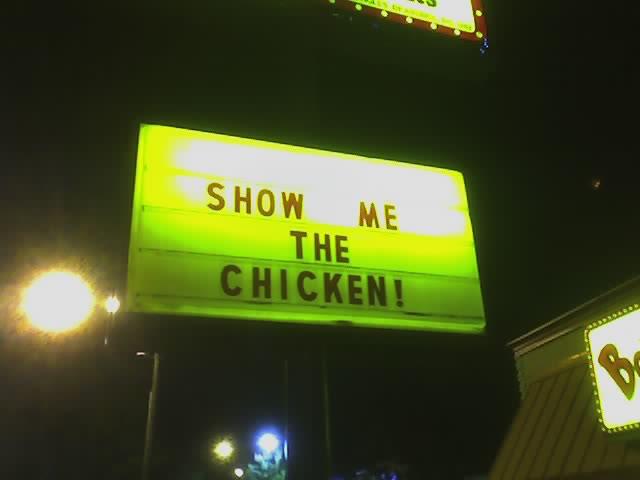
Saturday, July 23, 2005
The Cheesecake Factory's coming to Southpoint
 By SUE STOCK, Staff Writer
The News & Observer
The folks at the Streets at Southpoint have finally given a date for the Cheesecake Factory's opening there.
After months of refusing to say the restaurant was coming, the Durham mall's management said this week that the restaurant is expected to open Oct. 10.
The restaurant will occupy 12,000 square feet and seat more than 400 people. It's going in the space of the former Big Bowl and Q-Shack, which are being merged into one storefront.
The Southpoint Cheesecake Factory will be the second in the area. The first opened two years ago at Crabtree Valley Mall in Raleigh.
"Even though it's sometimes called Raleigh-Durham, they are two specific markets," said company spokesman Howard Gordon. "And the one thing we've found is that people in Raleigh-Durham love to eat."
The addition is good for Southpoint. Many experts consider Cheesecake Factory to be better than a traditional department store anchor. The average Cheesecake Factory racks up $11 million in sales each year. By the end of the year, Cheesecake will have 110 locations.
post 1000
 When I first started this weblog a little over a year ago, I thought it would be an occasional thing I logged onto to pass the time, posting something every once in a while. Little did I imagine it would be something I looked forward to doing every day, and that I could meet (and have met) dozens of wonderful people doing it.
I don't write as many personal posts as I used to, as any astute reader here may have noticed. The reason I don't is because I'm not the sort of person who writes in diaries or journals typically. I'm more the type that presents topics for conversation to stimulate further discussion. Since I'm like that in real life, the blog has become a reflection of who I am: a basically quiet person who reads a lot and shares what I read with the people I love as a public and personal service to those willing to log on.
That said, when I do write, it's not Jason or Carrie good, Tim earnest, or Ken straightforward, but it ain't bad. Had to pat myself on the back a little. LOL
If you've stuck with me for any length of time, you dig where I'm coming from, and since we're rapidly approaching 9,000 visits from you guys, I can assume there at least a few of you that do. If not, that would seriously suck because I need the validation :-)
Anyway, enough of the 'explaining myself' shit. I love you all (some more than others, and those that it applies to know who they are) and I hope that you'll keep coming back and that I give you a good enough reason to do so.
BTW, you could post comments more, guys. [Not you, Anita: you post just fine; keep up the good work :-) ]

Friday, July 22, 2005
randomly snapping pictures
Somertimes it's fun to take a break from obsessively shooting crappy pictures of malls and department stores and let pepole in on my lighter side. Here are some things I thought were funny or cool while I was out yesterday.
 Aldi, a chain of no-frills grocery stores has some rock-bottom prices. They're so cheap they charge a quarter to rent the shopping carts! This was my first vist there and I thought a shot of this was a great way to start my photgraphic day.
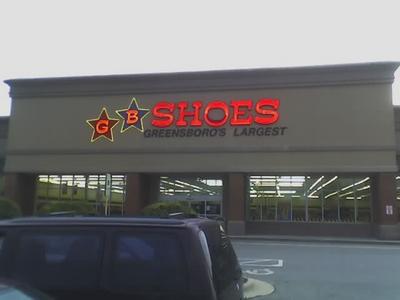 It's funky retro-looking logo time! If this shoe store's products were as half as cool as their sign, we'd have a winner.
 Roses lives! Believe it or not, this is a newly opened Roses store in Greensboro. I haven't seen these guys open a store in over a decade, and back then they had different owners. It's in a converted Phar-Mor, suprisingly busy for a Roses, and even had a furniture department. This is the Rose Mahal, folks!
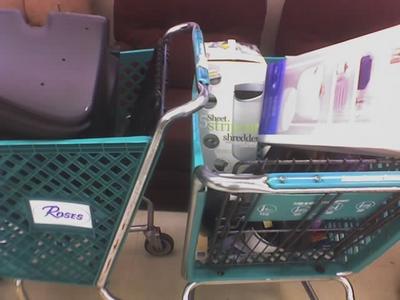 Were you wondering what happened to all the teal shopping carts left over when Ames discount stores went out of business? Well, they ended up at Roses. This was my attempt to take a picture of the newly-christened Roses carts with the Ames handle in full view. Now if I had a steady hand or a better camera phone, this would have been a great shot .
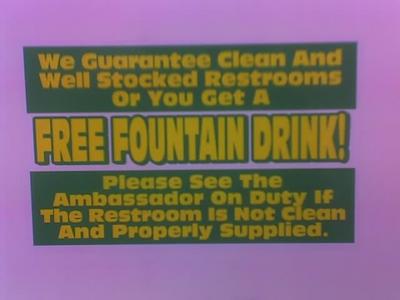 I know when I'm in a pissy convenience store restroom, the first thing I want is diplomatic assistance. The folks at Family Fair stores stay one step ahead by christening their employees ambassadors, who will give you a free fountain drink if you report a nasty restroom. And you thought getting a visa to stay in this country was special?
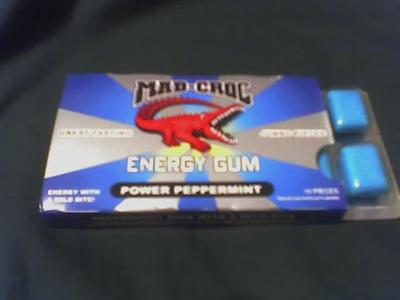 From the "why didn't I think of that" product department comes Mad Dog Energy Gum, available at Target. Honestly, the gum tastes like peppermint-flavored ass, but the caffeine added to give it the energy (as much as an 8 ounce cup of coffee) makes it worth it. Just don't give it to small children
 Aldi, a chain of no-frills grocery stores has some rock-bottom prices. They're so cheap they charge a quarter to rent the shopping carts! This was my first vist there and I thought a shot of this was a great way to start my photgraphic day.
 It's funky retro-looking logo time! If this shoe store's products were as half as cool as their sign, we'd have a winner.
 Roses lives! Believe it or not, this is a newly opened Roses store in Greensboro. I haven't seen these guys open a store in over a decade, and back then they had different owners. It's in a converted Phar-Mor, suprisingly busy for a Roses, and even had a furniture department. This is the Rose Mahal, folks!
 Were you wondering what happened to all the teal shopping carts left over when Ames discount stores went out of business? Well, they ended up at Roses. This was my attempt to take a picture of the newly-christened Roses carts with the Ames handle in full view. Now if I had a steady hand or a better camera phone, this would have been a great shot .
 I know when I'm in a pissy convenience store restroom, the first thing I want is diplomatic assistance. The folks at Family Fair stores stay one step ahead by christening their employees ambassadors, who will give you a free fountain drink if you report a nasty restroom. And you thought getting a visa to stay in this country was special?
 From the "why didn't I think of that" product department comes Mad Dog Energy Gum, available at Target. Honestly, the gum tastes like peppermint-flavored ass, but the caffeine added to give it the energy (as much as an 8 ounce cup of coffee) makes it worth it. Just don't give it to small children
BIG FOOT
 A dainty little shoe size may be desirable, but fewer Americans fit the bill
By JENNETTE BARNES, Standard-Times staff writer
A woman walks into a shoe store, the kind where they still measure your feet.
She says to the clerk, "I'm a 7."
Now, here's the punch line: She's not. At all.
"She could really be an 8," said Michael Friedland, owner of Harve's Shoe Box in Dartmouth. "Lots of people out there are wearing shoe sizes that are way too small."
The customer may want to wear a 7 because Mom did, but her feet are bigger -- and so are the rest of America's.
"In the past 10 years, the average size has increased by one full size," said Michael Kormos, who owned Footwear Market Insights before selling to another market research firm five years ago.
Kimberly Ledoux of Swansea, a regular customer at Harve's, wears a 7. Her husband wears a 9. So they never expected their sons would be topping the off-the-rack charts at sizes 12 (the 18-year-old) and 13 (the 20-year-old).
If the boys want a certain style, they sometimes have to get their sneakers by special order.
"Did you see that 15?" their mother exclaimed recently at the shoe store. "It's like a boat!"
Unlike men, for whom large shoe size has become a colloquial measure of manhood, women are still getting over the urge for small, delicate, "dainty" feet.
Women "most definitely" like to wear a small size, said Linda Collins of Stoughton, because "they want to sound petite."
She wears a brace on one foot, a situation that has forced her to be realistic about size. She now wears a size 8, instead of her previous 6 or 7.
Since research on shoe sizes is spotty at best, the sale of shoes becomes a way to track size.
"I've seen the bell curve shift," Mr. Friedland said.
Years ago, the median size for women was 7, he said, but now it's 8 or 8.5. He sells far fewer shoes in size 5 and far more in size 10 than he ever did 20 years ago.
"And they're younger. Ten- and 11-year-old girls are wearing a 7, 8, 9 women's," he said.
In men's, 9 is the most popular size, and the store usually stocks up to size 14.
Americans are taller than they were 100 years ago, due in large part to better nutrition. Feet naturally seem to be following suit.
Richard Johnson, owner of A Proper Fit/Assonet Bootery in Fall River, lamented the decline in measuring foot size. Department stores rarely do measuring, and often don't carry large sizes.
"People's feet are getting bigger every generation," he said. "And the sad thing is, they're not making shoes to accommodate these people."
Last year, athletic shoe maker New Balance sold more size 8 and 8.5 sneakers than any other women's size, followed closely by size 9.
As time goes by, the smallest sizes are making up less and less of the U.S. market. Women's sizes 6 and under made up nearly one-quarter of sales across the industry in 1986, but eight years later, they were just 17 percent, according to data from Footwear Market Insights.
At New Balance, sizes 6 and under accounted for just 9.8 percent of women's sales last year. Large sizes -- 9 and over -- were 21.6 percent of sales.
Based on what appeals to buyers, shoe stores make choices about what size to display on the shelf -- typically a small size, at least for women.
Thirty years ago, the women's sample size was a 4, Mr. Friedland said. But today at Harve's, it's a 6.
Deborah Mitchell, vice president of marketing at athletic shoe maker K Swiss, said the company now uses a size 7 for samples instead of a 6.
On the runway, sizes worn by models reflect the ideal of the time, and those sizes are eking their way upward as well. Mr. Friedland said he believes the standard model size will hit a 7 soon, in part because it's hard to find models who wear a 6.
Thursday, July 21, 2005
Nordstrom to enter Waterside Shops at Pelican Bay
 SCT Newswire
Nordstrom plans to open a store at the Waterside Shops at Pelican Bay, in Naples, Fla., furthering redevelopment efforts at the 260,000-square-foot open-air center.
Seattle-based Nordstrom says it plans to open the two-level, 80,000-square-foot store in the fall of 2007 or spring of 2008. The new store will join Saks Fifth Avenue as anchor of the 45-store regional center, which opened in 1992.
“This new and smaller store will give us an opportunity to have a more focused approach, providing a merchandise mix unique to our customers in Naples,” said Erik Nordstrom, the retailer's executive vice president of full-line stores, in a press release.
Taubman Centers and the Orlando, Fla.–based Forbes Co., the center's owners, are spending $25 million on a renovation that will add such posh retailers as Burberry, Gucci and Tiffany & Co.
lance and his pants - july 21 article
 At long last, my first article of the month. It's on the new 10/2 collection from Nike, endorsed by cyclist Lance Armstrong.
I hope this means I get another one next week. A guy can dream. I think this came out pretty well.
Consumer Philosophy by Tar-zhay
 By ALEX KUCZYNSKI
WHEN Siddhartha Gautama, the young man who later became known as Buddha, attained enlightenment, he saw the path to fulfillment: keep earthly belongings to a minimum. Stuff - material possessions, goodies, thingamajigs - was spiritual dead weight.
So I wonder what Buddha would make of the Target store in Mount Kisco, N.Y., which opened in the spring.
On a recent visit, I counted no fewer than 10 Buddha items for sale. In the home furnishings section, a bust of Buddha was $17.99. I also found a framed sketch of Buddha; a Buddha T-shirt; a Buddha candleholder; a Buddha that looked as if it might have been a bar of soap; and a fake stone relief in a shadowbox frame in which Buddha, with a goofy smile on his face, looked just like Homer Simpson. D'om!
Buddha, of course, is an appropriate symbol for Target's path to consumer enlightenment. I doubt you will find a Buddha anything at Wal-Mart, Kmart or Sears. But a crucial part of Target's success is that it makes an effort to attract not just consumers who, by financial necessity, shop at discount superstores, but also those members of the middle- and upper-income brackets who view discount shopping as a socioeconomic field trip.
These are the people who pronounce the name of the store Tar-ZHAY, and one of their mascots is the very representation of faddish faux-bohemian kitsch, Mr. Buddha himself.
To get these upscale shoppers into the store to acquire earthly goods, Target has to convince them there is something inside worth acquiring and worthy of placement in their homes as discount objet: a Michael Graves teapot, for example, or a cashmere sweater by Isaac Mizrahi (coming to Target stores this fall).
The chain's advertising and marketing campaigns are always of the moment. Sometimes it sponsors temporary boutiques in fashionable locations. One year it opened a summer store in the Hamptons; another time it docked a "holiday boat" at Chelsea Piers in Manhattan. The company has also developed relationships with of-the-moment artists, sponsoring an installation at Rockefeller Center by the artist Takashi Murakami, who has collaborated with Louis Vuitton.
Target is the third largest discount retailer in the United States, after Wal-Mart and Costco, and its "class to mass" strategy has prompted changes at other discounters. Kmart has arrangements with the WB and E! Entertainment Television, in which network stars wear Kmart clothes. In 2002, Wal-Mart introduced George, an inexpensive designer clothing line it acquired in 1999. But the line has, thus far, failed to transform Wal-Mart's image as the dowdy cousin of the discount bunch.
Sure, Target's image is more sophisticated than Wal-Mart's. But two things seriously bug me about the chain.
First, the affiliation with designers like Mr. Graves and Mr. Mizrahi strikes me as a bit of lip service. They certainly add a hip note to the store's advertising campaigns, but at the Mount Kisco store, one of 1,351 nationwide, there was not much Graves merchandise on display. I couldn't find a teapot, but I did find an ergonomic paper shredder in the Graves half-aisle beneath a picture of a woman who looked like the actress Felicity Huffman and the words "I like to coordinate my keyboard with my toaster."
These are dark days for the middle classes if such ambitious, obsessive coordinating is actually taking place.
The Mizrahi clothes are well intentioned, but a cardigan sweater for $22.99 in an acrylic-nylon blend is shapeless and itchy. I did find an attractive faux-crocodile Mizrahi clutch purse for $16.99, but later the same day I found it on the Target Web site for $11.89. Why bother buying it in the store?
A spokeswoman for Target said that prices are not always consistent. She could not specify why there seemed to be a lack of Michael Graves merchandise but suggested that the store could have been transitioning between products.
 The second thing that bothers me is the disconnect when mixing highbrow and lowbrow culture. At the front of the Mount Kisco store is a Starbucks, where shoppers can pause for a Mint Mocha Chip Frappuccino for $4.90 (for the venti), without tax. Three aisles into the store they can buy a pair of children's sneakers for $3.74. In what other country on the planet would you find a store that sells a cup of coffee for more than a pair of children's shoes?
This is the problem of the class-and-mass approach: There will always be rich people, and there will always be poor people, and they can happily mingle in economic anonymity in the aisles of Target. But at the end of the day you'll be able to tell one from the other by who is sitting at the Starbucks counter drinking a $5 latte.
There is, however, a lot to like about Target. Many shoppers frequent stores whose corporate policies they admire, and though Target has not entirely avoided the kind of labor squabbles that have dogged Wal-Mart in recent years, it is better known for its contributions to civic and cultural causes. And it does keep bringing in new ideas and designs. At Mount Kisco, I found California Closets, Liz Lange maternity clothes, Eddie Bauer travel gear and a great line of casual clothing by Mossimo. I liked some of the Mizrahi home pieces - a table lamp in the shape of a ship's light for $34.99, for instance.
In October, Target plans to introduce a "vintage modern" home furniture collection in collaboration with Aero Studios. Its in-store pharmacies now offer a design for prescription bottles that is meant to make taking drugs safer by identifying the right pills to take. And you have to admire a store that prompted Wal-Mart to start stocking 400-thread-count cotton sheets.
I piled my shopping cart high with earthly possessions. The dressing rooms were clean and bright, although service-free. (The bathroom was by far the cleanest one I have visited in any store, anywhere.)
I skipped the Buddha tea lights but burdened myself with many other items: a large mirror to hang on a guest bedroom wall and six other smaller ones for around the house; a leather lamp; a silk lampshade; two pairs of hiking shorts, a pair of Mossimo camouflage pants and three pairs of underwear for my stepson; seven pairs of underwear and a pair of Hello Kitty flip-flops for my stepdaughter; Mossimo blue jeans for me; 20 sturdy wooden hangers; a box of Ritz Bitz cheese crackers, half of which I ate in the parking lot and the rest of which I threw into the garbage before I could eat any more; a copy of People magazine; a bottle of water.
The bill was $234.42.
Dad shares everything he doesn't know about women
© 2005 Saginaw News
"Think of it in terms of shoes."
The teenager looked at his father with a questioning frown. He had asked about the differences between the sexes. The conversation they were having had progressed past reproduction and emotions -- much to the father's relief -- and was into a matter that was far easier to explain.
"How many shoes do you have?" the father asked.
"A brown pair and a black pair, sneakers for basketball, running shoes and boots for yard work. That makes 10."
"If you are not male, 10 is not enough."
"That doesn't make sense," said the son. "Either you're dressed up, playing sports or working," the son replied. "That determines what shoes you use. ... Isn't that logical?"
"Depends upon whose logic it is," observed the father.
"I need some direction," the son said.
"I'll try, although explaining this is similar to conjugating verbs in a language we can't speak. Ah, how many wallets do you have. And what color?"
"One. I think it's black."
"Does it match your shoes?"
"Why should it?" replied the son.
"You're a guy and this never would cross your mind. This illustrates the sex gap, if you know what I mean."
"Not exactly."
"Well, women keep their stuff in purses, not wallets. Right?" said the father.
"Yeah, but ... what does that have to do with shoes?"
"Follow me," said the father.
The father and son went into the master bedroom closet, which was divided into two parts: His and mostly hers.
"See that?" the father said pointing to an array of colorful purses. "Now look at the shoes."
"I didn't know there were so many shoes in so many colors," said the boy. "Why so many?"
The father waved his hand at the seemingly endless array of dresses, pants, skirts, blouses and frilly garments hanging opposite his tattered T-shirts and unmatched items.
"Green shoes for green dresses. Grays for gray. Pink for pink. Mauve, whatever that is, for mauve. You get the idea? Women wear different stuff every day all the time."
"Come to think of it, I guess they do. Why?" asked the son.
"They must have a hidden rule about never looking alike. My guess is the reason women go to the bathroom in clusters is to negotiate binding agreements about who is going to wear what the next day."
"But, Dad, if they keep changing colors every day, that means they have to change purses and move all the stuff inside around. Isn't that a lot of time-consuming work?"
"No doubt. Last week, when your mom was driving the car, the cell phone rang in her purse. She asked me to answer it. It was like excavating in an Egyptian tomb. I found the phone somewhere between the makeup and the pencils, just past the address book and deep below the discount coupons. It made cleaning out the camper look simple."
"Wow. When you toss in all the time they spend in the bathroom on top of the clothes swapping, it helps explain why they're always late. Doesn't it?" asked the boy.
"Son, we better not go there. Mom gets a wee bit edgy about the time thing."
"I know, Dad. I think I'm beginning to get what you mean about differences."
"Think of it in terms of shoes."
The teenager looked at his father with a questioning frown. He had asked about the differences between the sexes. The conversation they were having had progressed past reproduction and emotions -- much to the father's relief -- and was into a matter that was far easier to explain.
"How many shoes do you have?" the father asked.
"A brown pair and a black pair, sneakers for basketball, running shoes and boots for yard work. That makes 10."
"If you are not male, 10 is not enough."
"That doesn't make sense," said the son. "Either you're dressed up, playing sports or working," the son replied. "That determines what shoes you use. ... Isn't that logical?"
"Depends upon whose logic it is," observed the father.
"I need some direction," the son said.
"I'll try, although explaining this is similar to conjugating verbs in a language we can't speak. Ah, how many wallets do you have. And what color?"
"One. I think it's black."
"Does it match your shoes?"
"Why should it?" replied the son.
"You're a guy and this never would cross your mind. This illustrates the sex gap, if you know what I mean."
"Not exactly."
"Well, women keep their stuff in purses, not wallets. Right?" said the father.
"Yeah, but ... what does that have to do with shoes?"
"Follow me," said the father.
The father and son went into the master bedroom closet, which was divided into two parts: His and mostly hers.
"See that?" the father said pointing to an array of colorful purses. "Now look at the shoes."
"I didn't know there were so many shoes in so many colors," said the boy. "Why so many?"
The father waved his hand at the seemingly endless array of dresses, pants, skirts, blouses and frilly garments hanging opposite his tattered T-shirts and unmatched items.
"Green shoes for green dresses. Grays for gray. Pink for pink. Mauve, whatever that is, for mauve. You get the idea? Women wear different stuff every day all the time."
"Come to think of it, I guess they do. Why?" asked the son.
"They must have a hidden rule about never looking alike. My guess is the reason women go to the bathroom in clusters is to negotiate binding agreements about who is going to wear what the next day."
"But, Dad, if they keep changing colors every day, that means they have to change purses and move all the stuff inside around. Isn't that a lot of time-consuming work?"
"No doubt. Last week, when your mom was driving the car, the cell phone rang in her purse. She asked me to answer it. It was like excavating in an Egyptian tomb. I found the phone somewhere between the makeup and the pencils, just past the address book and deep below the discount coupons. It made cleaning out the camper look simple."
"Wow. When you toss in all the time they spend in the bathroom on top of the clothes swapping, it helps explain why they're always late. Doesn't it?" asked the boy.
"Son, we better not go there. Mom gets a wee bit edgy about the time thing."
"I know, Dad. I think I'm beginning to get what you mean about differences."
Wednesday, July 20, 2005
It's hot - but your work attire shouldn't be
 Michelle Powell
for The Huntsville Times
Yes, it is summer, and it is indeed hot! This poses a dilemma when it comes to the professional at work. But just because it's hot doesn't mean you should look sexy or sloppy. These two extremes have no place in the office. Though I have written on this subject before, it seems enough can't be said. Here is a short list of things to keep in mind as you select your summer work attire.
Ladies, though the temptation to be trendy is on every department store and magazine rack, don't compromise your image or your reputation. No matter how expensive or how attractive it may be, do not wear a bare shoulder top like spaghetti straps or halters tied around the neck, unless you wear a jacket or sweater over it.
And even that calls for good judgment. Don't wear blouses that look like lingerie. Avoid the trendy tops that expose your bra straps - these are totally out of place for work. Skip the plunging necklines, especially if you're well-endowed. Another temptation for some women is to wear shorts or miniskirts to keep cool. Sorry ladies, save it for the weekend.
There are attractive light-weight tops that are fitting for the workplace. A well-ironed button-down top with a collar and quarter length sleeves is a smart choice with an A line skirt. This looks professional with or without a jacket.
Ladies, be careful with Capri's. Even if your work environment allows for this more casual look be smart about it. Dress it up with business-appropriate shoes and an attractive work blouse or pair it with a casual jacket.
No flip-flops at work, please, including Fridays. Whatever you do, avoid the beach look altogether. Remember, you want people to take you seriously and you certainly don't want the boss to think you're approaching your work as casually as your wardrobe.
Men, no matter the how hot it gets please wear an undershirt with your long-sleeved dress shirt (no one likes to see sweaty arm pits at work). Short sleeves are fine for casual Polo's but not for dress shirts. Blazers and a crisp Polo shirt are a nice look for the summer with a pair of fitted khakis (not baggy).
Like the ladies and their flip-flops, men don't wear your sandals to work or sneakers, for that matter. One exception for sneakers would be if you're stocking shelves or you work in a warehouse where it's appropriate and a safety issue. And unless it's part of your work uniform, please leave the baseball cap at home.
For both men and women who may work in an environment that permits jeans, use good taste. Wear a traditional style in dark denim, not the faded seat or low cut hip-huggers. And no baggy jeans for the men; they should fit your bottom. And wear a belt, please.
The point of all this is to keep in mind that your appearance says a lot about you. And consistency is key. If you look professional during the fall and winter months and then start breaking out the beach attire during late spring and summer, you're going to send mixed messages.
Your manager and co-workers may subconsciously think you're slacking off. It can even weaken your customers' confidence in you to see you appear so cavalier. Think about it when you get up and get dressed in the morning: What message am I sending and is it consistent with the respectable image I want to maintain?
Michelle Powell is a certified etiquette trainer and president and CEO of Huntsville-based Professional Manner LLC, group training and personal coaching on business and social etiquette. Contact her at 256-746-0052 or answers@professionalmanner.com. Her Web site is www.professionalmanner.com.
James Doohan, 'Star Trek's' Scotty, dead
 LOS ANGELES, California (AP) -- James Doohan, the burly chief engineer of the Starship Enterprise in the original "Star Trek" TV series and motion pictures who responded to the apocryphal command "Beam me up, Scotty," died early Wednesday. He was 85.
Doohan died at 5:30 a.m. (1330 GMT) at his Redmond, Washington, home with his wife of 28 years, Wende, at his side, Los Angeles agent and longtime friend Steve Stevens said. The cause of death was pneumonia and Alzheimer's disease, he said.
The Canadian-born Doohan fought in World War II and was wounded during the D-Day invasion, according to the StarTrek.com Web site. He was enjoying a busy career as a character actor when he auditioned for a role as an engineer in a new space adventure on NBC in 1966. A master of dialects from his early years in radio, he tried seven different accents.
"The producers asked me which one I preferred," Doohan recalled 30 years later. "I believed the Scot voice was the most commanding. So I told them, 'If this character is going to be an engineer, you'd better make him a Scotsman.' "
The series, which starred William Shatner as Capt. James T. Kirk and Leonard Nimoy as the enigmatic Mr. Spock, attracted an enthusiastic following of science fiction fans, especially among teenagers and children, but not enough ratings power. NBC canceled it after three seasons.
When the series ended in 1969, Doohan found himself typecast as Montgomery Scott, the canny engineer with a burr in his voice. In 1973, he complained to his dentist, who advised him: "Jimmy, you're going to be Scotty long after you're dead. If I were you, I'd go with the flow."
"I took his advice," said Doohan, "and since then everything's been just lovely."
"Star Trek" continued in syndication both in the United States and abroad, and its following grew larger and more dedicated. In his later years, Doohan attended 40 "Trekkie" gatherings around the country and lectured at colleges.
The huge success of George Lucas' "Star Wars" in 1977 prompted Paramount Pictures, which had produced "Star Trek" for television, to plan a movie based on the series. The studio brought back the TV cast and hired director Robert Wise. "Star Trek: The Motion Picture" was successful enough to spawn five sequels with the cast of the original TV show; other films, featuring cast members of "Star Trek: The Next Generation," have followed.
The powerfully built Doohan spoke frankly in 1998 about his employer and his TV commander.
"I started out in the series at basic minimum -- plus 10 percent for my agent. That was added a little bit in the second year. When we finally got to our third year, Paramount told us we'd get second-year pay! That's how much they loved us."
He accused Shatner of hogging the camera, adding: "I like Captain Kirk, but I sure don't like Bill. He's so insecure that all he can think about is himself."
James Montgomery Doohan was born March 3, 1920, in Vancouver, British Columbia, youngest of four children of William Doohan, a pharmacist, veterinarian and dentist, and his wife Sarah. As he wrote in his autobiography, "Beam Me Up, Scotty," his father was a drunk who made life miserable for his wife and children.
At 19, James escaped the turmoil at home by joining the Canadian army, becoming a lieutenant in artillery. He was among the Canadian forces that landed on Juno Beach on D-Day. "The sea was rough," he recalled. "We were more afraid of drowning than the Germans."
The Canadians crossed a minefield laid for tanks; the soldiers weren't heavy enough to detonate the bombs. At 11:30 that night, he was machine-gunned, taking six hits: one that took off his middle right finger (he managed to hide the missing finger on screen), four in his leg and one in the chest. The chest bullet was stopped by his silver cigarette case.
After the war Doohan on a whim enrolled in a drama class in Toronto. He showed promise and won a two-year scholarship to New York's famed Neighborhood Playhouse, where fellow students included Leslie Nielsen, Tony Randall and Richard Boone.
His commanding presence and booming voice brought him work as a character actor in films and television, both in Canada and the United States.
Oddly, his only other TV series besides "Star Trek" was another space adventure, "Space Command," in 1953.
Doohan's first marriage to Judy Doohan produced four children. He had two children by his second marriage to Anita Yagel. Both marriages ended in divorce. In 1974 he married Wende Braunberger, and their children were Eric, Thomas and Sarah, who was born in 2000, when Doohan was 80.
In a 1998 interview, Doohan was asked if he ever got tired of hearing the line "Beam me up, Scotty" -- a line that, reportedly, was never actually spoken on the TV show.
"I'm not tired of it at all," he replied. "Good gracious, it's been said to me for just about 31 years. It's been said to me at 70 miles an hour across four lanes on the freeway. I hear it from just about everybody. It's been fun."
All The Rage Since Reagan
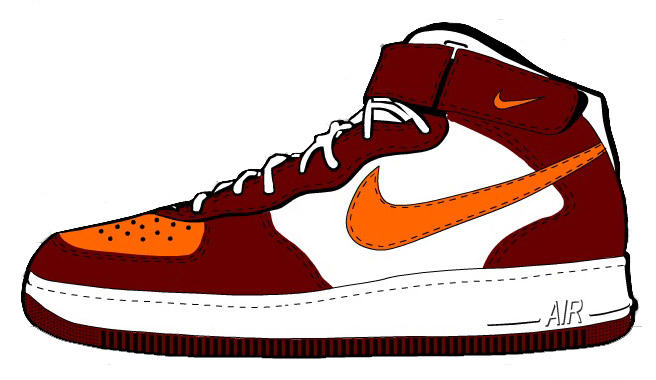 Nike's Air Force 1, introduced in the '80s, still grabs attention -- and huge margins
Stanley Holmes
BusinessWeek.com
Once the word hits the street, hundreds of teens start lining up at stores. So strong is demand that new releases happen only on weekends -- so kids won't skip school. When the doors open, they sell out in hours. Tickets for the current Eminem tour? The new iPod music player? Nope. We're talking about a basic basketball sneaker, Nike Inc.'s Air Force 1.
Launched in 1982, when Ronald Reagan was in the White House, the sneaker is almost pathetically low-tech. Yet the Air Force 1 remains the definition of urban cool. And while Nike Shox runners, Air Jordans, and the Cole Haan and Converse brands helped drive record earnings of $1.2 billion on sales of $13.7 billion in the fiscal year ended June 27, the AF1 played a big role, too, helping Nike reach No. 48 on the BusinessWeek 50 list of top corporate performers. AF1 racked up an estimated $1 billion in sales and generated profit margins of 70%, say analysts -- double that of other hit sneakers. Says Tashala Spellman, a 16-year-old AF1 devotee: "I like the style." She'd better: Spellman owns 10 pairs.
How do you keep a basic sneaker hot for a quarter-century? Nike's genius is that it has managed to market a classic without alienating teens. At the same time, Nike creates consumer longing by keeping supplies tight and releasing collectible versions with minimal hype. "Air Force 1 is maybe the most dominant basketball franchise in this industry," Gary M. DeStefano, president of Nike U.S., says. "But there's a way to keep it fresh."
The Air Force 1 hit the basketball courts and urban playgrounds in the '80s and quickly caught on with black youth, thanks to basketball star endorser Charles Barkley. But soon Nike began building mystique -- eschewing regular marketing channels even as it restricted supply. AF1 advertising is minimal today. Mostly, Nike lets the customers -- and the rappers -- do the talking. In 2002, for example, hip-hop's Nelly rapped about "my Air Force 1s" and generated a No. 1 hit. And such is the shoe's cult status that teenagers hang out at NikeTalk.com and other chat rooms to find out when the next AF1 is coming.
Every two months or so, Nike unleashes a newly tweaked shoe -- a camouflage version, say, or one timed for Mardi Gras. Each release involves roughly 350,000 to 500,000 pairs of shoes shipped nationwide, and each store gets about 25 to 30. "Nike continues to control the marketplace so diligently they create pent-up demand for the shoe," says John Shanley, analyst for Susquehanna Financial Group, an investment bank.
Analysts say retailers caught discounting Air Force 1s receive a smaller allocation the next time or none at all. And retailers are happy to play ball: After all, the Air Force 1 makes money and drives traffic. Retailers get full price for the shoe, basic versions of which sell for $85 to $100. Collectible versions, such as one designed by famed grafitti artist Mr. Cartoon, retail for $180. And the AF1 boosts demand for other Nike footwear, says Shanley. Nike's sell-through rate -- how fast a product flies off shelves in the first week -- averages 20%-plus of inventory, compared with an industry average of 10%. The sell-through rate for AF1s is 100%.
The Air Force 1 is a Nike profit machine. Shanley estimates that the company sells each pair to retailers for about $48.50 but pays just $12 to make them in Asia. Since the design has remained essentially unchanged, there are few development costs; all of the molds and lathes have been fully depreciated. And, of course, Nike no longer pays anyone to promote them. "It drives a much richer margin because it doesn't carry an endorsement fee," Shanley says.
There's no telling how long the Air Force 1 will remain hot in the faddish sneaker business. "If they ever get greedy with the Air Force 1, or if kids feel they're being manipulated, you can see a profitable business disappear in a hurry," says Jeffrey Bliss, president of sports marketer Javelin Group. Until then, take a number and stand in line, as Nelly says, "So I can get to stompin' in my Air Force 1s."
Gristedes won't squeeze my lemon
 My wonderful online friend Anita has been kind of down as of late so I wanted to do something quirky and sweet for her (because quirky and sweet is about all the cards I bring to the table).
I happened upon Anita's wish list on Amazon and saw that she had some sodas from Gristedes Supermarkets of New York on there. When they started selling individual sodas online, I don't know.
Anyway I thought it would be Q&S to send her a single Diet Coke with Lemon. I know she's not digging the stuff as much as before after drinking like 8 cases of it, but it was cheap and I'm broke so I figured she might get a kick out of it.
I got to the checkout and apparently I CAN'T send Anita the soda because Gristedes won't ship to gift addresses. WTF?
Anyway, she won't get the soda but it was an intersting journey into the world of e-commerce.
Tuesday, July 19, 2005
'At Last' cat food jingle is for the dogs
 David Hinckley
New York Daily News
Etta James' "At Last" is a record that, as Joni Mitchell once put it, will make you say "I love you" right out loud.
Except when you hear it used in a radio ad for cat food. Then it makes you say, "Honey, where's my .30-06? I'm aiming to blow this radio into the middle of next week."
Unfortunately, the Fancy Feast commercial that uses "At Last" doesn't seem to be going away. Nor does it seem to be developing any redemptive traits, like a hint of bemusement.
In the years since Madison Avenue decided that renting songs for ads was a cheap way to buy a piece of everything the song ever meant to anyone who heard it, we've gotten Bob Dylan's "The Times They Are A-Changin' " pitching an accounting firm and John Lennon's "Revolution" selling overpriced sneakers.
Somehow, impossible as it seems, this one feels worse.
Hearing "At Last" to pitch cat food is like hearing "Peace in the Valley" to sell time-shares for the Poconos. When "At Last" was selling Jaguars back in 1996, the ads at least gave a nod to class. This one feels like wearing a ball gown to a tractor pull.
It insults the song. It insults the listener. It insults Etta James. It probably insults cats.
The good news is that James, unlike too many of her peers, is doing fine. She's still recording and performing, and, cat food aside, she gets respect. She gets so many bookings she recently had to turn down an invitation to sing at Sandra Bullock's birthday party.
Not bad for a woman whose first hit came 50 years ago this past April: "Roll With Me Henry," an answer to the Midnighters' "Work With Me Annie."
Because listeners understood that "Roll" means the same thing as "Work," her record was retitled "The Wallflower." That is bemusement.
Five years later, Leonard Chess of Chess Records redirected James toward standards, and one of her first was "At Last," a 1942 Mack Gordon-Harry Warren tune written for Glenn Miller. Once James recorded it in October 1960, no one remembered the Miller version, or any other.
She said it was no big trick, because these standards were imprinted in her DNA.
"These were songs my mother loved," she said. "Songs I associated with Billie Holiday, songs that took me back to my childhood when I'd watch my mother dress up in beautiful gowns and go out on the town with hip jazz musicians or high-rolling gamblers. They were exciting, romantic, sophisticated songs."
And exactly who would take that to mean "cat food jingles"?
Now there's nothing wrong with cat food, and "At Last" will survive this ad. But whoever thought it up should be required to eat Fancy Feast for as long as it runs.
Nelly's a shoo-in
 Score another win for Canton, MA-based shoemaker Reebok. Rap superstar Nelly has joined the company's roster of all-star endorsers, a lineup that already includes 50 Cent, Jay-Z, Curt Schilling, Yao Ming, Donovan McNabb, and Stevie Williams.
''I've always been into sneakers and throughout my career I've always wanted to have a signature pair of sneakers that truly reflect my personal style," Nelly said in a statement.
Monday, July 18, 2005
Bloomingdale's shops sites in G'town, East End
Eleni Kretikos
Washington Business Journal
Federated Department Stores executives spent time in the District this week scouting sites for a new Bloomingdale's concept that caters to a young and hip crowd.
The real estate execs July 12 toured at least one site in Georgetown -- the former Staples building at 3307 M St. NW, owned by Georgetown developer Anthony Lanier. Lanier expects the four-story building to be vacant, with the exception of a Cingular Wireless store, within 90 days.
Federated also may have had time for a quick driving tour through the entertainment and shopping-heavy East End, home to retail-friendly properties such as Yeni Wong's building at Seventh and H streets NW in Chinatown, Douglas Development's Atlantic Building, 950 F St., and Akridge's Carroll Square, 975 F St.
Sources say Bloomingdale's would like to open a smaller store, of 20,000 to 30,000 square feet, aimed at the trendy and urban consumer. The mini-department store would sell a smaller-than-typical line of men's and women's apparel, cosmetics, shoes and accessories.
The Georgetown site could provide up to 50,000 square feet. Lanier is quick to say he's not in official negotiations with Federated.
Developer Douglas Jemal has heard of Federated's plans but says he hasn't been in contact with the company since 2002, when Federated pulled the plug on a deal to open a Macy's in Jemal's Woodies building at 11th and G streets NW.
"Maybe if they brought me an apple pie I would accept them again," Jemal says, but he quickly warms to the idea: "There are places where I could possibly put them."
Susan Linsky, special assistant in D.C.'s economic development office, says she was not aware Federated execs were in town this week but acknowledges they have visited at least twice in the past year.
"They know it's a hot market," she says. "They just have to find the right property."
Formats in flux
Sources say that while Federated seems serious about opening at least one, and possibly two, stores in the District, the company may not know exactly what it wants or where it wants to put it.
Federated, which earlier this year merged with May Department Stores, is still trying to digest its massive new portfolio and settle on which consolidations and closings are best.
A Federated spokeswoman would say only that "in our recent history, we have certainly experimented with various formats around the country."
We're worth it
Retailers, and department stores specifically, are realizing their future depends on driving traffic to nontraditional, non-shopping-mall locations.
"Department stores are doing this because they can't expand in malls anymore," says Mike Pratt, a principal of Madison Retail Group. "They are looking into other alternatives."
Last year, Bloomingdale's -- whose typical stores are 250,000 square feet -- opened a 90,000-square-foot store in New York's SoHo neighborhood, which is full of upscale shopping.
In that way, the Georgetown location makes sense, considering its fashion renaissance in the past few years.
The tony neighborhood has added Anthropologie, Intermix, Sisley and Wink, among others. Barneys New York is close to a deal for a 10,000-square-foot Co-op store next to M Street's Barnes & Noble.
"This is the recognition of the fact that we're a market worth going after," says Len Harris, vice president of retail leasing for Vanguard Realty Group. "For the longest time, [retailers] weren't sure. We're real, we have money and it's worth doing business here."
Washington Business Journal
Federated Department Stores executives spent time in the District this week scouting sites for a new Bloomingdale's concept that caters to a young and hip crowd.
The real estate execs July 12 toured at least one site in Georgetown -- the former Staples building at 3307 M St. NW, owned by Georgetown developer Anthony Lanier. Lanier expects the four-story building to be vacant, with the exception of a Cingular Wireless store, within 90 days.
Federated also may have had time for a quick driving tour through the entertainment and shopping-heavy East End, home to retail-friendly properties such as Yeni Wong's building at Seventh and H streets NW in Chinatown, Douglas Development's Atlantic Building, 950 F St., and Akridge's Carroll Square, 975 F St.
Sources say Bloomingdale's would like to open a smaller store, of 20,000 to 30,000 square feet, aimed at the trendy and urban consumer. The mini-department store would sell a smaller-than-typical line of men's and women's apparel, cosmetics, shoes and accessories.
The Georgetown site could provide up to 50,000 square feet. Lanier is quick to say he's not in official negotiations with Federated.
Developer Douglas Jemal has heard of Federated's plans but says he hasn't been in contact with the company since 2002, when Federated pulled the plug on a deal to open a Macy's in Jemal's Woodies building at 11th and G streets NW.
"Maybe if they brought me an apple pie I would accept them again," Jemal says, but he quickly warms to the idea: "There are places where I could possibly put them."
Susan Linsky, special assistant in D.C.'s economic development office, says she was not aware Federated execs were in town this week but acknowledges they have visited at least twice in the past year.
"They know it's a hot market," she says. "They just have to find the right property."
Formats in flux
Sources say that while Federated seems serious about opening at least one, and possibly two, stores in the District, the company may not know exactly what it wants or where it wants to put it.
Federated, which earlier this year merged with May Department Stores, is still trying to digest its massive new portfolio and settle on which consolidations and closings are best.
A Federated spokeswoman would say only that "in our recent history, we have certainly experimented with various formats around the country."
We're worth it
Retailers, and department stores specifically, are realizing their future depends on driving traffic to nontraditional, non-shopping-mall locations.
"Department stores are doing this because they can't expand in malls anymore," says Mike Pratt, a principal of Madison Retail Group. "They are looking into other alternatives."
Last year, Bloomingdale's -- whose typical stores are 250,000 square feet -- opened a 90,000-square-foot store in New York's SoHo neighborhood, which is full of upscale shopping.
In that way, the Georgetown location makes sense, considering its fashion renaissance in the past few years.
The tony neighborhood has added Anthropologie, Intermix, Sisley and Wink, among others. Barneys New York is close to a deal for a 10,000-square-foot Co-op store next to M Street's Barnes & Noble.
"This is the recognition of the fact that we're a market worth going after," says Len Harris, vice president of retail leasing for Vanguard Realty Group. "For the longest time, [retailers] weren't sure. We're real, we have money and it's worth doing business here."
Subscribe to:
Posts (Atom)