CHRIS LAUDERMAN
Staff Writer, The Charlotte Observer
After years of rumors, Crate & Barrel is finally coming to Charlotte.
The popular home furnishings retailer plans on opening a full-size store in the Charlotte area in fall 2006 - which means Charlotte consumers will have access to Crate & Barrel's full line of furniture and home products. The Raleigh store, currently the only other store in the Carolinas, sells housewares and no furniture.
John Ling, a vice president for Crate & Barrel, said Thursday the Charlotte area already has strong catalog and Internet sales.
Ling was in Lincoln County Thursday to open the company's new distribution center. When that facilty expands, it is likely that an outlet store will be included in the expansion, he said. But if that happens, the outlet would likely open in 2008, Ling said.
Thursday, August 11, 2005


big apple sign-tacular
Sign, sign, everywhere a sign. The New York trip this past weekend wasn't great (too many sneakers...long story) but I did get some great pictures, the first set of which I'm sharing below
 Here's a uniquely New York chain. Ricky's NYC is the brainchild of a hair and skin guru named Ricky (shocking) that decided to put all his favorite beauty products together in one place. If it's hip or weird, it's at Ricky's. I didn't go in this time, but the sign rocks!
 Adidas's New York flagship near Soho store sports this huge sign, but really the whole store building is like a giant advertisement for the brand. The three stripes motif is everywhere including its use as a lighting and architectural feature writ large on both floors of this masive sneaker emporium.
 J&R! It's the best electronics store in Manhattan and their mail-order business has been keeping me laced in technology for nearly a decade. The sign is new (and somewhat dated in logo design), but it's a welcome icon to any tech-head.
 Kmart stores in urban locations are fascinating. They're a lot like the ones we're all familiar with, but yet there's still something intangibly different about them. This is the Astor Place store near NYU, still rocking the old signage. The store farther uptown at Penn Plaza has been tricked out with the giant K (with 'kmart' under it) signage that's the current logo.
 You could call it Macy's cheaper, messy cousin, but really, Century 21 is over and above most off-price stores. This massive emporium of designer castoffs and brand-name bargains is a landmark of lower Manhattan. The sign is weatherbeaten, but it's been through a lot. This store is located acroos the street from Ground Zero.
 Louis Vuitton on Fiftth Avenue appears to have a very subtle storefront, but in reality the store is covered in translucent glass stretching up at least four stories that glows at night, and can be seen for blocks. Still, this simple entry door is all anyone needs to get a feel for how cool this place is.
 Finally, here's a look at the original Tower Records store on Broadway. For all it lacks in flash, the store makes up for with selection and coolness. The neon just gives a small hint of the treasures inside, which makes it even cooler in its subtlety.
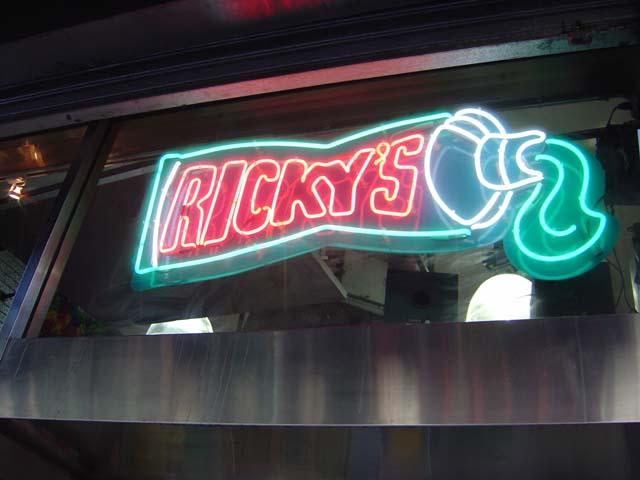 Here's a uniquely New York chain. Ricky's NYC is the brainchild of a hair and skin guru named Ricky (shocking) that decided to put all his favorite beauty products together in one place. If it's hip or weird, it's at Ricky's. I didn't go in this time, but the sign rocks!
 Adidas's New York flagship near Soho store sports this huge sign, but really the whole store building is like a giant advertisement for the brand. The three stripes motif is everywhere including its use as a lighting and architectural feature writ large on both floors of this masive sneaker emporium.
 J&R! It's the best electronics store in Manhattan and their mail-order business has been keeping me laced in technology for nearly a decade. The sign is new (and somewhat dated in logo design), but it's a welcome icon to any tech-head.
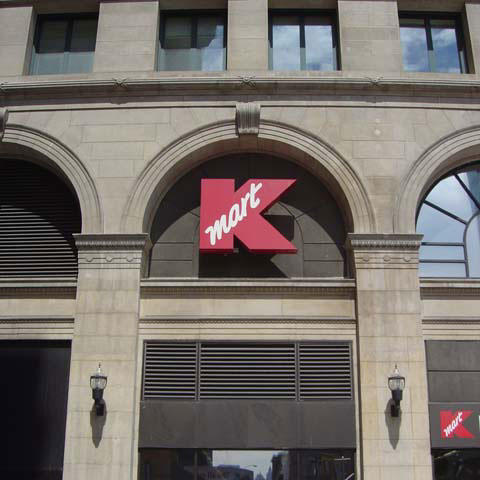 Kmart stores in urban locations are fascinating. They're a lot like the ones we're all familiar with, but yet there's still something intangibly different about them. This is the Astor Place store near NYU, still rocking the old signage. The store farther uptown at Penn Plaza has been tricked out with the giant K (with 'kmart' under it) signage that's the current logo.
 You could call it Macy's cheaper, messy cousin, but really, Century 21 is over and above most off-price stores. This massive emporium of designer castoffs and brand-name bargains is a landmark of lower Manhattan. The sign is weatherbeaten, but it's been through a lot. This store is located acroos the street from Ground Zero.
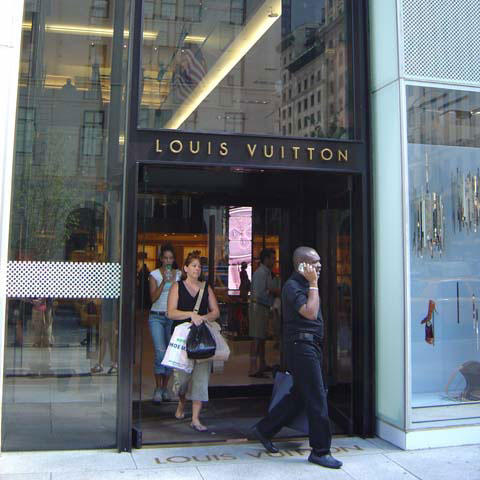 Louis Vuitton on Fiftth Avenue appears to have a very subtle storefront, but in reality the store is covered in translucent glass stretching up at least four stories that glows at night, and can be seen for blocks. Still, this simple entry door is all anyone needs to get a feel for how cool this place is.
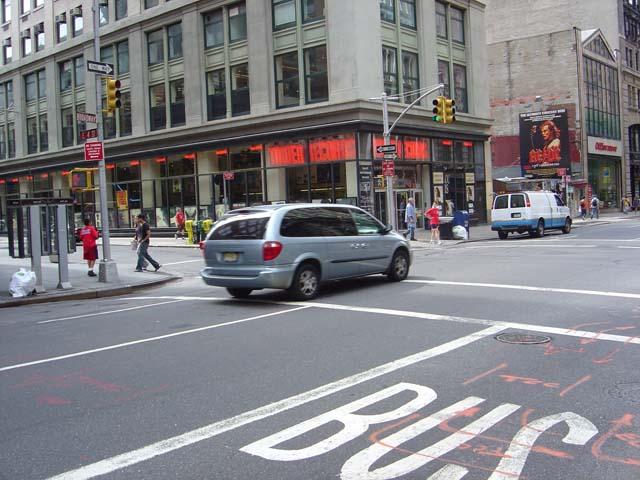 Finally, here's a look at the original Tower Records store on Broadway. For all it lacks in flash, the store makes up for with selection and coolness. The neon just gives a small hint of the treasures inside, which makes it even cooler in its subtlety.
13th anniversary
 On August 11, 1992, the Mall of America, the biggest U.S. shopping mall, opened in Bloomington, Minnesota.
Andre 3000 - er, Benjamin - 'kasting his net wide
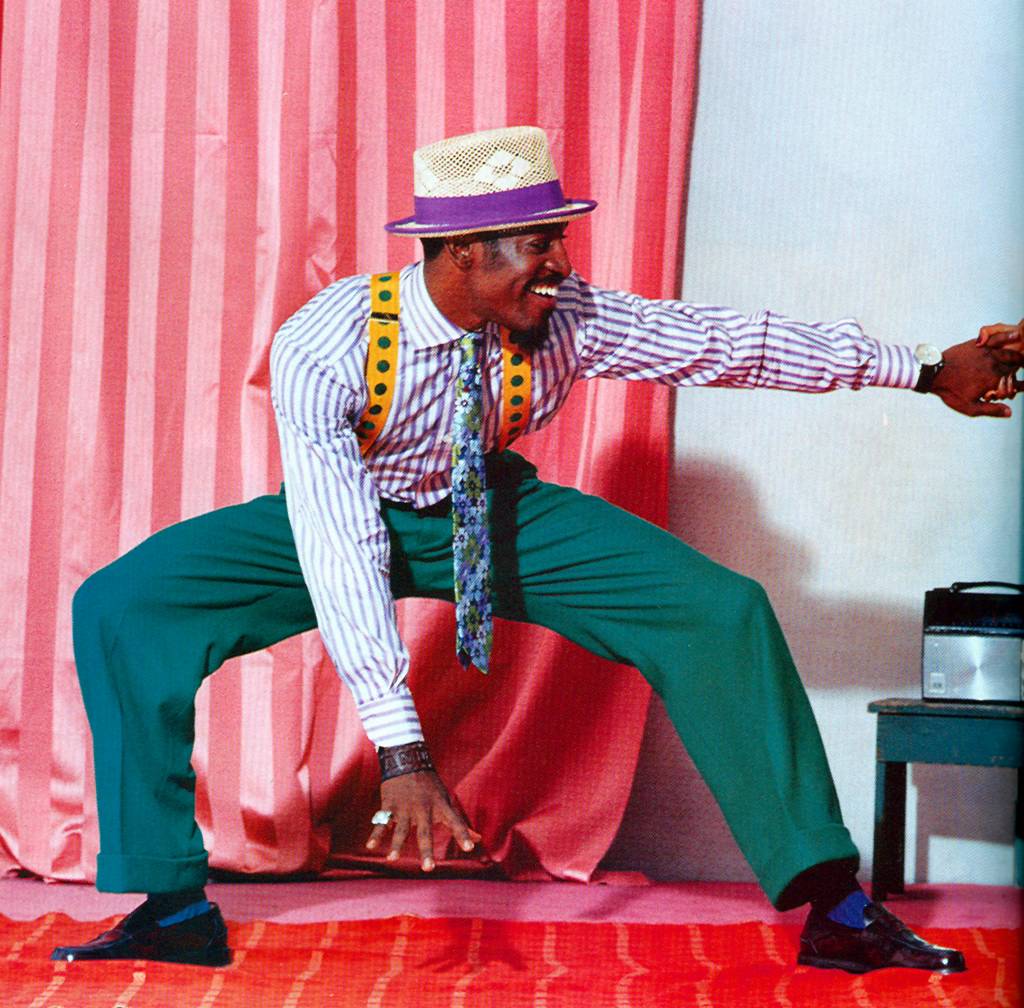
ERRIN HAINES
Associated Press
ATLANTA - In spite of himself, Andre Benjamin's "it factor" peeks out from under a straw hat.
He fidgets with the label on his water bottle. He curls up on the couch and rests his tennis shoes on a coffee table. He furiously fingers his personal digital assistant - to which he admits he's addicted - trying to catch ideas before they escape his mind.
Yet the charisma that has carried him for 11 years as half the Grammy-winning duo OutKast, made him a fashion icon, inspired his artwork, and catapulted him onto the big screen is still in the room, his energy hovering like a small child.
At once magnetically engaging and painfully shy, Benjamin admits he has no idea what "it" is - and no desire to find out.
"I'm just leaving it alone and letting it be," he smiled.
As an actor, Benjamin says he's getting better at "being" - finding the balance between chemistry and sincerity - due largely to his foundation as a musician. Being as familiar with his characters as with his song verses allows him to be in the moment, instead of concentrating too hard, he explained.
That skill will likely lend itself to two upcoming children's projects, an irresistible challenge for Benjamin, the father of a 7-year-old boy.
"I know what's cool with him right now and what's not cool," he said about his son, Seven, whose mother is Grammy-winning singer Erykah Badu.
It also helped him move past the reluctance he felt about taking his latest role in "Four Brothers," directed by John Singleton and opening Friday. Though he knew it was a good script, Benjamin said he was still hesitant.
Singleton, who met Benjamin when he contributed to the soundtrack for Singleton's 1995 film "Higher Learning," said he had to take the musician seriously as an actor after seeing him in a yet-to-be-released film starring Benjamin and OutKast partner Big Boi.
"He had some good, emotional stuff in it. It's just a hint of what he can do," Singleton said. "He's got an interesting look, and a quiet fire about him."
In the end, his new-found confidence - along with Singleton's encouragement and the chance to co-star with musician-turned-actor Mark Wahlberg - convinced him to play one of a quartet of bad seeds raised by a saintly foster mother killed in a seemingly-random shooting. The depth of the role also attracted him, Benjamin said.
"It's challenging to me to see what I can do and what I can get away with," he said.
At 30, he's getting away with a yellow polo shirt, red suspenders, jeans and blue retro sneakers. Soon, Benjamin will share his style with the masses, in a yet-to-be-named clothing company that will focus on "casual, individual identity wear" inspired by situations and function, he said. Beyond that, he declined to elaborate on what to expect, saying the project is still in the works.
"It's a time where everybody has to show themselves," Benjamin said. "I just want to give people the paint to be able to paint their own pictures."
Benjamin, who was born and raised in Atlanta, recently moved back to his home city after a stint in Los Angeles to pursue his acting career.
Stroking a moustache and goatee, Benjamin acknowledges that yes, he is a fidgeter. His nervous energy is the fuel that keeps him going in so many different directions.
He and OutKast partner Big Boi are working on a new album in their Atlanta studio, the soundtrack to the film starring the group, which Benjamin said is due out later this year. Benjamin said he is also hoping to showcase some of his artwork in a multi-city gallery exhibition. And sometime in between, he has a list of movies he wants to see, books he plans to read and clothes he wants to design.
Last year, he voted for the first time and has even served jury duty.
"It's scary," he said of getting older. "I'm not 20-something anymore. With 30, I'm getting old, but I still feel young.
"I wish I could've just jumped to 40...well, maybe not."
The Denim Bubble
Is the $300-jeans market about to crash?
By Michelle Leder
Last summer, when spending $200 or more on a single pair of jeans still seemed crazy, the stock of a small company called True Religion traded at less than a dollar. But over the past year, as True Religion jeans started hugging the butts of celebrities—the company's Web site lists Jessica Simpson, Angelina Jolie, J. Lo, and the cast of Desperate Housewives as enthusiasts—the rest of us began snapping up pairs. True Religion's stock soared to over $17. If you looked at sales growth without knowing anything else about the company—$22 million in the second quarter, a fivefold increase from a year earlier—it would be easy to think that True Religion had come up with a cure for cancer instead of a more expensive pair of jeans.
Jeff and Kymberly Lubell, the husband-and-wife team who run True Religion and own more than 40 percent of the company's stock, should enjoy this while they can, because there is a denim bubble, and it looks like it's about to burst. The $110 million "premium denim" market is beset by signs of excess. Consider the $128 jeans—for toddlers. Or the 400 percent markup: A pair that costs $60 to make retails for $300. Or the race to rush new brands into the stores: Seven for All Mankind, followed by Citizens of Humanity, followed by Stitch's …
Overpriced denim is an essentially fickle market. Companies are built, literally, on the backsides of celebrities—most of the premium jeans have distinctive back-pocket stitching that separates them from ordinary Levi's and, of course, each other. Today that means that every issue of InStyle showcases a hot new brand favored by Hollywood's elite. The August issue of InStyle, for example, spotlights five different brands ranging in price from a pair of $545 Stella McCartney jeans (favored by Gwyneth Paltrow and Kate Hudson) to a $176 pair of Earnest Sewn jeans that apparently grace Halle Berry's legs. But tomorrow (or next year), when Hollywood tires of denim—as it did of trucker hats—InStyle will feature no jeans of any kind, and the cool brands will be cool no more.
Though Alan Greenspan has yet to warn of "froth" in the pricey denim market, several analysts have been cautioning about a jeans glut since the beginning of the summer. With the big jeans-buying season under way—during a recent True Religion conference call, Chairman and CEO Jeff Lubell said third-quarter sales are historically the strongest, and he's projecting sales of $28 million to $30 million—analysts including the influential Stacy Pak at Prudential Securities say the demand for high-priced denim has already peaked.
The first signs are the price cuts. Already, it's pretty easy to find most of the popular brands, including Sevens, on bargain Web sites like Bluefly.com or even eBay—though the companies often claim that the eBay jeans are knockoffs. Even Nieman Marcus recently marked down several styles of Seven jeans from $242 to $169 and discounted some Chip and Pepper jeans by 50 percent, to $92. And Urban Outfitters recently cut 20 percent off several new styles of True Religion jeans on its Web site.
The NPD Group, which tracks retail sales, says that after two years of dramatic growth, the market for pricey jeans is flattening and will settle at 1 percent of the $11 billion denim market. With the average pair of jeans costing $25, it's hard to imagine how many more people will be willing to shell out eight times that much for some high-priced jeans, no matter how well they fit. True Religion's stock price had been posting month after month of double-digit gains, but it has fallen about 15 percent in the last two weeks. True Religion, which is expanding its line to jackets and other nondenim items, may well survive, but lesser brands will wash out and vanish. The high-end denim market won't crash, but it will do what its $300 jeans aren't supposed to: shrink and fade.
By Michelle Leder
Last summer, when spending $200 or more on a single pair of jeans still seemed crazy, the stock of a small company called True Religion traded at less than a dollar. But over the past year, as True Religion jeans started hugging the butts of celebrities—the company's Web site lists Jessica Simpson, Angelina Jolie, J. Lo, and the cast of Desperate Housewives as enthusiasts—the rest of us began snapping up pairs. True Religion's stock soared to over $17. If you looked at sales growth without knowing anything else about the company—$22 million in the second quarter, a fivefold increase from a year earlier—it would be easy to think that True Religion had come up with a cure for cancer instead of a more expensive pair of jeans.
Jeff and Kymberly Lubell, the husband-and-wife team who run True Religion and own more than 40 percent of the company's stock, should enjoy this while they can, because there is a denim bubble, and it looks like it's about to burst. The $110 million "premium denim" market is beset by signs of excess. Consider the $128 jeans—for toddlers. Or the 400 percent markup: A pair that costs $60 to make retails for $300. Or the race to rush new brands into the stores: Seven for All Mankind, followed by Citizens of Humanity, followed by Stitch's …
Overpriced denim is an essentially fickle market. Companies are built, literally, on the backsides of celebrities—most of the premium jeans have distinctive back-pocket stitching that separates them from ordinary Levi's and, of course, each other. Today that means that every issue of InStyle showcases a hot new brand favored by Hollywood's elite. The August issue of InStyle, for example, spotlights five different brands ranging in price from a pair of $545 Stella McCartney jeans (favored by Gwyneth Paltrow and Kate Hudson) to a $176 pair of Earnest Sewn jeans that apparently grace Halle Berry's legs. But tomorrow (or next year), when Hollywood tires of denim—as it did of trucker hats—InStyle will feature no jeans of any kind, and the cool brands will be cool no more.
Though Alan Greenspan has yet to warn of "froth" in the pricey denim market, several analysts have been cautioning about a jeans glut since the beginning of the summer. With the big jeans-buying season under way—during a recent True Religion conference call, Chairman and CEO Jeff Lubell said third-quarter sales are historically the strongest, and he's projecting sales of $28 million to $30 million—analysts including the influential Stacy Pak at Prudential Securities say the demand for high-priced denim has already peaked.
The first signs are the price cuts. Already, it's pretty easy to find most of the popular brands, including Sevens, on bargain Web sites like Bluefly.com or even eBay—though the companies often claim that the eBay jeans are knockoffs. Even Nieman Marcus recently marked down several styles of Seven jeans from $242 to $169 and discounted some Chip and Pepper jeans by 50 percent, to $92. And Urban Outfitters recently cut 20 percent off several new styles of True Religion jeans on its Web site.
The NPD Group, which tracks retail sales, says that after two years of dramatic growth, the market for pricey jeans is flattening and will settle at 1 percent of the $11 billion denim market. With the average pair of jeans costing $25, it's hard to imagine how many more people will be willing to shell out eight times that much for some high-priced jeans, no matter how well they fit. True Religion's stock price had been posting month after month of double-digit gains, but it has fallen about 15 percent in the last two weeks. True Religion, which is expanding its line to jackets and other nondenim items, may well survive, but lesser brands will wash out and vanish. The high-end denim market won't crash, but it will do what its $300 jeans aren't supposed to: shrink and fade.
Wednesday, August 10, 2005
Hot Kicks
 Retro sneakers generate new electricity
BY BRETT O'BOURKE
bo'bourke@herald.com
I was a poor kid growing up, and like most poor kids I wanted stuff my parents couldn't afford. I wanted Z Cavaricci clothes from Chess King instead of the 3-for-$20, assorted-colored shirts from JW. I wanted a Members Only jacket, not some no-name knock-off. And most of all, I wanted the latest sneakers. Cool kicks.
Sneakers were the great equalizer. You could get away with wearing a lot of generic stuff if you had hip shoes. To this day I will never forget the poor sap in middle school whose misguided mother sent him to school wearing stark white, McGregor sneakers with the little black rubber cleats on the bottom. Even then, before I had glanced at my first issue of GQ, I knew they were awful. To make matters worse, everyone knew there was just one place to get McGregors: Kmart. He always got picked last in gym class.
In my worst nightmare I am back in middle school, running around the halls in nothing but tighty-whities and a pair of those hideous McGregors.
Fortunately, from the very beginning, my sweet, blessed mother spared me from the horror of generic shoes. There are pictures of adolescent me wearing Moonwalkers and KangaROOS. I loved those damn ROOS, with the little pocket on the side where I stuffed love notes from summer camp girlfriends. As I got older and my tastes got more refined, Mom wasn't about to drop huge coin on a pair of sneakers.
When you are a poor kid, there are very few things handier than a rich friend. The trickle-down effect is awesome. My first pair of Nike Air Trainers (out of my league, no matter how much my mother loved me) came from a rich friend. He had worn them once and decided he wanted Reeboks instead. His mom gave me the Nikes. They were dark and light gray with a black strap across the front of the foot that said NIKE in green and they had a visible air pocket in the heel. Those shoes ruined me. There was no turning back.
First I mowed lawns on the weekends, then when I was old enough, got jobs as a bus boy, a groundskeeper, a stock boy at a Ben Franklin, whatever I had to do to make enough money to support my sneaker habit. By high school, Mom had long since given up even entertaining the notion of buying my shoes. ``If you want those $100 Nikes, you're going to have to buy them yourself.''
So, I did.
Still do -- a new pair of sneakers every six months or so. I would buy a new pair every three months if I didn't think my wife would kill me.
But all those years of repressed shoe envy left me with sneaker hypersensitivity.
My boss says I only ever compliment her footwear when she is sporting sneakers. I have a friend who is a sneaker freak as well and anytime we see each other, and one has on a new pair of sneakers, we offer an off-hand ''nice shoes,'' even though we are panged by jealousy.
Because God loves me -- the only possible explanation for something so miraculous, I figure -- the past few years have seen the big shoe companies reissue their classic kicks. Puma and Adidas were the first to cash in on the idea; Nike and Reebok weren't far behind. Many of the shoes I always wanted as a kid but never could quite score now line shoe department shelves all over town. Even KangaROOS are back. I bought a pair a couple months ago at Nordstrom.
My new girlfriend -- my wife -- even wrote me a note to put in the little side pocket. It reads, ``I love you. Now, please don't buy anymore shoes.''
I'll try, lover. I'll try.
20 years of Horton Plaza
 Mall has played huge role in revitalizing downtown San Diego
By Martin Stolz
UNION-TRIBUNE STAFF WRITER
August 8, 2005 marks 20 years since the opening of Horton Plaza, an experiment aimed at revitalizing downtown San Diego.
Getting to the opening took 13 difficult years. The project had a dozen designs, weathered recessions and an energy crisis, and survived battles with politicians and preservationists.
But today, supporters and former skeptics say the experiment worked and helped transform downtown into what leaders wanted it to be – the city's cultural center and a rapidly growing residential area.
"San Diego had lost its heart, had lost its downtown," said Pam Hamilton of the Centre City Development Corp., or CCDC, which was created in 1975 to aid redevelopment at Horton Plaza and throughout downtown.
The project's other goals – such as bringing a trolley downtown, building a convention center and creating residential appeal – appeared elusive to many, including Mike Stepner, who retired in 1997 after 27 years as a city planner and architect.
"It's been a great success," Stepner said. "But I was a worrier. For years, I could look out my window at City Hall and see this giant hole in the ground."
Horton Plaza also broke rules for retail development and influenced future projects, including Petco Park's construction.
It brought a mall with department stores to the city's center, after decades when retailers fled to the suburbs.
It featured an open-air and vertical design when malls elsewhere were enclosed, flat and surrounded by acres of parking.
It combined a mall and a hotel, two live theaters and movie theaters, when such traditional and mixed uses were rare in a single project.
Westfield Horton Plaza, as the center is now known for the Australian company that owns and operates it, has planned a 20th anniversary celebration tomorrow with free cake, noontime fireworks and discounts from merchants.
The center continues to evolve, as does the neighborhood.
Horton Plaza faces unprecedented competition from Gaslamp Quarter restaurants and retail stores springing up in condominium projects across downtown. Ballpark Village, a residential, office and retail project proposed near Petco Park, could steal customers from the mall.
Ron Burns, a regional vice president for Westfield who was the assistant general manager at Horton Plaza when it opened in 1985, isn't worried.
"At the end of the day, there are only so many customers and so many dollars," he said. "We'll compete head to head, and that's good."
The Horton Plaza shopping center has an edge, Burns said, over future competition by every measure – its convenience, entertainment, unique stores and sheer size. The center has 998,194 square feet of retail space, with 123 stores, three department stores and 30 kiosks or carts.
Lure to downtown
The story of Horton Plaza dates back more than four decades, when San Diego's downtown area had hit rock bottom. Post-World War II suburban growth came at the expense of the center city.
City leaders, seeking to reverse the decline, imagined new uses for the half-block Horton Plaza park on the south side of Broadway between Third and Fourth avenues. Alonzo Horton sold the plaza to the city in the 1890s.
Dreams of using the plaza for a county courthouse, central library, community college, office tower or parking garage never materialized.
Instead, a simpler effort, fixing the park's dilapidated bathrooms, spawned the $180 million shopping center in the six blocks south of the plaza.
By the early 1970s, San Diego had pegged its aspirations on residential development, because the city didn't expect to become a center for corporate headquarters, said Hamilton, of the CCDC.
But the impediments were huge because "downtown was really pathetic," she said. How could the city lure people to live downtown without shopping or desirable housing?
San Diego Mayor Pete Wilson, who took office in December 1971, soon embarked on the city's first effort to revitalize downtown, the Horton Plaza Redevelopment Project.
In 1972, the city began assembling land for the shopping center, including some with historic buildings, which led to preservation fights. The city eventually had 11.5 acres to squeeze in a mall that would have required 70 acres in the suburbs, Hamilton said.
Developer Ernest Hahn in 1974 won the right to build the mall next to the Horton Plaza park. He demanded commitments from officials for trolley service, residential projects and a convention center to bring customers downtown.
Even though Hahn's company paid $140 million to build the Horton Plaza project, critics saw the proposals as a city giveaway of $40 million in land and tax dollars. Others questioned Hahn's commitment to Horton Plaza, which became tied to the approval of his University Towne Centre project in La Jolla.
Hamilton said Hahn, who she described as "an honorable man," proved his commitment when he personally bought $5 million in bonds for public improvements near Horton Plaza.
At the time, Hahn's company had been bought by a Canadian company, and the city couldn't afford to issue bonds because of double-digit interest rates.
Active sidewalks
Few things about Horton Plaza proceeded with ease.
Still, the shopping center improved during the many delays, Hamilton said. For example, the center today has a Nordstrom department store where an automotive repair shop had been proposed, she said.
To avoid making Horton Plaza "an oasis in the middle of a desert," Hamilton said the CCDC established two other redevelopment areas – one for housing and another for expanding the business district and a proposed convention center.
Hahn's original vision didn't match the city's. He proposed a suburban-style indoor mall with an ice skating rink, said Ron Buckley, then a city planner who also advised the historic site board on the project.
But city leaders "from top to bottom" wanted an active sidewalk with stores, display windows and entrances, not "big, blank facades that the public has to walk around," he said.
The energy wasted on air conditioning and an ice rink didn't fit San Diego's climate, especially in a nation still overcoming the effects of an oil embargo, Buckley said.
Hahn hired a new architect, Jon Jerde, who devised the concept for the open-air mall connected by bridges and ramps.
In 1978, California voters passed Proposition 13, which reduced property taxes and limited their increases, forcing the city to scrap plans to pay for Horton Plaza's public parking garages.
Hahn's company agreed to pay for the garages but wanted to control their design, and the Fourth Avenue garage became "a huge bone of contention," Buckley said.
Jim Ahern, a Gaslamp Quarter property owner and real estate professional, described Horton Plaza's Fourth Avenue facade back then as a "radiator inventory" because pedestrians looked at a garage housing more than 2,000 cars.
It took nine years to resolve – from the date of the shopping center's opening on Aug. 9, 1985, until 1994, when the Fourth Avenue garage was hidden by the construction of a 65-loft apartment building with street-level shops.
The area around the Horton Plaza park and south of Broadway is no longer a den of tattoo parlors, strip clubs and blight. The center has 11 million visitors each year – near the attendance of Disneyland – and about 2,000 employees, a Westfield official said.
The city collects about $1.5 million from parking and rents. It also collects higher revenues from property and sales taxes. Moreover, the city retains control over Horton Plaza as a redevelopment area, which is expected to continue changing:
One parcel is undeveloped on G Street, where a proposed 30-story, 461-room Intercontinental Hotel is being challenged in the courts.
Westfield retains the rights to build nearly 400,000 square feet of offices on top of the parking garages, though company officials declined to comment on their plans.
The historic 1924 Balboa Theatre on Fourth Avenue is undergoing a $20 million rehabilitation, led by the CCDC. It is expected to be open in 2007 as a performing arts center for local theater groups, cinema and music concerts.
Success at Horton Plaza became the cornerstone for all subsequent downtown redevelopment, while serving as a model for projects combining public and private investment across the country, Hamilton said.
Horton Plaza gave momentum to other downtown projects, including the San Diego Convention Center and the ballpark.
The CCDC also has expanded its reach to encompass a 1,450-acre swath from Little Italy to the East Village, where the residential population is projected to grow from 27,000 to 90,000 in the next two decades.
The Horton Plaza shopping center didn't come without the loss of some historic buildings or complaints that the project pushed homelessness and social problems to other neighborhoods. But it continues to influence downtown redevelopment, Buckley said.
"It's meant much, much more to the city than was probably originally intended, and that's the spillover effect," he said, referring to subsequent residential and other development. "It's become a focus for activity and commerce in downtown."
Employee Hit By Flip-Flop In Mall Flap
Two Girls Accused Of Shoplifting At Von Maur Store
ClickOnDetroit.com
An employee at Briarwood Mall in Ann Arbor, MI was hit in the face with a flip-flop sandal while trying to detain two shoplifters Monday, police said.
Employees at the Von Maur department store witnessed two girls take shirts into a dressing room, and leave empty-handed, according to a report in The Ann Arbor News. The girls were brought to a store office, but one became uncooperative and tried to run, according to the report.
One of the employees, a 46-year-old woman, said she attempted to stop the girl. The girl then took off her flip-flop sandal and hit the employee in the face, the paper reported.
The girl then ran into the mall. Police located her a short time later at the Blake Transit Center, the paper reported.
Employees found three shirts in a backpack belonging to the second girl.
The girls were released to their parents. Charges are pending in juvenile court, according to the report.
ClickOnDetroit.com
An employee at Briarwood Mall in Ann Arbor, MI was hit in the face with a flip-flop sandal while trying to detain two shoplifters Monday, police said.
Employees at the Von Maur department store witnessed two girls take shirts into a dressing room, and leave empty-handed, according to a report in The Ann Arbor News. The girls were brought to a store office, but one became uncooperative and tried to run, according to the report.
One of the employees, a 46-year-old woman, said she attempted to stop the girl. The girl then took off her flip-flop sandal and hit the employee in the face, the paper reported.
The girl then ran into the mall. Police located her a short time later at the Blake Transit Center, the paper reported.
Employees found three shirts in a backpack belonging to the second girl.
The girls were released to their parents. Charges are pending in juvenile court, according to the report.
Tuesday, August 09, 2005
Re: Whither Marshall Field's? The Debate Rages On
From: Steven Swain
Sent: Tuesday, August 09, 2005 3:52 PM
To: 'Mitch Glaser'
Cc: 'Mike Meckler'
Subject: Re: Whither Marshall Field's? The Debate Rages On
Mitch & Mike:
I need to clarify my position on the future of the department store industry, because I don’t want Mr. Glaser to come away thinking that I agree with all the points of Mr. Meckler’s plan to save Marshall Field’s or disagree with Mr. Glaser’s assertion that adding a middlebrow chain to the Federated roster will eliminate many of the marketing and financial savings realized by the merger.
I will say before I begin that I have a strong sentimental attachment to the name “Marshall Field & Company” and the allure of its Chicago stores. Marshall Field was a brilliant merchant and his retail and wholesale companies were some of the most influential in consumer history. The State Street flagship, and to a lesser extent, their Water Tower Place store, are the epitome of department store retail done right, even after being forcefully remade in the Dayton-Hudson mold a decade ago.
Mr. Meckler’s plan, as I read it, would offer consumers an alternative to the promotional stature of Macy’s and the fashion-forward stature of Bloomingdale’s. His point that even a national, high-profile Macy’s will be forced to sink to the level of Kohl’s and JCPenney in presentation, brands, and stature to stay afloat are not entirely wrong, because I think that as retail has evolved to its current state, a situation like this is not entirely impossible.
That said, Mr. Meckler’s plan misses some important points smart retailers must pay attention to more than Midwestern bloggers. Like you pointed out in your response, trying to create a middle ground between Macy’s and Bloomingdale’s would be hard, especially with an unproven regional name, however storied. Nordstrom was able to succeed with a strategy similar to this, but comparing Nordstrom’s customer service-based, “store as brand” business model to that of traditional Federated would be like comparing apples and oranges.
Keeping Marshall Field’s as a regional or Chicgoland nameplate only makes no sense from a marketing standpoint either, as you pointed out. The small benefits of pleasing a few thousand sentimentalists compared to the millions of dollars it would take to implement the strategy amplify the futility of that plan.
I would suspect that Mr. Meckler is not a shopper, but rather a sentimentalist. Admittedly, I am one as well, though as a rationalist and student of history and retail theory, I try to make decisions based on logic as much as possible.
Sentimentality has its place, and I personally believe that Terry Lundgren and company have robbed America of some of its last vestiges of hometown retail identification, not to selflessly save the industry, but to selfishly save Federated Department Stores. That said, if Federated wouldn’t have done it, the big-box, “extra low prices at all costs” marketplace would have killed the ailing, inefficient May Department Stores Company eventually.
I wrote an essay in January stating the position that the department store industry is in trouble, regardless of the name over the door, because it has given up its leadership position to other retailing formats, which in turn have developed into quasi-department stores, while department store themselves have turned into large, inefficient clothing stores. This stance, despite Federated’s claims of supposedly “reinventing” its retail model over the past decade, will not ensure long-term survival, whether the store is called Macy’s, Hecht’s or any other name.
The future of the department store lies in diversification and not mergers. Federated, especially in its Macy’s division, needs to bring the energy and breadth of merchandise of their largest stores to its smaller markets, making those stores more compelling to shop and a real alternative to their competition. The former May Company stores need to broaden their product selection beyond the basics and embrace both higher-fashion and higher-quality goods along with a more developed presentation in their home store.
All department stores need to embrace food and leisure items and its possibilities for shopper retention and awareness. In addition, across the board, department stores need to learn how to take better care of their employees, customers, local communities, and physical plants so that customers will find familiar and helpful people in-store, employees will feel appreciated enough to learn the skills needed to be better retailers, and communities will be able to once again link the large retailers of their towns and cities with impressive buildings and even more impressive community involvement.
Without substantive changes, the department store industry as a whole will become less relevant with passing time. While the public at large may not miss them in the long term, the short term will prove disastrous for the real estate and job markets. Millions of square feet of retail space could be left empty and thousands of jobs could be lost if Federated refuses to diversify or this merger fails.
While department store competitors like Belk, Bon-Ton, and Gottschalk’s could absorb some of the losses as growth to their business, the same companies suffer from many of the same problems that the giant chains do.
Many of the latter day rules for retailing no longer apply, so an embrace of the founding principles that made department stores great in the first place could revive the industry. Simply staying the course and merging into larger and larger concerns will eventually lead the industry to ruin.
Respectfully,
Steven Swain
of steve’s blog
Sent: Tuesday, August 09, 2005 3:52 PM
To: 'Mitch Glaser'
Cc: 'Mike Meckler'
Subject: Re: Whither Marshall Field's? The Debate Rages On
Mitch & Mike:
I need to clarify my position on the future of the department store industry, because I don’t want Mr. Glaser to come away thinking that I agree with all the points of Mr. Meckler’s plan to save Marshall Field’s or disagree with Mr. Glaser’s assertion that adding a middlebrow chain to the Federated roster will eliminate many of the marketing and financial savings realized by the merger.
I will say before I begin that I have a strong sentimental attachment to the name “Marshall Field & Company” and the allure of its Chicago stores. Marshall Field was a brilliant merchant and his retail and wholesale companies were some of the most influential in consumer history. The State Street flagship, and to a lesser extent, their Water Tower Place store, are the epitome of department store retail done right, even after being forcefully remade in the Dayton-Hudson mold a decade ago.
Mr. Meckler’s plan, as I read it, would offer consumers an alternative to the promotional stature of Macy’s and the fashion-forward stature of Bloomingdale’s. His point that even a national, high-profile Macy’s will be forced to sink to the level of Kohl’s and JCPenney in presentation, brands, and stature to stay afloat are not entirely wrong, because I think that as retail has evolved to its current state, a situation like this is not entirely impossible.
That said, Mr. Meckler’s plan misses some important points smart retailers must pay attention to more than Midwestern bloggers. Like you pointed out in your response, trying to create a middle ground between Macy’s and Bloomingdale’s would be hard, especially with an unproven regional name, however storied. Nordstrom was able to succeed with a strategy similar to this, but comparing Nordstrom’s customer service-based, “store as brand” business model to that of traditional Federated would be like comparing apples and oranges.
Keeping Marshall Field’s as a regional or Chicgoland nameplate only makes no sense from a marketing standpoint either, as you pointed out. The small benefits of pleasing a few thousand sentimentalists compared to the millions of dollars it would take to implement the strategy amplify the futility of that plan.
I would suspect that Mr. Meckler is not a shopper, but rather a sentimentalist. Admittedly, I am one as well, though as a rationalist and student of history and retail theory, I try to make decisions based on logic as much as possible.
Sentimentality has its place, and I personally believe that Terry Lundgren and company have robbed America of some of its last vestiges of hometown retail identification, not to selflessly save the industry, but to selfishly save Federated Department Stores. That said, if Federated wouldn’t have done it, the big-box, “extra low prices at all costs” marketplace would have killed the ailing, inefficient May Department Stores Company eventually.
I wrote an essay in January stating the position that the department store industry is in trouble, regardless of the name over the door, because it has given up its leadership position to other retailing formats, which in turn have developed into quasi-department stores, while department store themselves have turned into large, inefficient clothing stores. This stance, despite Federated’s claims of supposedly “reinventing” its retail model over the past decade, will not ensure long-term survival, whether the store is called Macy’s, Hecht’s or any other name.
The future of the department store lies in diversification and not mergers. Federated, especially in its Macy’s division, needs to bring the energy and breadth of merchandise of their largest stores to its smaller markets, making those stores more compelling to shop and a real alternative to their competition. The former May Company stores need to broaden their product selection beyond the basics and embrace both higher-fashion and higher-quality goods along with a more developed presentation in their home store.
All department stores need to embrace food and leisure items and its possibilities for shopper retention and awareness. In addition, across the board, department stores need to learn how to take better care of their employees, customers, local communities, and physical plants so that customers will find familiar and helpful people in-store, employees will feel appreciated enough to learn the skills needed to be better retailers, and communities will be able to once again link the large retailers of their towns and cities with impressive buildings and even more impressive community involvement.
Without substantive changes, the department store industry as a whole will become less relevant with passing time. While the public at large may not miss them in the long term, the short term will prove disastrous for the real estate and job markets. Millions of square feet of retail space could be left empty and thousands of jobs could be lost if Federated refuses to diversify or this merger fails.
While department store competitors like Belk, Bon-Ton, and Gottschalk’s could absorb some of the losses as growth to their business, the same companies suffer from many of the same problems that the giant chains do.
Many of the latter day rules for retailing no longer apply, so an embrace of the founding principles that made department stores great in the first place could revive the industry. Simply staying the course and merging into larger and larger concerns will eventually lead the industry to ruin.
Respectfully,
Steven Swain
of steve’s blog
Monday, August 08, 2005
New Balance sneaker company proud of its independent path
Boston Globe
New England, once the shoe capital of the world, could lose another sneaker company with the proposed acquisition of Reebok International Ltd., but New Balance Athletic Shoe Inc. has managed to stay independent by going its own way.
Instead of hiring sports stars to pitch shoes, Boston's New Balance has a philosophy of "Endorsed by no one." Instead of focusing on fashion and teenagers, as many rivals do, New Balance Chairman and Chief Executive Jim Davis emphasizes function, something his baby-boomer customers appreciate. Instead of making all its shoes abroad, 25 percent of New Balance shoes are made or assembled domestically. And instead of becoming a public company that sells stock shares on Wall Street, New Balance has remained private.
"For us, it will be business as usual," said Davis, who bought New Balance on the day of the Boston Marathon in 1972.
New England, once the shoe capital of the world, could lose another sneaker company with the proposed acquisition of Reebok International Ltd., but New Balance Athletic Shoe Inc. has managed to stay independent by going its own way.
Instead of hiring sports stars to pitch shoes, Boston's New Balance has a philosophy of "Endorsed by no one." Instead of focusing on fashion and teenagers, as many rivals do, New Balance Chairman and Chief Executive Jim Davis emphasizes function, something his baby-boomer customers appreciate. Instead of making all its shoes abroad, 25 percent of New Balance shoes are made or assembled domestically. And instead of becoming a public company that sells stock shares on Wall Street, New Balance has remained private.
"For us, it will be business as usual," said Davis, who bought New Balance on the day of the Boston Marathon in 1972.
three for shopping
 Not so fast, Federated Department Stores.
According to blogger Michael Meckler of red-state.com, Federated would be better served by abandoning their two-tier retailing plan (Macy's at the bottom tier and Bloomingdale's at the top tier) and replacing it with a three-tier plan that place Marshall Field's in the middle.
Such a plan, according to Meckler, would free Macy's to compete with Target and Kohl's as price-based retailers, while allowing Marshall Field's to present a higher level of price and quality in merchandise, as well as customer service (which is lacking at Target and Kohl's, and might as well be lacking at Macy's).
I think the idea is interesting. Creating a middlebrow chain with the cachet of Marshall Field's would allow the brand to be preserved and would allow Field's to do what Field's does best, serve the fashionable but less edgy customer that still appreciates style and quality, which would also allow Federated to directly compete with Nordstrom, which has this market pretty much to itself currently.
My only concern in Meckler's plan is the future of Lord & Taylor. It's been tarnished by mismangement over the years, but is still a viable chain with a few adjustments needed to keep it relevant. In my opinion, any plan to realign Federated has to include some discussion about how to preserve L&T, one of the most venerable names in retailing.
before i go to sleep...
 Yes, folks, it was one of those weekends...
I'm really worn out from my whirlwind weekend New Nork trip, so I'm glad I have today off. Before I crash, I decided to post some important news stories. Two are on living legends that recently passed away, one was a familar face, one less so but alomost as important in the world of blues music, and the final story is on landmark civil rights legislation that may under go some controversial changes.
Thes articles should appear just below what you're reading now, or you can click on the links above.
Have fun y'all, I'll talk to you when I wake up...
TV news great Peter Jennings dies
 The face of ABC news succumbed to cancer
By David Bauder
Associated Press
NEW YORK – Peter Jennings, 67, the suave, Canadian-born broadcaster who delivered the news to Americans each night in five separate decades, died of lung cancer yesterday at his New York home.
``Peter has been our colleague, our friend, and our leader in so many ways. None of us will be the same without him,'' ABC News President David Westin said.
With Tom Brokaw and Dan Rather, Jennings was part of a triumvirate that dominated network news for more than two decades, through the birth of cable news and the Internet.
He was the face of ABC News when big stories broke, logging more than 60 hours on the air during the week of the 9/11 attacks.
``There are a lot of people who think our job is to reassure the public every night that their home, their community and their nation is safe,'' he once said. ``I don't subscribe to that at all. I subscribe to leaving people with essentially – sorry it's a cliche – a rough draft of history. Some days it's reassuring, some days it's absolutely destructive.''
Jennings' cancer announcement four months ago came as a shock.
``I will continue to do the broadcast,'' he promised, his voice husky, in a taped message. But he never again appeared on the air.
``He knew that it was an uphill struggle. But he faced it with realism, courage, and a firm hope that he would be one of the fortunate ones,'' Westin said.
News was the family business for Jennings. His father, Charles Jennings, was the first person to anchor a nightly national news program in Canada. Peter Jennings had a weekend radio show in Ottawa at age 9. He never completed high school or college, and began his career as a news reporter at a radio station in Brockton, Ontario, moving quickly to an anchor job at Canadian Television.
Sent south to cover the Democratic convention in 1964, he was noticed by ABC's news president. In 1965, as third-place ABC aimed for young viewers, he was picked to anchor the evening news.
``It was a little ridiculous when you think about it,'' Jennings said. ``A 26-year-old trying to compete with Cronkite, Huntley and Brinkley. I was simply unqualified.''
Critics savaged him as a pretty face unfit for the job. His Canadian accent and gaffes such as misidentifying the Marine Corps' anthem as ``Anchors Aweigh'' didn't help. He lasted three years. As a foreign correspondent, he thrived, setting up an ABC bureau in Beirut and becoming a Middle East expert.
Jennings returned to the evening news a decade later, as chief foreign correspondent and one of three anchors on ABC's ``World News Tonight.'' In 1983, he became the program's sole anchor, and would soon dominate, spending a decade on top of the ratings, as viewers responded to his smart, controlled style.
``When it's clearly an emotional experience for the audience, the anchor should not add his or her emotional layers,'' Jennings said.
Jennings pushed a turn-of-the-century history project at ABC and also led a documentary team at ABC News that produced 2000's high-rated special ``The Search for Jesus.''
``I have never spent a day in my adult life where I didn't learn something,'' Jennings said. ``And if there is a born-again quality to me, that's it.''
In the 1990s, NBC's Tom Brokaw surpassed Jennings in the ratings. When Brokaw stepped down last year, soon followed by Rather, ABC began a campaign stressing Jennings' experience. But he was deprived of his role as elder statesman by his cancer diagnosis only a month after Rather's departure.
He is survived by his wife, Kayce Freed, and his two children, Elizabeth, 25, and Christopher, 23.
40 Years After Passage, Voting Law Is in Dispute
Continued Need Debated as Expiration Nears
By Darryl Fears
Washington Post Staff Writer
Saturday, August 6, 2005 marked the 40th year of the Voting Rights Act, and civil rights activists poured into sticky-hot Atlanta for a march that harks back to the thunderous demonstrations and rallies that led to the act's signing on Aug. 6, 1965.
But black, Hispanic and Asian American leaders who plan to link arms in front of the Georgia Capitol said this protest is no historic reenactment. They are fighting a law passed by the state's Republican-controlled legislature in March that requires voters to obtain one of six forms of photo identification before going to the polls, as opposed to the 17 types of picture and non-picture ID they currently use. Georgia officials say the changes -- which experts say will make the state's screening measures the strictest in the nation -- are needed to prevent fraud.
The skirmish over the Georgia rules is a part of the continuing debate over the landmark voting rights legislation, which has boosted minority representation and altered the contours of American politics. At the time the law was enacted, there were three black members of Congress; today there are 43. There are also 25 Hispanic House members and one Hispanic senator, compared with five members of Congress in 1965.
"It's important to use the anniversary to really emphasize to folks the importance of what this act means and what it stood for," said Henry Flores, a professor of political science at St. Mary's University in San Antonio.
Awareness of the legislation was raised this week with the release of memos written by Supreme Court nominee John G. Roberts Jr. from his days as a young aide in Ronald Reagan's Justice Department. Those memos revealed that Roberts forcefully advocated a policy that would shorten the law's reach. The policy sought to bar only voting rules that discriminated intentionally, as opposed to barring rules that have a discriminatory effect.
As Congress deliberates reauthorizing the act, which is set to expire at the end of next year, some conservative critics argue that two key provisions should be modified, if not dropped altogether. One of those provisions, Section 5, requires states to draw minority-controlled congressional districts if black and Hispanic voters dominate certain residential areas.
Section 5 also required election officials in nine states, mostly in the South, to submit any voting rules changes that might affect minorities to the Justice Department for pre-clearance.
That is why Georgia's new identification requirement awaits a decision by Attorney General Alberto R. Gonzales, who could approve or challenge its implementation in the coming weeks. Rural black voters, many of whom are too poor to own cars, have said they can't get to one of the state's 56 driver's license offices to get a photo ID. Black legislators stormed out of chambers to protest the change.
The other voting rights provision under scrutiny, Section 203, requires election officials to assist immigrant voters who don't speak English by providing them with voting material in their native language. The provision is not widely challenged because it benefits Asian Americans, Latinos, Armenians and others on both sides of the political divide.
In a speech earlier this week, Gonzales said he would work for the reauthorization of both provisions, according to the Justice Department. Republicans in the House and Senate have so far been supportive. President Bush has remained neutral on the issue, saying he would support any resolution that seemed fair.
But some conservative critics argue that Section 5 has all but wiped out major discrimination at the polls. Abigail Thernstrom, a conservative member of the U.S. Civil Rights Commission, said Congress should eliminate Section 5 -- which covers Virginia, Alabama, Alaska, Arizona, Florida, Georgia, Louisiana, Mississippi and Texas -- and voters claiming discrimination should seek remedies in the courts, as they do in the 41 states that are not covered by the provision.
"Why can't they go to a federal court . . . and make an argument?" she said. "They've got the 14th Amendment. They don't need Section 5."
Some supporters of the section, however, argue that such litigation is too costly for many aggrieved black and Hispanic voters. "If you have a poor black person or Native American or Latino who wants a Section 2 trial, they have to find lawyers who will do it," Flores said. "You've got to have money to pay for an expert witness to generate research. You tell me what African American can afford a $400-an-hour lawyer and a $200-an-hour expert."
Beyond the theoretical harm, liberal supporters of the measure say efforts to dilute the minority vote by redrawing districts in South Carolina and Texas are a real-life example of why the pre-clearance of rules is still needed. Also, they say, black voters complained of being wrongly identified as felons and crossed off the voting rolls in the 2000 presidential election.
"The right wing does not want to enforce voting rights law," said the Rev. Jesse L. Jackson, president of the liberal Rainbow/PUSH Coalition, which is leading the Atlanta demonstration.
Thernstrom and some other critics of the law also say that instead of fulfilling its intended purpose, it is now being used to create misshapen districts that herd minorities into a few areas while leaving adjacent districts overwhelmingly white, an action that has had the effect of helping Republicans.
"Republicans are having a field day with creating districts that bleach out minorities," Thernstrom said.
Congress has used Section 5 to guard against efforts by southern segregationists to scuttle the attempts of black people to vote. Since Reconstruction, the period after the Civil War, southern states have used a variety of means, from poll tax to literacy tests to violent intimidation, to keep black people from casting votes. In some cases, police blotters listed the offense of African Americans who were lynched as "tried to vote."
The fight over the law's language provision, Section 203, isn't as pronounced. It affects small portions of the country, such as the Los Angeles suburb of Monterey Park, where 5 to 10 percent of the population isn't versed in English.
Kathay Feng, executive director of California Common Cause, recalled going to a senior citizen center there and seeing Chinese immigrants lined up to vote during the presidential election in 1996.
White poll workers didn't understand their Cantonese language, or even the way they pronounced their names. Finally, one worker asked if they could step aside "so that we could first help regular voters," Feng said.
"The law is still needed," she said.
By Darryl Fears
Washington Post Staff Writer
Saturday, August 6, 2005 marked the 40th year of the Voting Rights Act, and civil rights activists poured into sticky-hot Atlanta for a march that harks back to the thunderous demonstrations and rallies that led to the act's signing on Aug. 6, 1965.
But black, Hispanic and Asian American leaders who plan to link arms in front of the Georgia Capitol said this protest is no historic reenactment. They are fighting a law passed by the state's Republican-controlled legislature in March that requires voters to obtain one of six forms of photo identification before going to the polls, as opposed to the 17 types of picture and non-picture ID they currently use. Georgia officials say the changes -- which experts say will make the state's screening measures the strictest in the nation -- are needed to prevent fraud.
The skirmish over the Georgia rules is a part of the continuing debate over the landmark voting rights legislation, which has boosted minority representation and altered the contours of American politics. At the time the law was enacted, there were three black members of Congress; today there are 43. There are also 25 Hispanic House members and one Hispanic senator, compared with five members of Congress in 1965.
"It's important to use the anniversary to really emphasize to folks the importance of what this act means and what it stood for," said Henry Flores, a professor of political science at St. Mary's University in San Antonio.
Awareness of the legislation was raised this week with the release of memos written by Supreme Court nominee John G. Roberts Jr. from his days as a young aide in Ronald Reagan's Justice Department. Those memos revealed that Roberts forcefully advocated a policy that would shorten the law's reach. The policy sought to bar only voting rules that discriminated intentionally, as opposed to barring rules that have a discriminatory effect.
As Congress deliberates reauthorizing the act, which is set to expire at the end of next year, some conservative critics argue that two key provisions should be modified, if not dropped altogether. One of those provisions, Section 5, requires states to draw minority-controlled congressional districts if black and Hispanic voters dominate certain residential areas.
Section 5 also required election officials in nine states, mostly in the South, to submit any voting rules changes that might affect minorities to the Justice Department for pre-clearance.
That is why Georgia's new identification requirement awaits a decision by Attorney General Alberto R. Gonzales, who could approve or challenge its implementation in the coming weeks. Rural black voters, many of whom are too poor to own cars, have said they can't get to one of the state's 56 driver's license offices to get a photo ID. Black legislators stormed out of chambers to protest the change.
The other voting rights provision under scrutiny, Section 203, requires election officials to assist immigrant voters who don't speak English by providing them with voting material in their native language. The provision is not widely challenged because it benefits Asian Americans, Latinos, Armenians and others on both sides of the political divide.
In a speech earlier this week, Gonzales said he would work for the reauthorization of both provisions, according to the Justice Department. Republicans in the House and Senate have so far been supportive. President Bush has remained neutral on the issue, saying he would support any resolution that seemed fair.
But some conservative critics argue that Section 5 has all but wiped out major discrimination at the polls. Abigail Thernstrom, a conservative member of the U.S. Civil Rights Commission, said Congress should eliminate Section 5 -- which covers Virginia, Alabama, Alaska, Arizona, Florida, Georgia, Louisiana, Mississippi and Texas -- and voters claiming discrimination should seek remedies in the courts, as they do in the 41 states that are not covered by the provision.
"Why can't they go to a federal court . . . and make an argument?" she said. "They've got the 14th Amendment. They don't need Section 5."
Some supporters of the section, however, argue that such litigation is too costly for many aggrieved black and Hispanic voters. "If you have a poor black person or Native American or Latino who wants a Section 2 trial, they have to find lawyers who will do it," Flores said. "You've got to have money to pay for an expert witness to generate research. You tell me what African American can afford a $400-an-hour lawyer and a $200-an-hour expert."
Beyond the theoretical harm, liberal supporters of the measure say efforts to dilute the minority vote by redrawing districts in South Carolina and Texas are a real-life example of why the pre-clearance of rules is still needed. Also, they say, black voters complained of being wrongly identified as felons and crossed off the voting rolls in the 2000 presidential election.
"The right wing does not want to enforce voting rights law," said the Rev. Jesse L. Jackson, president of the liberal Rainbow/PUSH Coalition, which is leading the Atlanta demonstration.
Thernstrom and some other critics of the law also say that instead of fulfilling its intended purpose, it is now being used to create misshapen districts that herd minorities into a few areas while leaving adjacent districts overwhelmingly white, an action that has had the effect of helping Republicans.
"Republicans are having a field day with creating districts that bleach out minorities," Thernstrom said.
Congress has used Section 5 to guard against efforts by southern segregationists to scuttle the attempts of black people to vote. Since Reconstruction, the period after the Civil War, southern states have used a variety of means, from poll tax to literacy tests to violent intimidation, to keep black people from casting votes. In some cases, police blotters listed the offense of African Americans who were lynched as "tried to vote."
The fight over the law's language provision, Section 203, isn't as pronounced. It affects small portions of the country, such as the Los Angeles suburb of Monterey Park, where 5 to 10 percent of the population isn't versed in English.
Kathay Feng, executive director of California Common Cause, recalled going to a senior citizen center there and seeing Chinese immigrants lined up to vote during the presidential election in 1996.
White poll workers didn't understand their Cantonese language, or even the way they pronounced their names. Finally, one worker asked if they could step aside "so that we could first help regular voters," Feng said.
"The law is still needed," she said.
Little Milton: an R&B great in any era
 BY JEFF JOHNSON Staff Reporter
Chicago Sun-Times
Little Milton Campbell's five-decade career is the story of postwar rhythm and blues in microcosm.
The versatile Southern soul-blues performer, who died Thursday in Memphis, Tenn., at age 70, was among the most versatile performers in the blues field. He had the guitar chops to hold his own during the rough-edged electric blues period of the 1950s, the gritty, gospel-trained voice and songwriting talent to score hit after hit in the soul-powered '60s and early '70s and the adaptability to survive during the disco years of the late '70s. Even in the '80s and '90s, when R&B was watered down by synthesizers and electronic beats, the sheer vitality of his songs shined through.
In 1999, when he made the duets album "Welcome to Little Milton," he held his own in the studio with many of the roots-rockers and blues-rock stars who idolized him, such as Dave Alvin, Gov't Mule and Susan Tedeschi. That album brought the only Grammy nomination of his career.
And his last album, "Think of Me," released in May on Telarc, marked a return to his classic sound. Milton's throaty tenor and single-string runs were in perfect form on an album that he hoped would bring a wider audience.
"He never got the recognition he deserved," said Ike Turner, who met Little Milton when they were teenagers in Greenville, Miss., just breaking into the music business.
Turner said he attended B.B. King's concert Thursday night in Highland, Calif., and the two were reflecting on the recent loss of many Delta-based blues stars who got their start in the 1940s and '50s.
"Milton called me a few weeks ago and said, 'Man, we should stay closer,' " Turner said. "Rosco Gordon had just died, and just before him Tyrone Davis. We were kids together, back when me and Milton were skinny like [Jimi] Hendrix. Now my girl calls him 'Big Little Milton.' ... All of the good guys who could play are falling like trees."
Turner, 73, played a vital role in Milton's career, steering him toward Sam Phillips in 1953 at Sun Records in Memphis. Later, when Turner had become established in Downstate East St. Louis, he sent for Milton, who landed at St. Louis-based Bobbin Records.
But it was Chicago's Checker Records, a Chess imprint, for which he scored his biggest hits, including "We're Gonna Make It." The 1965 song became a civil rights anthem, reaching No. 1 on the R&B chart and No. 25 on the pop chart.
His music became a staple on the play lists of Chicago's black-oriented radio stations. Late '60s hits such as "If Walls Could Talk," "Feel So Bad," "Who's Cheating Who?" and "Grits Ain't Groceries" marked a time in the life of the city's African-American youth, the same way the Beach Boys and the Buckinghams did for whites.
Chicago blues queen Koko Taylor, Milton's label mate at Chess, said she was deeply saddened by Milton's passing. "He was nothing but a bluesman, just like I'm nothing but a blueswoman," Taylor said. "He was a great blues person, guitarist and singer. I don't think I've ever met anybody who knows about the blues who could say anything bad about Little Milton."
After the Chess empire collapsed, Milton found his way to another seminal R&B label, Memphis-based Stax. Younger fans found Milton through his appearance in the 1973 concert film "Wattstax," for which he performed "Walking the Back Streets and Crying."
Stax folded in 1976, and Milton tried several other labels, finally settling at the R&B specialist Malaco. But he felt he never got the proper promotional push there.
While he was making the Telarc album last fall, he told the Sun-Times, "I'm trying to see if we can get a different share of exposure that we haven't gotten since the early Chess and Stax days. I'm not criticizing Malaco, but I hung in there for 19 years, waiting for promises that never came to be."
Jon Tiven, who co-produced and co-wrote much of "Think of Me," says, "Milton was very well established in the African-American community, and one of the reasons he came to me is he felt he wanted to get more recognition in the white community. And he was well on his way to accomplishing that with this album."
But Milton's friends will remember his warmth and sense of humor as much as his music.
Tiven said he last saw Milton perform at an open-air concert in Nashville, Tenn. Tiven, who had taken his dog to the show, arrived backstage sporting sunglasses. He introduced himself to Milton's road manager, who informed Milton that Tiven was there to see him. Milton took one look and shouted, "Jon Tiven isn't blind!"
Asked what he would miss most about Little Milton, Chicago soul-blues singer Otis Clay replied, "There's a word that we always called each other that you couldn't print. It was all with affection."
Services are set for 11 a.m. Wednesday at Greater Love Church Ministries in Southaven, Miss.
Friday, August 05, 2005
see, i told you it was a functional finish
 Here I am using the shiny underside of an escalator near Sears at Oak Hollow Mall in High Point to take a self-portrait, while my friend Kevin gets a drink form the Coke machine.
i'm stuffed
I thought I'd take all of you in Steve-land on another road trip with me. The good part is that refreshments will provided along the way. After those Arby's posts, I was getting hungry.
I've heard it said that "you are what you eat." Apparently, I'm pretty diverse and marginally good for you, but fun to be around :-)
Get your car keys and your appetite, we're headed out:
 We'll start at lunchtime. Anyone who's spent much time in the mid-Atlantic will know that when gallons of milk collide with lots of neon and some excess "z's," you get Sheetz.
I kid. Sheetz is a great place to stop for cheap gas, hot food 24/7, and slightly over-the-top retail merchandising. I had a burger and fries today and this was the picture I took waiting on my food, which was prepared fresh when I ordered.
Their store designer is on acid, but it's very well done and our local Sheetz locations have a large following, including your firendly neighborhood blogger.
 Need a snack? After work, I high-tailed it to Greensboro in just enough time to go to the Gold Medal Products showroom to pick up some new popcorn boxes (above) for my commercial popcorn popper.
Yeah, you read that right. I always wanted one (big popcorn lover), and my mom's country club needed one for outdoor events. Plus it was at Sam's Club for a good price. So we got one and I operate it as needed. It's fun as all get-out.
The people at Gold Medal were really nice and they're keen on giving product samples to get you to buy more of their products, like the slushie sample I got that was supposed to provoke me to buy that $2300 slushie machine. I almost did it, not becaue of the sample, but because I want one of those, too.
Oh well, probably more cost effective to go to the 7-Eleven anyway.

 Next stop: Costco. Costco is a great place to buy food (and just about everything else) in bulk. As any warehouse club executive will tell you, the best way to get people to take 50 pound cans of artichokes home is to let them sample the for free.
I took the bait. Usually, I can refrain from the sample tables but today it was near dinner time and they had somewhere south of a dozen food stands with everything from potstickers to mussels to Hot Pockets to peaches to Vienna sausages (skipped the last one there. I like free food, but Vienna sausages aren't even good for free).
Luckily, my wallet wasn't as busy as my mouth. I only bought postage stamps, photo paper, a Cheesecake Factory cheesecake and a case of Kirkland Signature sodas.

 Ready for dessert? We end our food odyssey at Cold Stone Creamery. There's at least a half-dozen chains now that take soft ice cream bases and mix in goodies on a marble slab, but this is my favorite. Today's mixture: cheesecake ice cream with graham cracker crumbs, strawberries, and blueberries. A fine finish to a fine day of food.
Time to head home. There's Pepto Bismol in the glovebox :-)
I've heard it said that "you are what you eat." Apparently, I'm pretty diverse and marginally good for you, but fun to be around :-)
Get your car keys and your appetite, we're headed out:
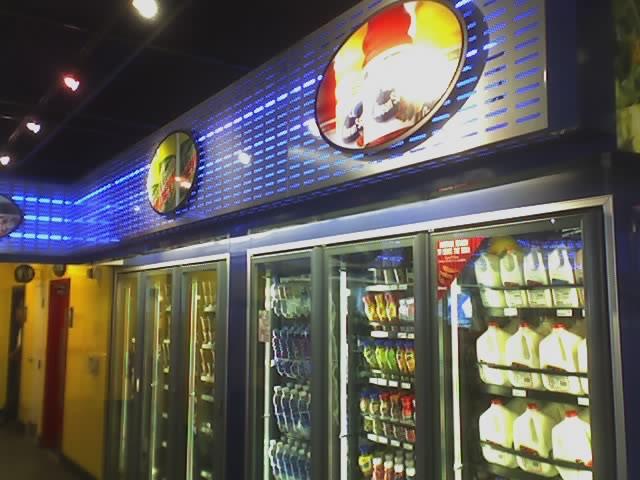 We'll start at lunchtime. Anyone who's spent much time in the mid-Atlantic will know that when gallons of milk collide with lots of neon and some excess "z's," you get Sheetz.
I kid. Sheetz is a great place to stop for cheap gas, hot food 24/7, and slightly over-the-top retail merchandising. I had a burger and fries today and this was the picture I took waiting on my food, which was prepared fresh when I ordered.
Their store designer is on acid, but it's very well done and our local Sheetz locations have a large following, including your firendly neighborhood blogger.
 Need a snack? After work, I high-tailed it to Greensboro in just enough time to go to the Gold Medal Products showroom to pick up some new popcorn boxes (above) for my commercial popcorn popper.
Yeah, you read that right. I always wanted one (big popcorn lover), and my mom's country club needed one for outdoor events. Plus it was at Sam's Club for a good price. So we got one and I operate it as needed. It's fun as all get-out.
The people at Gold Medal were really nice and they're keen on giving product samples to get you to buy more of their products, like the slushie sample I got that was supposed to provoke me to buy that $2300 slushie machine. I almost did it, not becaue of the sample, but because I want one of those, too.
Oh well, probably more cost effective to go to the 7-Eleven anyway.

 Next stop: Costco. Costco is a great place to buy food (and just about everything else) in bulk. As any warehouse club executive will tell you, the best way to get people to take 50 pound cans of artichokes home is to let them sample the for free.
I took the bait. Usually, I can refrain from the sample tables but today it was near dinner time and they had somewhere south of a dozen food stands with everything from potstickers to mussels to Hot Pockets to peaches to Vienna sausages (skipped the last one there. I like free food, but Vienna sausages aren't even good for free).
Luckily, my wallet wasn't as busy as my mouth. I only bought postage stamps, photo paper, a Cheesecake Factory cheesecake and a case of Kirkland Signature sodas.

 Ready for dessert? We end our food odyssey at Cold Stone Creamery. There's at least a half-dozen chains now that take soft ice cream bases and mix in goodies on a marble slab, but this is my favorite. Today's mixture: cheesecake ice cream with graham cracker crumbs, strawberries, and blueberries. A fine finish to a fine day of food.
Time to head home. There's Pepto Bismol in the glovebox :-)
Pepsi to open 3 mall lounges
By CAROLINE WILBERT
The Atlanta Journal-Constitution
Pepsico is going after teen mall rats with a lounge concept very similar to something Coca-Cola tried two years ago. Pepsi is opening three Pepsi-themed mall lounges, where kids can play Xbox video games, watch videos, hang out and, of course, buy Pepsi products from vending machines.
The first lounges will be in Florida, California and Illinois.
In 2003, Coke opened two lounges — called Coca-Cola Red Lounges — in malls in California and Illinois. In the lounges, teens can watch videos, sit on sofas and buy Coke products. Though Coke hasn't expanded the concept since opening the original lounges, a spokeswoman said the company is gathering research and may add more down the road.
The Atlanta Journal-Constitution
Pepsico is going after teen mall rats with a lounge concept very similar to something Coca-Cola tried two years ago. Pepsi is opening three Pepsi-themed mall lounges, where kids can play Xbox video games, watch videos, hang out and, of course, buy Pepsi products from vending machines.
The first lounges will be in Florida, California and Illinois.
In 2003, Coke opened two lounges — called Coca-Cola Red Lounges — in malls in California and Illinois. In the lounges, teens can watch videos, sit on sofas and buy Coke products. Though Coke hasn't expanded the concept since opening the original lounges, a spokeswoman said the company is gathering research and may add more down the road.
Thursday, August 04, 2005
Supermarkets Make 75 Years of History.
Chain Store Age
Today marks the 75th anniversary of the supermarket.
The first supermarket opened Aug. 4, 1930 in Jamaica, N.Y. The King Kullen store, comparable to today's no-frills warehouse outlets, served as the catalyst for a new age in food retailing, selling more than 1,000 products. Other companies pioneering the supermarket concept in 1930 were Ralphs Grocery Company in California, Piggly Wiggly in Tennessee and the Texas-based Weingarten’s Big Food Markets and Henke & Pillot, which was purchased by The Kroger Co. in 1956.
According the Food Marketing Institute, the supermarket helped shape American culture and history in the following ways:
• Endure The Great Depression: The supermarket emerged while America was grappling with the Great Depression. The impoverished American public welcomed the unprecedented low prices, boundless variety and the opportunity to select products directly from shelves. This innovation became an immediate success.
• Create the Middle Class: The supermarket’s low prices freed up substantial funds for families to spend on cars, homes, education and other needs and amenities of life. As supermarkets proliferated in the 1950s and 1960s, they played a pivotal role in creating the American middle class. On the supermarket’s silver anniversary, President John F. Kennedy said that the supermarket’s low-cost mass marketing techniques “… have enabled a higher standard of living and have contributed importantly to our economic growth.”
• End the Cold War: Between 1958 and 1988, some 50,000 Soviet citizens traveled to the U.S., most touring an American supermarket on their trip. The supermarket showcased the possibilities of food abundance and became a metaphor for what capitalism could do and Communism could not. In his autobiography, Boris Yeltsin gave this account of his 1989 visit to a supermarket in Houston: “When I saw those shelves crammed with hundreds, thousands of cans, cartons and goods of every possible sort, for the first time I felt quite frankly sick with despair for the Soviet people. That such a potentially super-rich country as ours has been brought to a state of such poverty! It is terrible to think of it.”
Today marks the 75th anniversary of the supermarket.
The first supermarket opened Aug. 4, 1930 in Jamaica, N.Y. The King Kullen store, comparable to today's no-frills warehouse outlets, served as the catalyst for a new age in food retailing, selling more than 1,000 products. Other companies pioneering the supermarket concept in 1930 were Ralphs Grocery Company in California, Piggly Wiggly in Tennessee and the Texas-based Weingarten’s Big Food Markets and Henke & Pillot, which was purchased by The Kroger Co. in 1956.
According the Food Marketing Institute, the supermarket helped shape American culture and history in the following ways:
• Endure The Great Depression: The supermarket emerged while America was grappling with the Great Depression. The impoverished American public welcomed the unprecedented low prices, boundless variety and the opportunity to select products directly from shelves. This innovation became an immediate success.
• Create the Middle Class: The supermarket’s low prices freed up substantial funds for families to spend on cars, homes, education and other needs and amenities of life. As supermarkets proliferated in the 1950s and 1960s, they played a pivotal role in creating the American middle class. On the supermarket’s silver anniversary, President John F. Kennedy said that the supermarket’s low-cost mass marketing techniques “… have enabled a higher standard of living and have contributed importantly to our economic growth.”
• End the Cold War: Between 1958 and 1988, some 50,000 Soviet citizens traveled to the U.S., most touring an American supermarket on their trip. The supermarket showcased the possibilities of food abundance and became a metaphor for what capitalism could do and Communism could not. In his autobiography, Boris Yeltsin gave this account of his 1989 visit to a supermarket in Houston: “When I saw those shelves crammed with hundreds, thousands of cans, cartons and goods of every possible sort, for the first time I felt quite frankly sick with despair for the Soviet people. That such a potentially super-rich country as ours has been brought to a state of such poverty! It is terrible to think of it.”
the Pig made it big
 New Patent Museum Details the Birth of the Supermarket
Knight Ridder Newspapers
WASHINGTON - Next time you're stuck in a checkout line, you might want to blame Clarence Saunders.
Saunders, a grocery wholesaler in Memphis, Tenn., invented and patented what he called "Self-Serving Stores" in 1917. He made millions on what came to be called supermarkets, then went from riches to rags and halfway back again on the 20th century's most influential retail concept.
Washington's newest museum, the U.S. Patent and Trademark Office Museum in nearby Alexandria, Va., tells Saunders' story, along with those of other people who reinvented American life.
Until Saunders came along, Americans bought their wares by telling clerks what they wanted. Clerks filled their orders from stocks kept behind counters.
Saunders' patent no. 1,242,872 changed all that. It called for "distributing the merchandise of a store in such a manner that goods may be selected and taken by the customers themselves while making a circuitous path through the store."
Translation: Give the customers shopping baskets and make them pick up their own goods. Cut the staff down to a few cashiers and use the savings to charge less.
Saunders' invention, summarized in a six-page patent application, made him rich in a hurry. He called his stores Piggly Wiggly. When he was asked later why he chose such an odd name, he replied: "So people will ask that very question." By 1923, he'd opened 1,268 Piggly Wigglys, mainly in the South.
In a display of wealth, Saunders commissioned a 38,000-square-foot pink marble mansion in Memphis complete with an indoor pool and shooting range.
He never got to live there. In the early '20s, Saunders thought stockbrokers were selling Piggly Wiggly stock short and decided to buy back his own company.
"He went to New York City with a suitcase full of cash. The estimates of how much money he took with him range from 1 to 10 million dollars," said Dan Hope, spokesman for the Pink Palace Museum, which now occupies the mansion.
Stock exchange officials concluded that Saunders was trying to corner Piggly Wiggly's stock. He was forced to sell almost all of it, went bankrupt and lost control of the company.
In the '30s, he designed and built an entirely mechanized, clerk-free store, which he called Keedoozle. The machinery proved cranky and costly, however, and Keedoozle failed. Only now are food retailers moving toward Keedoozle-like clerk-free supermarkets with automated checkouts.
The patent office's museum in Alexandria, Va., which opened last month, features Saunders' story in an exhibit titled "A Day in My Life." The museum's Web site is www.uspto.gov/web/offices/ac/ahrpa/opa/museum. The museum is open 9 a.m. to 5 p.m. weekdays and noon to 5 p.m. Saturdays.
---
To learn more about Saunders, go to www.pigglywiggly.com and click on "About Us."
To learn more about his mansion, now the Pink Palace Museum, visit www.memphismuseums.org/mansion.htm. The museum is open 9 a.m. to 5 p.m. Mondays through Saturdays and noon to 5 p.m. Sundays.
cox's of mckeesport: presented by tube city online
 Cox’s, northeast corner Fifth Avenue at Walnut Street, Downtown McKeesport, PA, circa 1990. The blue tiled portion is the original building, opened in 1955. The annex to the left, covered in black anodized steel, was opened in 1972. The awnings around the store were used for outdoor fashion shows into the 1960s. ( photo © Jason Togyer)
It's an understatement that I'm fascinated by old retail (and new retail and future retail; you get the point). So anytime I find something new that's about retail history, I'm all over it.
Such is the case with the historic photos posted online by my friend Jason Togyer of the old Cox's Department Store in McKeesport, Pennsylvaina. Cox's was his hometown store and was quite successful in Western Pennsylvania back in the middle part of the 20th century. A story he wrote on Cox's a few years back will tell you more about the store's glory days.
Here's a excerpt:
From its chrome trimmed, blue-tiled front to its marble and terrazzo floors, Cox's was a class-act all the way. The street was closed periodically for fashion shows, with the models using the awnings outside as runways. At night, indirect lighting illuminated the front of the building, including the giant stylized "Cox's" scripts.
Inside, besides the latest fashions, the architects had included an elevator and - fantastically - an escalator! In a city full of wooden-framed five-and-tens, anchored at one end by a Sears and at the other by Monkey Wards, it must have seemed like Macy's on the Mon.

The pictures give a perspective on what once was and allow the viewer to eith relive a little of the past or experience the midcentury styles and merchandising they never saw in person. it's a facinating viewing and did I mention the story? Yeah, I did.
 Jason is also writing a book on the late, great G.C. Murphy Co., which was also headquartered in McKeesport. Murphy's was one of my favorite stores growing up. I mentioned this a few months back when I saw the story in the Pittsburgh Post-Gazette. Can't wait to read that book.
i'm thinking arby's
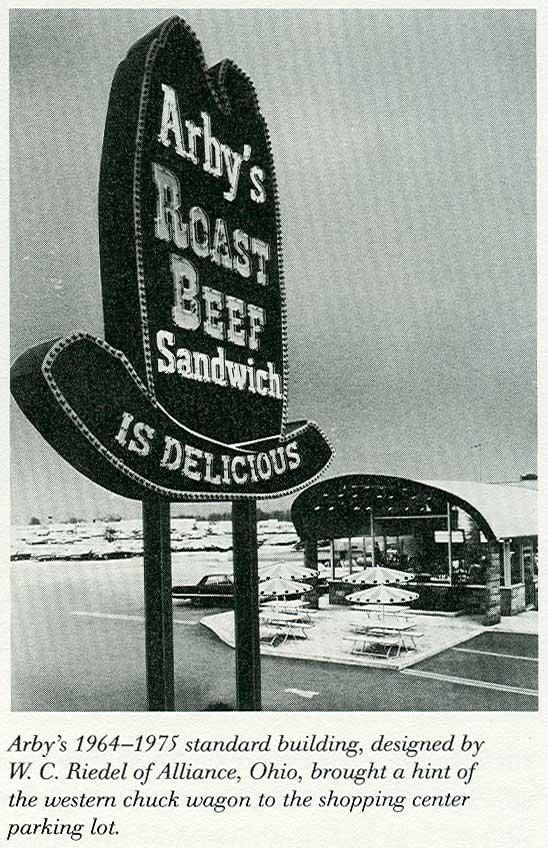
One of the things that got the most attention in yesterday’s photoblog post was the picture of the Arby’s sign in Winston-Salem. I remembered I had a picture (above) of an old prototype Arby’s from the book Orange Roofs, Golden Arches by Phillip Langdon, and also found some interesting factoids about the chains's early days in that book.
Let me bore you for a second with these:
-- It was founded in 1964 in Boardman, Ohio, just outside Youngstown.
-- “Arby’s” was a name fashioned from the initials of its founders: Forrest and Leroy Raffel – the Raffel Brothers. Get it? R-B? Kinda cool.
-- The Raffel brothers originally wanted to call the place “Big Tex,” but couldn’t get the naming rights.
-- The “Kent-Vegas” style sign [good one, Carrie :-) ] was meant to attract attention and educate people about what Arby’s served, seeing as there were no other fast food roast beef restaurants. It was the standard Arby’s sign until 1975, when it was simplified to cut costs and reflect an expanding menu.
-- The first Arby’s were classy joints (for fast food places anyway). Bright yellow roof and gaudy sign notwithstanding, the first restaurants featured a chuckwagon motif with recessed lighting and stone veneer to attract a more upscale crowd than the burger joints.
Many of the original chuckwagon style restaurants got remodeled in the ‘70s and ‘80s, but kept their original signs until a few years ago. The numbers are dwindling as restaurants close or get remodeled. Personally, I dig the old Arby’s signs. They’re big, garish and a little dated (and could be a little better maintained), but they’re also interesting from a design and advertising standpoint. It does what advertising is supposed to do: leave a lasting memory in the consumer’s mind. The design is unique and will likely never be replicated because signs like that cost a bundle to erect and maintain. It also works as nostalgia, because there was at least one of these suckers in every suburb in America in the ‘80s, which is when I remember it from.
I did happen to see, a few weeks ago, a largely un-remodeled former Arby's in the chcuckwagon style. It was in Durham, North Carolina in an older suburban area. The Arby’s had moved across the street to a new location, but the building, now used as a check cashing place, was still standing and recognizable as an Arby’s. In place of the ten-gallon hat sign were these humongous retro-looking neon signs that read CHECKS CASHED. I’ll try to get a picture next time I’m down that way.
august 4 article: got cucumbers?
 I really hate the title my editor gave to this story, but at least she published it this time!
Wednesday, August 03, 2005
Cast Member: 'Chappelle's Show' Is 'Done'
 The Associated Press
NEW YORK -- Time to face the facts: Dave Chappelle's hit Comedy Central series isn't coming back, says one of its stars. "`Chappelle's Show' is over, man. Done," comic Charlie Murphy told TV Guide. "It took me a long time to be able to say those words, but I can say it pretty easy now, because it's the truth."
Chappelle's sudden "spiritual retreat" to South Africa on the eve of his show's third season has left the series in limbo since May. About half of a new season had been filmed before Chappelle left, Murphy said.
"I'm disappointed it ended the way it did, but I'm not angry with anybody," he said. "`Chappelle's Show' was like the Tupac of TV shows. It came out, it got everybody's attention, it was a bright shining star, but it burned out and for some strange reason, it burned out quick."
Comedy Central has always said the door is open for Chappelle to return, spokeswoman Aileen Budow said Wednesday.
Network chief Doug Herzog met with Chappelle on June 3, but that has been their last communication, she said.
Murphy, the older brother of comic Eddie Murphy, said his two seasons with Chappelle made him a star.
"Now I can go out and do stand-up," he said. "I'm getting movie offers. It's off the hook. Me getting to the next level or whatever's going to happen is going to come from the next things I do, but `Chappelle's Show' served its purpose and I'll always be grateful."
goodbye Casual Corner
Retail Brand Alliance to sell Casual Corner to liquidator
By JAMES COVERT (Dow Jones Newswires)
NEW YORK - The owner of Casual Corner Group Inc. said it will sell the struggling women's clothing chain to a liquidator, which may in turn sell a chunk of its stores to a big rival.
Looking to spend more time on its upscale Brooks Brothers chain, privately owned Retail Brand Alliance Inc. plans Thursday to sell Casual Corner's 550 stores to Gordon Brothers Group LLC, a Boston-based retail liquidator, Retail Brand Alliance President and Chief Executive Claudio Del Vecchio said in an interview.
Casual Corner's retail locations, which occupy malls and shopping destinations across about 45 U.S. states, typically house multiple stores under names including Casual Corner, Petite Sophisticate and August Max. Taken together, the leases account for more than 1,000 boutiques.
"Casual Corner will probably take a lot of energy and resources to fix," Del Vecchio said. "Now we're positioned to focus more of our energy on Brooks Brothers."
Del Vecchio declined to discuss specific terms of the deal, but said previous estimates that Casual Corner might fetch $250 million to $300 million proved overly optimistic. Aside from a more modest cash payment, the agreement is largely a transfer of leases, he said. The companies plan to sign the agreement Thursday, but don't intend to publicly announce it, as they are both privately owned, Del Vecchio said.
New York & Co., a competitor to Casual Corner in the mid-priced women's apparel niche with nearly 500 stores of its own, had spoken with Retail Brand Alliance in recent weeks about possibly acquiring 250 Casual Corner sites, Del Vecchio said. Now, the retailer is in negotiations with Gordon Brothers to acquire the sites, he said.
Del Vecchio wasn't able to provide details of those talks, and New York & Co. didn't respond to requests for comment. But a person familiar with the matter said an agreement with New York & Co. isn't a done deal yet.
By JAMES COVERT (Dow Jones Newswires)
NEW YORK - The owner of Casual Corner Group Inc. said it will sell the struggling women's clothing chain to a liquidator, which may in turn sell a chunk of its stores to a big rival.
Looking to spend more time on its upscale Brooks Brothers chain, privately owned Retail Brand Alliance Inc. plans Thursday to sell Casual Corner's 550 stores to Gordon Brothers Group LLC, a Boston-based retail liquidator, Retail Brand Alliance President and Chief Executive Claudio Del Vecchio said in an interview.
Casual Corner's retail locations, which occupy malls and shopping destinations across about 45 U.S. states, typically house multiple stores under names including Casual Corner, Petite Sophisticate and August Max. Taken together, the leases account for more than 1,000 boutiques.
"Casual Corner will probably take a lot of energy and resources to fix," Del Vecchio said. "Now we're positioned to focus more of our energy on Brooks Brothers."
Del Vecchio declined to discuss specific terms of the deal, but said previous estimates that Casual Corner might fetch $250 million to $300 million proved overly optimistic. Aside from a more modest cash payment, the agreement is largely a transfer of leases, he said. The companies plan to sign the agreement Thursday, but don't intend to publicly announce it, as they are both privately owned, Del Vecchio said.
New York & Co., a competitor to Casual Corner in the mid-priced women's apparel niche with nearly 500 stores of its own, had spoken with Retail Brand Alliance in recent weeks about possibly acquiring 250 Casual Corner sites, Del Vecchio said. Now, the retailer is in negotiations with Gordon Brothers to acquire the sites, he said.
Del Vecchio wasn't able to provide details of those talks, and New York & Co. didn't respond to requests for comment. But a person familiar with the matter said an agreement with New York & Co. isn't a done deal yet.
mall ball
Pennsylvania company hopes basketball brings consumers back to malls
Wendy Tanaka
The Philadelphia Inquirer
Foot traffic at the nation's malls has been declining. But a King of Prussia start-up is trying to help shopping centers bounce back with basketball shooting ranges.
So far, Mall Ball L.P. has installed an enclosed basketball range in the Gallery at Market East mall in Center City and Prince Georges Mall outside Washington.
Mall Ball's founder and chief executive officer, James Lesser, said his company has commitments to outfit 100 malls by the end of February.
"Malls are looking at entertainment as a way to reinvigorate attendance and sales," Lesser said.
According to the International Council of Shopping Centers, the number of trips to the mall had fallen in 2003 to the 1996 level of 9.5 visits every three months. The average peaked at 10.1 in the 1998-2001 period. The council did not say why mall attendance has dropped.
The Mall Ball ranges at the Gallery and Prince Georges Mall opened last month. Each glass-enclosed range is 16 feet high, 22 feet long, and 11 feet wide.
Mall visitors pay $4 to see how many baskets they can sink in 24 seconds.
They also vie for weekly prizes. The three highest scorers of the week at each mall might win an iPod or a PlayStation console.
Each week, the highest scorer between the two malls receives a cash prize of $1,000. Mall Ball expects to raise the first-place prize to $5,000 in November.
Joseph Coradino, executive vice president of the Pennsylvania Real Estate Investment Trust, the Philadelphia mall developer that owns the Gallery shopping center, said Mall Ball's product fits its business strategy. PREIT also has a skateboard park at its mall in Moorestown.
"As we continue to try and increase our customer appeal in our shopping centers, one area we focus on is dining and entertainment," Coradino said.
In addition to being a Mall Ball customer, PREIT is a partner: It pitches the basketball ranges to shopping centers around the country. Lesser said he is finalizing a contract with PREIT to become an investor in Mall Ball as well.
Mall Ball was founded in November 2004 with personal money from Lesser, 35, an entrepreneur who founded JDL Ventures L.L.C., an arcade-game designer and operator in King of Prussia that closed in 2003; former Safeguard Scientifics Inc. president Harry Wallasea; and venture capitalist Ira Lubert.
So far, the trio has invested at least $15 million for 100 basketball ranges that use authentic NBA backboards, rims, score clocks and hardwood floors. An emcee calls the action.
Those who shot baskets in the Gallery mall yesterday said the Mall Ball range was fun and a welcome addition.
"I can see myself doing this two times a week," said Eric Waddy, 32, who played four games in a row.
"The fun of it is to see how much I can actually hit."
Asked whether the price -- $4 for 24 seconds of shooting hoops -- was steep, Waddy said: Not really.
"If you win, you can win a prize or $1,000," he said. "It's like buying four lottery tickets."
Wendy Tanaka
The Philadelphia Inquirer
Foot traffic at the nation's malls has been declining. But a King of Prussia start-up is trying to help shopping centers bounce back with basketball shooting ranges.
So far, Mall Ball L.P. has installed an enclosed basketball range in the Gallery at Market East mall in Center City and Prince Georges Mall outside Washington.
Mall Ball's founder and chief executive officer, James Lesser, said his company has commitments to outfit 100 malls by the end of February.
"Malls are looking at entertainment as a way to reinvigorate attendance and sales," Lesser said.
According to the International Council of Shopping Centers, the number of trips to the mall had fallen in 2003 to the 1996 level of 9.5 visits every three months. The average peaked at 10.1 in the 1998-2001 period. The council did not say why mall attendance has dropped.
The Mall Ball ranges at the Gallery and Prince Georges Mall opened last month. Each glass-enclosed range is 16 feet high, 22 feet long, and 11 feet wide.
Mall visitors pay $4 to see how many baskets they can sink in 24 seconds.
They also vie for weekly prizes. The three highest scorers of the week at each mall might win an iPod or a PlayStation console.
Each week, the highest scorer between the two malls receives a cash prize of $1,000. Mall Ball expects to raise the first-place prize to $5,000 in November.
Joseph Coradino, executive vice president of the Pennsylvania Real Estate Investment Trust, the Philadelphia mall developer that owns the Gallery shopping center, said Mall Ball's product fits its business strategy. PREIT also has a skateboard park at its mall in Moorestown.
"As we continue to try and increase our customer appeal in our shopping centers, one area we focus on is dining and entertainment," Coradino said.
In addition to being a Mall Ball customer, PREIT is a partner: It pitches the basketball ranges to shopping centers around the country. Lesser said he is finalizing a contract with PREIT to become an investor in Mall Ball as well.
Mall Ball was founded in November 2004 with personal money from Lesser, 35, an entrepreneur who founded JDL Ventures L.L.C., an arcade-game designer and operator in King of Prussia that closed in 2003; former Safeguard Scientifics Inc. president Harry Wallasea; and venture capitalist Ira Lubert.
So far, the trio has invested at least $15 million for 100 basketball ranges that use authentic NBA backboards, rims, score clocks and hardwood floors. An emcee calls the action.
Those who shot baskets in the Gallery mall yesterday said the Mall Ball range was fun and a welcome addition.
"I can see myself doing this two times a week," said Eric Waddy, 32, who played four games in a row.
"The fun of it is to see how much I can actually hit."
Asked whether the price -- $4 for 24 seconds of shooting hoops -- was steep, Waddy said: Not really.
"If you win, you can win a prize or $1,000," he said. "It's like buying four lottery tickets."
Adidas to Buy Reebok for $3.8 Bln to Challenge Nike
(Bloomberg) -- Adidas-Salomon AG, whose U.S. sales have fallen for two years, agreed to buy Reebok International Ltd. for about 3.1 billion euros ($3.8 billion) to narrow the gap with Nike Inc.
Adidas, the maker of ClimaCool and T-Mac sneakers, is offering $59 for each share of Canton, Massachusetts-based Reebok, or 34 percent more than yesterday's closing price. The German company also will assume 69 million euros of cash, according to a statement released today.
The purchase, Adidas's biggest since its 1998 acquisition of Salomon, will more than double sales in the U.S., Nike's home market. Reebok, whose Freestyle aerobic shoe was one of the best- selling sneakers in history, is ``the perfect fit'' because of its strength in the U.S., Adidas Chief Executive Herbert Hainer said in an interview.
``This is a good deal for them in the long term,'' said Paras Anand of Deutsche Asset Management, who helps manage the equivalent of about $3.55 billion in European stocks. Adidas will be able to cut costs by combining distribution and manufacturing and merging the two companies' research and development, Anand said.
The acquisition will boost earnings in the first year and save 120 million to 125 million euros the first three years after the acquisition, Hainer, 51, said in the interview.
Second-quarter profit rose 34 percent to 94 million euros from 70 million euros a year earlier, Herzogenaurach, Germany-based Adidas said today in a statement. Analysts were expecting 82 million euros, according to the median of five estimates gathered by Bloomberg. Sales gained 8 percent to 1.52 billion euros.
Adidas shares rose 1.73 euros, or 1.2 percent, to 149.25 euros at 11:02 a.m. in Frankfurt. Reebok rose $14.65, or 33 percent, to $58.60 in Germany.
NBA, NFL
Adidas is betting Reebok's faster revenue growth will boost profitability as the company's European sales remain sluggish and its North American revenue has fallen an average 13 percent the past two years. The purchase will give Adidas 28 percent of the global $11.5 billion athletic-shoe market, rivaling Nike's 31 percent widening the lead over cross-town rival Puma AG.
The German company will also get Reebok's clothing business, which includes licenses to outfit the National Football League and the National Basketball Association. In addition, Adidas will gain better negotiating power and more shelf space at retailers such as Foot Locker Inc., according to John Horan, publisher of industry newsletter Sporting Goods Intelligence in Glen Mills, Pennsylvania, who's covered the industry for 27 years.
Adidas and Nike also are becoming fiercer rivals in soccer in the run-up 2006 World Cup, to be held in Germany. Adidas, which sold 6 million Roteiro soccer balls and 1 million pairs of PredatorPulse shoes last year, has formed a 100-member team to plan for the event. The company will unveil the tournament ball in September and roll out merchandise including World Cup jerseys later this year.
Transaction Value
Adidas had an 8.9 percent share of the $8.9 billion wholesale U.S. athletic-shoe market last year, according to Sporting Goods Intelligence. Reebok controlled 12 percent and Beaverton, Oregon-based Nike had 36 percent. A combined Adidas- Reebok would have about $11.7 billion in sales, compared with Nike's $13.7 billion.
Adidas expects to complete the acquisition in the first half of 2006. The total value of the transaction is about $3.59 billion, according to data compiled by Bloomberg. Adidas is paying about 10.7 times Reebok's earnings before interest, taxes, depreciation and amortization and about 0.9 times revenue, according to Bloomberg data. It paid about 8.92 Ebidta and 1.1 times revenue for Salomon when it bought the company for almost $800 million.
Reebok's Fireman
Reebok, whose shares had risen 30 percent the past year, said last month that second-quarter profit rose 71 percent, helped by gains in countries such as India and China and new Pump basketball shoes even as U.S. sales of its Classic footwear, the company's biggest business, declined.
The sale to Adidas may solve Reebok's succession problem as its 61-year-old founder and chief executive, Paul Fireman, may be ready to retire, according to Horan. Fireman took over day-to-day management at Reebok last year after then-President and Chief Operating Officer Jay Margolis resigned.
Merrill Lynch advised Adidas-Salomon and CSFB advised Reebok on the transaction, according to today's statement.
Adidas, the maker of ClimaCool and T-Mac sneakers, is offering $59 for each share of Canton, Massachusetts-based Reebok, or 34 percent more than yesterday's closing price. The German company also will assume 69 million euros of cash, according to a statement released today.
The purchase, Adidas's biggest since its 1998 acquisition of Salomon, will more than double sales in the U.S., Nike's home market. Reebok, whose Freestyle aerobic shoe was one of the best- selling sneakers in history, is ``the perfect fit'' because of its strength in the U.S., Adidas Chief Executive Herbert Hainer said in an interview.
``This is a good deal for them in the long term,'' said Paras Anand of Deutsche Asset Management, who helps manage the equivalent of about $3.55 billion in European stocks. Adidas will be able to cut costs by combining distribution and manufacturing and merging the two companies' research and development, Anand said.
The acquisition will boost earnings in the first year and save 120 million to 125 million euros the first three years after the acquisition, Hainer, 51, said in the interview.
Second-quarter profit rose 34 percent to 94 million euros from 70 million euros a year earlier, Herzogenaurach, Germany-based Adidas said today in a statement. Analysts were expecting 82 million euros, according to the median of five estimates gathered by Bloomberg. Sales gained 8 percent to 1.52 billion euros.
Adidas shares rose 1.73 euros, or 1.2 percent, to 149.25 euros at 11:02 a.m. in Frankfurt. Reebok rose $14.65, or 33 percent, to $58.60 in Germany.
NBA, NFL
Adidas is betting Reebok's faster revenue growth will boost profitability as the company's European sales remain sluggish and its North American revenue has fallen an average 13 percent the past two years. The purchase will give Adidas 28 percent of the global $11.5 billion athletic-shoe market, rivaling Nike's 31 percent widening the lead over cross-town rival Puma AG.
The German company will also get Reebok's clothing business, which includes licenses to outfit the National Football League and the National Basketball Association. In addition, Adidas will gain better negotiating power and more shelf space at retailers such as Foot Locker Inc., according to John Horan, publisher of industry newsletter Sporting Goods Intelligence in Glen Mills, Pennsylvania, who's covered the industry for 27 years.
Adidas and Nike also are becoming fiercer rivals in soccer in the run-up 2006 World Cup, to be held in Germany. Adidas, which sold 6 million Roteiro soccer balls and 1 million pairs of PredatorPulse shoes last year, has formed a 100-member team to plan for the event. The company will unveil the tournament ball in September and roll out merchandise including World Cup jerseys later this year.
Transaction Value
Adidas had an 8.9 percent share of the $8.9 billion wholesale U.S. athletic-shoe market last year, according to Sporting Goods Intelligence. Reebok controlled 12 percent and Beaverton, Oregon-based Nike had 36 percent. A combined Adidas- Reebok would have about $11.7 billion in sales, compared with Nike's $13.7 billion.
Adidas expects to complete the acquisition in the first half of 2006. The total value of the transaction is about $3.59 billion, according to data compiled by Bloomberg. Adidas is paying about 10.7 times Reebok's earnings before interest, taxes, depreciation and amortization and about 0.9 times revenue, according to Bloomberg data. It paid about 8.92 Ebidta and 1.1 times revenue for Salomon when it bought the company for almost $800 million.
Reebok's Fireman
Reebok, whose shares had risen 30 percent the past year, said last month that second-quarter profit rose 71 percent, helped by gains in countries such as India and China and new Pump basketball shoes even as U.S. sales of its Classic footwear, the company's biggest business, declined.
The sale to Adidas may solve Reebok's succession problem as its 61-year-old founder and chief executive, Paul Fireman, may be ready to retire, according to Horan. Fireman took over day-to-day management at Reebok last year after then-President and Chief Operating Officer Jay Margolis resigned.
Merrill Lynch advised Adidas-Salomon and CSFB advised Reebok on the transaction, according to today's statement.
stone carvings, mannequins, signs and such
Here's some photoblogging from my travels around Greensboro and Winston-Salem yesterday;
 The old Guilford Dairy in Greensboro is now home to a skateboard shop. This stone carving over the entry is so cool. I never noticed it before.
 Need a car? Love mannequins in bikinis? Speak Spanish? Here's your car lot!
 This is the Church's Chicken in Greensboro that I frequent. Can't beat the 2 piece leg and thigh special for 99 cents on Tuesdays.
 The old Guilford Dairy in Greensboro is now home to a skateboard shop. This stone carving over the entry is so cool. I never noticed it before.
  Need a car? Love mannequins in bikinis? Speak Spanish? Here's your car lot!
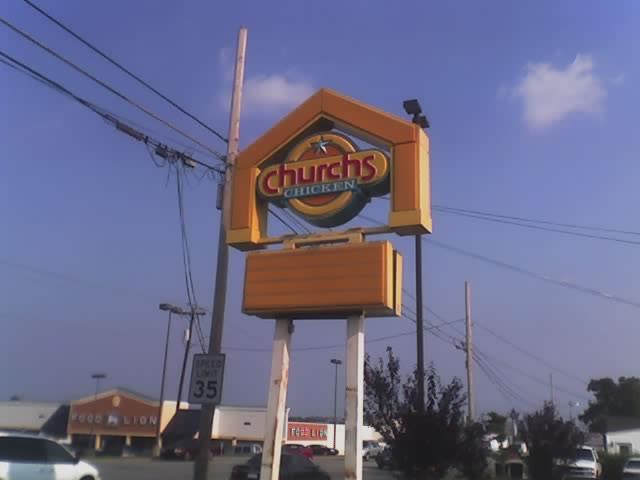 This is the Church's Chicken in Greensboro that I frequent. Can't beat the 2 piece leg and thigh special for 99 cents on Tuesdays.
 This is one big-ass Foot Locker. Nice design, circa 1998. Hanes Mall, in Winston-Salem
 Before they went tye-dye with it, Spencer Gifts used to have this very '70s logo. I guess someone in marketing decided the tacky merchandise and the classy logo didn't match up. too bad. It's the best part of this store. Except for the Afro wigs, of course.
 You don't see these signs much anymore. Knollwood Street in Winston Salem
Tuesday, August 02, 2005
What happened to Saks?
How did it go from wunderkind to SEC bad boy?
By Steve Kaufman
It all started so positively. In 1998, Brad Martin and Philip Miller announced that Proffitt's, the fast-growing chain of Southern and Midwestern department stores, was buying Saks Fifth Avenue, the quintessentially urban luxury retailer, from the Bahrainians.
Martin, the ultra-aggressive ex-Tennessee Congressman, had turned five stores into a 230-store chain that was retail's most vigorous venture.
Miller, the ultra-sophisticated urbanite, had moved up the ladder at Marshall Field's and Neiman Marcus to the pinnacle as chairman and ceo of Saks Fifth Avenue, the nation's ultimate retail luxury brand. (Saks had the New York cachet that Neiman's lacked.)
Not everyone felt the synergy. The New York Times made a crack comparing Martin's and Miller's shoes – Martin's practical brogans were the shoes of a Tennessee schoolteacher compared to Miller's shiny Gucci wing-tips. (Ironic, since 100 years earlier The Times itself had been purchased by a Tennessee rustic who turned it into the nation's most sophisticated newspaper.)
It was a pricey buy. Proffitt's was paying $2.82 billion in stock and assumed debt, about 11 times Saks' estimated annual cash flow. By contrast, it had paid just 6 times cash flow for McRae's and a 9.4 multiple for Carson Pirie Scott.
And there were other potential pitfalls. Proffitt's succeeded by applying across-the-board financial and operational models, such as buying store fixtures, graphics and design materials less expensively in bulk. But Saks was a different animal, used to a more lavish budget and a keener design sense.
Martin immediately reinforced his commitment by renaming the organization Saks Inc., acknowledging that the jewel in the crown ought to define the crown. However, despite everyone's protests that it would be business as usual at Saks Fifth Avenue, cracks began to appear in the façade. The buying function was indeed centralized so that the same people were purchasing the same shelving units and T-stands for Saks Fifth Avenue that they were for Herberger's. Saks Fifth Avenue merchandisers began to complain that showcases lacked both the design panache and the polished and durable surfaces they once were known for.
A year later, Miller was out and Christina Johnson was in. By that time, though the 1990s had been the belle epoque for most luxury retailers, Saks Fifth Avenue was not thriving. In 2000, to restore the glitter, Birmingham decided to spin off its New York yankee. Then the spinoff was postponed. It never happened.
The economy dithered in the new millennium and the regional chain formula stuttered. Caught somewhere between Target's cheap chic and Kohl's stripped-down environment, trapped in underperforming malls, the Saks Department Store Group faltered.
The once-dynamic parent organization is now selling off holdings as fast as it can. And it has become ensnared in a Kafkaesque spiral of internal misdeeds leading to investigations that postpone its SEC filings that cause noteholders to cry "default" that make many worry about its viability.
Saks Fifth Avenue is under new management, and trying hard to regain the luster that Neiman Marcus now seems to own. As for that promise that burned in 1998 and is flickering seven years later – could it have been the shoes?
By Steve Kaufman
It all started so positively. In 1998, Brad Martin and Philip Miller announced that Proffitt's, the fast-growing chain of Southern and Midwestern department stores, was buying Saks Fifth Avenue, the quintessentially urban luxury retailer, from the Bahrainians.
Martin, the ultra-aggressive ex-Tennessee Congressman, had turned five stores into a 230-store chain that was retail's most vigorous venture.
Miller, the ultra-sophisticated urbanite, had moved up the ladder at Marshall Field's and Neiman Marcus to the pinnacle as chairman and ceo of Saks Fifth Avenue, the nation's ultimate retail luxury brand. (Saks had the New York cachet that Neiman's lacked.)
Not everyone felt the synergy. The New York Times made a crack comparing Martin's and Miller's shoes – Martin's practical brogans were the shoes of a Tennessee schoolteacher compared to Miller's shiny Gucci wing-tips. (Ironic, since 100 years earlier The Times itself had been purchased by a Tennessee rustic who turned it into the nation's most sophisticated newspaper.)
It was a pricey buy. Proffitt's was paying $2.82 billion in stock and assumed debt, about 11 times Saks' estimated annual cash flow. By contrast, it had paid just 6 times cash flow for McRae's and a 9.4 multiple for Carson Pirie Scott.
And there were other potential pitfalls. Proffitt's succeeded by applying across-the-board financial and operational models, such as buying store fixtures, graphics and design materials less expensively in bulk. But Saks was a different animal, used to a more lavish budget and a keener design sense.
Martin immediately reinforced his commitment by renaming the organization Saks Inc., acknowledging that the jewel in the crown ought to define the crown. However, despite everyone's protests that it would be business as usual at Saks Fifth Avenue, cracks began to appear in the façade. The buying function was indeed centralized so that the same people were purchasing the same shelving units and T-stands for Saks Fifth Avenue that they were for Herberger's. Saks Fifth Avenue merchandisers began to complain that showcases lacked both the design panache and the polished and durable surfaces they once were known for.
A year later, Miller was out and Christina Johnson was in. By that time, though the 1990s had been the belle epoque for most luxury retailers, Saks Fifth Avenue was not thriving. In 2000, to restore the glitter, Birmingham decided to spin off its New York yankee. Then the spinoff was postponed. It never happened.
The economy dithered in the new millennium and the regional chain formula stuttered. Caught somewhere between Target's cheap chic and Kohl's stripped-down environment, trapped in underperforming malls, the Saks Department Store Group faltered.
The once-dynamic parent organization is now selling off holdings as fast as it can. And it has become ensnared in a Kafkaesque spiral of internal misdeeds leading to investigations that postpone its SEC filings that cause noteholders to cry "default" that make many worry about its viability.
Saks Fifth Avenue is under new management, and trying hard to regain the luster that Neiman Marcus now seems to own. As for that promise that burned in 1998 and is flickering seven years later – could it have been the shoes?
it's coming!
 The second season of Arrested Development (the funniest show on television) gets released on DVD on October 11th. Thanks to Evan for the heads-up.
Kennedy Center Denied Federal Funding
WASHINGTON (AP) -- The Kennedy Center won't be building a plaza and two new buildings because expected federal funding has fallen through.
Officials with the performing arts center had hoped that money to help pay for the $650 million project would be included in the transportation bill that was passed by Congress last Friday. But budget constraints forced lawmakers to pass the package without the $400 million federal contribution.
Center officials told The Washington Post the project has been postponed indefinitely.
The plaza would have included broad cover over the Whitehurst Freeway, with pools, trees and paths for pedestrians and bikers that would lead back to the National Mall.
New York City-based architect Rafael Vinoly would have designed the two buildings, one dedicated to educational exhibits on the performing arts and the other for rehearsal space.
The Kennedy Center's funding failure makes it the second high-profile Washington project to be canceled this summer. Architect Frank Gehry's proposed addition to the Corcoran Gallery of Art was dropped because of financial difficulties in May.
Officials with the performing arts center had hoped that money to help pay for the $650 million project would be included in the transportation bill that was passed by Congress last Friday. But budget constraints forced lawmakers to pass the package without the $400 million federal contribution.
Center officials told The Washington Post the project has been postponed indefinitely.
The plaza would have included broad cover over the Whitehurst Freeway, with pools, trees and paths for pedestrians and bikers that would lead back to the National Mall.
New York City-based architect Rafael Vinoly would have designed the two buildings, one dedicated to educational exhibits on the performing arts and the other for rehearsal space.
The Kennedy Center's funding failure makes it the second high-profile Washington project to be canceled this summer. Architect Frank Gehry's proposed addition to the Corcoran Gallery of Art was dropped because of financial difficulties in May.
Monday, August 01, 2005
Nike Takes Oblique Approach With Its New Bryant Shoe
By Greg Johnson
Los Angeles Times Staff Writer
Nike has introduced an athletic sneaker that gives Kobe Bryant what few athletes ever achieve: his own logo.
Though Nike's ubiquitous swoosh is stitched on the sides of the newest Air Huarache 2K5 shoe, the heel is burnished with a small, stylized mark that is supposed to reflect a samurai warrior but does not overtly refer to the Laker star.
ESPN.com first reported the marketing move Thursday. On its website, Nike posted a photograph of the shoe and quoted a designer saying it was shaped by Bryant's personality and athletic style.
Though he joins other Nike athletes — including Michael Jordan, Tiger Woods, Vince Carter and LeBron James — with logos, Bryant will still have to prove that he has the star power needed to carry a merchandise line. Some marketing experts suspect that fallout from the felony sexual assault charge against Bryant that was dismissed 11 months ago will limit Bryant's endorsement effectiveness.
"Adult perception is definitely negative, and in his key demographic of teens and young adults, it's not significantly different," said Henry Schafer, executive vice president of Marketing Evaluations Inc., a Manhasset, N.Y., company that measures celebrity appeal.
"It's definitely far too early in terms of using him out front in the public eye with any kind of a product."
Schafer said Bryant trails only fellow NBA player Latrell Sprewell for the highest negative rating among professional athletes.
"It strikes me as a pulled punch," said Kevin Walker of Boardwalk, a Pasadena design firm, referring to the logo. "It's demure and abstract, the kind of mark that a corporation might go with if it's trying to be all things to all people."
This is, however, a relatively good time for Nike to introduce a shoe that retails for $130, said Marshal Cohen, chief industry analyst for market research firm NPD Group. Sales of athletic shoes grew by 3.1% to $16.4 billion during 2004, and value-conscious consumers seem more willing to pay for pricier shoes.
"Adidas came out with a $250 shoe, which is a barrier we never thought would get crossed," Cohen said.
Los Angeles Times Staff Writer
Nike has introduced an athletic sneaker that gives Kobe Bryant what few athletes ever achieve: his own logo.
Though Nike's ubiquitous swoosh is stitched on the sides of the newest Air Huarache 2K5 shoe, the heel is burnished with a small, stylized mark that is supposed to reflect a samurai warrior but does not overtly refer to the Laker star.
ESPN.com first reported the marketing move Thursday. On its website, Nike posted a photograph of the shoe and quoted a designer saying it was shaped by Bryant's personality and athletic style.
Though he joins other Nike athletes — including Michael Jordan, Tiger Woods, Vince Carter and LeBron James — with logos, Bryant will still have to prove that he has the star power needed to carry a merchandise line. Some marketing experts suspect that fallout from the felony sexual assault charge against Bryant that was dismissed 11 months ago will limit Bryant's endorsement effectiveness.
"Adult perception is definitely negative, and in his key demographic of teens and young adults, it's not significantly different," said Henry Schafer, executive vice president of Marketing Evaluations Inc., a Manhasset, N.Y., company that measures celebrity appeal.
"It's definitely far too early in terms of using him out front in the public eye with any kind of a product."
Schafer said Bryant trails only fellow NBA player Latrell Sprewell for the highest negative rating among professional athletes.
"It strikes me as a pulled punch," said Kevin Walker of Boardwalk, a Pasadena design firm, referring to the logo. "It's demure and abstract, the kind of mark that a corporation might go with if it's trying to be all things to all people."
This is, however, a relatively good time for Nike to introduce a shoe that retails for $130, said Marshal Cohen, chief industry analyst for market research firm NPD Group. Sales of athletic shoes grew by 3.1% to $16.4 billion during 2004, and value-conscious consumers seem more willing to pay for pricier shoes.
"Adidas came out with a $250 shoe, which is a barrier we never thought would get crossed," Cohen said.
this is why the ladies love marion
 What a way to promote a town! My friend Ken (not the Ken in the article) is from Marion, and I can totally see him having a sticker like this on his car. It's pretty funny.
wal-mart pick-up lines
 I've had a couple of online friends (Mitch, Carrie) lament the recent end of Singles Night at the Franklin Road Wal-Mart in Roanoke, joking that they'll never find their sole-mates now.
 We took it hard around here, too. The local paper even printed up some pick-up lines (above that one could use when they were driving thir carts with red ribbons to make that Sam's Choice Love Connection.
It's not gut-busting funny, but it's pretty good. I thought it would be funny to scan it and share with all of you in Steve-land, especially since many of you don't live in The Roanoke Times' circulation area.
Subscribe to:
Posts (Atom)