Friday, March 18, 2005

Nike Introduces Product Line For Wal-Mart


Nike's new Starter brand performance sneakers will debut at 400 Wal-Mart stores in the US next month. (Associated Press photo)

BEAVERTON, Ore. -- Sneaker giant Nike is making its first foray into the world of discount chains.

The Beaverton, Ore.-based company is launching a new sneaker line at retail giant Wal-Mart.

The new line, produced by Nike subsidiary Exeter Brand Group, will be the first sneakers offered by Bentonville-based Wal-Mart for athletic use, as opposed to casual wear.

The shoes will be marketed under the Starter brand. They will retail for $40 and will be available in 400 stores starting next week.

Nike has long wrestled with how to reach the millions of budget-minded consumers who shop at discount chains.

How high can they go?

For $250, a microchip-equipped sneaker offers customized cushioning adjustment

By Andrea K. Walker
Baltimore Sun Staff

Michael Jordan proved early on that people are willing to dish out big bucks for the right sneakers. Twenty years after their creation - and two years after Jordan retired from playing basketball - his Nike Air Jordans still sell for as much as $200.

Now, Adidas is about to take the athletic shoe to higher ground.

The German athletic apparel manufacturer plans to introduce in stores today a $250 running sneaker it calls the Smart Shoe.

The Adidas-1 is gaining attention as the first of its kind to use an embedded computer chip that adjusts the cushioning of the shoe based on a runner's weight, speed and running terrain.

The product might cause as much a stir over price as over its technology. It's one of the most expensive sneakers ever to hit the market.

"It's going to be head and shoulders the most expensive shoe out there," said Tim Taylor, a footwear associate at Dick's Sporting Goods in Columbia.

The $16 billion athletic shoe market has rapidly expanded as consumers buy sneakers to make a fashion statement as much as they do for athletic performance.

A new generation of basketball stars led by LeBron James, Kevin Garnett and Baltimore native Carmelo Anthony have replaced endorsement celebrities of the past.

Even old-style, canvas sneakers such as Converse Inc.'s Chuck Taylors have made a comeback. About 493 million pairs of athletic shoes were sold last year, up nearly 5 percent from 471 million pairs sold in 2003, according to NPD Group/NPD Fashionworld, a research firm in New York.

Although consumers have shown they are willing to pay a pretty penny for footwear, some question how big the market is for a shoe that costs as much as some car payments.

"I just think that a $250 price point is a price that is really out there," said Neil Schwartz, director of marketing for SportScan INFO, a Florida market research firm that collects data for the sporting goods industry. "I'm not sure the amount of money spent will equal the advantage of the technology in the shoe."

The average running shoe costs about $55 a pair, according to SportsScan data. Working in Adidas' favor is the growing demand for higher-priced running shoes. Sales of shoes that cost more than $75 grew 20 percent last year, and running shoes are the largest-selling category of athletic shoe.

"People are spending more on a sneaker than ever before," said Mike May, spokesman for the Florida-based Sporting Goods Manufacturing Association, a trade group. "They're realizing that technology-wise, you're getting more support, more longevity, more style, more comfort and more diversity of color than ever before."

"People pay $50,000 for automobiles," he said. "There's not a reason why they won't pay $250 for a sneaker."

Stephen Pierpoint, an Adidas project manager, said the new shoe took four years of development to bring to market. The price is justified by the value of the innovative technology, he said.

Demand has been high, he said, and Adidas has surpassed its goal for the number of shoes it wanted in stores on its launch date.

The shoe's sensor works by measuring the distance to a small magnet at the bottom of the shoe, taking 1,000 readings a second. A small microprocessor capable of making 5 million calculations per second processes the information. The shoe then adapts with a motor-driven cable system that spins at 6,000 rpm - faster than the blades of a helicopter. The motor then gradually adjusts the cushioning of the shoe.

"It's the most advanced sporting shoe on the market," Pierpoint said. "There is not another product that exists like this."

The company expects early buyers to be avid runners or shoppers who like to stay ahead of the trends. The company has released the shoe in selected stores around the country.

Baltimore-based Downtown Locker Room had hoped to get the shoe at one of its 42 stores but wasn't one of Adidas' selected sites.

"There's no question it would be great for us," said Todd Kirssin, divisional merchandise manager of footwear for the athletic apparel store, which owns stores from Maryland to North Carolina. "If we could get it, we would blow out of it."

Kirssin predicts the shoe will attract more than just serious runners.

"It will have a much broader appeal," Kirssin said. "This would be something for the techie kids. Plus, people like to have something that's so limited. Our customer likes to have things first."

The Columbia location of Dick's Sporting Goods has received 25 pairs and expects it to sell pretty well, but Taylor acknowledged that the price might too steep for some customers. Taylor is a runner, but he won't be buying the shoe.

"I think once the word gets around, people will buy it," Taylor said. "I'm not going to spend $250, but it's a great concept."

Wednesday, March 16, 2005

Neiman Marcus Considers Sale of Company

Dallas - March 16, 2005

The Neiman Marcus Group, Inc. today said it is considering selling the company as a strategic alternative to enhance shareholder value. The company added that it would not disclose details about its exploration of this or other strategic alternatives until the board has approved a transaction. The Group, which includes specialty retailers Neiman Marcus and Bergdorf Goodman, is retaining Goldman Sachs & Co. as the financial advisor in this endeavor.

Lands’ End Reportedly on the Block

New York City - March 15, 2005

Sears, Roebuck and Co. is seeking a buyer for its Lands’ End division at an asking price below the $1.9 billion it paid in 2002, according to a report in Women’s Wear Daily (WWD).

Citing financial sources in the mergers and acquisition community, WWD said that Sears had put a price of $1.2 billion on Lands’ End in presentations it made to a few select companies and individuals.

Texas Pacific Group, majority stakeholder of J. Crew, is one of those said to be interested in the company, WWD reported.

Also named was David Dyer, president and chief executive of Tommy Hilfiger Corp., and former president and CEO of Lands’ End.

Both Tommy Hilfiger and Texas Pacific Group declined to comment. Sears, whose shareholders are set to vote on its proposed merger with Kmart Holding Corp. on March 24, also declined to comment.

Phat Fashion Philosophy

STACI BROWN BROOKS
Birmingham News staff writer

While you can barely get to work without spilling tepid coffee on your shirt, hip-hop royalty holds forth on the 'hood's influence on couture during his morning commute.

"The ideas that come from the streets are the ones that pay the bills in Paris," said uberfounder Russell Simmons, he of Def Jam Recordings, film, cable TV, fashion, financial services, philanthropy, political activism and more.

He was on his cell phone en route from his New Jersey home to the New York office of his Phat Farm menswear label. His brother Joseph Simmons, "Rev. Run" of Run DMC, was with him. The brothers will visit the Riverchase Galleria Parisian this week to promote Phat Farm.

Thirteen-year-old Phat Farm blends country club sensibility and street credibility with its stripes, argyles and plaids; its primary colors and pastels; its ball caps and chinos; its cabled and pique polos; its suits and sneakers; and its aristocratic "P" crest logo. The label's motto is "Classic American Flava."

The garments Parisian carries range from $24 to $85.

"We work on instinct and we work on prediction. But the instinct is what makes us unique, the prediction is what makes us obvious," Russell Simmons said. "We know lavender's hot for spring. You can't miss lavender and be in the fashion business. You couldn't have missed pink last year. But will it be a powder pink? Will it be a softer lavender? Which one? That's instinct."

He spoke briskly but elaborately, using many more words than the guy who tersely dismissed audiences at the end of HBO's "Def Comedy Jam" in the early'90s.

Specifically for this season, Simmons is excited about the fruit of his label's acquisition by $2.5 billion marketer Kellwood Co. that he said puts Phat Farm in the upper echelon of apparel.

"It is by far the greatest quality and the best collection we've delivered. We've wanted forever to be competitive with the big guys," said Simmons, who's up against his pals Tommy Hilfiger and Ralph Lauren in department stores. "As an independent designer it's almost impossible to produce the finest quality at the greatest prices."

One of his passions is Phat Farm's oxford shirt, which he said is composed of "always crispy fresh phat fabric." That means wrinkle-free.

"People don't like to use the word wrinkle-free because it sounds cheap," Simmons explained. "We wanted to make an oxford shirt for this generation."

Simmons is also excited about Phat Farm's fashion basics with new denim washes and his Phat Farm Select Sneaker ($65) with a rainbow of accents.

"It's a very dressy, slick sneaker," Simmons said of the white shoe with tips in such colors as lavender, navy, powder blue or brown. The mogul said he always wears sneakers with suits.

Phat Farm's chameleonic ability to blend in at the corner store and suburban soccer games isn't that great of a stretch for those who don't stereotype hip-hop culture, Simmons said.

"The hip-hop community is many different things. You've got Lauryn Hill and you've got 50 Cent. They're both hip-hop," he said. "You've got Jay-Z, and you've got The Game or Eminem. They're different, but they're hip-hop. Rev. Run wears a cape and a collar."

Hip-hop culture validates designers across the board, he said, not just Phat Farm or so-called urban brands. The culture breathed new life into Lauren's brand and its affirmation is what made Hilfiger a success.

"We come from a cool, brand-building community," he said. "It's trend-setting. We choose something, we choose it for the world."

Monday, March 14, 2005

Crossroads Mall photos now online


I finally got around to putting my pictures of Crossroads Mall online. They serve as a good compliment to my dead mall story about the place.

View Crossroads Mall, Roanoke, VA

it's a custom job, part three


Believe it or not, the first retail chain to catch onto the sneaker customization trend is Finish Line. In the company's latest magalog, a page is devoted to how to customize sneakers, which I've scanned here. It's a cool thing for a store like Finish Line to do, and they also mention how you can take typical acrylic paint and combine it with acetone to make acceptable shoe paint. I don't know if the method is better or comparable to the original method posted here, but it's worth a try if you're practicing and can't get hold of gourd paint in your neighborhood.

Sunday, March 13, 2005

four thousand

If you just visted steve's blog a minute or two ago, you were visitor number four-thousand. Welcome, congratulations and, most importantly, thank you. I'll have to come up with a graphic.

a Bob Vila moment

The work at the club continues. Mom and I spent all day Saturday, cleaning repairing and sprucing. I learned how simple it is to install a dishwasher. We got the dishwasher from one of my aunts who remodeled her kitchen and got rid of it because it didn’t match the new décor.

Granted the connections were all there, but it didn’t take a lot of effort on my part to hook it up. My friend Todd Rowland has always said it wasn’t hard, but I never thought I’d find out for myself. I bumped my head a couple times, but overall nothing too odd happened.

Next to the dishwasher we installed a trash compactor. This was a find from the Goodwill, barely used and somewhat dated; overall a great find for practically nothing money-wise. Trash compactors were a decent idea that never really caught on. We have one at home from 1980 that we use all the time. I find it to be a stylish, less-messy way of dealing with refuse, but they haven’t been hot sellers since the Carter administration.

No matter; both appliances went in like a dream and I felt a little more manly being able to put in my own built in appliances.

Saturday, March 12, 2005

a joyful noise in a time of need

One of the more interesting things I can do with my audio set-up is record virtually any audio onto CD using my component CD recorder and home theater receiver. I usually don’t do it for others, but I had a client who needed something special. His aunt was the wife of a man suffering from terminal cancer. His dying wish was for his wife to get a more reliable car so that she wouldn’t have to deal with car trouble. She purchased the new car, but the stereo inside didn’t have a cassette player and several of the country gospel tapes that had helped her keep perspective through the years couldn’t be played on the new stereo and couldn’t be replaced because they were out-of-print or unavailable on CD. My client asked if I could copy them over to CD and I willingly complied.

The new CDs came out really well and my client’s aunt is happy. Unfortunately as I was copying the tapes, my client’s uncle passed away. While not unexpected, it’s still sad that things had to end for him in the way that they did. My client’s aunt is holding up as well as can be expected, but she is thankful for both the new car and the old tapes, material reminders of her husband’s memory and the love and times they shared.

friends, etc.

Nothing better than good conversation. When I came home after a particularly rough night for me emotionally (more on this later), I turned on IM expecting to find noone but ran into a number of friends, old and new.

First to respond was my friend Blair. He was checking his email before bed, and we were able to talk about the usual stuff for a few minutes before he went to sleep. Blair’s a great guy: a real Boy Scout, literally. He made it to Eagle Scout and is a Scoutmaster in South Carolina. We’ve been good friends for nearly a decade.

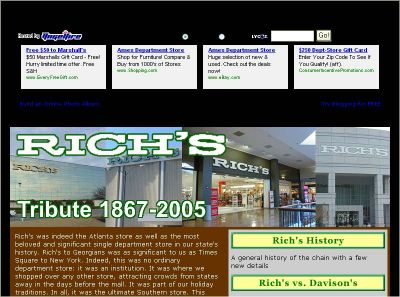
Next was my new friend J.T. We’re both mall guys and J.T’s also into country roads big time. Our conversation was long and took a number of different tangents. He’s the guy behind the Rich’s tribute site, and his other road websites are great too.

My new friend Shariq and I had a great conversation as well. He’s a friend from the Men’s Health forum, and we’re both into clothes, architecture and girls. It was fun chatting with him on those subjects and more.

I should also mention another Men’s Health forum friend: Kris. Kris and I have been communicating back and forth for a short while. We talk about some of the same things Shariq and I talk about, you know, clothes, architecture and girls, but there’s a little bit of religion thrown in because he works for a Lutheran church and I grew up around a several religious people, particularly my grandma, who was the pastor of three churches she founded. Kris is a great guy with a good head on his shoulders and I feel like we understand each other pretty well even though we’re just now becoming friends.

Ladies: Blair, J.T., Shariq, and Kris are all stable, eligible bachelors, as well as your friendly neighborhood blogger. Hint! Hint!

Finally, I should mention my cousin Cindy and my friend Ken, neither of which are available, but nice people all the same.

Cindy called this afternoon, and we talked for a long time. She lives in New Jersey and is a very beautiful woman who works in a medical office. She has a great husband and some of the cutest kids you want to see. We only get to see each other when someone dies or we have a family reunion, but we keep up a good rapport over email. I don’t have a lot of friends who are family, but she’s definitely one of them.

Ken is a guy I need to get in contact with, but I’ve been so preoccupied I haven’t had a chance. I think I’ve mentioned him here before. We used to work together at LMW and he was the guy who convinced me to buy my electric bass, though since he’s been away, I haven’t done much with it. He described himself onetime as humorous, helpful and odd, and I think that’s an accurate description. We’re kindred souls: after hanging out with him for a week or two, I totally ‘got’ him and him me. We’ve been close for at least a couple of years, and sometimes I wish I lived closer so that we could hang out more.

You know, that’s just the tip of the iceberg when it comes to my friends: there’s Tim, Todd, the other Todd, Eddy, Angie, Faye, Sonya, Judy, Wayne…I better stop. I’m going to forget someone ;)

Thursday, March 10, 2005

man, woman, God and Satan

In the beginning, God created the Heavens and the Earth, and populated the Earth with broccoli, cauliflower and spinach, green and yellow and red vegetables of all kinds, so Man and Woman would live long and healthy lives.

Then using God's great gifts, Satan created Ben and Jerry's Ice Cream and Krispy Kreme Donuts. And Satan said, "You want chocolate with that?" And Man said, "Yes!" and Woman said, "as long as you're at it, add some sprinkles." And they gained 10 pounds. And Satan smiled.

And God created the healthful yogurt that Woman might keep the figure that Man found so fair. And Satan brought forth white flour from the wheat and sugar from the cane and combined them. And Woman went from size 6 to size 14.

So God said, "Try my fresh green salad." And Satan presented Thousand-Island Dressing, buttery croutons and garlic toast on the side. And Man and Woman unfastened their belts following the repast.

God then said, "I have sent you heart healthy vegetables and olive oil in which to cook them." And Satan brought forth deep fried fish and chicken-fried steak so big it needed its own platter. And Man gained more weight and his cholesterol went through the roof.

God then created a light, fluffy white cake, named it "Angel Food Cake," and said, "It is good." Satan then created chocolate cake and named it "Devil's Food."

God then brought forth running shoes so that His children might lose those extra pounds. And Satan gave cable TV with a remote control so Man would not have to toil changing the channels. And Man and Woman laughed and cried before the flickering blue light and gained pounds.

Then God brought forth the potato, naturally low in fat and brimming with nutrition. And Satan peeled off the healthful skin and sliced the starchy center into chips and deep-fried them. And Man gained pounds.

God then gave lean beef so that Man might consume fewer calories and still satisfy his appetite. And Satan created McDonald's and its 99-cent double cheeseburger. Then Satan said, "You want fries with that?" And Man replied, "Yes! And super size them!" And Satan said, "It is good." And Man went into cardiac arrest.

God sighed and created quadruple bypass surgery. Then Satan created HMOs.

Thought for the day: There is more money being spent on breast implants and Viagra today than on Alzheimer's research. This means that by 2040, there should be a large elderly population with perky boobs and huge erections and absolutely no recollection of what to do with them.

Wednesday, March 09, 2005

what the hell is 'hootie' doing?


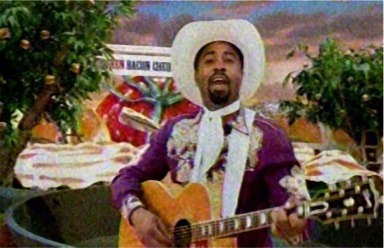
It's definately not 1994 anymore. Yes, that was Darius Rucker of Hootie & The Blowfish, donned in a rhinestone cowboy suit for a surreal Burger King Tendercrisp Bacon Cheddar Ranch commercial, along with several other B-list celebrites and starlets.

The spot is so odd it's almost cool, but the fact that Darius appears so prominently in it begs the question "is money really that tight or did you feel like committing career suicide?"

The video clip of this commercial is now available for download

the year i belong in


You Belong in 1968


1968


If you scored...

1950 - 1959: You're fun loving, romantic, and more than a little innocent. See you at the drive in!

1960 - 1969: You are a free spirit with a huge heart. Love, peace, and happiness rule - oh, and drugs too.

1970 - 1979: Bold and brash, you take life by the horns. Whether you're partying or protesting, you give it your all!

1980 - 1989: Wild, over the top, and just a little bit cheesy. You're colorful at night - and successful during the day.

1990 - 1999: With you anything goes! You're grunge one day, ghetto fabulous the next. It's all good!


fred durst's blog


Believe it or not, the rumor about Limp Bizkit frontman Fred Durst having a blog is true! It's as bad as they say, and worse. Check out this quote:

do you get it? do you really get it? some people were just born to get it and others just weren't. the ones that weren't have no idea what i just said and the ones that do understand completely. and so goes life in my mind.

Sorry Fred. I don't get it.

Tuesday, March 08, 2005

catching my breath


The suprisingly good sneaker stores at Charlottesville Fashion Square are highlighted in yellow.

As if my life wasn’t busy enough without impromptu trips, I took off with my friend Kevin to Charlottesville to go look for sneakers over the weekend. I’m sure if you've read much here you know about my sneaker fanatacism, but Kevin puts me to shame. He’s got just about everything big that comes out from Nike! Anyway, he was buying, I was browsing, but it was a fun trip. But it got in the way of me doing much else, at least on Saturday.

I did get in some work though; I had to help my mom with her ongoing renovations to her country club on Sunday. This week was more work in the china closet she and I built. You would not believe how many dishes she’s accumulated there for special events. I now know where I get my shopping habits from ;)

Speaking of shopping, I ran into the perfect side-job. I’m now a freelance shopping and style correspondent for a local newspaper. It doesn’t pay a lot, but I get to write about what I want and I get to go shopping to do it. I just kind of fell into it. They liked what I did earlier when I responded to a call for shopping tips. I was awarded the title of “retail therapist” at that time. For those who don't remember, check out my ‘job interview’

New York 8-14-2004 Photos now online


Times Square, New York City, 8-14-04

Something old, something new. I finally got around to putting my New York pictures from last August online, and I decided to place them in Yahoo! Photos. How is this different than the other services I've been using? For one thing, you now have the option of professionally printing out any picture you see in the set in a variety of sizes and even have the option to get photo gifts, should you deisre to get Macy's on a t-shirt. :) There are nominal charges for any photo services that you get through Yahoo!, but I don't get anything financially from it. It's just another cool feature from steve's blog.

Another good thing is that I have unlimited photo storage with Yahoo!, which means I can share more with you, my faithful readers. The new service doesn't allow for photo descriptions, but that's the only drawback. Overall, it's win-win.

View New York 8-14-2004

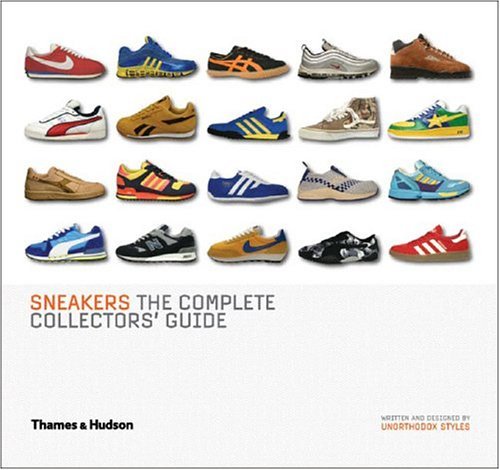
buy this book | Sneakers: The Complete Collectors' Guide


Sneakers: The Complete Collectors' Guide by Unorthodox Styles.

Following on from Neal Heard's book of last year, Trainers (Sneakers), comes Sneakers: The Complete Collector's Guide, compiled and edited by creative agency Unorthodox Styles, who also worked on the adidas 35th anniversary and run sneaker-obsessive website Crooked Tongues.

Out in May, the book is an encyclopaedic guide looking at some of the key designs and brands in a market that shows no signs of slowing down.

See more information at Amazon.com about this product.

need another excuse to buy sneakers?

from Darin St. George, The Milford Daily News

Toss those sneakers! This is usually the last thing people think of throwing away; I mean, if they still fit, why get new ones? That is one of the very first things I look at when I meet a person in the [health] club. If you are fairly active, then your sneakers need to be swapped out every six months at least. I pound my sneakers, and have three or four pair that I use depending on the activity. Ask yourself when you bought your current pair and if you can't remember, then it's time to go shopping. Do the same with running socks (the padded ones), sports bras (I definitely need some new ones) and weight gloves. Even though fitness isn't about clothes, sometimes having the right ones and even some new ones can help get the fire started...

Feet of Endurance

The launch of a new collection to mark the 35th anniversary of the iconic adidas Superstar shoe has sparked a fresh wave of sneakermania. Jon Perks looks into the past, present and future of sports footwear culture.

Over the past few weeks observant passers-by will have noted an early morning queue forming outside specialist footwear store size? in Lower Temple Street, Birmingham [England].

The question isn't who have they been waiting for, but what.

Launched last month, the adidas Superstar 35 collection marks the anniversary of one of the world's most iconic shoes that first went on sale in 1970 - stars of music, art and fashion invited by the brand to create the new limited edition range of 35 different Superstar shoes.

With each delivery comes another line of would-be buyers desperate to get their hands on a pair of the shoes that have been changing hands for hundreds of pounds on eBay: "In terms of oneoff trainers it's been the most popular shoe in the three years we've been open," says Dan Pullen, manager at size? "When we get a delivery they're all gone pretty much in a day, hours even."

With just 4,000 pairs of the Expression range and 5,000 of the Musician range available worldwide, the adidas Superstar 35 are the footwear equivalent of hot cakes - but it's only a small fraction of a growing sneaker culture in which serious collectors will pay hundreds, even thousands of pounds for a pair of shoes, often buying as many as three, five or ten pairs of the same shoe at one time.

The Collector

They say you can tell a lot about a man by his shoes.

That's never truer than in the case of Rob Scarlett.

Rob only owns two pairs of 'proper shoes' - one for a funeral, one for a wedding - but his sneaker collection currently totals '1740-something' pairs... and counting.

That's the equivalent of buying a pair every fortnight for 67 years - except Robert's only been collecting since 1982 - an average rate of six pairs a month.

Since kicking off (no pun intended) with a pair of adidas Allasio at the age of nine, the 32-year-old from Solihull has built up a mammoth collection, the sheer size meaning he has to store the dozens of boxes at numerous locations, mostly relatives' houses.

"I've never seen them all together, I simply don't have the space," admits Rob.

"It all started without me realising I was collecting.

"What sparked it was breakdancing, just the whole street culture thing really, the graffiti and just the associations, the people I was with." After getting his pair of Allasio ("a cousin of the Trimm Trab"), Rob says he was then "going into a store and throwing down deposits on six or seven pairs at any one time, and continually doing that every week with pocket money and money I earned from breakdancing; once I'd got enough to get the pairs I'd go in and just walk out with an armful.

"Around 1983/84 I got my first pair of Diadora Borg Elites, and that's pretty much when I started to see them in a more serious way," says Rob.

"Instead of spending all my money on sweets I saved as much as I could, and instead of opting for an infinite amount of toys at Christmas, I'd have a couple but would always be saying to my mum and dad: 'can I have those trainers, can I get that Tacchini tracksuit...'"

Amazingly, Rob keeps no written record or catalogue of his sneaker stockpile - it's all in his head: "I know what I've got and if it's multiple pairs of the same shoe I know what colour-wise," he says.

"If I want to wear a certain pair of kicks then I'll just find the relevant box, get the shoe out; I know where certain ones are - it's just a question of keeping the ones I wear a lot at hand."

Given the size of his collection, you'd be forgiven for thinking Rob simply buys every new trainer that comes onto the market. Far from it: "I don't buy the latest shoe simply because it's the latest shoe - I just buy what I like," he states.

"If it's a vintage shoe I'll track it down, but if it's an up to date release it goes on the basis of what I like cosmetically - if I like the look of the shoe then I'll go for it, that's been the case since I was small."

While he may only buy shoes on the basis of their looks, Rob - who cites Puma Navratilovas, adidas Trimm Trabs and Micro Pacers amongst his favourites - still has an eye for a classic or collectible: "There's quite a few, but the one that I'm quite fond of is the Diadora Borg Elites, 1981 shoe," he says. "They come with their own printed signature on the shoe, but I also have a pair that was signed additionally by Borg himself, it kind of makes it that little bit special.

"I think the current value of a shoe like that to a collector would be around £1,200-£1,500," he adds, coolly.

"If it's something readily available I'll buy two, three pairs - one to wear, one to wear when that pair's gone and one just to keep on ice."

So what remains for someone who seems to own every pair of sneakers ever made?

Aside from currently tracking down two sets of vintage trainer from 1983 ("I can't name them because they're so obscure I'd rather not expand everyone else's interest into them"), Rob reveals he has two big ambitions; to write an autobiographical account of his collection, and to design his own shoe.

He certainly has enough prototypes to work with.

The Book

You know when a trend, movement or person has seeped into popular culture when a book is published on the subject.

Following on from Neal Heard's book of last year, Trainers, comes Sneakers: The Complete Collector's Guide, compiled and edited by creative agency Unorthodox Styles, who also worked on the adidas 35th anniversary and run sneaker-obsessive website Crooked Tongues.

Out in May, the book is an encyclopaedic guide looking at some of the key designs and brands in a market that shows no signs of slowing down.

"You've got a lot of guys who maybe worked in sports stores in the 80s, who obviously had access to cheap shoes and were basically taking stuff from end of lines, putting stuff away and they've become collectors," says Russ Williamson of Unorthodox Styles.

"I know a lot of guys in the States who try and get every single Jordan shoe," says Tim Easley of the Crooked Tongues website, which has built up a database of 47,000 subscribers in its five years.

"They buy like five-ten pairs of the ones they like, so they can keep them fresh for like the next ten years, so they don't have to go and buy extra pairs - a lot of them put them in display cabinets in their house.

"Generally nowadays people are just collecting anything that's limited," Tim adds.

"People don't seem to be that specific; people are buying stuff from JD Sports or Footlocker that's not the collectable stuff now but it's maybe gonna be quite collectable in five, ten years' time.

"That's the stuff the kids are buying and they're wearing every day and killing the shoes - so no-one will have them and all these guys who've been buying the limited stuff and keeping them in the bedroom will be all over the place!"

Monday, March 07, 2005

B$46.52 as of today


I don't know what to make of this. Maybe someone out there will.

Adidas: The Machine Of A New Sole

Adidas' new shoe is no gimmick. But at $250, it's no bargain
By Stanley Holmes in Portland, Ore.

Three years ago, a trio of engineers for adidas-Salomon (ADDDY ) began toiling away in a windowless boiler-room-turned-secret-workshop beneath downtown Portland, Ore. Their goal: to create the first intelligent running shoe, one that would use an in-sole computer to adjust its heel cushioning in real time according to changes in the running surface.

"We knew we would have to rewrite the rules," says Christian DiBenedetto, chief shoe engineer at the North American headquarters of Adidas. "But we knew it would be massive if we could pull it off."

Well, maybe. Even if Adidas can make a reliable computerized shoe, the unknown is whether enough consumers will value the breakthrough. The Adidas 1, a $250 high-tech wonder, hits store shelves this month as a big gamble that the German company can redraw the battle lines between itself and archrivals Nike Inc. (NKE ) and Reebok International Ltd. (RBK )

Inside the heel of the aerodynamic shoe are a wafer-thin sensor and magnet that monitors the amount of shock applied to the foot and adjusts the footbed 1,000 times per second.

Adidas executives believe the shoe could be their iPod, a technology so ready for prime-time that it can be adapted to the company's basketball and soccer shoes and eventually enter the profitable league of "gotta-have" sneakers among urban youth. Says a hopeful Erich Stamminger, CEO of Adidas North America: "This is the biggest thing to hit this industry in decades."

LIMITED RELEASE
But Adidas could just as likely be stepping off a cliff. No one knows if even serious runners are ready to pay $250 for a shoe -- more than 50% above the next most expensive sneaker on the market. Nike Air Jordans, at $150 to $175 a pair, only staged a comeback last year, after two years of sinking sales

. Adidas won't divulge its capital investment in Adidas 1. But analysts say production is complicated and that the new sneakers will cost four or five times as much to make as a normal shoe. Because of that, production will be less than 10,000 this year to drive exclusivity and hedge Stamminger's bet.

Adidas is following the example of German luxury auto makers, BMW and Mercedes-Benz. The carmakers introduce expensive technology, like navigation systems, in high-priced models, establish credibility and critical mass, and then push the technology, if it's accepted, into lower priced models.

But shoes aren't cars, and Adidas can't afford a misstep. Outside the U.S. it is the clear rival to Nike, and holds a dominant 35% share of soccer-shoe sales. But the German company slid to No. 3 in the $8.3 billion U.S. branded-athletic-shoe market in the late 1990s, thanks to weak ad campaigns and unfashionable new products. Adidas held a 9.1% share in 2003 and 2004, vs. 12% for Reebok, and 36.4% for a resurgent Nike.

Stamminger, who took over the U.S. division last year, adding to his global marketing title, is making changes that have retailers more interested in Adidas these days. Designs for the U.S. are hatched in Portland now, reversing years of designs that played in Munich and bombed in Missouri.

In addition to outbidding rivals for NBA pitchmen Kevin Garnett, Tracy McGrady, and Kwame Brown, he secured exclusive ad rights for the U.S. TV feed of 2006 World Cup Soccer. And Adidas recently signed hot fashionista Stella McCartney to design new lines of sport clothing.

POSITIVE FEEDBACK
Rivals Nike and Reebok have taken notice but are skeptical that Adidas 1 will be another Air Jordan.

"We think technology that changes the design of the shoe rather than just the function, like our pump that obsoletes laces, is where the breakthroughs come," says Reebok Chief Marketing Officer Dennis Baldwin.

Both rivals are developing their own "smart shoes," though they say they aren't going as far in applying silicon chips to the problem.

One pitfall stemming from the hardware is added weight. A size-9 Adidas 1 weighs 15.3 ounces, while most top-end running shoes weigh between 10 and 14 oz. And if anyone obsesses about a few ounces, it's influential consumers in the $4.9 billion running-shoe market.

Nevertheless, Adidas is pumped by nine months of positive buzz that preceded the new shoe's launch. Runner's World gear editor Warren Greene, for example, says Adidas 1 delivered the goods on his extended test. "The overall fit and feel and responsiveness and the ride of the shoe were all positive."

Stamminger delivered a mild rebound in 2004 when Adidas' sales rose 2% last year after two years of flat sales. Now he is projecting sales will grow by 5% to 10% this year and hit double digits next year, thanks in part to Adidas 1. Those are heady expectations for a sneaker priced in territory Michael Jordan couldn't reach, even on his best day.

Sunday, March 06, 2005

another sneaker timeline

The first rubber-soled shoes were manufactured in the 1800s, but the modern sneaker didn't gain cultural prominence until the 1950s. Here are some other memorable moments in the history of the sneaker from The Journal News

1917: Converse releases the world's first performance basketball shoe, the Converse All Star.

1923: The All Star turns into the Chuck Taylor All Star, a shoe still beloved today.

1935: Converse releases the Jack Purcell, snapped up by early Hollywood stars.

1950s: Sneakers become a symbol of rebellion when James Dean is photographed in white kicks and Levis. Teenagers worldwide, from bikers to cheerleaders, start to wear sneakers.

1968: Puma is the first sports shoe maker to introduce Velcro fasteners.

1973: Runner Steve Prefontaine becomes the first major athlete to wear Nike running shoes.

1982: Nike releases the Air Force One.

1985: A Chicago Bulls rookie named Michael Jordan endorses a line of Nike shoes and apparel. The first Air Jordan is released.

1986: Run-DMC releases the song "My Adidas" and lands a landmark endorsement deal, sparking the now-ubiquitous trend of using hip-hop artists in promotional campaigns.

2003: Rapper Jay-Z launches his S. Carter line of sneakers with Reebok, making him the first non-athlete to have a signature athletic footwear collection.

2005: Jordan Brand celebrates its 20th anniversary with the release of the Jordan XX sneaker.

more krogering


This is the Wayne, Michigan Kroger store, on Michigan Avenue (US12), another example of a well-preserved Kroger superstore, at least on the outside, anyway. The interior is early 1990's (http://tch546.tripod.com/smkt/kroco.html)

Believ it or not, there's a bunch of retail geeks like me around. Through my friend J.T. Legg, I found about the Yahoo! group Remembering Retail. After joining, I took the Madison Heights Kroger pictures I took yesterday and posted them to the group photo site.

That post led to "Rob-dude" at Remembering Retail telling me about his supermarket photo site. It's a simple site, just pictures and commentary on Ohio and Michagan grocery stores, but it's worth the visit if you like to see old supermarket designs. I liked the Kroger page in particular, but there's much more than Kroger there. You should check it out sometime.

Saturday, March 05, 2005

Paying top dollar for sneakers

By HEATHER SALERNO
THE JOURNAL NEWS

It's just past dawn on a frigid Saturday, but Travis McGarrell of White Plains is wide awake, bundled up and headed for Niketown on East 57th Street. The store is opening two hours early for the release of the Air Jordan Retro XIIIs, and this 18-year-old is determined to snag a pair.

McGarrell's worried, though. Niketown has a limited number of shoes for sale, and he's gotten word that some fans have camped out overnight.

He considered ditching his trip into the city. Then his inner sneakerhead — as these frenzied sneaker collectors are called — began to whisper.

Maybe, the voice said, you'll luck out. Maybe there won't be that many people there.

The voice couldn't have been more wrong.

The scene outside Niketown leaves McGarrell — along with a few of the store's usually jaded security guards — stunned. Hundreds of sneakerheads are snaked around the building, with about a dozen New York City police officers posted for crowd control.

Niketown managers say the throng topped 500 at one point, though it's thinned since blue wristbands were distributed at 3:30 a.m. Rumors float that only the first 165 in line got those bands, their ticket into the store when it opens at 8 a.m. Niketown won't confirm a number, and it's hard to tell how many buyers without bracelets are still hanging around, hoping to gain entry anyway.

"I figured I'd come and give it a shot," McGarrell says. "I never, ever thought it would be this crazy."

McGarrell might be a sneakerhead, but he's enough of a newbie to think he'll score these slammin' shoes by waiting or a mere hour or two. You see, to get kicks like this, you've really got to earn them.

You've got to be hard-core, like Joseph Butler and Matthew Shaw of Brooklyn, who spent a whopping 19 hours at Niketown.

They claimed first-in-line status at 1 p.m. Friday, spending the bitterly cold night commiserating with other sneaker fiends and alternating trips to the nearest 24-hour deli.

Butler, 23, and Shaw, 22, say they each own about 200 pairs of sneakers. This is their third weekend in a row spent in slush and snow outside New York City shops, trying to add a few more hard-to-get shoes to their stockpiles.

The Jordan Retro XIIIs are a big deal, they explain, because they're black and "altitude" green — colors not normally associated with the shoes' legendary Chicago Bulls namesake.

The friends see their hobby as fashionable fun, but not everyone shares their view.

"My wife thinks I'm crazy," Shaw says. "I talked to her last night, and she said to just call her in the morning. She's disgusted with me."

"I wear my Adidas when I rock the beat/on stage front page every show I go/it's Adidas on my feet high top or low" — Run-DMC

Like collectors of sports memorabilia or comic books, sneakerheads have formed their own unique brotherhood — and yes, it is almost exclusively men.

The community has grown so much in recent years, the independent online forum Niketalk.com now boasts 4.7 million posts and more than 35,000 registered members. Competitions have started to sprout around the country, prompting sneakerheads to travel hundreds of miles to have their collections judged.

Some say that what was once an underground phenomenon has turned into hysteria. Cops were called two weeks ago to a Lower East Side shop when dozens of sneakerheads started a brawl in a scramble to get a pair of rare Nike Pigeon Dunks.

Sneaker freaks are usually young guys from urban areas, generations schooled on hip-hop and basketball culture.

They have their own lingo: Never-worn, perfectly preserved sneakers are "deadstock"; a "hyper strike" is when a company releases a few dozen shoes at only one place in the world.

Sneakerheads know the right stores in the right neighborhoods; they know the ones to go to for the latest styles and the ones to avoid because they jack prices way up. They scour Web sites looking for buys, spending hundreds, sometimes thousands, on a single purchase.

In fact, Steve Mullholand, publisher of Sole Collector magazine, claims that sneakers may be a better investment than the current stock market.

"I know a guy that has a fairly small collection, maybe 50 pairs of shoes," he says. "But I guarantee you, he could buy a Ferrari with that collection. A new one."

The Internet is littered with sneakers going for double, triple, even 10 times the retail price, depending on the shoe's vintage and condition. A pristine pair of 1985 Air Jordan I low-tops is now selling for $9,000 at InStyleShoes.com, a site owned by Mullholand.

Some sneakerheads are indiscriminate when it comes to brand, veering from hot new labels like A Bathing Ape (known as BAPE) to old-school favorites like Air Force Ones. Others are faithful to Jordans, or to the Nike Dunk, a skateboarding shoe.

There are those who gravitate toward the rarest of the rare, like a Jordan XI sample "Space Jam" that has Michael's short-lived jersey number 45 on the back. Others are fashion mavens who want to break necks walking down the street; they're drawn to a shoe's artistry, such as the pop-art styling on an Adidas Superstar that pays tribute to Andy Warhol.

Then there are sneakerheads who fall into both categories. If they can afford it, they'll buy two pairs of the same shoe: one to put on ice, the other to show off and wear. Ironically, sneakerheads don't really care about the feature that made early sneakers so popular — comfort. Instead, what seems to stoke the most interest is exclusivity.

Shoe manufacturers often fuel a buzz for newer sneakers by releasing limited quantities; Nike is the master of this strategy.

"We'll sometimes do regional colors, darker on the East Coast, lighter on the West Coast," says Jordan brand manager Roman Vega. "It creates more demand for us. You'd have to call a friend to get it for you or fly there. It helps keep the brand hot."

So when a sneakerhead drops a ton of cash on Nike NYC Pigeon Dunks, he's also buying the assurance that only a reported 150 people in the world will have the same shoe.

"If you have one of those (limited editions), nobody else in your high school will have them. No one else in your state will have them," Mullholand says. "You're guaranteed people will go, 'Are you kidding me?' "

And while the unenlightened wouldn't know an All Star from an Air Max, sneakerheads can spot a sweet shoe in an instant.

"You can tell when someone knows what you're wearing," says Josh Rubin, a Manhattan-based designer whose blog about hip products, CoolHunting.com, has a section devoted to sneakers.

"You get like a nod, kind of showing respect."

"Rock my Adidas, never rock Filas" — Beastie Boys

Jeremie Harris of New Rochelle leads the way to the dorm room that houses the sneaker collection of his New York University classmate Mohammad Mohammad.

Mohammad's the true sneakerhead of the two, though Harris did stand outside Barneys New York for hours with his friend last month to snag some Kidrobot Air Max Is. With only an estimated 250 released worldwide, Harris quickly sold the $150 pink-and-black shoes on eBay to a buyer in Singapore for $400.

Even with the lure of fast cash, Mohammad wouldn't dream of letting his Kidrobots go — not after waiting in line for nearly a full day to get them. He hasn't laced up the shoes, and he's not ever planning to wear them.

He's never even slipped them on his feet.

"I'm keeping mine," he says. "After what I went through, these are a memory piece."

Mohammad, who's 18 and from Jackson Heights, works part-time at Banana Republic to help pay for his sneaker fixes. The job lets him do spontaneous things like plunk down $400 for Nike "Unkle" Dunks, which he did after fruitlessly searching for them online and then spotting them at a NoLita store.

He's not into Jordans anymore, and he hates Adidas: "They're the ugliest sneakers I've ever seen in my life."

Now Mohammad says he's on the verge of becoming a "Dunkaholic."

"Once you get into it," he says, "you can't stop."

"I said give me two pair/cause I need two pair/So I can get to stompin' in my Air Force Ones" — Nelly

Just one subway stop away, at the corner of Broadway and Bleecker, is a basement boutique called Nom de Guerre. It's known for having hard-to-find sneakers, and appropriately, the store itself is pretty hard to find.

The only sign of it at street level is its name stenciled on the sidewalk, in front of a dark stairwell that leads to a narrow corridor tunneled beneath a Swatch watch outlet. Entering Nom de Guerre through the first steel door on the right, you see racks of cutting-edge T-shirts and pricey designer jeans — but not a single sneaker.

So this is the place where Nas, Busta Rhymes and Kanye West come to update their vast collections? The store where — just a few weeks after it opened — Jude Law dropped by to scoop up $600 vintage Dunks?

Apparently so, if the shop's constantly ringing phone is any clue. Each time Nom de Guerre partner Wil Whitney picks up, he repeats the same thing: He's sold out of Nike Air Max 180s.

"We're trying to get a dozen more, but it doesn't look good," he tells one caller.

Whitney heads out the door and wanders down that dimly lit hallway. He unlocks another steel door to reveal a shoebox-size room. It's only a few shelves with a few dozen shoes, but a sneakerhead would call it nirvana.

None of these sneakers has a price tag, but you don't need one to know you won't find a bargain here. A glass case shows off the most valuable merchandise, including $800 Nike Air Forces made as a Roc-A-Fella Records promotion.

"So they were never for sale to the public," says Whitney, explaining the high cost.

Right now, Whitney says the store's owners are trying to figure out how to discourage sneaker resellers — those in the game just to make money, spoilers who'll take a true fan's place in line only to sell a hard-to-get sneaker for a huge profit.

The store is trying to compile a "hold" list, a roster of regulars who won't have to wait with the crowd at a sneaker release.

That way, Nom de Guerre might avoid situations like the one last week in which 40 customers turned up for 12 pairs of one-piece Laser Dunks.

"When that happens, there aren't a lot of happy people," Whitney says.

"And I be gettin' Nikes before they even get released" — Fabolous

Sneakers first gained cultural prominence in the 1950s, when James Dean was photographed in Levis and white athletic shoes. Last year, 493 million pairs were sold for a total of $16 billion.

But the start of the sneakerhead craze can be traced to the mid-1980s, when Michael Jordan put out his first shoe and changed the industry forever. Americans soon had no problem buying multiple pairs and shelling out three figures for each one.

This year marks the 20th anniversary of the Air Jordan; Nike just unveiled the $175 Jordan XX to mark the occasion.

"I was an anomaly of society when I had five, six pairs of sneakers under my bed in 1981," says Bobbito Garcia, author of "Where'd You Get Those? New York City's Sneaker Culture: 1960-1987."

"That's like a small amount of sneakers to have now for a yuppie who works at Goldman Sachs."

Adam Goldstein, a Los Angeles disc jockey who goes by the handle DJ A.M., describes the current sneaker mania this way: "It's like Pokémon for adults."

Goldstein's own collection tops 500: Most are carefully boxed, marked with a Polaroid picture and stored in his garage. Among his prized possessions are black-and-white Jordan I's (purchase price: $800) and an original pair of never-worn, shell-toe Adidas from 1987, like the ones favored by pioneer rap group Run-DMC.

About 30 favorites are displayed like museum pieces on a "shoe wall" in the Hollywood Hills home he recently moved into with his fiancée, "Simple Life" star Nicole Richie.

"I had it in my old house, and she encouraged me to put it back up," Goldstein says. He laughs that Richie, famous for her own shopaholic tendencies, can "definitely relate" to his obsession.

"Guys don't get to accessorize the way girls do," he says. "We have shoes, that's what we have… They kind of represent your taste."

"Had to scuffle with freaks/I'm a addict for sneakers" — Nas

At exactly 8 a.m., Niketown's doors swing open and security lets in the first 10 customers in line.
The chosen few dart inside, arms waving triumphantly. War whoops ricochet around the showroom as they hold up their hard-won Jordan Retro XIIIs.

"We're the top 10, baby! Whoo!" shouts one.

Sales clerk Keri Childs of Mount Vernon cracks up.

"I was on the train this morning and I heard four guys talking about coming here," she says. "I didn't say anything, but I was like, 'You're gonna be too late.'"

Joseph Butler hands a box of size 9s back to a clerk, who sighs and heads back to the stockroom.

"Sorry, man!" calls Butler, looking a bit sheepish. "You've got to have that perfect box, and that one's all smashed up."

As he heads for the register, Butler pauses to pull out his cell and plug in the number of a guy named Tony, a sneakerhead behind him in line who seems to have connections.

"I've got to buy more sneakers off him," Butler mutters.

Meanwhile, Travis McGarrell is nowhere to be found. He's at Grand Central Terminal, waiting for the next train back to White Plains. But he's not headed home.

As soon as he saw the crowd at Niketown, he got on the phone and dispatched a friend to wait at the Galleria mall.

The Foot Action there is opening soon, and McGarrell is hoping to grab the Jordans there.

After all, even a rookie sneakerhead knows enough to have a Plan B.

kroger's over in madison heights


Preserved exterior


A kitchen clean interior

I was out and about yesterday and attempted to take a picture of the last (largely) unmodified 1970s-era Kroger 'Superstore' I knew of. I went to the site, in Madison Heights (north of Lynchburg) and realized that the store was now the latest area Kroger to close.

Unfettered and presented with an oppurtunity to photograph what was left of the old store, I shot a series of pictures to document what was and is there, one of which you see above.

The exterior was shabby but really clean and the interior was intact and looked like all that was missing was the food and customers.

This Kroger Superstore opened sometime in the mid '70s with an adjacent shopping center and a Kmart next door. It closed early in 2005, after losing its next door neighbors to a new Lowe's home improvement store. After thirty years of service, this store was pummeled by changing demographics, three Food Lion stores within a three mile radius and a Wal-Mart supercenter.

Multiplying Macy's

Regional store names bow to national branding

ALLISON LINN
Associated Press

SEATTLE - Standing outside the Bon Marché department store in downtown Seattle, Marguerite Norbut lamented the day that workers replaced the sign she'd walked past for years with a new but familiar name: Macy's.

"I've seen it since I was a little girl!" said Norbut, 54, who grew up just across Puget Sound and has shopped at various "the Bon" stores in the Northwest her entire life.

But Norbut's daughter, Rachael, 22, heard a ring of urban sophistication, a reaction that would doubtless please the executives at Federated Department Stores Inc., Macy's parent company.

"I've always associated Macy's with California and the East Coast," the younger Norbut said.

For better or worse, it's the end of a retailing era for Seattle and other cities around the country.

Beginning Sunday, customers of the Bon, Rich's, Goldsmith's, Burdines and Lazarus will lose -- at least in name -- the regional department stores that have been around for more than a century. Federated is rechristening them under the national Macy's brand.

Longtime shoppers have had the opportunity to get used to the change -- Federated had already begun hyphenating "Macy's" onto the more familiar store names before deciding to get rid of the regional names altogether. Dan Edelman, chief executive of Macy's Northwest, said Federated decided to drop the hyphenations after customer surveys showed that most would not find the name change to be a negative.

The loss of regional branding is likely to continue with Cincinnati-based Federated's proposed merger with The May Department Stores Co., announced earlier this week. Spokeswoman Carol Sanger said the merger will likely mean that many of May's regional department stores also eventually become Macy's stores, although she said the company was still considering what to do with two of May's best-known brand names: Lord & Taylor and Marshall Field's.

But the company says the Hecht's name is all but certain to change to Macy's, meaning the Charlotte area stands to gain as many as three Macy's stores from the scheduled changeover. Hecht's has a recently remodeled store at SouthPark and another at Carolina Place in Pineville. Another Hecht's store is under construction at the Northlake Mall scheduled to open in September at Interstate 77 and W.T. Harris Boulevard.

Officials say it's too soon to give specifics on local change-over plans.

Analysts say the name changes are inevitable, because they save Federated money and give it the much-needed ability to market itself nationally and compete better against other national brand names ranging from The Gap Inc. to Wal-Mart Stores Inc. Along with the name change, the company plans a national television campaign, and it is touting other advantages such as easier national return policies and nationally branded store credit cards.

Still, some longtime shoppers think it's bad business to scrap a popular local brand name such as Rich's in Georgia.

"I don't know why they would want to drop the name. In Atlanta, it's as recognizable as Coca-Cola," said Elizabeth Brown, a retired schoolteacher from Marietta, Ga., who was shopping at a Rich's mall store in Kennesaw, a northern suburb of Atlanta.

The company insisted it is taking pains to keep some regional feeling despite the name change.

Edelman said the former Bon will have its own promotional calendar and flexibility in carrying clothing that fits regional weather. The Northwest stores also will still sell the well-loved Frango mints.

But Marshal Cohen, chief analyst with The NPD Group, argued that many of Federated's regional department stores have already lost much of their individual personalities after years of answering to a corporate parent, making the name changeover more of a formality.

"Was Burdines so different from a Macy's? No, not anymore," he said.

The name changes also left some reminiscing about the days when going to a department store was an event. Louetta Payne, 70, remembered dressing up for a trip to her local Rich's, and spending the better part of a day there.

"Those days will never come back, and I'm not saying they're better than now," she said as she browsed a clearance at a Lazarus-Macy's outside of Columbus, Ohio. "It's just that there was a pride to it. What you bought there was unique."

what are they trying to say?


Does anyone else think this is funny?

Friday, March 04, 2005

going green

Thursday, March 03, 2005
HELEN JUNG


Nike is known for designing shoes so striking that footwear fans admiringly collect them by the dozens, and customers wait in line for hours to spend $150 or more on the latest release. But making hemp look hip? That's a whole new challenge as the Beaverton-based company grapples with going green.

In February, Nike started selling five models of casual shoes and boots that it says use environmentally sustainable materials and manufacturing processes. Called Nike Considered, the new line of shoes is part of the company's overall effort to research ways to reduce waste, eliminate toxic substances and otherwise lessen the environmental impact of the world's largest sneaker manufacturer.

Among other changes, the Nike Considered shoes are largely made with materials found within 200 miles of the factory, to cut down on fuel consumption in transporting them. The leather comes from a tannery that recycles wastewater to ensure that no toxins are released into the environment, and it is pigmented using vegetable dyes. Hemp and polyester are used to make the shoe's woven upper and shoelaces. The midsole is cut to lock into the outer sole, lessening the need for adhesives in constructing the shoe. The shoe's outer sole includes recycled rubber.

The shoes, with suggested retail prices of $65 for sandals to $110 for boots, aren't designed for heavy-duty hiking or sport, said Nate Tobecksen, a Nike spokesman.

They also don't have the sleek, stylized design that Nike is known for. With the woven upper and natural vegetable dye color of the leather, some of the shoes resemble a macrame moccasin or a woven wallaby that looks mistakenly imprinted with the Nike swoosh.

But as consumers flaunt their environmental consciousness with purchases that show their inner greenie -- such as the snout-nosed, gas-electric hybrid Toyota Prius -- the unrefined look of the shoes may well be a selling point.

The shoes are finding retail space in places as dissimilar as the down-to-earth Recreational Equipment Inc. to the tony Barneys New York Co-op stores.

"The design of the shoe is definitely a conversation piece. The pattern and components used in the production of the shoes -- especially the Considered Boot -- are innovative," said Monique Soulet, an associate buyer for Barneys Men's Co-op shoes. "Our co-op customers are fashion-savvy and are willing to take chances on patterns that diverge from the beaten path."
But the environmental aspect is also part of its appeal, she said.

For outdoor-gear retailer REI, the shoes "have an aesthetic about them that's cool, and it tries to tell a little about the story just in the design of the shoes," said Mike Foley, spokesman for REI, which carries two models of the shoes in nine stores and on its Web site. "They look environmental."

It remains to be seen how popular they become with consumers, said Matt Powell, contributing editor for trade publication Sports Executive Weekly.

"I think it's great that Nike is trying to be a good corporate citizen," Powell said. "But the consumer who's going to appreciate this is relatively small."

Still, if there's not a commercial market for the shoes themselves, Nike probably will find ways to incorporate some of the environmentally friendly elements into other shoes, he said.

Suppliers said they are also seeing more interest, not only from Nike, but also from Adidas-Salomon AG, Reebok Ltd. and others in using more environmentally friendly materials, said Paul Pellati, a sales executive for Sadesa, a company in Buenos Aires, Argentina, that provides leather to shoe companies.

Using vegetable dyes and other natural pigments is more expensive, he said. But once enough consumers are willing to pay more, shoe companies will widely use such materials. Then, he said, "we're all off to the races."

The move not only fits in with Nike's environmental goals, but it also gives an image boost to an often-vilified corporation. Nike should be applauded and encouraged to do more, said Amanda Chehrezad, a spokeswoman for Co-op America, a nonprofit that urges businesses, consumers and investors to spend their money using socially and environmentally responsible practices.

"When larger companies do decide to take significant changes to create new products using environmental and social standards, we think it's a great step for them and we always like to see them do that," Chehrezad said. "We just encourage them to keep going and incorporating more efforts into their other practices and production areas," she said, such as ensuring Nike's contract factories are paying and treating workers fairly.

Nike is continuing to develop new models, the company's Tobecksen said. The company is working on more products to bring to market in June, with additional designs to roll out through spring 2006.

Meantime, while the current shoes aren't exactly the most mainstream of looks, Tobecksen said, "Stay tuned."

"The next generation," he said, "will have possibly more of a design that may be more in line with people's perceptions of a sneaker."

Thursday, March 03, 2005

this is me, then | 1988


This is your friendly neighborhood blogger in 1988, standing with my brother Allen in our favorite shirts. I wore a lot of madras shirts as a teenager. I was a dork.

what i do

Want to see some of what I've designed at work? Look below.

This house, in the 700 block of Jamison Avenue, SE, in Roanoke, was the prototype for two houses in the neighborhood erected by Southeast By Design, a collaboration between LMW. PC, Blue Ridge Housing Development Corporation, the city of Roanoke and Virginia Tech. I refined for construction and was the CAD technician on the house, which was designed by a Virginia Tech 3rd year student architectural studio.

This house, at 728 Jamison Avenue, SE, in Roanoke, was the prototype for three houses in the neighborhood erected by Southeast By Design, a collaboration between LMW. PC, Blue Ridge Housing Development Corporation, the city of Roanoke and Virginia Tech. Hunter Greene and I collaborated on the project, but I was the CAD technician and prepared most of the construction documents.


The expansive first floor living area of 728 Jamison Avenue. The sliding doors enter onto a 2 story sleeping porch, which is a common detail on houses in its Southeast Roanoke neighborhood.


House for sale...my house! :) The house on the right was based on the 720 Jamison prototype, but is located at 620 Jamison Avenue. The porch was reduced for budgetary reasons on this and other houses.

The Roanoke Health & Human Services facility on Williamson Road is the adaptive reuse of a former Sears Roebuck store as a central home for the city's health & welfare needs. I was the primary CAD technician, contributing 22 architectural sheets and coordinating the implementation of 60 engineering sheets into the drawing set.


The rear facade of the same facility.


The third-floor main interior corridor and lobby of the Roanoke Health & Human Services Facility. Note the lighted coves, lighting layout and alumium and glass storefront design; those were all me. :)


Here's what the former Sears Roebuck store looked like in a rendering for their 1957 ad during Roanoke's 75th anniversary celebration. The store opened that year. Sears was part of Searstown, which consisted of a combination Kroger and Sears store, with an adjacent Rose's variety store and Peoples Drug (later Revco). Kroger left in the '70s, Roses and Revco in the early '80s, and finally Sears in 1985, moving to Valley View Mall. After Sears moved, the store was briefly a small enclosed mall, but now there is only retail on the bottom floor.

The Human Services portion of the building has been occupied for over a year, but the Health Department was unable to move into its section due to budget problems. That situation was recently resolved:

Health department to get healthier, roomier location

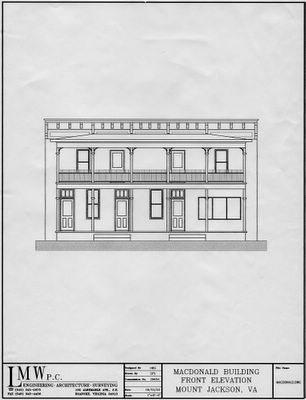
I did a facade rendering on this existing historic building in CAD based on a few basic measurements (taken by an associate) and several photographs, without actually visiting the site. I thought it came out well, and once I visited the building to verify what I did, very little had to be changed.

SNEAK ATTACK

By TOM SYKES, New York Post

PEOPLE fighting over rare merchandise at a tiny downtown boutique is par for the course in Manhattan. But when those people are grown men, and they've spent all night waiting in freezing temps to buy a pair of sneakers - as they did last week for limited edition, $300 Nike Pigeon Dunks at an Orchard Street shop - they make the most debt-ridden fashionista look sane.

"Guys go crazy for sneakers in the way that girls go crazy for Manolo Blahniks," says Jimmy Jellinek, editor in chief of Complex magazine, a sneaker collector's bible.

Even New York sneakerheads like Carlo Castro were shocked by the frenzy at the Orchard Street shop, where a fight broke out but no arrests were made.

"It was kind of unbelievable to me that people would wait in line that long. But they see Pharrell [Williams] wearing these dunks, so they want them," explained Castro, referring to the hip-hop superstar. (Williams is also co-owner of his own sneaker/clothing shop in SoHo, called A Bathing Ape.)

The sneaker-fetish scene revolves around the twin poles of eBay and the city's ultra-exclusive boutiques - some have no signs, others no storefronts - where staff and customers talk about sneakers with the rapture of wine connoisseurs discussing great vintages.

Rather than relying on big-bucks advertising, word of mouth is king at the city's specialty sneaker temples - mostly clustered on the Lower East Side.

At stake are bragging rights to be the first, or only, person in your neighborhood to have that exclusive shoe - or, alternately, the chance to make some serious money by reselling it on eBay.

The most sought-after sneakers, like the Nike Pigeon Dunk, are produced in limited editions.

"Basically, this is the same formula of limited releases that the sneaker companies were using in the '80s," says Dave Ortiz, the owner of tiny sneaker emporium Dave's Quality Meat.

"Everyone goes bananas because they can get one pair of 500," Ortiz says. "Smaller boutiques like us fuel the fire, because the kids who shop here are the 'influencers' - they inspire the broader masses. They get bragging rights from that unique pair of sneakers."

The most sought-after models are limited-edition collaborations between street artists and the big companies.

"It's all about heritage," says Jellinek, noting that by purchasing a pair of Nikes with "built-in nostalgia" the wearer also stakes a claim "to all Nikes that came before it - all the influences of hip-hop and skating - that go into that sneaker's DNA."

It's also all about knowing where half these stores are even located - and how to get in.

The Alife (pronounced A-life) Rivington Club is one of the city's premier sneaker shops, even though it's totally unmarked and you have to be buzzed in through a security door.

Single sneakers are displayed in mahogany shelving, with the more expensive, limited-edition items - which can top out at $400 - locked away in glass cases like museum exhibits.

Nom de Guerre, whose customers include Giorgio Armani, is a sprawling subterranean store accessible via a cellar staircase and marked only by a small plaque on the pavement. The most expensive pair of sneaks on sale are an $800 pair of Slim Shady Nikes.

"Fifty percent of customers are genuine collectors," said manager Angelo Baque, 26. "Fifty percent are buying to resell on eBay - these kids can turn $300 into $1,500 overnight. When I was 16, I made $4.25 an hour at McDonald's."

The other day, David Willson, 20, who drops more than $100 on sneakers "a couple of times a year," was browsing.

"I like to get a few pair of good sneakers for going out every year," he said.

"For school or everyday, I am like everyone else," he said. "I just buy cheap ones from Century 21."

Spoken like a true Blahnik-loving fashionista.

something to think about

I love the sneakers I buy and I'm not stopping anytime soon, but sometimes you have to think about something other than the 'new-shoe smell' and consider the human consequences of marketing. Then there's the other side of the coin: the connection to something greater than the rubber and lesther on your feet. Here's some food for thought:
__________

Selling Sneakers By Violating Young Minds
By Courtland Milloy
Wednesday, March 2, 2005; Page B01

More than two dozen young men had been waiting for nearly an hour when the Downtown Locker Room shoe store in Temple Hills opened at 10 a.m. Sunday.

They were hoping to be among the lucky ones who would walk away with a pair of Michael Jordan's latest release -- or "limited" rerelease in this case: the Nike Jordan Retro 13 "Altitude," a basketball shoe that first came out in the early 1990s.

This time, the black and green sneaker was selling for $160 a pair, $10 more than the originals. The Downtown Locker Room had 60 pairs in stock and sold out within an hour.

And so it went at select shoe stores throughout the Washington area over the weekend. At a Downtown Locker Room in Waldorf, customers who called ahead were advised to show up at least an hour before the store opened at 7 a.m. Sunday. The line began forming in the cold of dawn, and before the sun could break through the morning fog, all the Retro 13s were gone.

Told that the sneaker he had just bought for $160 probably cost $2 to make, a young man who works as a cook at a fast-food restaurant told me gleefully: "I don't care if they cost a penny to make. These are Jordans." Those who overheard him nodded in agreement.

For those who missed out, there is always the Internet, where the Retro 13 has been selling for as much as $300 a pair.

During the past two decades -- ever since Jordan signed as the pitchman for Nike in 1985 -- the craze over Jordan shoes has been much discussed. This is especially true in black urban areas where the popularity of Jordan shoes and other brand-name apparel has been associated with thefts, armed robberies and even homicides.

The public could stand to know more about the marketing strategies that fuel these desires -- and the socioeconomic implications of having consumers under a spell.

On March 11, scholars from throughout the country will gather at Howard University to share their knowledge on the subject at a three-day conference, "Consuming Kids: How Marketing Undermines Children's Health, Values & Behavior."

Alvin Poussaint, a professor of psychiatry at Harvard Medical School and president of the Campaign for a Commercial-Free Childhood, will moderate panel discussions on such subjects as the sexualization of childhood in advertisements, the economics of obesity and the commercial branding of children in public schools.

"Even parents who are trying to do the right thing must realize what they're up against," said Velma LaPoint, a professor of child development at Howard and one of the conference organizers. "They may be trying to promote positive child development, but at the same time, you've got a marketing industry trying to hire people like me to tell them what a child's vulnerabilities might be at certain ages. In very scientific ways, they set out to capitalize on a child's need to belong and to create in them a feeling that they must always have something new to be accepted."

Sonny Vaccaro, a Nike executive in 1985 and the man credited with bringing Jordan onboard, dismissed talk of marketing boogiemen and said classic Jordan shoes, like old Frank Sinatra recordings, help keep a glorious past alive.

"What we saw happen with Michael, and carry on to other individuals, was a legacy and a myth wrapped up into one thing: a shoe," said Vaccaro, now a consultant to Reebok. "It was incomprehensible, and it grew to mystical proportions. What we are seeing now is a new generation wanting to be a part of that. All humans want to be connected to greatness and glory, and now people are connecting with that, and each other, through the shoe."

When I noted that $160 seemed a lot to pay for such a connection, Vaccaro replied: "And they'll pay $260 and $270 when it's time to pay that number."

No doubt the human need for connection is strong. Scholars at the conference on marketing to kids would do well to keep that need in mind and to consider ways to satisfy it that last longer than a shoe.

Wednesday, March 02, 2005

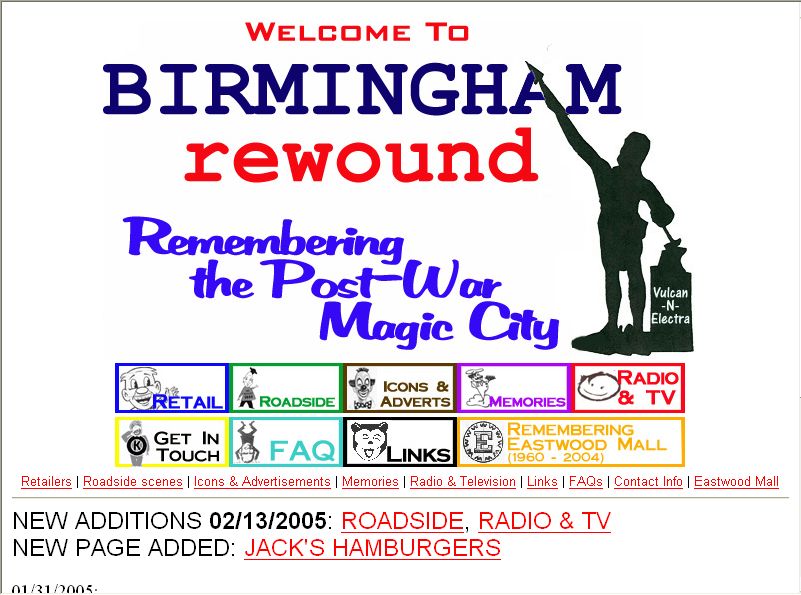
birmingham rewound


Birmingham Rewound, 3/2/2005

I know that I'm a historian by nature, and it's nice to know there are others like me. One such person is Russell Wells, who you may remember from the Eastwood Mall tribute site I posted a few weeks ago.

My new friend J.T. Legg (webmaster of the Rich's tribute site posted this week) told me about Russell's new site Birmingham Rewound. On it, he features some fading memories of postwar Birmingham, Alabama, through personal rememberances, old pictures and vintage audio.

Though I'm not a resident or native of Birmingham (you'll have to hit up my friend Tim Anson for the former), I found the content of Birmingham Rewound facinating and fun. You might, too, especially if you like what you see here.

Tuesday, March 01, 2005

song of the day | march 1, 2005

Nice & Slow - Redhead Kingpin and the F.B.I. Listen

snow day

As I write, I’m in the middle of eight inches of snow which came down overnight Sunday night. It’s the first real snowfall we’ve had this winter and I’ve been enjoying it, if for no other reason than pulling out the cool new parka I bought at the end of the season last year ;) I couldn’t go anywhere, so I got to spend the day in yesterday, and have spent most of it on the phone with several of my friends, who invariably all call on the same day. No biggie though, I like the company.

I was hoping to hear from some of the people I interviewed with today, but the snow through things off a bit. Maybe tomorrow. The guy I interviewed with at Virginia Furniture Market was in the Roanoke paper Monday reviewing Oscar dresses. You read that right. What the hell??!! Well, to each his own, I guess.

I do have a good group of friends and have met a couple more from the message boards and blogs I participate in. One of the people I met contributes on the Men’s Health board and lives in Charlotte. He’s a youth minister and seems to be into clothes and otherwise a fairly normal person. I met another couple of people on UrbanPlanet that are big retail and planning freaks like me. One guy from Atlanta runs a Rich’s department store tribute site. Another guy studies the malls of the Carolinas like me. Another fellow runs an Ames discount store tribute site and I sent him some information that he posted on his website about the old Ames around here. It’s always nice to meet new people, especially when they make you feel more normal.

Over the weekend Mom and I loaded the new shelves at the club with dishes. I counted over 340 dinner plates alone, and that’s only maybe half of what we have, and even that doesn’t count all the other plates, bowls, flatware, and glasses. Needless to say, it was a long day on Sunday. To update some stuff from earlier, both the shelves and new floor I built and put down are doing okay. Not a bad try for a guy with all thumbs like me.

I guess you’ve heard by now about the May-Federated department store merger. What I gather is that our local Hecht’s will become Macy’s, maybe next year. I’m not overwhelmed by that prospect, but I know it’s going to lead to a little more upscale, modern department store over time. Maybe having a Macy’s will grease the wheels a little on some of the national name stores we don’t have yet.


A rendering of Boscov's in Albany, NY (www.turner3d.net/ albany.html)

One store we don’t have is Boscov’s. Boscov’s is comparable to Belk and Hecht’s, with a generous dose of Sears thrown in. It’s a great store; not trendy but not lame either. Most of the stores are around 200,000 square feet, about the size of a typical Super Wal-Mart, which is why it’s hard for them to find a good spot in the Roanoke Valley, where they’re actively looking according to a real estate website I found. I’ve been to a couple in Pennsylvania. And I’m looking forward to the new store in Danville at Piedmont Mall coming in 2006. Maybe we’ll luck up and get one at Tanglewood or Valley View.

Speaking of malls, I ended up going to Lynchburg twice over the weekend. Once with Mom and Dad, once with my friend Kevin. They have a new dollar store in River Ridge Mall that carries a little bit of everything, even hair pieces for $1.00. So if you need some fake hair cheap, I know who can hook you upJ.

On a classier note, I found the Harbor Inn seafood restaurant in Lynchburg to be very classy and a good deal to boot. The best way to find a good restaurant I’ve found is to follow the crowd of fat happy people and go where they go. That usually works, and it certainly worked this time.

That's my 2 cents for the day :)

Fat Joe, Nas, Others Salute Jam Master Jay And His Adidas

Fund-raiser gala held to benefit late DJ's charity foundation.

NEW YORK — Two hip-hop icons were honored Friday night at the Skylight club: Jam Master Jay and Adidas.Nas, Fat Joe, Bone Thugs-N-Harmony, Q-Tip, Public Enemy and DMC were among those on hand for a fund-raiser gala that celebrated the Jam Master himself as well as the 35th anniversary of his group's favorite kicks.

"Jam Master Jay is my man, and Queens is my borough," Nas said of the late DJ, who was slain in his Queens studio in October 2002 (see "Jam Master Jay, Run-DMC DJ, Killed In Shooting").

"It's important we come out and show love to the foundation and the community work that's being put together through Adidas and the Jam Master Jay Foundation."

"We came together for this to really pay homage," said Layzie Bone, flanked by his entire group.

"It really means a lot to us because we came up on Run-DMC. We really loved these guys, and Jam Master Jay taught us some things and talked to us. It really meant a lot to be here."

"Run-DMC were one of the most powerful impacts on my childhood, 'cause they took a culture and made it worldwide and showed me the possibilities of something I liked," offered video director Dave Meyers (Jay-Z, Kelly Clarkson). "They were some cool guys doing cool sh--. I was a kid who was very influenced by their creative flow and the choices they made."

Many of the artists noted that not only were they influenced by the music of Jam Master Jay (born Jason Mizell), but as they became prominent in the industry, Jay reached out to them personally.

"Jam Master was a mentor, an idol to me, a good brother," Fat Joe remembered. "Every time I seen him, he was like, 'Yo, Joe, you gotta get outta the Bronx. You gotta get out of New York. You gotta sell some records somewhere else. There's a whole world out there, go sell some records somewhere else.' "

"Everyone coming to support just shows me all the love and effect Jason had," Jam Master Jay's widow, Terri Corley-Mizell, said. "It's about honoring his legacy and life. Everyone here had love for Jason, which means a lot for me."

The Adidas sneaker was shown love as well: 35 types of special Adidas were on display, including the Missy Elliott shoe, the Bad Boy shoe, the Roc-A-Fella 10th anniversary sneaker and a Disney sneaker with a picture of Goofy on it.

"Adidas gotta show love," DMC said. "We took that shell-toe sneaker around the world. We stepped onstage at Live Aid, the people gave and the poor got paid. Adidas is more than a sneaker on my feet, it represents what hip-hop is about."

Some of the proceeds from the event went to the Jam Master Jay Foundation, which supports music programs in inner-city schools. DMC, Bone Thugs and Public Enemy were among the performers who hit the stage at the shindig.

Museum shows 200 pairs of sneakers

LOS ANGELES (AP) --A traveling exhibit of nearly 200 pairs of sneakers has been created by a 45-year-old Los Angeles County social worker.

James Moore, who calls his exhibit the California Sneaker Museum, brought it Saturday to the Ahmanson Senior Citizen Center in Exposition Park.

The exhibit features pie charts with athletic footwear market shares, vintage advertisements and is an ode to the evolution of sneakers.

"(Kids) spend a lot of money on sneakers," Moore said. "There's a history to sneakers, and I want kids and parents to see how this evolved into a multibillion-dollar industry."

The collection includes a 1930s pair of Red Ball basketball sneakers, 1960s sneakers made by Goodyear and BF Goodrich and a pair of silver Adidas KobeTwo sneakers.

"It's gone from an 1800s rubber-and-cloth material Plimsoll to now there's a specialty shoe for every sport," Moore said.

Moore said he buys most of his sneakers on the Internet, but also scours thrift stores and buys from collectors.

His most expensive purchase so far? A $200 pair of Nike Air Jordan XVIIs, which came in a foam-lined cherry red carrying case.

New Balance's latest ads celebrate the (older) amateur

By Naomi Aoki, Boston Globe Staff February 28, 2005

Are you in it for love or money?

In a national ad campaign that begins this week, the Boston sneaker maker New Balance aims to set itself apart from the Nikes and the Reeboks of the world.

The idea behind the campaign: If you want to wear the same shoes as NBA stars Allen Iverson or LeBron James wear, buy Reeboks or Nikes. But if you're in it for the pure love of the sport, New Balance is the shoe for you.

'' 'For Love or Money' felt so natural to us because it was something that only New Balance can stand in front of," said Paul Heffernan, executive vice president of global marketing at New Balance. ''It's all about everyday athletes playing for the love of the game."

Well, Reebok International Ltd. and Nike Inc. might ask, ''What's so different about that?" After all, they're also courting the everyday athlete. But their ads are slick and filled with sports and entertainment celebrities. This month, Canton-based Reebok introduced its ''i am what i am" campaign, featuring actress Lucy Liu and tennis player Andy Roddick.

In its new campaign, New Balance features amateur athletes and high-school sports teams. As opposed to ads featuring pro athletes, these ads are unconcerned with how polished the athletes appear or whether their foot placement is just right.

In addition to four 30-second TV spots, the campaign also includes print, billboard, and online ads that pose a series of questions about values in sports today:

''Can a losing coach still be a good coach?"

''Is fighting in sports ever justified?"

''Which teaches a player more, winning or losing?"

Tobe Berkovitz, an advertising professor and associate dean of the College of Communication at Boston University, gives New Balance's strategy a thumbs up. New Balance's customer isn't a teenager -- an all-important demographic in the youth-oriented sneaker business. It's the 21- to 55-year-old who's working toward a personal goal, rather than working to impress someone.

The $1.4 billion company has to defend that turf against far larger rivals with far bigger marketing budgets. The company didn't say how much it is spending on the ad campaign, but said it is spending significantly more on advertising than it did last year.

Berkovitz predicts the ''For Love or Money" campaign will reinforce its customers' brand loyalty and potentially expand their appeal among people who are moving into the New Balance niche.

''If they can grow by just 3 or 5 percent, or even if they can just keep the other guys from eating them alive, that's a win for New Balance," he said.

Rich's | the tribute


J.T. Legg's Rich's tribute site, 3/1/05.

J.T. Legg, a self decribed 'retail geek' like me had this to say about his tribute website to the soon to be departed iconic Atlanta, Georgia department store chain Rich's:

"I'm the webmaster of the new Rich's Tribute site, which will have pictures inside and out of my all-time favorite department store that Federated just canned out of shear stupidity. I grew up my whole life with Rich's, making frequent annual visits tothe Town Center Mall store all 19 years of its existance."

"I did manage to snag pics of every single Rich's store in the entire Atlanta area, but it did take a TON of work and time to do it. I also had two run-ins with mall security that were not pleased that I had such a penchant for Atlanta's classic store."

That's love y'all. You should check out his Rich's tribute soon